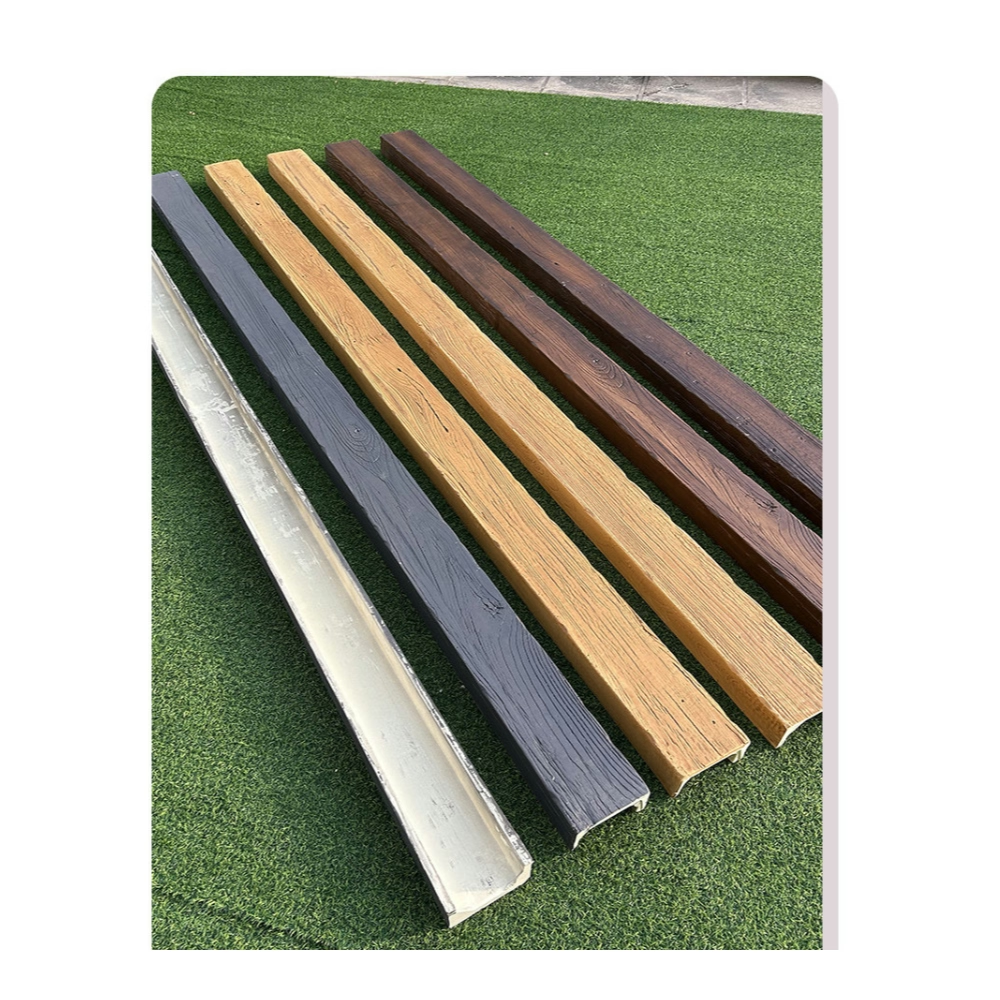
Painting and finishing polyurethane beams requires attention to ventilation that protects both worker health and finish quality. Finishing materials emit vapors that require adequate dilution and removal to maintain safe conditions. Beyond safety, proper ventilation affects finish appearance by controlling dust, humidity, and temperature variations that influence how paints and stains perform.
Professional finishing operations typically use dedicated spray booths or specially configured workspaces that provide controlled ventilation. For smaller operations or field finishing, portable ventilation equipment and careful workspace arrangement achieve adequate conditions. Understanding the principles enables appropriate setup regardless of available resources.

Understanding Ventilation Requirements
The amount of ventilation needed depends on the types of finishing materials being used. Water-based paints and stains emit less vapor than solvent-based products, requiring less aggressive ventilation. Solvent-based materials, including lacquers, conversion varnishes, and oil-based stains, require ventilation that keeps vapor concentrations below safe exposure limits established by health authorities.
Air exchange rates measure how quickly fresh air replaces contaminated air in a workspace. For light finishing work with water-based materials, one to two air exchanges per minute may suffice. Heavy spray work with solvent materials may require five or more exchanges per minute. Calculating workspace volume and required exchange rates determines fan sizing and placement.
The relationship between supply and exhaust ventilation affects how effectively contaminants are removed. Pure exhaust systems create negative pressure that draws air from nearby areas, potentially pulling contaminated air through work zones. Balanced systems with both supply and exhaust create cleaner work zones by pushing fresh air through the space rather than just pulling contaminated air away.
Workspace Configuration Strategies
Spray booth design concentrates ventilation exactly where finishing work occurs, providing efficient contaminant removal with minimal exhaust volume. Booth walls contain overspray while exhaust systems pull air through the work zone and out of the building. For beam finishing, portable spray booths provide these advantages without permanent installation.
When dedicated booths are unavailable, open-sided work zones with directed airflow provide acceptable conditions for lighter finishing work. Position exhaust fans to pull air across the work area, with fresh air supplied from behind the operator. This configuration carries overspray away from the work surface and prevents vapor accumulation in the breathing zone.
Enclosure of beam storage and staging areas prevents contamination of unfinishing pieces during spray operations. Tarps or plastic sheeting can create temporary enclosures that contain overspray and direct it toward exhaust points. This containment protects adjacent materials and surfaces while keeping ventilation focused on active work zones.

Exhaust Fan Selection and Placement

Fan capacity should match workspace ventilation requirements based on air exchange calculations. Undersized fans provide inadequate contaminant removal; oversized fans create excessive air movement that disrupts spray patterns and finish quality. Match fan capacity to actual workspace dimensions and finish material requirements.
Exhaust outlet placement affects contaminant removal efficiency. Placing exhaust near the source of contamination, typically the spray gun position, removes vapors before they disperse through the workspace. Placing exhaust at ceiling level removes heat and lighter vapors that rise, while floor-level exhaust handles heavier vapors that sink.
Ducting from exhaust fans should be as short and direct as possible. Long duct runs reduce fan efficiency and create opportunities for condensation and residue buildup. When long runs are unavoidable, increase fan capacity to compensate for resistance. Route ducts to exhaust outdoors rather than into attic spaces or other enclosed areas where vapor accumulation creates hazards.
Personal Protection Equipment
Respiratory protection supplements ventilation controls but does not replace them. NIOSH-approved respirators with appropriate cartridges filter vapors and particulates from breathing air. Organic vapor cartridges address solvent vapors; particulate filters address spray mist. Selecting cartridges matched to the finishing materials being used ensures appropriate protection.
Respirator fit affects protection effectiveness significantly. Tight-fitting respirators require fit testing to verify adequate seal against the face. Loose-fitting powered air-purifying respirators provide alternative protection that does not require fit testing. Regular inspection and cartridge replacement maintain respirator effectiveness over time.
Eye protection prevents irritation from overspray and vapor exposure. Safety glasses or goggles appropriate for spray work provide needed protection without interfering with visibility. Face shields provide additional protection during high-volume spray operations where overspray exposure is significant.
Temperature and Humidity Considerations
Ventilation affects temperature and humidity conditions in finishing areas, which in turn affect finish application and curing. Extremely dry conditions can cause water-based finishes to dry too quickly, resulting in poor flow and orange peel texture. Very humid conditions slow drying and can affect finish cure. Monitoring and controlling these conditions through ventilation adjustment maintains optimal application environments.
Seasonal variations require ventilation strategy adjustments. Summer conditions may allow increased ventilation that improves worker comfort without affecting finish quality. Winter conditions may require heated makeup air to prevent finishes from chilling below application temperatures. Adapting ventilation practices to seasonal conditions maintains consistent results year-round.
Ventilation for cure periods differs from application ventilation. After finishing, beams continue releasing vapors as finishes cure. Continued ventilation removes these vapors and prevents condensation on freshly finished surfaces. The curing period may require ventilation for days or weeks depending on finish type and environmental conditions.
Technical References
ASTM standards cited in every specification
Test Data
Lab results from internal testing program
Updated 2026
Reviewed against current product specs