Commercial interior projects operate under constraints that residential work rarely encounters. Tight schedules, code compliance requirements, and durability demands create an environment where material and installation choices carry significant consequences. PU faux beam solutions address these commercial realities through products and systems designed for the professional fit out context where performance failures prove costly and schedule delays create cascading problems.
The commercial fit out market encompasses diverse project types including office buildings, retail environments, hospitality venues, healthcare facilities, and educational institutions. Each application presents unique requirements that commercial-grade beam solutions must satisfy. Understanding these varied demands helps specify appropriate products for specific commercial applications.
Commercial Project Requirements
Consistency across large installations distinguishes commercial from residential work. A hotel chain opening multiple properties requires identical beam appearances across all locations, while a single restaurant installation might include dozens of beams requiring matching appearance throughout. Production consistency that meets these demands differentiates commercial-grade products from residential alternatives.
Schedule pressure in commercial construction compresses timelines that affect installation approaches. Products that install efficiently without sacrificing quality enable schedule compliance that delays cannot accommodate. The labor cost implications of installation speed directly affect project profitability for contractors and value for owners.
Code compliance adds requirements that residential installations may ignore. Fire ratings, accessibility considerations, and structural certifications all affect material selection for commercial applications. Products without appropriate certifications cannot be used in applications where codes require compliance.
Product Specifications for Commercial Use
Material formulations for commercial applications often differ from residential equivalents. Enhanced durability characteristics address the higher use levels and maintenance frequencies that commercial environments impose. These formulation differences manifest in product performance that justifies premium pricing.
Dimensional consistency throughout production runs ensures that commercial installations proceed without problems caused by out-of-specification products. Quality control systems maintain tolerances that prevent fitting issues, joint gaps, and alignment problems that would delay schedules and require remediation.
Warranty coverage for commercial products typically exceeds residential terms, reflecting the higher stakes of commercial applications. Multi-year warranties provide assurance that manufacturers stand behind their products sufficiently to support commercial use. This warranty protection transfers to property owners through contractor installations.
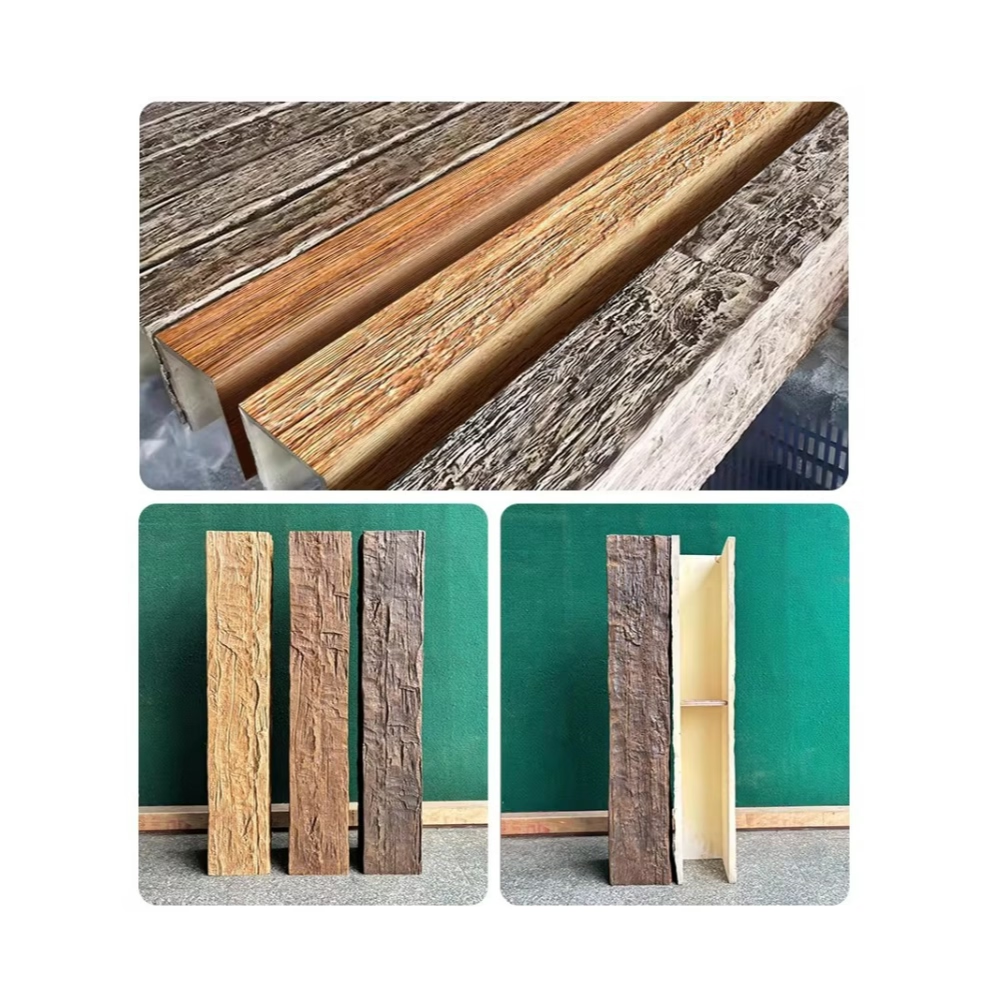
Application Across Commercial Sectors
Hospitality venues feature extensive beam installations in lobbies, restaurants, ballrooms, and common areas. The aesthetic requirements for these applications demand wood-like warmth while practical requirements include durability against heavy use and easy maintenance. Commercial PU beam products satisfy both considerations effectively.
Retail environments employ beams to create signature atmospheres that differentiate shopping experiences. Department stores, boutiques, and specialty retailers use beam installations to establish brand identities and enhance customer engagement. The visual impact that quality beams provide supports these marketing objectives.
Corporate offices incorporate beams in reception areas, conference rooms, and executive spaces. These installations create impressions of established, quality-focused organizations. The professional appearance that commercial-grade beams provide supports corporate image objectives.

Installation Efficiency for Commercial Projects
Modular systems that assemble from standardized components accelerate commercial installations significantly. Pre-engineered mounting systems, pre-finished components, and coordinated hardware streamline installation procedures that would otherwise require custom fabrication or extensive field work.
Multiple simultaneous installations benefit from labor division that specialized tasks enable. While some workers handle mounting systems, others can position beams, creating assembly line efficiency that single-beam installation cannot achieve. This workflow optimization reduces per-unit labor costs.
Quality assurance systems that prevent problems prove more valuable in commercial contexts than remediation approaches. The cost of schedule delays, rework, and callbacks in commercial projects exceeds residential equivalents substantially. Investment in quality installation processes prevents these costly problems.
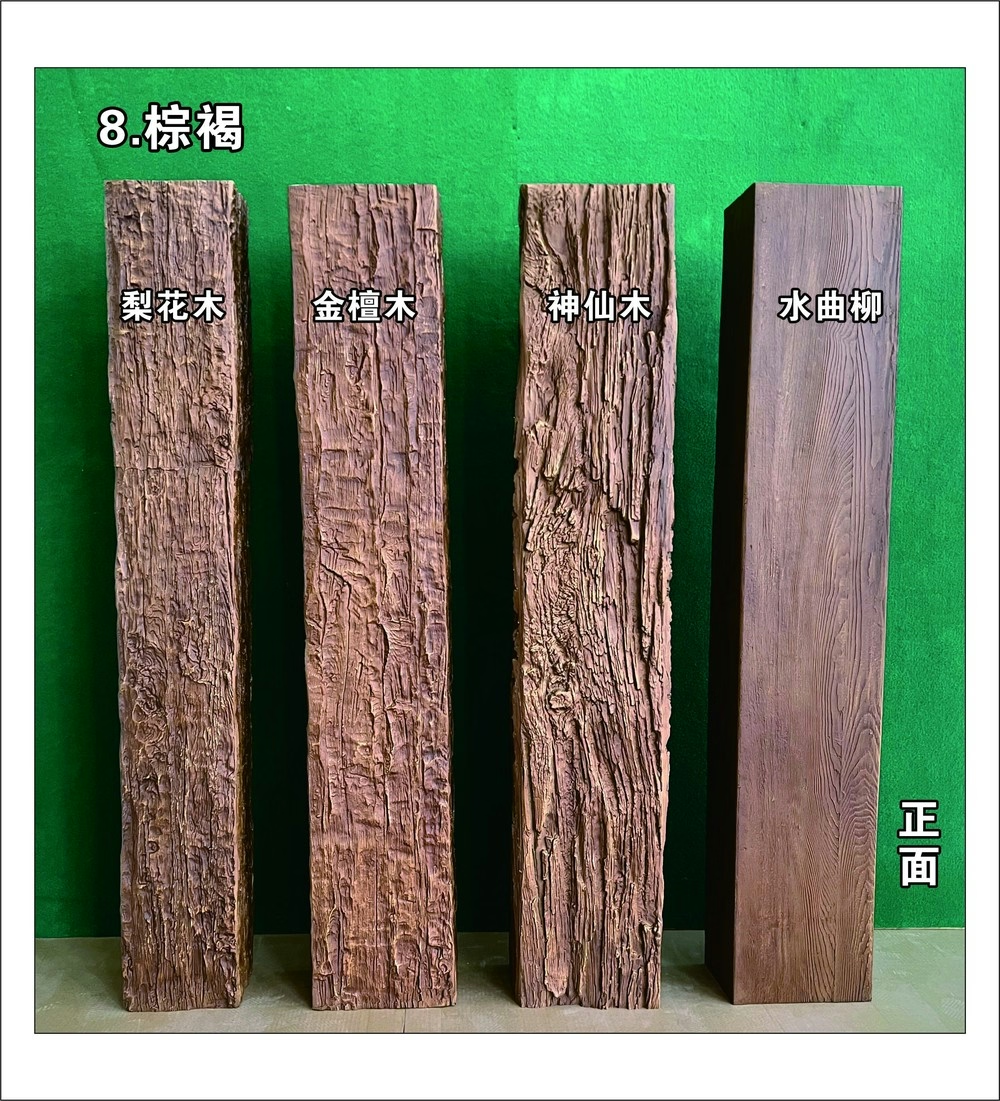
Durability for Demanding Environments
Scratch and impact resistance protect appearances despite the inevitable abuse that commercial spaces experience. Furniture movement, equipment handling, and high traffic all stress beam surfaces in ways that residential environments rarely encounter. Commercial-grade products handle these conditions without visible damage.
Cleanability ensures that commercial beams maintain fresh appearances despite frequent cleaning. Restaurant kitchens, healthcare facilities, and public spaces all require regular sanitation that would damage less resilient materials. Commercial PU products accept aggressive cleaning protocols without deterioration.
Moisture tolerance enables installation in challenging locations including pool areas, humid kitchens, and exterior-adjacent spaces. Commercial buildings often feature these challenging environments, requiring materials that tolerate moisture without degradation.
Specification and Procurement Considerations
Professional specification processes ensure appropriate product selection for commercial applications. Architects and designers specify products that meet project requirements, while contractors verify that specified products are available and correctly specified. This collaboration prevents problems during procurement and installation.
Quantity pricing structures reward large commercial orders with favorable unit costs. Contractors managing commercial projects should explore these pricing opportunities that spread overhead across larger volumes. The savings can be substantial for projects with significant beam quantities.
Lead time planning ensures that materials arrive when needed without expedited shipping costs or schedule disruption. Commercial products may require longer lead times than residential equivalents due to production scheduling and transportation logistics. Early procurement prevents these complications.
Working with Commercial Suppliers
Supplier capabilities vary significantly in the commercial beam market. Established suppliers with commercial experience understand project requirements and provide appropriate support. Newer or residential-focused suppliers may struggle with commercial expectations regarding consistency, reliability, and support.
Samples and mockups enable evaluation before commitment to large purchases. Reputable suppliers provide samples that allow testing and verification before ordering production quantities. This evaluation investment prevents costly mistakes that specification errors would create.
Technical support from suppliers helps address installation challenges that commercial projects inevitably encounter. Access to knowledgeable support staff accelerates problem resolution and prevents schedule impacts. This support infrastructure differentiates commercial-focused suppliers from volume-focused competitors.
Long-Term Commercial Value
Life-cycle cost analysis reveals advantages for quality commercial beam solutions despite higher initial investment. The extended service life, reduced maintenance, and preserved appearance all contribute to lower total ownership costs. These factors should inform procurement decisions alongside initial pricing.
Brand value from quality commercial interiors extends beyond functional considerations. The professional environments that quality beams help create enhance brand perception, customer satisfaction, and employee morale. These indirect benefits often exceed direct cost considerations for organizations that recognize their importance.
Sustainability considerations increasingly influence commercial procurement decisions. The extended service life and reduced maintenance of quality commercial beams align with sustainability objectives that emphasize resource conservation and waste reduction. These environmental benefits support investment decisions for sustainability-focused organizations.
Technical References
ASTM standards cited in every specification
Test Data
Lab results from internal testing program
Updated 2026
Reviewed against current product specs


