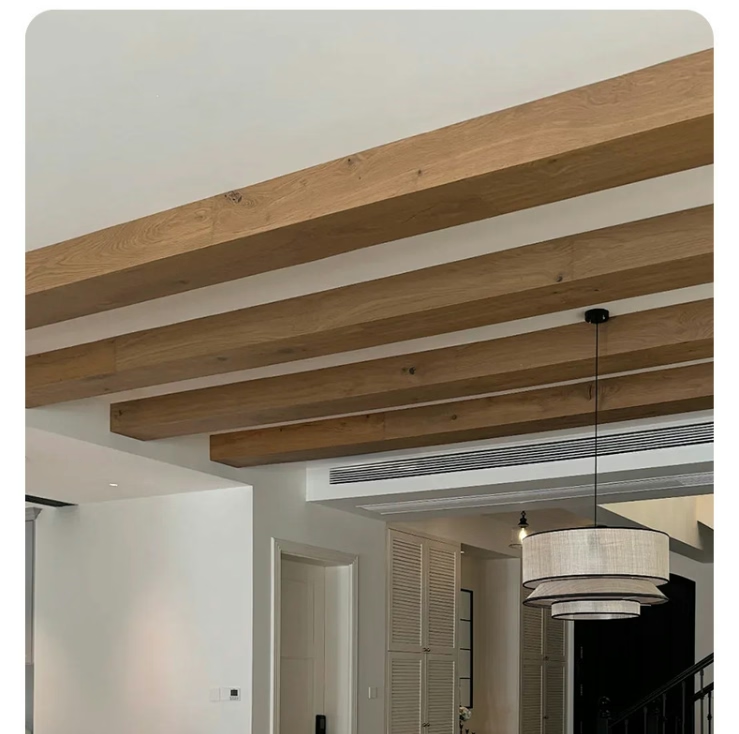
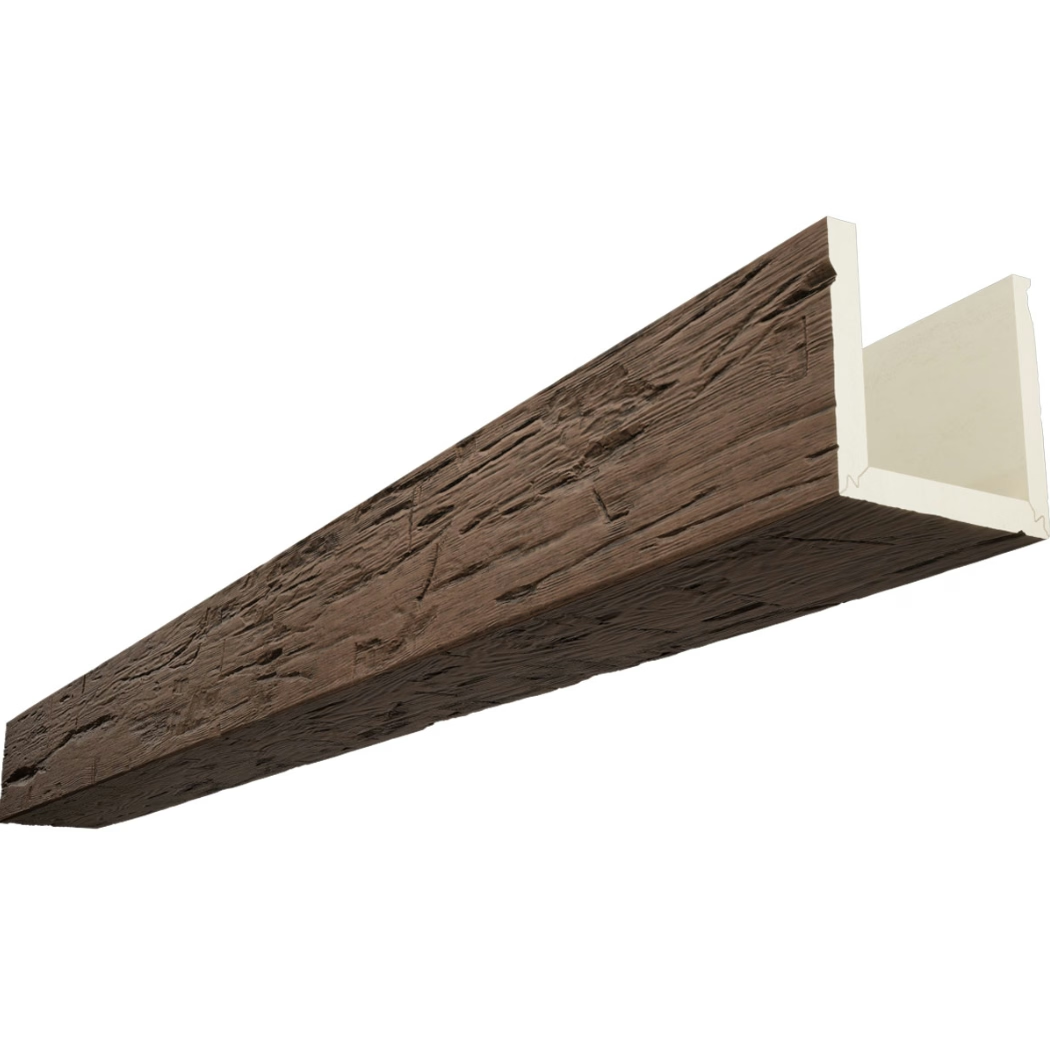
Walking into a well-designed restaurant should feel like stepping into a carefully curated experience. The ceiling often gets overlooked during interior planning, yet it plays a crucial role in establishing the overall ambiance. Restaurant owners and designers increasingly turn to PU faux wood beams as a versatile solution for creating distinctive ceiling features that capture attention without compromising structural integrity.
The hospitality industry demands materials that can withstand high-traffic environments while maintaining their visual appeal. Traditional wooden beams, despite their natural beauty, present significant challenges in commercial settings. They are heavy, requiring reinforced ceiling structures, expensive to procure and install, and susceptible to moisture damage in kitchen-adjacent areas. PU faux wood beams address each of these concerns while delivering an authentic wood aesthetic that guests consistently praise.
Modern restaurant design balances aesthetic ambition with practical functionality. A farmhouse-style eatery might pair exposed brick walls with rich oak-toned faux beams, creating visual warmth that encourages diners to linger. Contemporary fusion restaurants often opt for cleaner beam profiles with subtle grain textures, providing architectural interest without overwhelming minimalist décor schemes. The versatility of PU beams allows designers to achieve virtually any look, from weathered barn wood to refined coastal cedar.
Acoustic considerations often surprise restaurant operators who discover how faux wood beams contribute to sound management. The irregular surfaces and varied beam configurations help diffuse sound waves, reducing echo in open-plan dining spaces. This acoustic benefit proves particularly valuable in establishments with hard flooring surfaces, concrete walls, and large windows—all common features in contemporary restaurant design that would otherwise create uncomfortably loud environments.
Fire safety regulations in commercial buildings require careful material selection. PU faux wood beams manufactured for commercial applications typically meet strict fire-retardant standards, providing peace of mind for restaurant owners and safety inspectors alike. This compliance often proves simpler to achieve with manufactured products than with natural timber, which may require additional treatment or special approval processes.
Maintenance represents another significant advantage for restaurant environments. Grease, moisture, and cooking odors permeate commercial kitchens and adjacent dining areas. Unlike natural wood, PU beams resist moisture absorption and can be cleaned with standard cleaning solutions without risking damage or discoloration. Restaurant managers appreciate this practical benefit, as ceiling maintenance often falls low on priority lists until visible problems emerge.
Installation timing frequently determines project success in the restaurant industry. Renovations must minimize closure periods to protect revenue and staff employment. PU faux wood beams install significantly faster than traditional timber alternatives. Without the need for structural reinforcement or specialized handling equipment, installation teams complete projects in days rather than weeks. Some restaurant owners schedule installations during normal operating hours, with beams positioned in strategic areas to create minimal disruption.

Design professionals recognize the value of consistent visual language throughout a restaurant space. Faux wood beams create visual connections between different functional areas, tying together bars, dining rooms, and private event spaces. A continuous beam pattern across multiple zones establishes architectural coherence that guests sense even without consciously analyzing the design. This thoughtful detail elevates the overall perception of quality and attention to design excellence.
Lighting integration with faux wood beams opens additional creative possibilities. Recessed lighting fixtures fit neatly between beams, creating layered illumination that enhances the wood texture during evening service. Pendant lights hung from beams add task lighting over specific tables while reinforcing the rustic aesthetic. Some designers incorporate LED strip lighting within beam cavities, producing subtle ambient glow that transforms the ceiling into a dramatic focal point after dark.
Seasonal and event-based styling becomes more achievable with PU faux beams. Temporary decorations attach easily without damaging surfaces, allowing restaurants to transform their appearance for holidays, special events, or rotating themes. This flexibility supports marketing initiatives and keeps regular guests engaged with fresh visual experiences. Natural timber typically cannot accommodate repeated fastener insertion without accumulating visible damage.
Restaurant concept development often involves establishing clear design narratives that communicate brand values to guests. Faux wood beams support various narrative approaches: rugged authenticity for farm-to-table establishments, refined craftsmanship for upscale dining, relaxed informality for casual eateries. The ability to select specific wood species, finishes, and beam profiles enables precise alignment with brand positioning and target demographics.
Investment protection matters significantly in the competitive restaurant industry. PU faux wood beams maintain their appearance over years of service, protecting renovation investments from the premature aging that affects lesser materials. Restaurant spaces that feel fresh and well-maintained command premium pricing and attract discerning clientele. The ceiling treatment contributes substantially to this perception of quality and professionalism.
Acoustic panels and decorative elements integrate seamlessly with faux beam installations. Designers often combine beams with fabric panels, artwork installations, or greenery displays, creating layered ceiling treatments that address both aesthetic and functional requirements. This integrated approach produces sophisticated results that distinguish memorable restaurants from generic dining spaces.
Sustainability considerations increasingly influence purchasing decisions among environmentally conscious restaurant operators. PU faux wood beams reduce demand for harvested timber, supporting forest conservation efforts. While sustainability extends beyond material selection, choosing products that minimize environmental impact demonstrates corporate responsibility that resonates with values-oriented consumers.
The international trade dimension introduces quality variations that affect project outcomes. Reputable manufacturers maintain strict quality control processes that ensure consistent color matching, texture accuracy, and dimensional precision across beam orders. Restaurant owners importing beams for multiple locations appreciate the reliability that standardized manufacturing provides, knowing that each location will receive matching products that maintain brand consistency across their portfolio.
Seasonal temperature fluctuations common in restaurant environments pose no threat to properly manufactured PU beams. Unlike natural wood, these products do not expand and contract noticeably with humidity changes, eliminating the gap formation and surface checking that affects timber installations. Restaurants in climate-controlled spaces benefit particularly from this dimensional stability, maintaining perfect seams and connections year-round.
Design collaboration between architects, interior designers, and restaurant owners produces the most successful projects. Faux wood beams serve as versatile tools that support various design visions while offering practical advantages that satisfy the functional requirements of commercial hospitality spaces. The result is restaurant interiors that delight guests, support operational excellence, and represent sound business investments.
The restaurant industry continues evolving, with interior design playing an increasingly important role in competitive positioning. PU faux wood beams represent a proven solution for creating distinctive, durable, and cost-effective ceiling treatments that enhance guest experiences and support business objectives. Restaurant professionals exploring renovation options should consider how these versatile products align with their design ambitions and operational requirements.
Technical References
ASTM standards cited in every specification
Test Data
Lab results from internal testing program
Updated 2026
Reviewed against current product specs