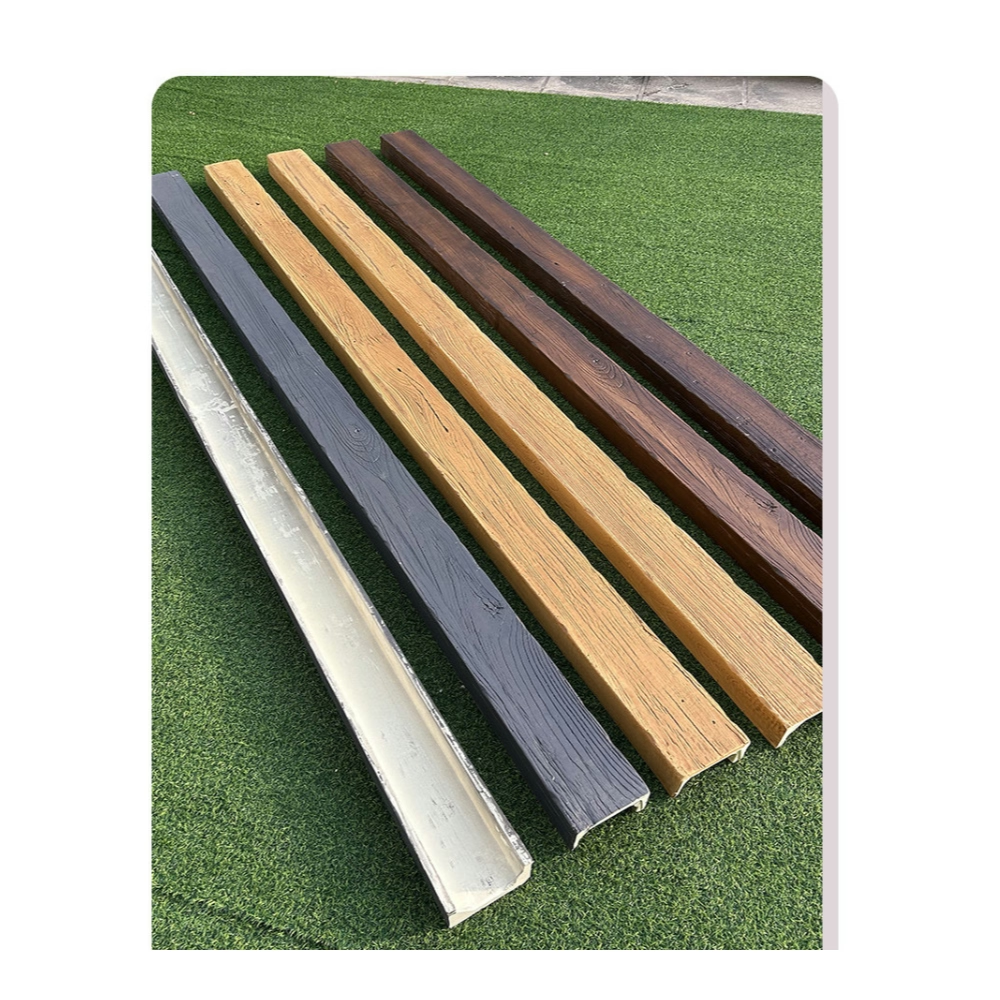
The passage of time affects all building materials, and ceiling beams prove no exception. Timber beams that once contributed handsome architectural character may deteriorate through moisture exposure, insect activity, or simple wear. Beams that were appropriate for earlier design eras may appear dated as aesthetics evolve. Structural beams left exposed after renovation may never have been intended for visibility. These varied circumstances share a common solution: beam wraps that transform existing elements into attractive features without demanding replacement.
The decision between replacement and wrapping often hinges on structural versus cosmetic considerations. Beams with intact structure but compromised appearance are prime candidates for wrapping—the underlying structure remains functional while the wrap provides fresh aesthetics. Beams with structural damage require remediation before cosmetic treatment, regardless of whether wrapping or replacement follows. Understanding this distinction prevents misapplication of wrapping solutions where more extensive intervention is needed.
The investigation phase before beam wrapping should confirm structural adequacy and identify any conditions requiring attention. Moisture content affects timber beams in ways that wrapping could exacerbate if underlying issues remain unaddressed. Insect activity that might continue beneath wraps could eventually compromise structural integrity. These latent conditions merit treatment before wrapping proceeds, ensuring that wrapped beams will perform reliably throughout their extended service life.
Wrapping versus full replacement involves practical tradeoffs that renovation planning should address. Replacement requires removal of existing beams—a potentially complex process depending on how beams are integrated with surrounding structure. Wrapping preserves existing structure while adding cosmetic improvement, typically at lower cost and with less disruption than replacement would involve. The preservation approach also maintains structural continuity that removal and replacement might disrupt.
The dimensional relationship between existing and wrapped beams affects both appearance and practical outcome. Existing beams that are smaller than desired for visual impact can be enlarged through wrapping—adding apparent mass that increases architectural presence. Existing beams already at appropriate scale can be wrapped with minimal thickness addition that preserves proportions while improving appearance. Understanding these relationships enables specification that achieves intended results.
Existing beam conditions affect which wrapping approaches work best. Beams with flat, even surfaces accommodate any wrap profile without adaptation. Beams with irregularities, damage, or complex geometries may require custom wrap configurations that accommodate specific conditions. Assessment during planning identifies which approach each beam requires, enabling accurate specification and cost estimation.
The attachment methods for beam wraps must accommodate existing beam materials and conditions. Timber beams accept standard fasteners and adhesives readily, providing multiple attachment options. Metal beams may require specific fastener types that grip effectively. Concrete-encased beams present the most challenging attachment scenario, potentially requiring adhesive-only approaches where mechanical fastening proves impractical.
Surface preparation for wrap installation ensures reliable attachment that performs throughout service life. Cleaning existing beams removes contamination that might interfere with adhesive bonding. Addressing surface irregularities creates uniform substrates that wrap profiles follow smoothly. This preparation effort proves worthwhile for the improved outcomes it enables.
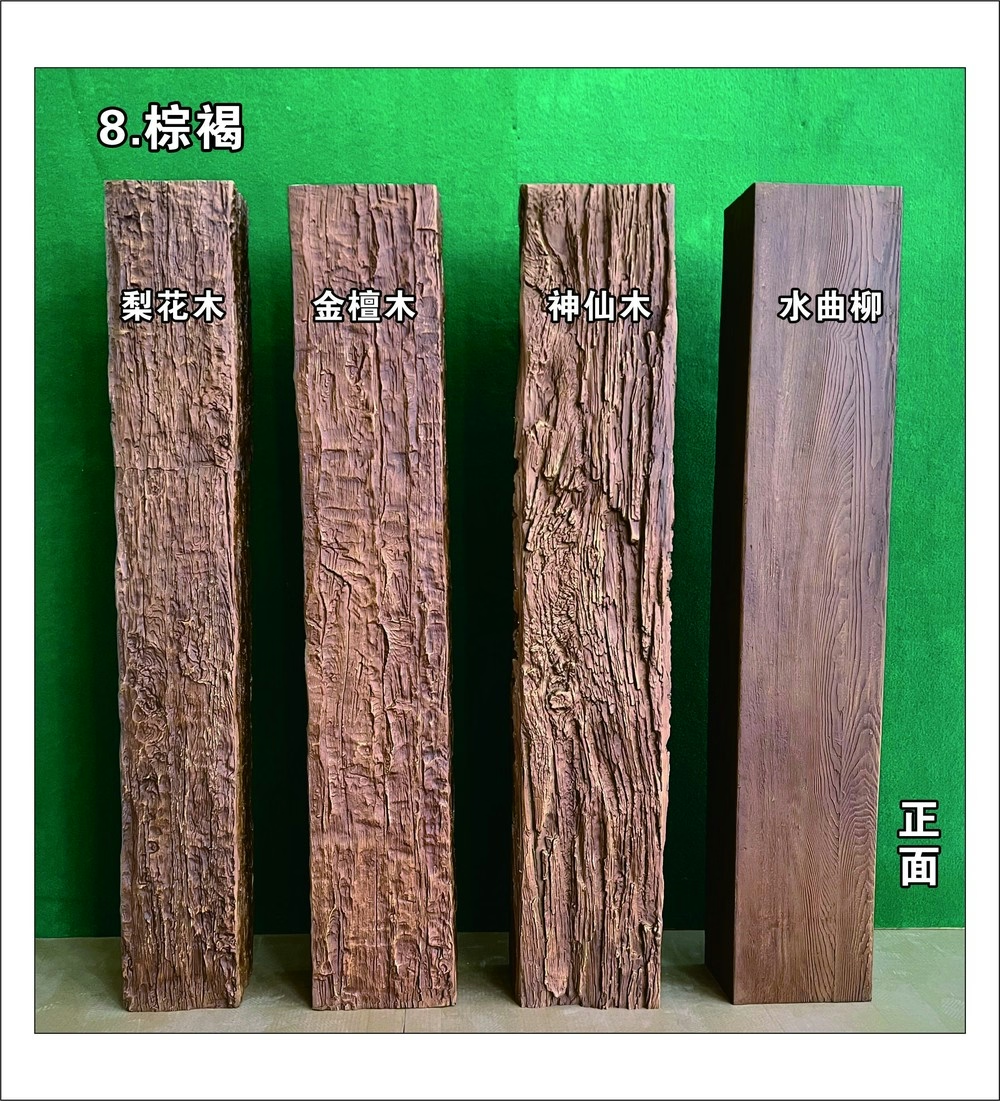
The aesthetic range available through beam wrapping addresses virtually any design requirement. Rustic textures with pronounced grain suit traditional and farmhouse aesthetics. Refined surfaces with subtle texture complement contemporary interiors. Custom finishes can match existing woodwork or create deliberately contrasting elements. This versatility enables appropriate treatment regardless of surrounding design language.
Period-appropriate treatment for historic buildings requires understanding traditional construction and design aesthetics. Beam wraps that reproduce original profiles and finishes enable restoration of architectural character that modernization had compromised. This preservation-sensitive approach maintains historic fabric while providing the reliable performance that contemporary use requires.
Contemporary applications often favor beam wraps that introduce character absent from existing construction. Exposed structural elements that were never intended for visibility may lack the architectural refinement that residential comfort requires. Wrapping these utilitarian elements adds the warmth and detail that makes spaces feel designed rather than merely constructed.
The visual transformation that beam wrapping provides often exceeds expectations, particularly for beams with significant condition issues. Wraps that completely conceal damage, staining, or deterioration create fresh surfaces that appear entirely new. The transformation effect proves particularly dramatic when surrounding surfaces remain unchanged—the beam improvement stands out as an obvious enhancement rather than blending into a comprehensive renovation.
Maintenance considerations for wrapped beams favor the wrapping approach over original beam maintenance. Natural timber beams require periodic inspection, treatment, and refinishing to maintain appearance. Wrapped beams resist the conditions that affect natural wood, maintaining appearance without ongoing maintenance intervention. This practical advantage proves valuable for beams in difficult-to-access locations where maintenance would prove challenging.
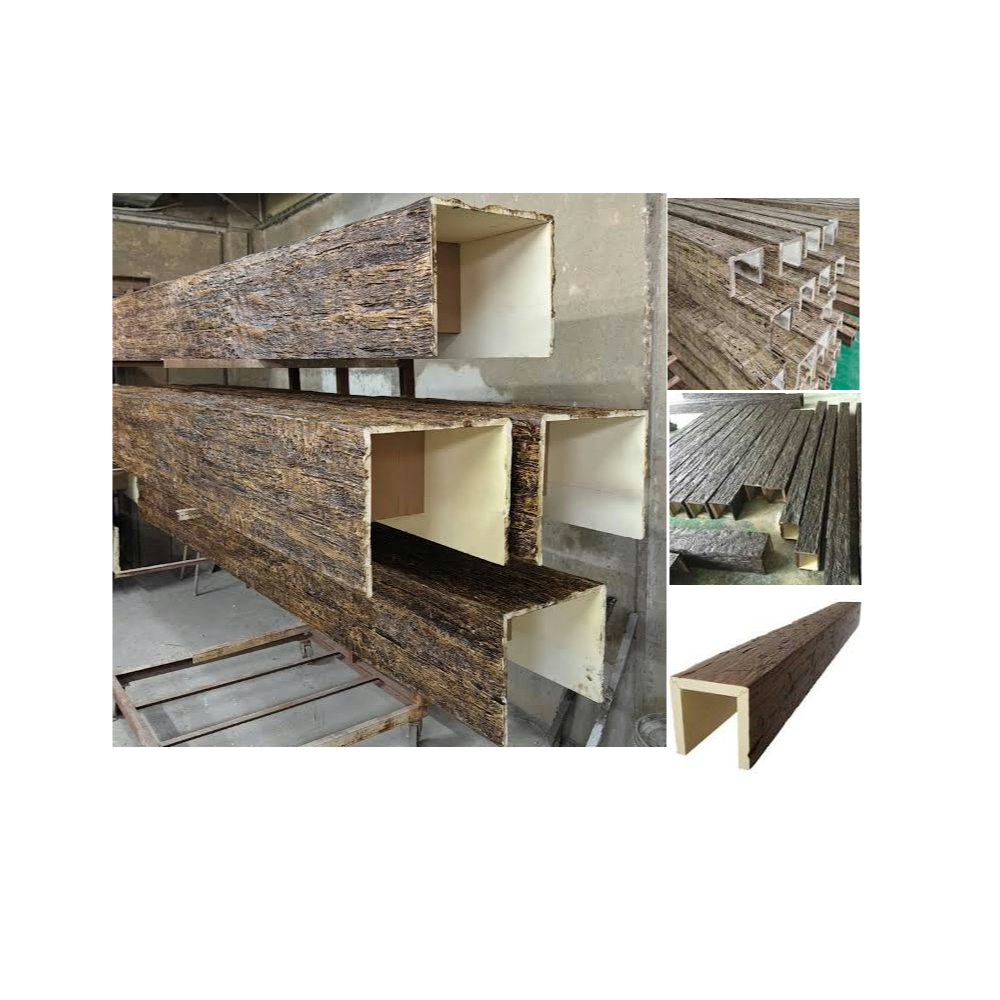
The longevity of beam wrap installations depends on quality materials and proper installation. Premium polyurethane wraps installed with appropriate technique provide decades of service without intervention. Economy products or improper installation may fail prematurely, requiring repair or replacement that proper specification would have prevented. The investment in quality ensures satisfactory long-term outcomes.
Budget allocation for beam wrap renovation should consider both immediate improvement and ongoing value. The aesthetic enhancement that wrapping provides increases property value in ways that exceed the wrapping investment. The reduced maintenance requirement eliminates future maintenance expenses that unwrapped beams would eventually demand. These value considerations make beam wrapping financially sound alongside the visual improvement it achieves.
The project timeline for beam wrap renovation typically proves shorter than alternative approaches. The concentrated work effort—focusing on beams rather than entire ceilings—compresses schedules and reduces disruption. This timeline advantage proves valuable for occupied homes and commercial spaces where extended renovation would impose unacceptable operational impacts.
Coordination with other renovation work affects beam wrap timing within larger projects. Wrapping should occur after ceiling work but before final finish work that might be affected by installation dust or debris. This sequencing ensures that wrap installation proceeds efficiently while protecting completed work from damage that might require touch-up or repair.
The acoustic effects of beam wrapping merit consideration for spaces where sound quality matters. Wrapped beams break up ceiling planes in ways that affect sound reflection and absorption. This acoustic modification may improve or compromise listening conditions depending on specific circumstances and acoustic goals. Understanding these effects enables appropriate specification for spaces with acoustic requirements.
Seasonal conditions affect beam wrap installation in some climates. Temperature extremes complicate adhesive application and curing. High humidity may affect certain adhesives. Planning installation for moderate conditions ensures proper bonding that extreme conditions might compromise. This seasonal awareness prevents installation problems that timing could avoid.
The environmental conditions that wrapped beams will encounter affect material selection and specification. Exterior applications face UV exposure, precipitation, and temperature extremes that interior applications do not. Matching wrap products to exposure conditions ensures performance that unrated products might not provide. This condition matching prevents premature failure that inadequate specification would cause.
Post-installation inspection should verify that wrapped beams meet quality expectations before project completion. Checking for secure attachment, uniform appearance, and proper alignment identifies any issues requiring correction while installation crews and materials remain available. This inspection discipline ensures that completed projects satisfy expectations that deferred identification might otherwise compromise.
Assessment Before Wrapping
Professional assessment before beam wrap specification identifies conditions that might affect installation or performance. Structural issues, moisture problems, and dimensional constraints all merit identification during this phase. Professional involvement ensures that wrapping represents an appropriate response rather than concealment of problems requiring different treatment.
Integration with Overall Design
Beam wrap selection should integrate with overall design objectives rather than being treated as an isolated decision. The wraps should complement surrounding materials, coordinate with other finish selections, and support the spatial character that design intends. This integrated approach ensures that wrap installation enhances rather than disrupts overall design quality.
Technical References
ASTM standards cited in every specification
Test Data
Lab results from internal testing program
Updated 2026
Reviewed against current product specs