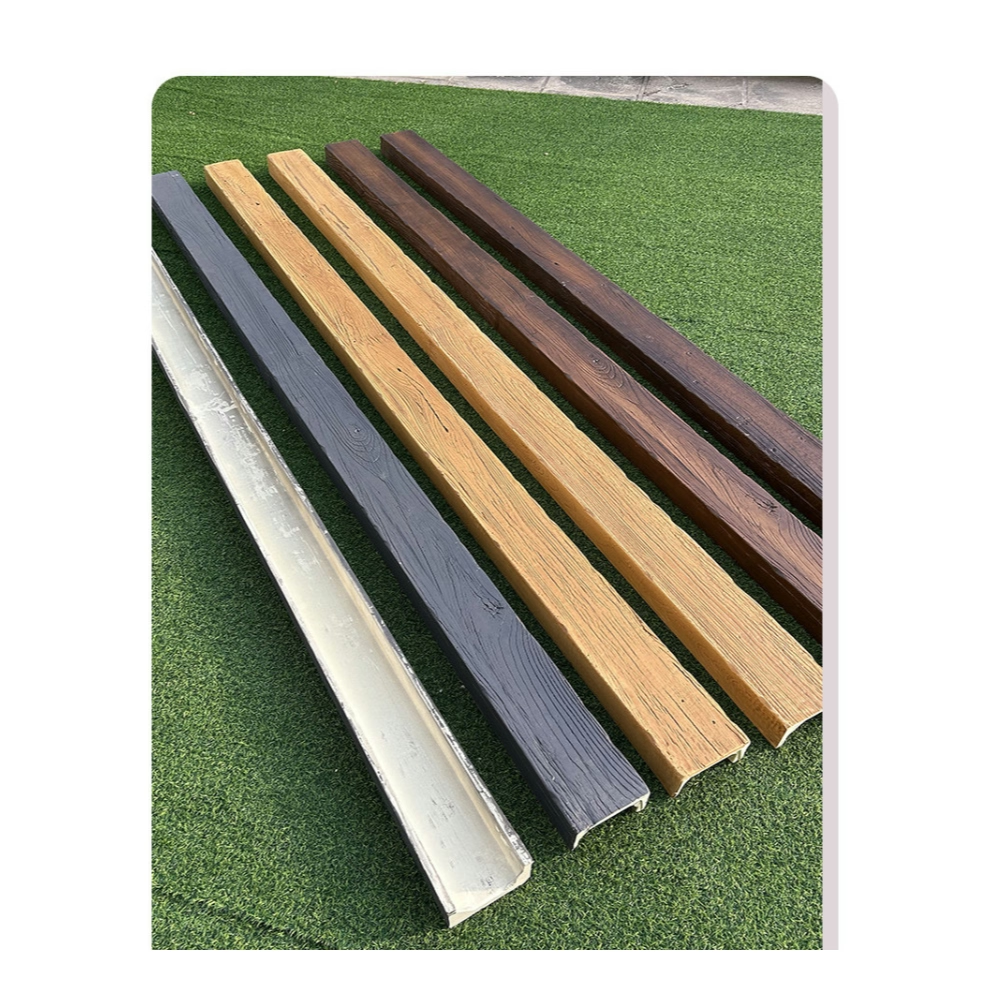
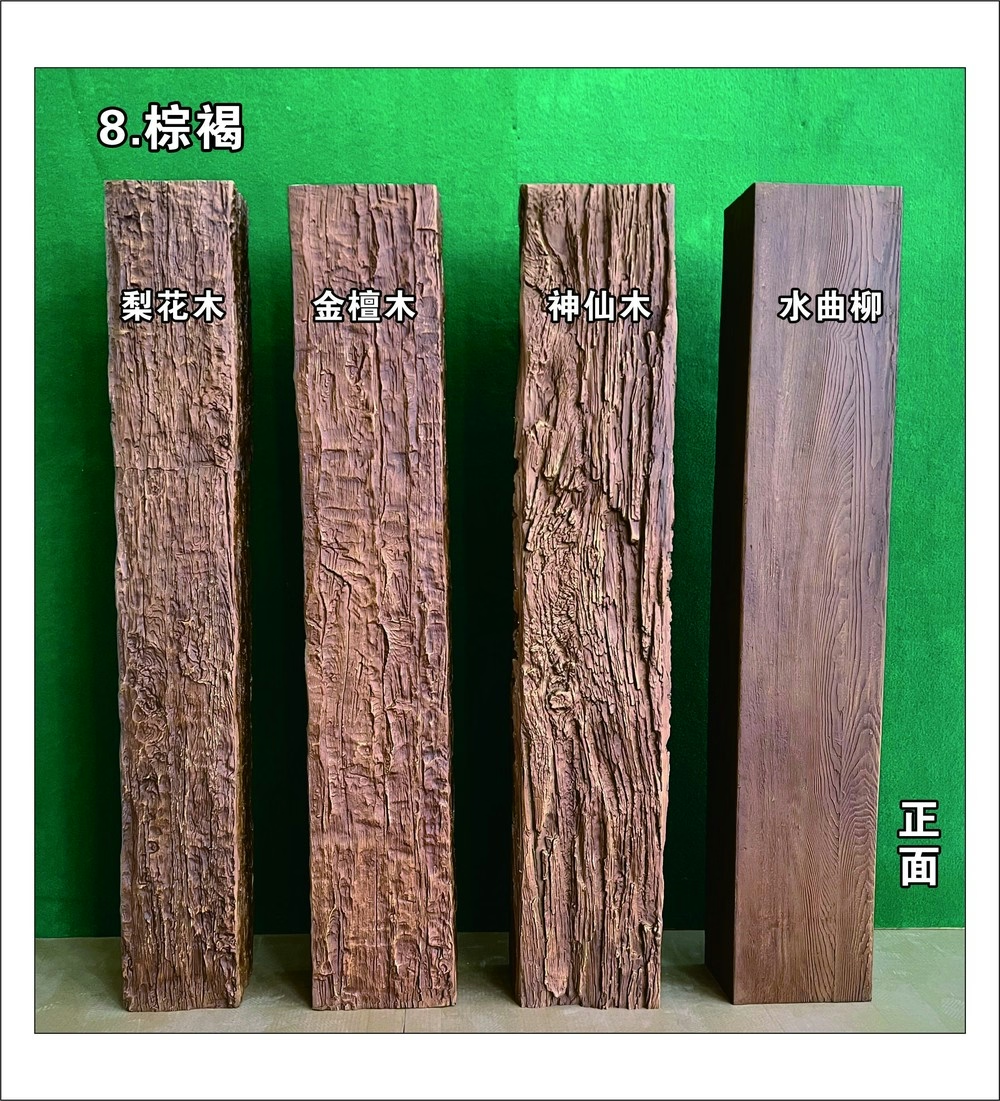
The finishing touches on any faux wood beam installation determine whether the result looks professionally executed or appears to be a weekend project that almost came together. PU resin end caps serve as those crucial finishing elements, providing clean terminations at beam endpoints that complete the architectural illusion while addressing practical concerns about edge protection and moisture resistance. These manufactured accessories have become essential components in the installer's toolkit, replacing improvised solutions that rarely achieved satisfactory results.
Modern PU resin formulations represent significant advances over earlier plastic trim products. Today's materials accept stains, paints, and texture treatments that produce convincing wood-like finishes, while maintaining the dimensional stability and moisture resistance that make polyurethane superior to natural wood in many applications. The combination of authentic appearance with practical durability explains why PU resin end caps have largely displaced competing materials in quality-conscious installations.
Material Properties That Make PU Resin Ideal for End Caps
Polyurethane resin achieves a balance of characteristics that proves difficult or impossible to obtain from alternative materials. The cellular structure provides insulation against temperature extremes while remaining rigid enough to hold precise molded shapes through years of service. Unlike wood, PU resin doesn't expand and contract noticeably with humidity changes, eliminating the gaps and separations that plague wood trim in variable environments.
Surface hardness in PU resin formulations resists the impact damage that lighter-weight alternatives suffer from routine use. Beam terminations at accessible heights receive inadvertent contact from furniture movement, cleaning activities, and daily household traffic. PU resin's resilience absorbs this abuse without showing the dents, scratches, and gouges that would immediately degrade a wood or foam alternative's appearance.
The material's moldability allows end caps to incorporate detail work—wood grain textures, edge bevels, and decorative profiles—that would require expensive custom carpentry in wood. These details add perceived value to the finished installation far beyond their material cost, creating the impression of craftsmanship that genuine custom work would command. The manufacturing consistency that molding provides also ensures that every end cap matches its specifications exactly.
Matching End Caps to Beam Profiles
Beam profile geometry determines which end caps will fit properly and look appropriate in the completed installation. Manufacturers design end caps for specific beam cross-sections, with internal cavities that mirror the beam's external profile. This mirror relationship allows end caps to seat flush against beam surfaces, creating continuous visual lines that enhance the timber illusion.
Three-sided beam configurations—the most common for ceiling installations where beams mount against flat surfaces—use end caps that close the open face while leaving the back surface open for mounting attachment. These asymmetric end caps require correct orientation during installation; reversing the end cap produces visible misalignment that compromises the installation's appearance.
Four-sided beams that fully enclose structural supports require end caps that complete all visible surfaces simultaneously. The geometric complexity of these installations demands careful measurement and potentially custom fabrication when standard end caps don't match the beam profile precisely. Some manufacturers offer made-to-order end cap services for non-standard beam configurations.

Installation Techniques for Reliable Results
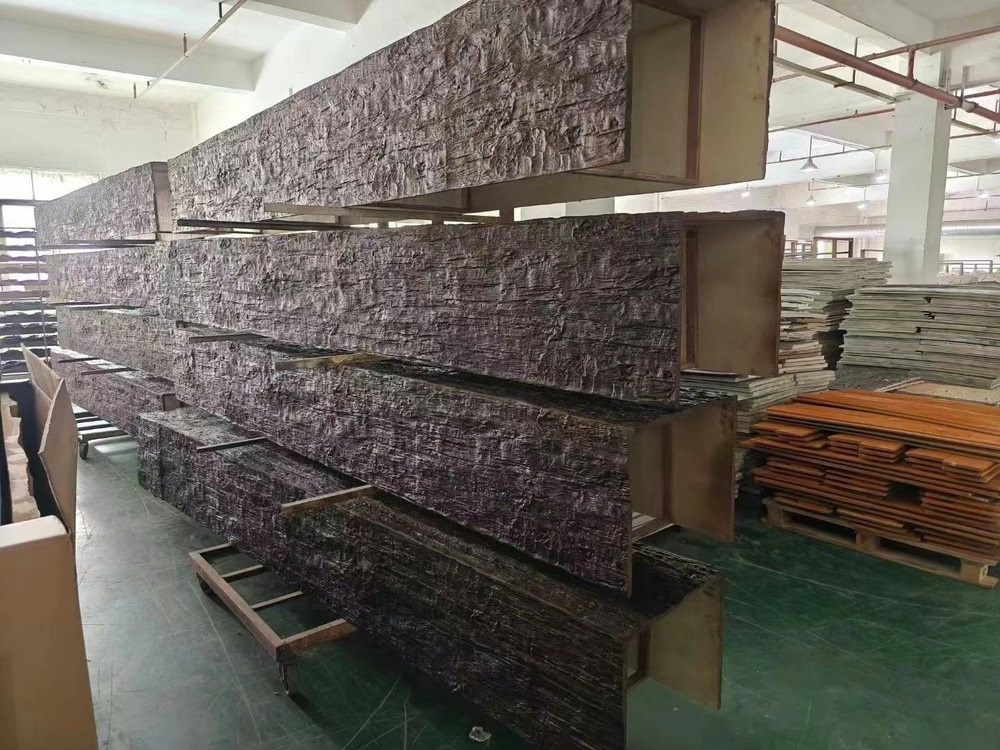
Successful end cap installation begins with a clean, square cut at the beam's termination point. The cut surface determines how well the end cap will seat, making cutting precision essential for professional results. A fine-toothed saw blade minimizes surface tear-out on polyurethane materials, producing smoother cut edges that require less preparation before end cap application.
Dry fitting before adhesive application reveals any fitting issues while correction remains simple. Minor gaps or misalignment can often be addressed by adjusting the end cap's position slightly or by trimming material from interference points. Marking reference lines during dry fit ensures that final positioning matches the intended placement without trial-and-error repositioning after adhesive application.
Adhesive selection requires products specifically formulated for polyurethane substrates. Standard construction adhesives may not bond properly to PU surfaces, leading to bond failures that manifest as gaps or complete end cap separation over time. Reading manufacturer recommendations and selecting products designed for the specific material ensures reliable, long-lasting bonds.
Achieving Seamless Visual Integration
The goal of end cap installation is visual invisibility—the end cap should disappear into the beam's appearance, leaving only the impression of a cleanly terminated timber member. This invisibility requires attention to both fit precision and finish continuity across the joint between beam and end cap.
Finish matching represents the primary challenge in achieving seamless integration. End caps that arrive from the manufacturer with different surface treatments than their corresponding beams create immediate visual discontinuity. Ordering end caps and beams as a coordinated system, or finishing all elements together after dry-fitting, produces the most reliable color and texture matching.
Gap filling at the joint between end cap and beam requires compounds that accept the same finishing treatments as the surrounding surfaces. Products designed specifically for polyurethane repair work better than generic wood fillers, which may not adhere properly or accept stain consistently. Taking time to select appropriate gap-filling products prevents finishing failures that would otherwise require remedial work.
Corner and Angle Applications
Standard end caps work well for beams terminating perpendicular to adjacent surfaces, but angled terminations require specialized approaches. Mitered end caps accommodate beams that terminate at non-perpendicular angles, with the miter plane cut to match the specific angle encountered. The tolerance for error in miter cutting is minimal—small discrepancies create visible gaps that undermine the installation's professional appearance.
Outside corner installations present compounded complexity, requiring end caps that address both the corner geometry and the termination at the intersecting surfaces. Pre-mitered corner end caps simplify these challenging locations, though they require accurate angle measurement for proper fit. When standard options don't accommodate unusual corner configurations, custom fabrication or creative adaptation of standard components becomes necessary.
Inside corners—where beams meet at interior angles rather than projecting outward—present different end cap requirements. These locations often work better with alternative finishing approaches, such as fitting decorative trim pieces rather than attempting to terminate beams with end caps at the corner intersection. Understanding which termination approach works best for each location prevents wasted effort on solutions that cannot produce satisfactory results.
Quality Indicators and Product Selection
Not all PU resin end caps offer equivalent quality, despite superficial similarities in appearance and specification. Surface finish quality, dimensional accuracy, and material density vary significantly between manufacturers and even between product lines within the same company. Higher-quality end caps exhibit crisp detail reproduction, consistent wall thickness, and surfaces that accept finishing treatments without primer or special preparation.
Warranty coverage provides meaningful quality signals from manufacturers willing to stand behind their products. End caps backed by substantial warranty periods typically represent genuine confidence in material durability and manufacturing consistency. Products with minimal or absent warranty coverage may indicate manufacturing processes or material formulations that the producer doesn't trust to perform adequately over time.
Price correlation with quality exists but isn't absolute—some premium-priced products offer features that don't justify their cost for typical residential applications, while budget options sometimes provide adequate performance for undemanding uses. Evaluating specific product characteristics rather than relying solely on price positioning produces the best selection decisions for each project's requirements and constraints.
Technical References
ASTM standards cited in every specification
Test Data
Lab results from internal testing program
Updated 2026
Reviewed against current product specs