There is something deeply satisfying about walking into a room where every architectural detail feels intentional. The way a rafter tail peeks out from beneath an overhang, or the way exposed timber framing adds warmth to an otherwise plain ceiling, speaks to a design philosophy that values texture and character over bare functionality. For decades, achieving that look meant working with real lumber, accepting its weight, its tendency to split, and the ongoing upkeep it demands. PU resin handcrafted faux rafter tail accessories change that equation entirely.

The Art of the Rafter Tail in Architectural Design
Rafter tails have been a feature of building design since humans first framed structures with wood. In traditional stick-built homes and barns, the exposed end of each rafter was cut by hand, creating a profile that became a signature of regional architectural styles. Some tails are simple and squared off, while others feature elegant curves carved to shed rainwater away from the building's walls. In Craftsman bungalows, wide overhanging eaves showcase rafter tails that are shaped like brackets. In Mediterranean and Spanish Colonial Revival homes, rafter ends often display ornate corbel-style cuts that add Old World flair.
Today, most modern construction buries these structural elements behind soffit materials, leaving ceilings and overhangs looking flat and anonymous. Homeowners and designers who want to reintroduce warmth and authenticity find themselves with a dilemma: restore genuine timber framing, which is expensive and structurally complex, or accept that the look simply isn't practical for their project.
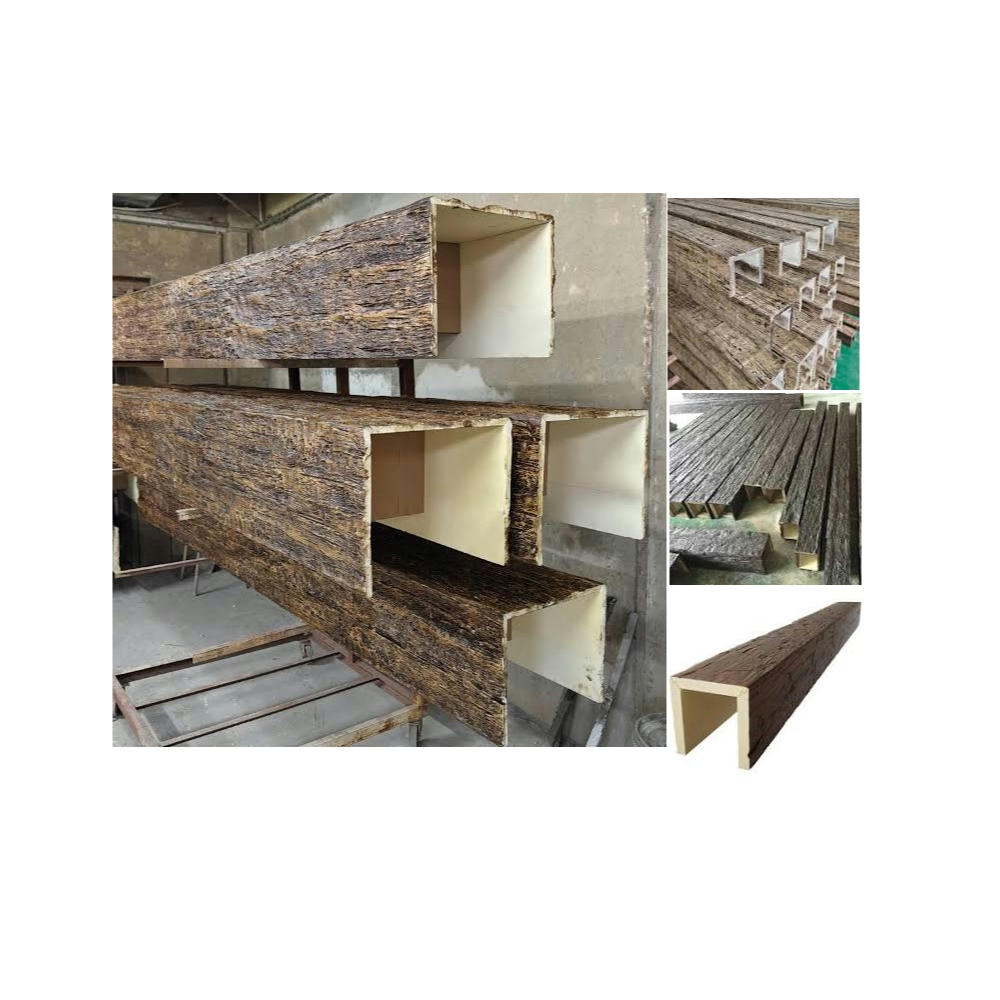
PU resin faux rafter tail accessories sidestep both options. They are pieces designed specifically to be attached to existing structures, whether those are real rafter ends, covered soffits, or flat fascia boards. They replicate the profile of traditional rafter tails with enough fidelity that most observers cannot tell the difference at a glance.
Why PU Resin Outperforms Real Timber for Decorative Trim
The material itself deserves careful consideration because it is doing a great deal more than just sitting there looking pretty. Polyurethane resin, when formulated for architectural use, produces a product that is remarkably stable under a wide range of environmental conditions. Unlike natural wood, it does not absorb moisture, which means it will not swell, warp, or rot when exposed to rain, humidity, or condensation. This makes it particularly well suited for exterior applications where real timber would require regular sealing, staining, or painting to maintain its appearance.
The density of quality PU resin trim pieces also means they hold detail extremely well. Intricate curves, fine grain textures, and subtle surface variations that might be worn away over time on natural wood are reproduced consistently and maintained indefinitely. Each piece emerges from the mold or carving process with the same crispness as every other piece in the production run, which simplifies both installation and future replacement.
Weight is perhaps the most immediately practical advantage. A single real wood rafter tail, depending on its size, might weigh several kilograms. The PU resin equivalent weighs a fraction of that, which means a single worker can handle installation without mechanical assistance, and existing structures do not need to be reinforced to support the added load. This opens up retrofitting possibilities that would simply not be feasible with genuine timber replacements.
Design Applications Across Residential and Commercial Projects
The versatility of these accessories becomes apparent when you look at the range of projects where they are being used. In residential settings, they appear most frequently in porch and lanai constructions in warm climates, where open-beam ceilings and extended roof overhangs create natural opportunities for decorative rafter tail detail. A homeowner in Florida building a covered patio can attach these PU resin pieces to the ends of their structural rafters and immediately achieve the appearance of a hand-crafted timber frame porch without any of the structural engineering or pest management concerns that accompany real wood.

In mountain cabins and lodge-style homes, the connection to natural materials is intentional and thematic. Faux rafter tails in darker, more weathered finishes complement stone fireplace surrounds, stacked log walls, and other rustic elements that define the interior design. The ceiling or overhang no longer looks like an afterthought but becomes part of a cohesive design language.
Commercial applications are equally diverse. Brewpubs and restaurants with exposed ceiling structures use rafter tail accessories to reinforce a craft, artisanal aesthetic. boutique hotels pursuing a "modern farmhouse" identity install them in lobby areas, dining rooms, and outdoor dining spaces. The pieces function as props for a design narrative, communicating warmth and handcraft even within buildings that are otherwise contemporary in their engineering and amenities.
Installation Best Practices for Professional Results
Getting the best results from PU resin rafter tail accessories requires attention to a few practical details, starting with surface preparation. The mounting surface should be clean, dry, and structurally sound. Any loose paint, caulk, or debris should be removed before positioning. For exterior applications, applying a compatible primer to both the mounting surface and the back of the accessory improves adhesion significantly.
Alignment is critical, especially when installing a series of tails along a long fascia or soffit line. A chalk line or laser level reference will keep the row straight and prevent the kind of cumulative drift that becomes obvious from the ground. Most installers work from the center outward, securing the center piece first and then moving to the ends, which makes it easier to distribute any minor spacing adjustments evenly.
Adhesive choice matters. Construction-grade adhesive formulated for polyurethane and composite materials provides the strongest bond. In high-wind or seismic zones, mechanical fasteners can supplement the adhesive, with screws driven through predrilled pilot holes and countersunk below the surface. The screw holes can then be filled with a color-matched wood filler if the finish is textured to resemble natural grain.
Finish Selection and Maintenance Considerations
One of the most appealing aspects of PU resin rafter tail accessories is the range of finishes available directly from the manufacturer. Some customers order pieces in a primed white finish and apply site-applied paint to match their trim color scheme. Others select from factory-applied finishes that mimic popular wood species, including oak, pine, walnut, and weathered grey barnwood. The factory finishes are typically more durable than site-applied paint because they are applied under controlled conditions with products formulated for UV stability.
For exterior installations, periodic cleaning with mild soap and water is generally all the maintenance required. The material does not require sealing or repainting under normal conditions, which represents a meaningful ongoing cost saving compared to natural wood. In coastal environments where salt air accelerates the degradation of many building materials, PU resin accessories often outlast adjacent wooden trim elements by many years.
Sourcing the Right Accessories for Your Project
When evaluating suppliers for PU resin rafter tail accessories, look for manufacturers who offer both standard profiles and custom tooling capabilities. Standard profiles cover the most common rafter tail shapes found in residential construction, including squared, tapered, and bracket-style cuts. Custom tooling becomes necessary when a project calls for a specific historical profile or a unique dimensional requirement that does not match any catalog item.
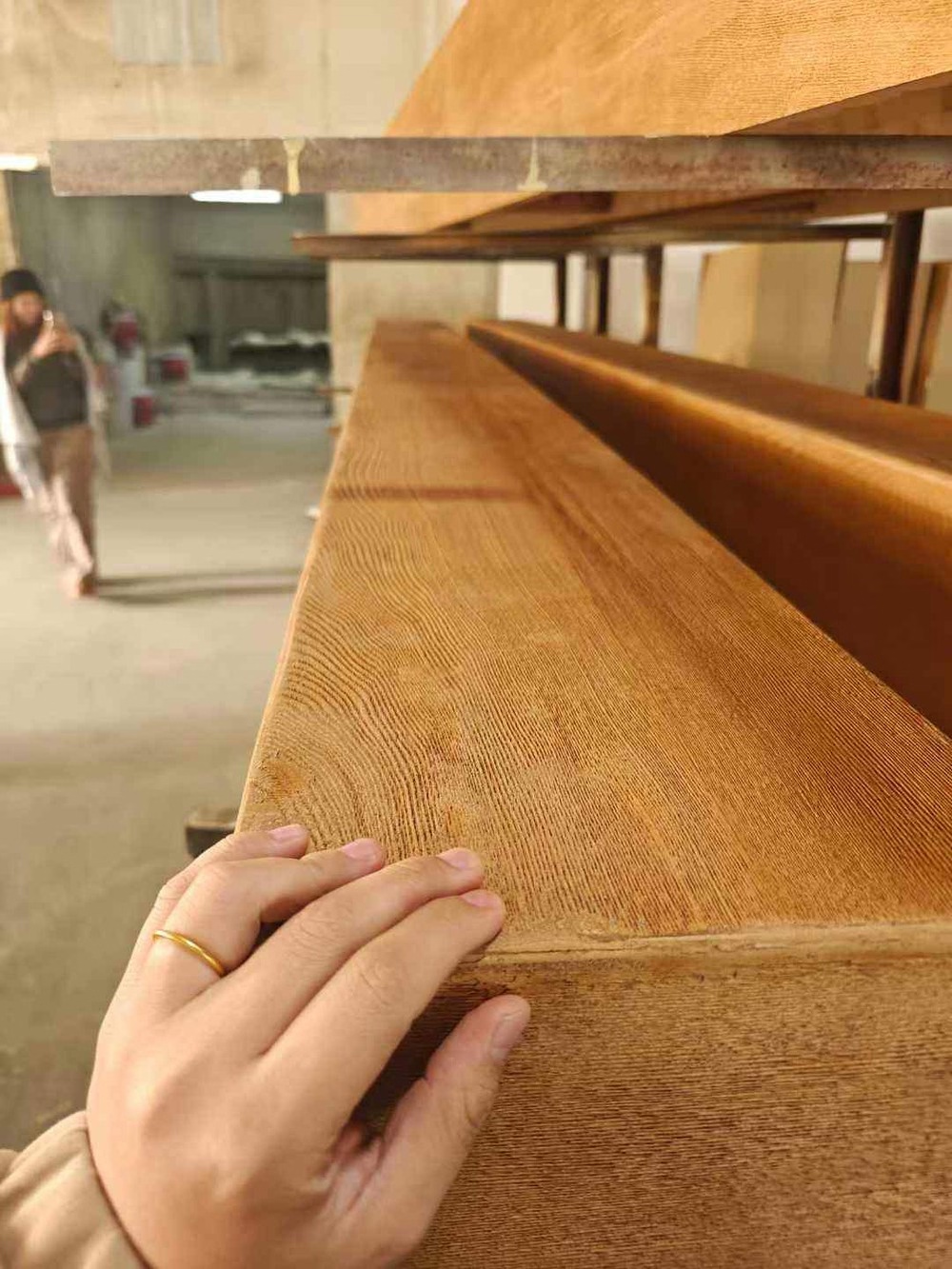
Request samples before committing to a large order. Physical samples allow you to evaluate surface texture quality, finish color accuracy, and dimensional consistency. A reputable supplier will have no problem providing one or two sample pieces for assessment. Be wary of suppliers whose catalog images look inconsistent in quality or whose pricing seems significantly below market norms, as this can indicate the use of lower-grade resin formulations that may not perform well over time.
The global market for these accessories has grown substantially as designers and builders become more familiar with the material category. Whether you are equipping a single residential porch or specifying trim packages for a multi-unit development, working with a supplier who understands international logistics and can provide consistent documentation for customs clearance will make the procurement process far smoother.
Technical References
ASTM standards cited in every specification
Test Data
Lab results from internal testing program
Updated 2026
Reviewed against current product specs


