There is a persistent misconception that decorative faux beams are exclusively an interior product. Walk through any planned community or resort property and you will find covered outdoor spaces, entry porticos, and garden pavilions that would benefit enormously from the architectural richness that decorative beams provide, yet the ceilings remain bare, plain, and architecturally anonymous. The reason is often uncertainty about how materials will perform under outdoor conditions.
That uncertainty is understandable with real wood, which requires ongoing maintenance to resist moisture, insects, and UV damage in exterior environments. But purely aesthetic non-load-bearing exterior PU faux wood decorative beams have been specifically engineered to thrive in these conditions, making outdoor beam installations a practical and beautiful option for any project.
Why Exterior Beams Present Unique Challenges
Outdoor ceiling installations face a combination of stresses that interior applications simply do not encounter to the same degree. Direct and reflected solar radiation can heat beam surfaces to temperatures that cause expansion and, in some materials, surface degradation. Rain, humidity, and condensation create ongoing moisture exposure that promotes rot and mildew in organic materials. Wind-borne salt, in coastal environments, accelerates corrosion of metal fasteners and can degrade the surface of many building materials. Insects, particularly carpenter ants and various wood-boring beetles, target exposed wooden elements in outdoor settings.
These challenges do not make exterior beam installations impossible; they simply require selecting materials that are designed to withstand them. Pure polyurethane resin decorative beams are exactly such a material. They do not absorb moisture, they resist insect attack because they contain no cellulose fibers, and UV-resistant additives in quality formulations prevent surface chalking and color fade over extended exposure periods.
Design Applications for Exterior PU Beams
The most common setting for exterior PU decorative beams is the covered porch. Whether attached to the front of a home or wrapping around the back as part of an outdoor living area, a porch ceiling framed with timber-look beams creates an immediate sense of shelter and craftsmanship. The beams provide visual structure that helps define the porch as a distinct outdoor room, separate from the lawn or garden beyond.
In warm climates, open-air pavilions and tiki bars benefit from beam installations that add tropical architectural character. Beams in darker, weathered finishes evoke the appearance of aged timber that has been exposed to the elements for years, which is entirely appropriate for this casual outdoor aesthetic. The beams also serve a practical function in these applications, supporting decorative elements such as hanging lanterns, fan blades, or thatch-style roofing materials.
Entry porticos and porte-cochères present another opportunity. The covered entrance to a home or commercial building sets the tone for the entire property. Beams across the ceiling of a portico reinforce the sense of arrival and transition, marking the threshold between outside and inside. In commercial applications such as hotel entrances and restaurant patios, this architectural moment is as important as any interior space in establishing brand identity and guest experience.

Matching Exterior Beams to Different Architectural Styles
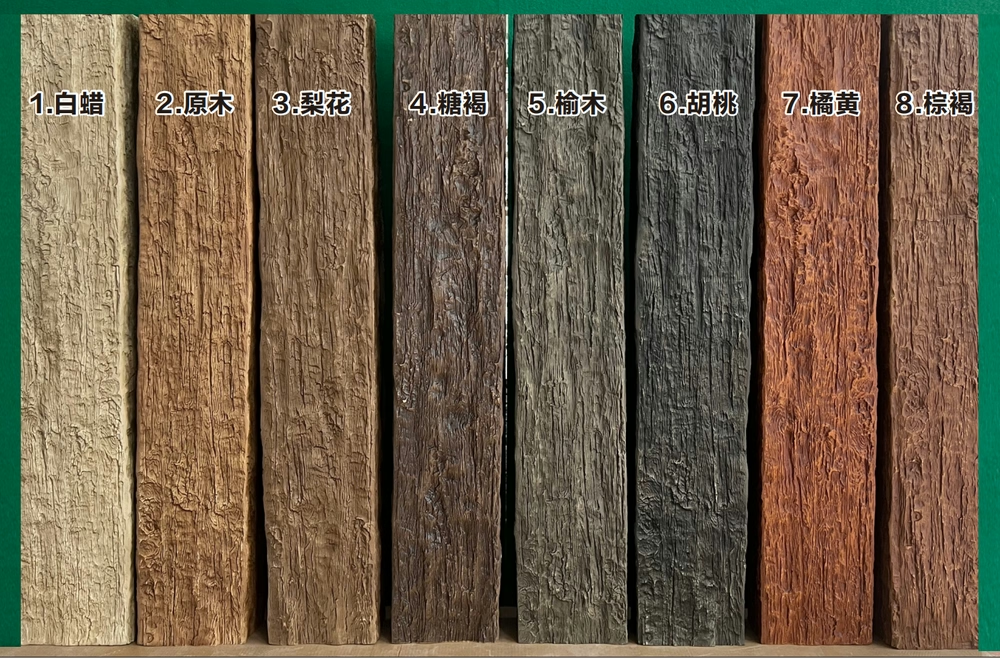
The flexibility of PU faux wood beams in terms of profile shape, surface texture, and finish color means that they can be adapted to complement virtually any exterior architectural style. A contemporary home with clean lines and a minimal material palette can receive beams with smooth surfaces and matte-finished wood tones that echo the home's horizontal siding or stucco without introducing visual clutter.
A Craftsman-style home, with its emphasis on handcraft and natural materials, responds well to beams with more pronounced grain textures and finishes that reference warm-toned native woods such as Douglas fir or redwood. The beams should feel like they belong to the same material world as the home's porch columns, railings, and window trim.
For Mediterranean and Spanish Colonial Revival homes, beams in a lighter, more golden tone, possibly with a subtle whitewash effect, complement the stucco walls and clay tile roofs that define these styles. The beam profile should reflect the broader eave overhangs typical of these styles, with wider flanges and deeper webs than would be appropriate for a Craftsman or contemporary design.
Fastening Systems for Exterior Installations
Secure fastening of exterior beams requires more consideration than interior installations because of the additional environmental loads, particularly wind, that exterior elements must resist. The primary fastening method for exterior PU beams is a combination of construction adhesive and mechanical fasteners, with the specific fastener type and spacing determined by the beam dimensions and local wind load requirements.
Adhesive selection is critical for exterior applications. The adhesive must maintain its bond strength through temperature cycles, moisture exposure, and UV exposure. Polyurethane construction adhesives are generally well suited to this application because they are inherently resistant to moisture and maintain flexibility through temperature extremes, which allows them to absorb minor differential movement without cracking.
Mechanical fasteners should be corrosion-resistant. In coastal environments, stainless steel screws are the preferred choice, while in inland applications, coated screws rated for exterior use provide adequate corrosion resistance at a lower cost. Fasteners should be driven through pilot holes to prevent the PU material from splitting, and the holes should be countersunk so that the screw head is recessed below the beam surface. The screw holes can be filled with a color-matched flexible filler that remains intact through temperature cycling.

Maintenance and Long-Term Care
One of the most appealing aspects of exterior PU decorative beams is the minimal maintenance they require compared to real wood. An annual inspection and cleaning is generally sufficient for most installations. The cleaning process involves rinsing the beam surfaces with a garden hose to remove accumulated dust and debris, followed by gentle scrubbing with a soft brush and mild soap solution to address any biological growth such as mildew or algae.
For beams in areas with heavy tree coverage or nearby landscaping, more frequent rinsing may be needed to prevent the buildup of organic material that can promote surface staining. In general, however, the non-porous surface of PU resin means that dirt and biological material do not penetrate the material and can be removed without aggressive scrubbing or chemical cleaners.
Any damaged areas, such as gouges from impact or chips at corners, should be repaired promptly to prevent moisture from reaching the underlying material through the damaged area. A two-part epoxy filler or a compatible flexible sealant can fill the damaged area, which can then be sanded flush and touched up with a matching paint or finish. Having a small supply of matching finish for touch-up work is a practical investment for any exterior beam installation.
Technical References
ASTM standards cited in every specification
Test Data
Lab results from internal testing program
Updated 2026
Reviewed against current product specs

