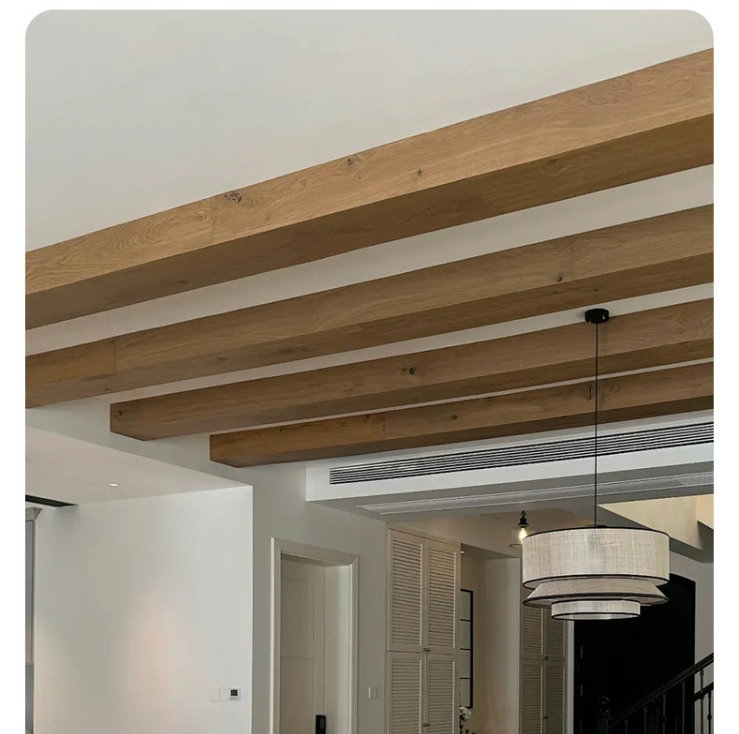
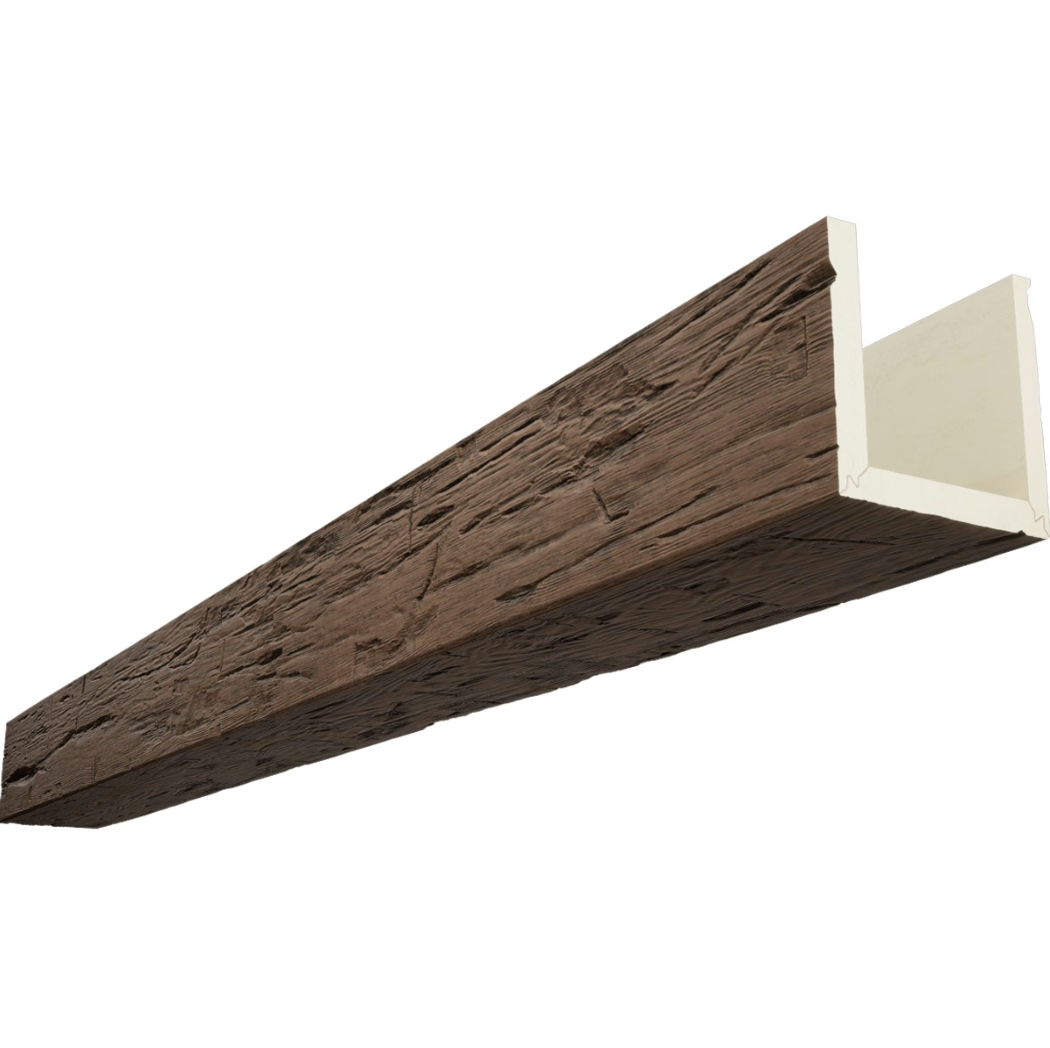
Choosing decorative beams for a project, whether it is a single residential living room or a multi-property commercial development, involves making commitments of both money and design intent. The beams you select will be visible for years, and any quality problems discovered after installation can be expensive and disruptive to remediate. A supplier that stands behind their products with meaningful quality checking and a genuine customer satisfaction guarantee changes the risk calculus significantly, making it easier to commit to a purchase with confidence.
This article explains what separates genuine quality assurance from marketing language, what protection a solid guarantee actually provides, and how to evaluate suppliers based on their commitment to product quality rather than just their catalog of finishes.
What Quality Checking Actually Involves
The phrase "quality checked" can mean many different things depending on how seriously the supplier takes it. At the most basic level, quality checking involves examining finished products before they are shipped to detect defects such as surface blemishes, dimensional inconsistencies, and damaged components. A supplier that performs only this minimum level of inspection is doing something, but it falls short of what buyers need for high-value projects.
More rigorous quality checking follows defined protocols that cover multiple dimensions of product quality. Dimensional inspection verifies that beam profiles, wall thicknesses, and lengths fall within specified tolerances. Surface quality inspection checks for voids, air bubbles, delamination, surface scratches, and finish inconsistencies. Structural testing, where applicable, verifies that the beam can withstand normal handling and installation forces without cracking or permanent deformation.
Packaging inspection is an often-overlooked component of quality checking that directly affects the condition in which products arrive at the job site. Beams that are poorly packaged can be damaged in transit despite being defect-free when they left the factory. A supplier that inspects packaging integrity and uses appropriate protective materials is providing an additional layer of assurance.
Weight verification is a practical check that catches formulation problems. If a beam is noticeably lighter or heavier than expected, it may indicate a density deviation that could affect performance. Consistent weight across a production run is a reliable indicator of consistent foam formulation.
Understanding Guarantee Coverage
A guarantee is only as good as its terms. Before relying on any guarantee, read the specific language carefully and understand what it covers, what conditions apply, and how claims are handled.
A meaningful product guarantee for decorative beams should cover defects in materials and workmanship for a defined period, typically ranging from one year for basic products to five years or more for premium lines. The guarantee should specify what constitutes a defect, how the supplier will remedy defective products (replacement, repair, or refund), and what the buyer is responsible for in terms of reporting the defect and providing evidence.
Be cautious of guarantees that cover only replacement shipping but not the cost of removing and reinstalling defective products. In a ceiling beam installation, the cost of labor to remove and replace a defective beam can far exceed the cost of the beam itself, and a guarantee that leaves the buyer holding this cost provides less protection than it appears to.
The most customer-focused guarantees include provisions for partial or complete refund if the buyer is dissatisfied with the product for reasons unrelated to defect, such as a finish that looks different in person than it did in catalog images. This level of coverage reflects confidence in the product and respect for the buyer's investment.
The Role of Sample Verification
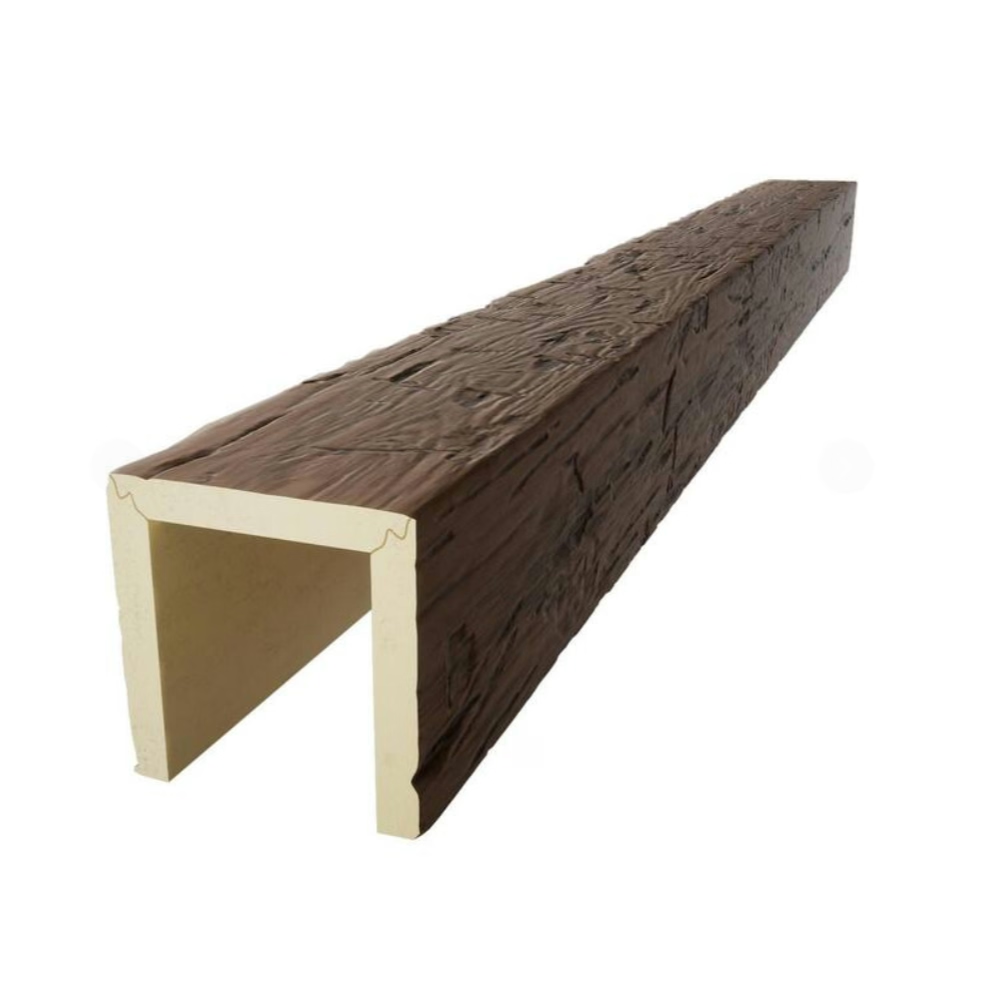
No guarantee substitutes for seeing and touching the actual product before committing to a large order. Requesting physical samples is one of the most effective risk-mitigation steps a buyer can take, and reputable suppliers expect and encourage this.
Samples allow you to evaluate surface texture quality directly, running your fingers across the grain to assess its depth and realism. You can check the dimensional accuracy of the profile against specifications and compare the finish color against your project's material palette under the lighting conditions present in the actual installation space.
A sample also provides an opportunity to test how the beam responds to common site conditions. Cutting a sample with a standard wood-cutting blade reveals whether the cut edge is clean or prone to chipping. Testing how adhesive bonds to the back surface of the sample confirms compatibility with your chosen mounting adhesive. Exposing the sample to water for a few hours demonstrates whether the material absorbs moisture or remains stable.
A supplier that provides samples readily and without excessive handling charges is demonstrating confidence in their product. A supplier that is reluctant to provide samples, or that charges inflated fees that effectively discourage sampling, may have something to hide about the quality of their production.
Evaluating Supplier Track Record
A guarantee is ultimately backed by the supplier's financial stability and commitment to remaining in business. A supplier with a strong track record, multiple years of operation, and a documented history of honoring guarantees provides more reliable protection than a new entrant to the market offering generous terms.
Look for suppliers with verifiable customer references, particularly from projects similar in scale and application to yours. A supplier that has successfully supplied decorative beams for commercial projects, hospitality installations, or large-scale residential developments has demonstrated the ability to manage quality across multiple production runs and to handle the logistics of larger orders.
Responsiveness is another indicator of supplier reliability. A supplier that responds promptly to inquiry emails, provides detailed technical information, and offers practical installation guidance is demonstrating the kind of ongoing support that becomes critical when issues arise during a project. A supplier that is slow to respond during the sales process is likely to be equally slow when support is needed after purchase.
Building a Relationship Beyond the First Order
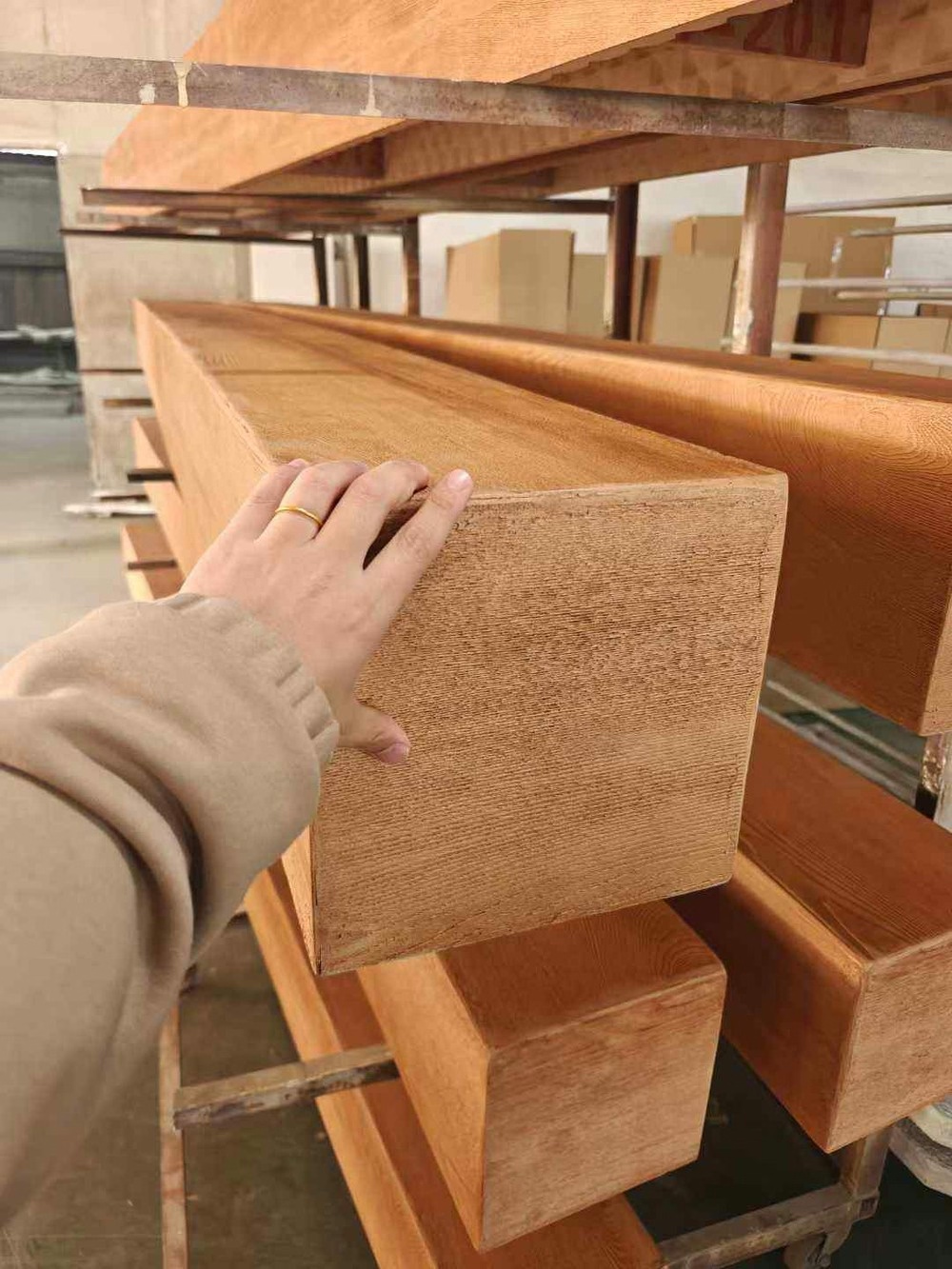
The best buyer-supplier relationships in the decorative beam market extend beyond transactional purchases. A supplier that understands your project requirements, design aesthetic, and installation context becomes a more valuable partner over time. They can anticipate your needs, recommend appropriate products, and provide custom solutions when your requirements deviate from catalog options.
Providing feedback after each project helps the supplier improve their products and service. If a finish did not match expectations, describe the discrepancy specifically so the supplier can adjust their color matching process. If an installation technique worked particularly well, share it so the supplier can pass the knowledge on to other customers. This kind of collaborative relationship turns a commodity purchase into a design partnership that improves outcomes on both sides.
Technical References
ASTM standards cited in every specification
Test Data
Lab results from internal testing program
Updated 2026
Reviewed against current product specs