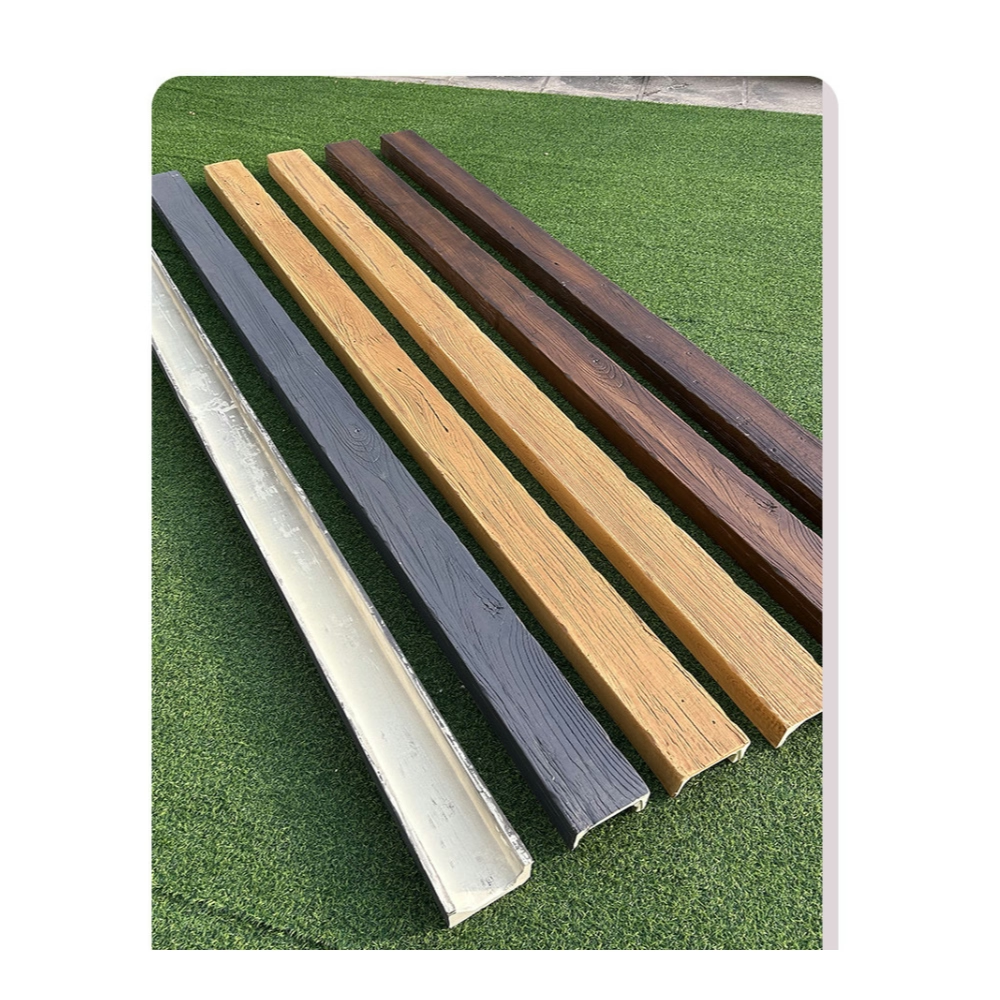
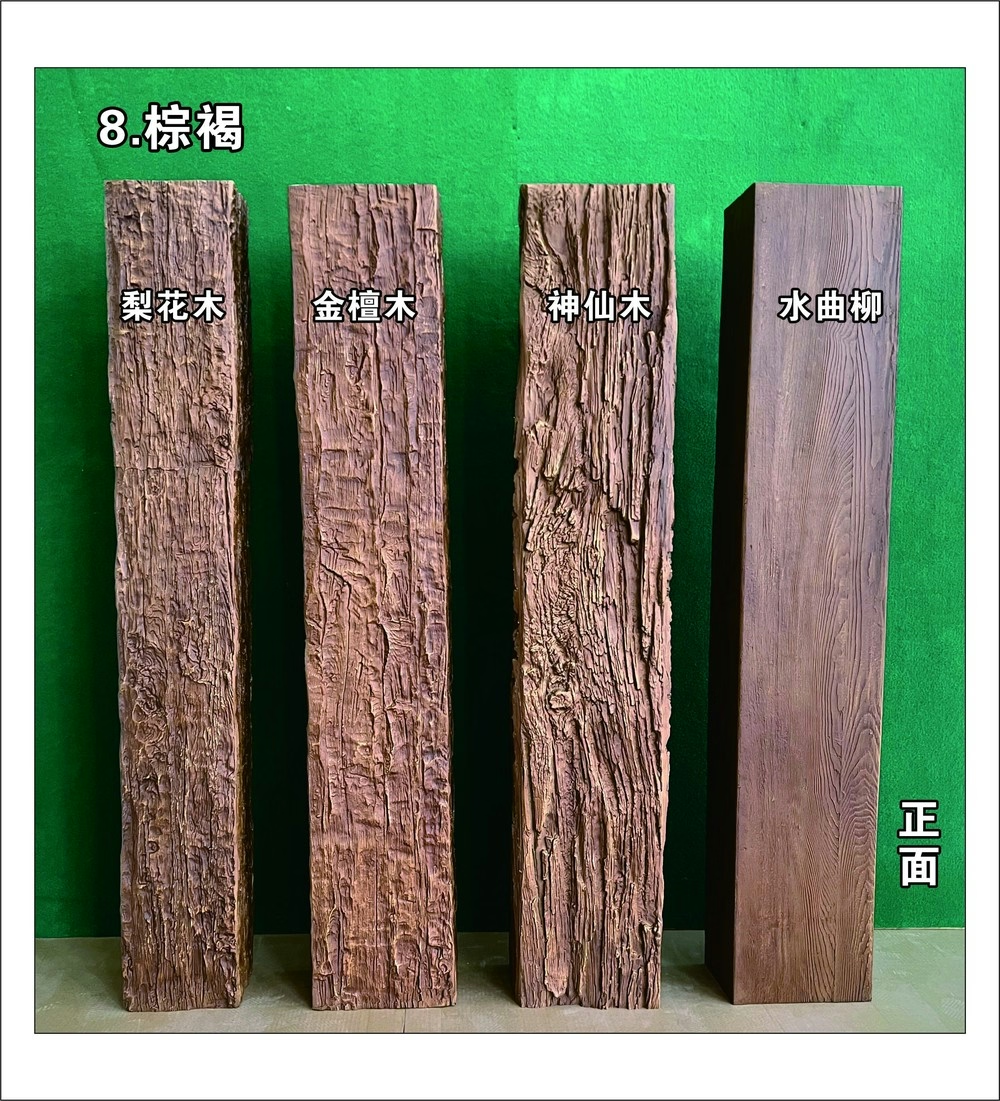
Complex beam installations often require joining multiple beam sections to achieve desired spans or create intricate ceiling configurations. Traditional joinery methods demand precision cutting, careful fitting, and sometimes specialized woodworking skills that slow installation and introduce opportunities for error. Quick-connect splicing accessories streamline this process, providing engineered solutions that enable rapid beam assembly while maintaining structural integrity and clean appearance at joints.
The development of quick-connect accessories responds to real field challenges encountered during beam installations. Projects requiring beams longer than shipping capacities, ceiling designs calling for angular connections, and situations where on-site assembly is more practical than factory production all benefit from these connection solutions. The accessories have been refined through feedback from professional installers who identified specific needs that generic hardware could not address.
Connector Types and Their Applications
Straight splice connectors join beam ends to extend overall length, creating seamless connections that maintain beam appearance across the joint. These connectors typically feature a structural spine that bridges the connection while concealed flanges allow attachment to beam interiors. Once installed and finished, the joint becomes invisible, creating the appearance of a single continuous beam spanning the combined length.
Corner connectors enable beams to meet at angles, supporting L-shaped, T-shaped, and more complex configurations. The specific connector geometry varies based on the angles involved, with 45-degree and 90-degree options covering the most common configurations. These connectors provide secure mechanical connection while allowing finish materials to create clean transitions at the joint.
T-junction connectors support configurations where beams cross or branch, common in grid patterns and coffered ceiling designs. The connector must accommodate multiple beam directions while maintaining structural continuity in each direction. Engineering of these connectors addresses the load transfer requirements that occur when beam intersections support additional weight from crossing members.
Plate connectors provide reinforcement at high-stress locations including mid-span supports and beam intersections. These accessories add material thickness and bearing surface precisely where structural demands are greatest, preventing the stress concentrations that could compromise connection integrity over time. Strategic use of plate connectors extends the service life of complex beam assemblies.

Installation Techniques for Strong Connections
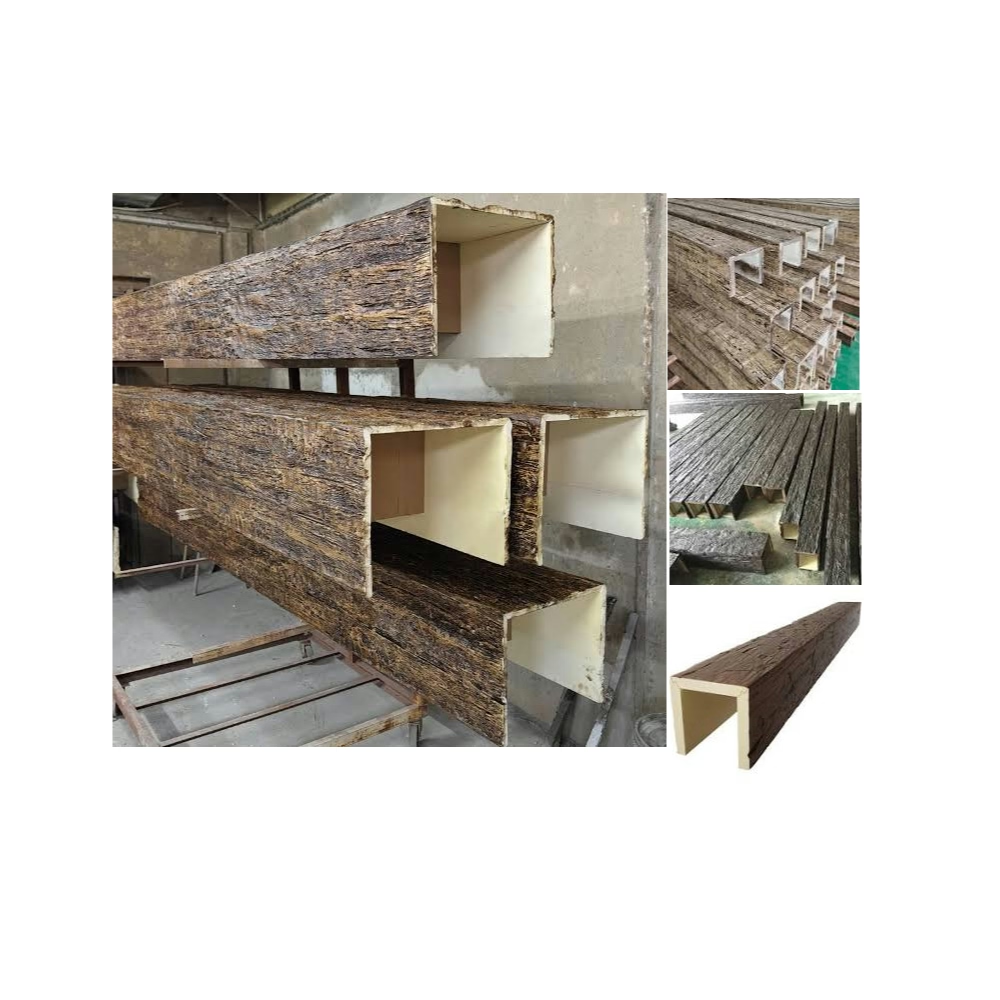
Surface preparation at connection points ensures that accessories achieve full bond strength. The beam interior should be clean, dry, and free from any contamination that might compromise adhesive contact. Light sanding of smooth interior surfaces improves adhesion, while any damaged areas should be repaired before accessory installation. Taking time with preparation prevents connection failures that would require disassembly and repair.
Dry fitting of connectors before adhesive application confirms that components align properly and that the assembled configuration matches expectations. This practice fitting catches problems before materials are committed, when correction is still simple. Any trimming or adjustment identified during dry fitting should be completed before proceeding to adhesive application.
Adhesive selection appropriate for the materials involved ensures durable connections. Construction adhesive formulated for polyurethane provides the bond characteristics needed for secure attachment. The adhesive should be applied generously to both the connector surface and the beam interior, creating complete coverage that eliminates any gaps where stress concentrations might develop.
Clamping during cure maintains alignment and contact pressure that affect final connection strength. The required clamping duration varies by adhesive product, with typical requirements ranging from several hours to overnight. The clamping approach should apply even pressure across the connection without deforming beam surfaces. Removing clamps before adhesive fully cures risks connection weakness.
Achieving Professional Results
Finish application at connections requires the same attention as beam surfaces. The goal is invisible joints where beams appear to be continuous. This requires careful application of finish materials that match the factory-applied coating, with attention to color consistency and texture uniformity. Practice on scrap material helps develop technique before working on actual installation surfaces.
Sealant at joints provides additional protection against moisture infiltration that might compromise connection integrity over time. A thin bead of paintable caulk at the joint creates a weatherproof barrier while remaining flexible to accommodate thermal movement. This sealing step proves particularly important in humid environments or exterior applications where moisture exposure is likely.
Quality verification of completed connections confirms that assembly has achieved intended results. Visual inspection checks for gaps, misalignment, or other appearance issues. Physical testing applies gentle pressure to confirm that connections are secure. Any concerns identified should be addressed before the installation progresses further, as problems discovered later are more difficult to correct.
Documentation of connection locations and types provides reference information for future maintenance or modifications. Photographs of complex connections can assist in future work that might involve the beam assembly. This documentation investment pays dividends if modifications become necessary years after the original installation.
Quick-connect splicing accessories have transformed the approach to complex beam installations, enabling configurations that would otherwise require specialized expertise and extensive time. The engineered solutions provide reliable connections that achieve both structural performance and clean appearance, supporting the design ambitions that motivate beam installations while simplifying the technical demands of assembly.

Technical References
ASTM standards cited in every specification
Test Data
Lab results from internal testing program
Updated 2026
Reviewed against current product specs