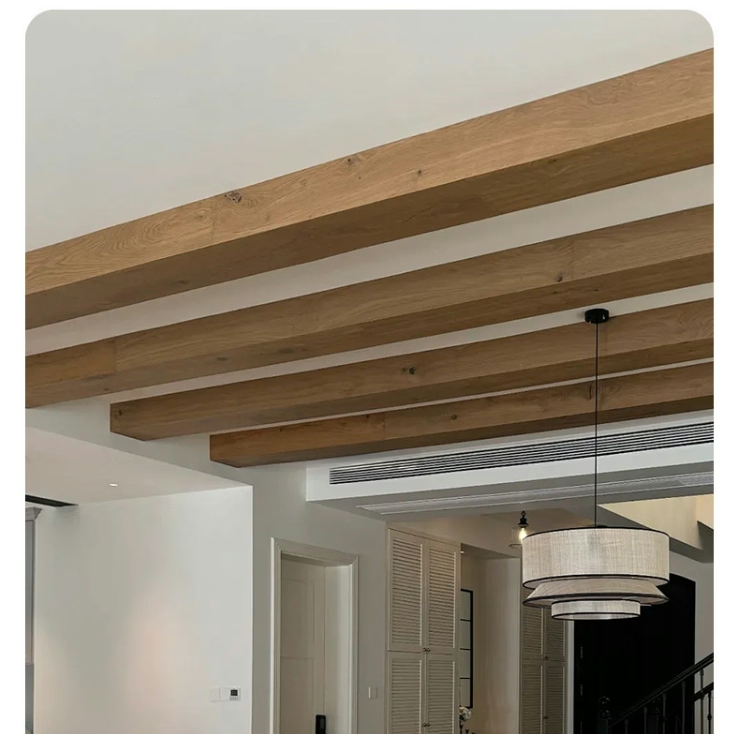
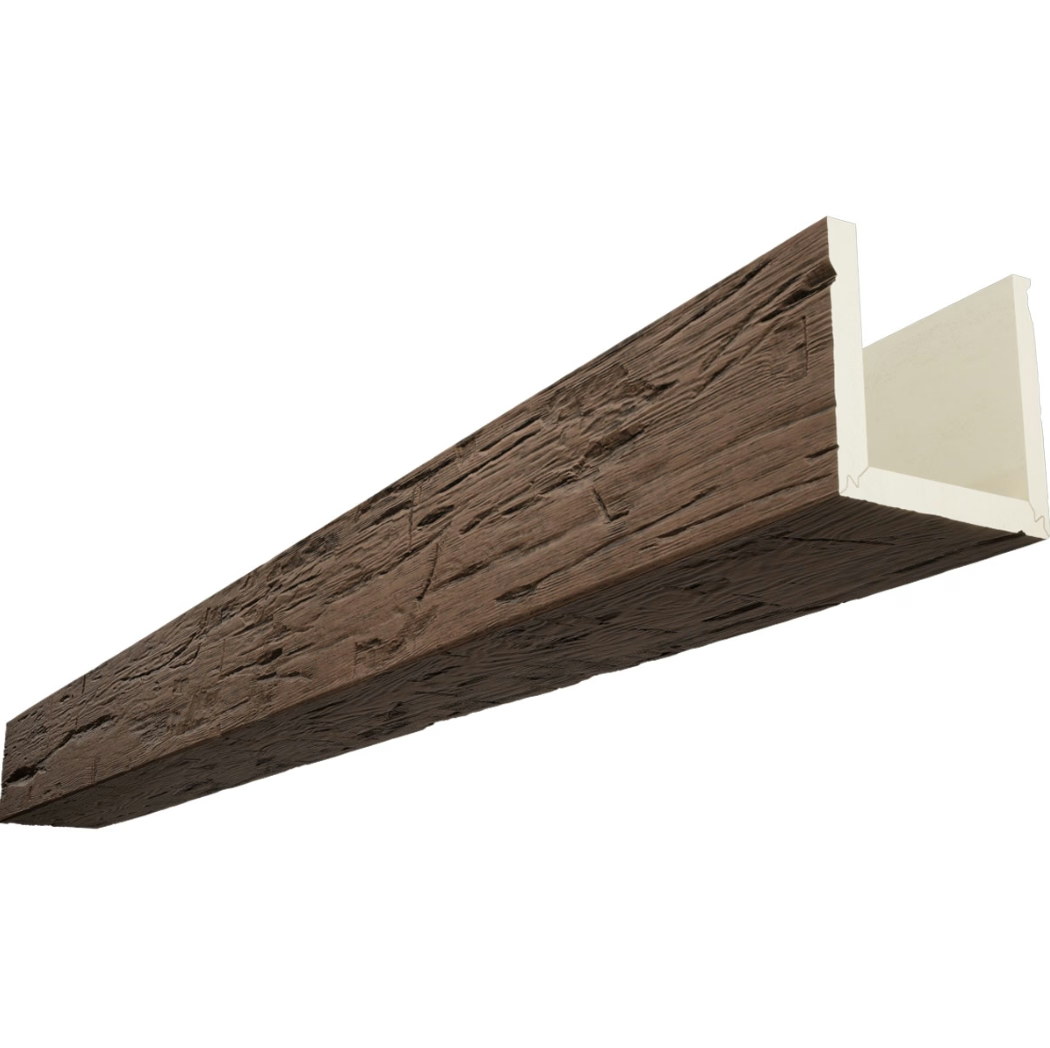
A project in Singapore needs ceiling beams that match a design approved in New York. A boutique hotel chain headquartered in London is specifying a consistent beam profile across properties in Dubai, Lisbon, and Cape Town. A custom homebuilder in Vancouver has selected a non-standard beam depth that no domestic supplier carries. In each of these scenarios, the challenge is not design or quality but logistics: how do you get the right beams to the right place at the right time?
Modern global supply chains have matured to the point where international delivery of custom and standard PU faux beams is not just possible but practical for projects of almost any scale. Understanding how these logistics work, and how to navigate them efficiently, is a valuable skill for anyone involved in specifying or procuring decorative building materials.
The International Logistics Landscape for Building Materials
The global trade in decorative building materials has grown substantially over the past two decades, driven by the expansion of international hotel and hospitality brands, the globalization of architectural practices, and the increasing availability of quality-manufactured products from specialist producers worldwide. This growth has produced logistics networks that are far more sophisticated than those available a generation ago.
For PU faux beams, the primary logistics challenge is their length. Unlike compact products that can be shipped in standard boxes, beams often measure three meters or more, requiring specialized packaging and freight arrangements. The most common shipping methods are ocean freight for larger orders where transit time is less critical, and air freight for urgent requirements or smaller shipments where speed justifies the higher cost.
Understanding Incoterms, the internationally recognized trade terms that define the responsibilities of buyers and sellers in international transactions, is essential for anyone procuring beams from overseas. The most commonly used Incoterms for beam shipments are CIF (Cost, Insurance, and Freight), where the seller handles shipping and insurance to the destination port, and DAP (Delivered at Place), where the seller delivers to the buyer's specified location including all shipping costs. Clear communication about which Incoterm applies prevents misunderstandings about who is responsible for shipping costs, insurance, and customs duties at each stage of the journey.
Lead Times: What to Expect and How to Plan
Lead time is one of the most frequently underestimated factors in international beam procurement. It encompasses not just production time but also order processing, quality inspection, packaging, and shipping transit. A realistic total lead time for a standard catalog beam from an overseas manufacturer is typically four to eight weeks from order confirmation to arrival at the destination port, depending on the shipping method selected.
Custom profile beams require additional time for tooling development, which can add two to six weeks to the production phase depending on the complexity of the profile and the manufacturer's current tooling schedule. Some manufacturers maintain libraries of existing tooling that can be modified for new profiles, which can reduce custom tooling lead times significantly compared to starting from a blank tool.
Planning backwards from a required installation date is the most reliable way to avoid logistical crises. Identify the installation date, subtract the average installation time for the beam scope, subtract a buffer period for inspection and any repairs or touch-ups, subtract the expected shipping transit time, and subtract the production and processing time. The resulting date is when the order must be confirmed with the supplier. Building in a buffer of one to two weeks beyond the calculated minimum is prudent, as delays can occur at any stage of the process.

Customs, Duties, and Import Regulations
Every country has its own customs regulations governing the import of manufactured building materials, and understanding these regulations before placing an order prevents costly surprises and delays.
In most countries, PU decorative beams are classified under the Harmonized Tariff Schedule under categories related to plastic building materials or architectural decorations. The applicable duty rate varies by country and by the specific product classification, and it can significantly affect the total cost of imported beams compared to domestically sourced alternatives.
Some countries have free trade agreements that reduce or eliminate duties on building materials imported from partner countries. Verifying the applicable trade agreement and ensuring that the shipment qualifies for preferential treatment under that agreement can produce meaningful savings. The supplier can often assist by providing the correct certificate of origin and commercial invoice documentation required to claim treaty benefits.
Product safety and fire rating regulations vary considerably between countries. Some jurisdictions require building materials to meet specific fire performance standards before they can be installed in certain building types. If the project is subject to such regulations, confirm that the beam products carry appropriate certifications or test reports from an accredited laboratory.
Packaging for International Transit
The packaging used for international beam shipments must protect the products through multiple handling operations, potential container consolidation and deconsolidation, and the vibration and motion of ocean or air transport. Beams are particularly vulnerable to impact damage at corners and edges, and their length makes them susceptible to bending if not properly supported within the packaging.
Quality international shipments use a combination of internal bracing, corner protection, and external crating. Individual beams or small groups are wrapped in protective foam or cardboard, positioned within a wooden crate with internal blocking to prevent movement, and secured with strapping or banding. The crate is labeled with handling instructions, project information, and a packing list that matches the contents to the commercial invoice.
Buyers should inspect shipments immediately upon arrival and document any visible damage before signing the delivery receipt. This documentation is essential for filing claims with the carrier or the supplier if damage is discovered during unpacking. Taking photographs of the packaging and products before removing them from the crate provides a record of the condition at arrival.
Strategies for Managing International Procurement Risk
Several strategies can reduce the risks associated with international beam procurement. Consolidating orders to reduce the number of shipments, even if it means storing materials temporarily, reduces per-unit shipping costs and simplifies logistics management.
Working with suppliers that have established relationships with freight forwarders specializing in building materials ensures that the logistics partner understands the handling requirements for long, fragile architectural components. A freight forwarder experienced with decorative beams will know how to route shipments to minimize transit time and handling, and will be familiar with the documentation requirements for the relevant trade lanes.
For projects with critical timelines, air freight of a partial order to cover the initial installation phases while the ocean shipment is in transit can keep the project on schedule. This approach involves paying premium shipping rates for the urgent portion but avoids the total project delay that would result from waiting for the complete ocean shipment.
Finally, maintaining clear and documented communication with the supplier throughout the production and shipping process provides early warning of any issues that might affect delivery timing. A supplier that provides regular production updates, photographs of packed shipments, and proactive notification of any delays is a partner worth keeping.
Technical References
ASTM standards cited in every specification
Test Data
Lab results from internal testing program
Updated 2026
Reviewed against current product specs