The desire to refresh a room often collides with the reality of renovation logistics. Moving furniture, scheduling contractors, enduring dust and noise, and managing the disruption to daily life for weeks on end can turn what should be an exciting creative project into a source of stress. Yet the appetite for visual transformation remains strong. Homeowners and designers alike are looking for high-impact upgrades that do not require months of construction.
Easy-install PU faux beams have emerged as one of the most effective quick makeover solutions for interior spaces. In a single weekend, a pair of experienced installers can transform a plain ceiling from anonymous to architectural, from flat to dimensional, from forgettable to memorable.
Why Beams Work as a Makeover Tool
The effectiveness of beams as a makeover element stems from their ability to alter the visual perception of a room without changing its fundamental structure. A room with a featureless flat ceiling feels generically contemporary, regardless of how much care was taken with the furniture, lighting, and wall treatments. The same room with two or three well-proportioned beams crossing the ceiling immediately reads as designed, intentional, and architecturally considered.
This transformation operates through several visual mechanisms. Beams introduce scale reference points that help occupants understand the proportions of the room. They create visual zones that can make a large open space feel more intimate or a small room feel more interesting. They add texture that makes the ceiling plane active rather than passive, drawing the eye upward in a way that enhances the sense of volume and space.
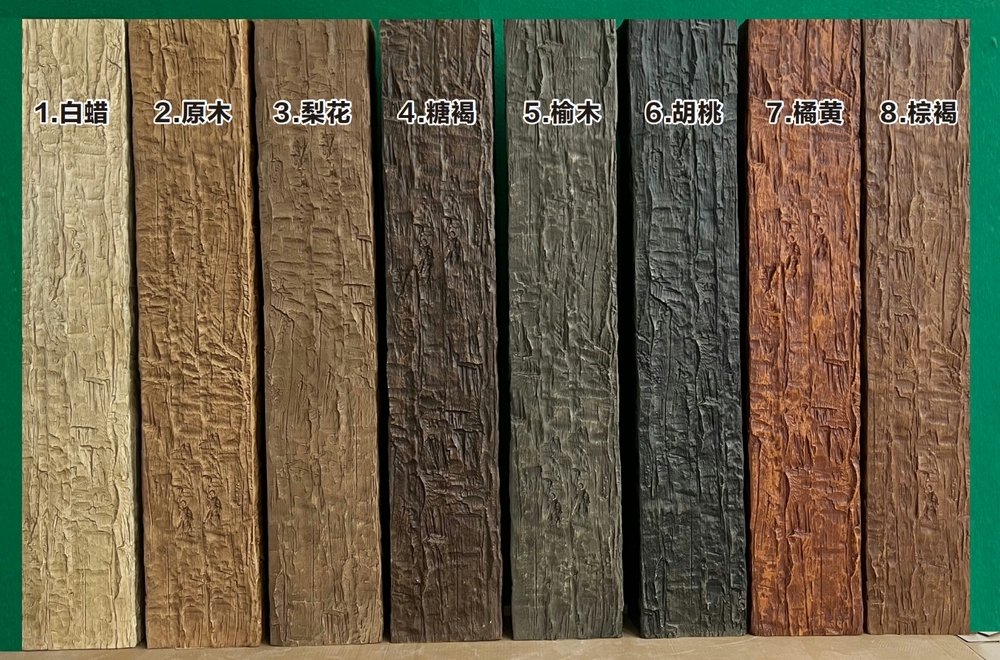
The material warmth of wood-grain finished beams also affects the emotional character of a room. Studies of interior environments consistently find that natural material cues, including wood textures, contribute to perceptions of comfort, welcome, and wellbeing. A room with timber-look beams feels warmer, both literally and emotionally, than the same room with a plain painted ceiling.
Common Quick Makeover Scenarios
The dining room is perhaps the most satisfying application for a quick beam makeover. Family gatherings, dinner parties, and holiday celebrations all集中 around the dining table, and a beautifully finished ceiling above it creates a sense of occasion that extends beyond the food and company. Two parallel beams running the length of the room, flanking a central light fixture or chandelier, can transform a builder-grade dining room into something that feels purpose-designed.
The living room benefits equally from beam installations. A single beam crossing the room perpendicular to the direction of the longest wall creates an immediate design statement that ties the seating arrangement together. The beam provides a visual anchor for the room's furniture layout, helping to define the primary seating zone even in open-plan spaces where the living area flows into the kitchen and dining space.
Kitchens, often the social center of a modern home, present an opportunity for beam installations that extend the material warmth of wooden cabinetry and countertops to the ceiling plane. Beams in a finish that complements the cabinet hardware and countertop material create a cohesive material narrative that ties the kitchen's design elements together.
Bedrooms can also benefit from beam installations, though the approach is typically more restrained. A single beam across the center of the room, or a pair of beams running parallel along the sides of the room, adds architectural interest without overwhelming the intimacy that bedroom design typically seeks to create.

Installation Speed: What to Expect
One of the most compelling advantages of PU faux beams for quick makeovers is the installation speed. A professional installer or an experienced DIYer can typically complete a standard residential beam installation at a rate of ten to twenty linear meters per day, depending on the complexity of the layout and whether the installation involves single beams or cross-beam patterns.
The actual installation process involves three main stages: measurement and layout, mounting, and finishing. Measurement and layout, which includes marking beam positions, checking for level, and verifying that mounting surfaces are clean and sound, typically takes thirty minutes to one hour for a typical room. Mounting, which involves applying adhesive to the beam, positioning it against the ceiling, and securing it with fasteners or bracing until the adhesive cures, takes fifteen to thirty minutes per beam depending on length and complexity. Finishing, which involves filling fastener holes, touching up the finish, and installing any end caps or trim pieces, takes one to three hours depending on the number of beams and the complexity of the finishing requirements.
For a room with four to six beams and a straightforward parallel layout, the total installation time from start to clean-up is typically four to eight hours. This means a motivated homeowner can complete the project over a single weekend, leaving time for the adhesive to cure overnight before removing temporary supports.
Cost Comparison: Beams vs. Other Ceiling Treatments
Comparing the cost of a beam installation to other ceiling treatments reveals why beams represent such compelling value as a makeover tool. A full ceiling renovation involving new drywall, taping, mudding, sanding, priming, and painting in a medium-sized room can easily cost several thousand dollars in materials and labor, and the disruption extends over multiple weeks.
A beam installation in the same room requires far fewer materials: the beams themselves, construction adhesive, fasteners, and touch-up finish. The labor, if done by the homeowner, is measured in hours rather than weeks. If contracted out, the installation labor for a standard residential beam project is typically a fraction of the cost of a full ceiling replacement.
Against other decorative ceiling treatments such as coffered ceiling panels, decorative medallions, or crown molding, beams offer a distinctive visual impact that these alternatives cannot match. Coffered panels add dimension but without the material warmth of wood texture. Medallions are decorative but localized. Crown molding adds presence to the wall-ceiling intersection but does not create the overhead dimensional interest that beams provide.
Maintaining the Results
A beam makeover is not a temporary fix. The results, properly installed, are permanent in the sense that the beams will remain in place and continue to look excellent for years without intervention. Unlike temporary decorative elements that require seasonal refreshing or periodic replacement, a well-installed beam system maintains its appearance indefinitely.
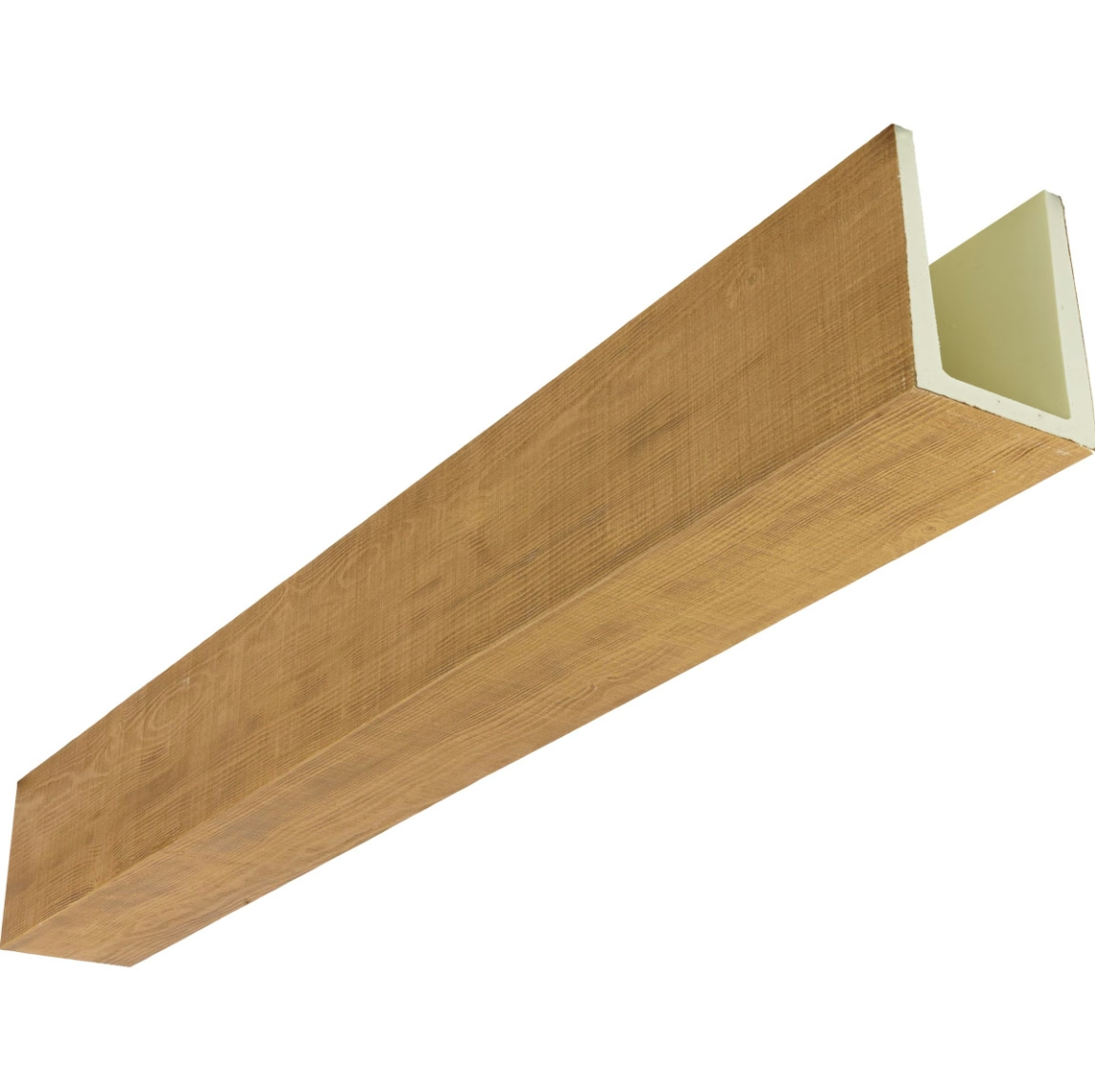
The maintenance requirements are minimal. Dusting or light vacuuming of the beam surfaces, particularly in rooms where HVAC vents direct airflow upward toward the ceiling, keeps the beams looking clean. Any scuffs or marks can be touched up with a small amount of matching paint or stain applied with a fine brush. More significant damage, such as a deep gouge or impact chip, can be repaired with a two-part epoxy filler, sanding, and refinishing.
For homeowners who like to refresh their interiors periodically, the lightweight nature of PU beams means that removal, if ever desired, is straightforward. Unlike drywall or plaster ceiling treatments that require demolition and repair, a beam installation can be removed by cutting the adhesive bond and lifting the beams away, leaving only the mounting hardware holes to be filled and touched up.
Technical References
ASTM standards cited in every specification
Test Data
Lab results from internal testing program
Updated 2026
Reviewed against current product specs


