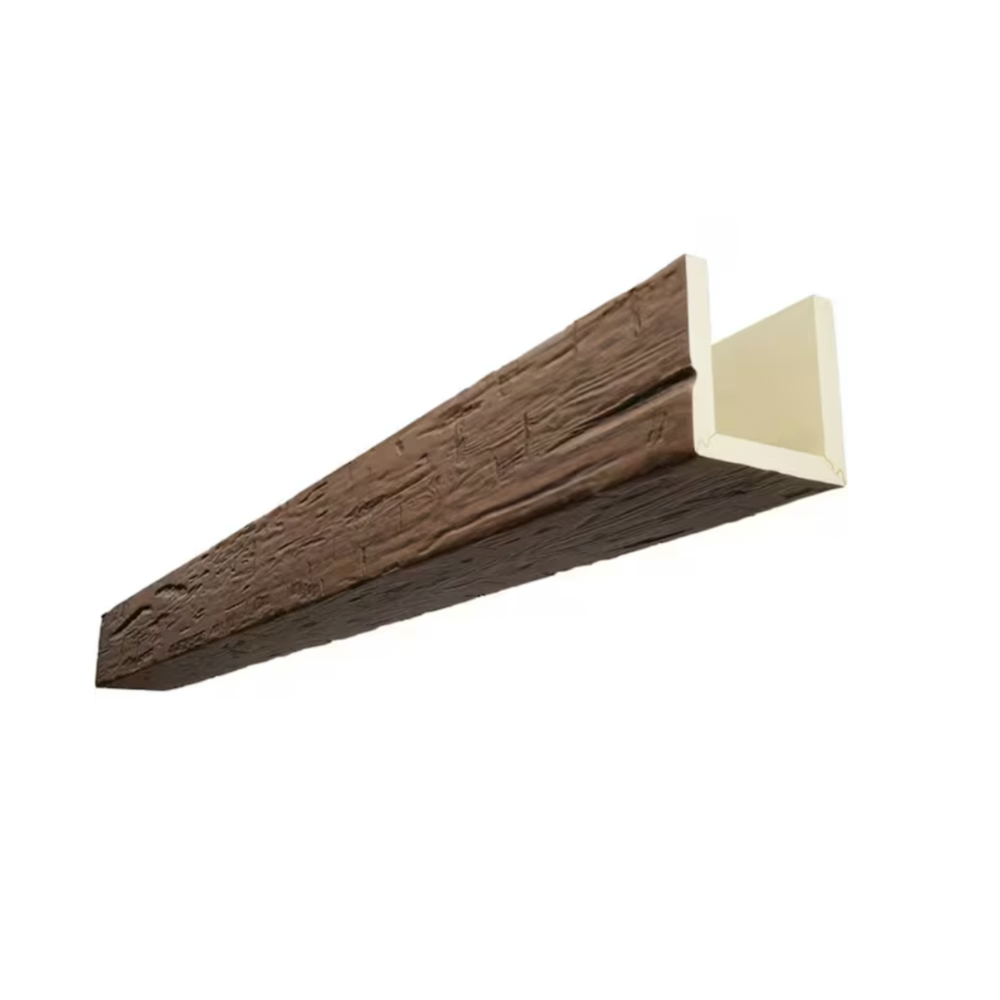
Every interior goes through a period when it no longer feels right. The colors that once seemed perfect have faded or grown tiresome. The furniture has been rearranged so many times that no configuration feels natural. The ceiling, which was never particularly interesting to begin with, now reads as actively bland, dragging down the entire room. This is the moment when a refresh is needed, but the question is always the same: refresh how?
Decorative faux ceiling beams answer that question with remarkable directness. They work on the room's overhead plane, which is the one surface that every occupant sees regardless of where they are sitting or standing. They introduce material warmth and architectural dimension simultaneously. They require no demolition, no dust, no weeks of disruption. And they deliver a transformation that looks expensive and intentional even when the budget is modest.
The Refresh Mindset: Strategic Overhaul
A refresh differs from a renovation in its scope and intent. A renovation tears down and rebuilds. A refresh rethinks and recontextualizes. The goal is not to erase the existing space but to reveal its latent potential and give it new energy.
When applied to ceiling beams, this mindset means treating the existing ceiling not as a problem to be concealed but as a canvas to be enhanced. A flat drywall ceiling becomes the backdrop against which dimensional beam elements create contrast and visual interest. The existing ceiling finish, whether painted or textured, remains in place, and the beams are installed on top of it, creating depth through superposition rather than through reconstruction.
This approach preserves the existing ceiling while adding to it, which means the project remains reversible if future design directions call for different treatments. The beams can be removed without damaging the underlying ceiling, and the mounting holes require only simple touch-up repair.
Room-Specific Strategies
Each room in a home has its own functional character, lighting conditions, and furniture arrangement, and the beam strategy should respond to these specifics rather than applying a generic solution.
The kitchen is a high-activity space where the ceiling is often overlooked but frequently visible from the adjacent dining and living areas. A kitchen refresh with beams works best when the beam finish complements the dominant material in the kitchen's palette. In a kitchen with wooden cabinetry and a wood countertop, beams in a matching or slightly contrasting wood tone create a visual thread that connects the cabinetry to the ceiling, making the room feel more cohesive. In a kitchen with painted or laminate cabinetry, beams in a natural wood tone introduce warmth that balances the cooler manufactured surfaces below.
The master bedroom demands a different approach. Bedrooms are spaces for rest and retreat, and the ceiling treatment should contribute to that atmosphere rather than compete with it. A pair of parallel beams running the length of the room, in a soft natural wood tone, adds architectural interest without overwhelming the space. The beams should be proportional to the room: in a smaller bedroom, narrower beams with a simple profile avoid making the room feel cluttered. In a larger master suite with higher ceilings, wider beams with more elaborate profiles can be introduced without creating visual overload.
The home office and study present an opportunity for beams that reinforce focus and productivity. Research on work environments consistently finds that natural material cues, including wood surfaces, support concentration and reduce stress. A ceiling with warm-toned beams in a study or home office creates an environment that is simultaneously professional and comfortable, supporting the dual demands of focused work and extended time spent in the space.

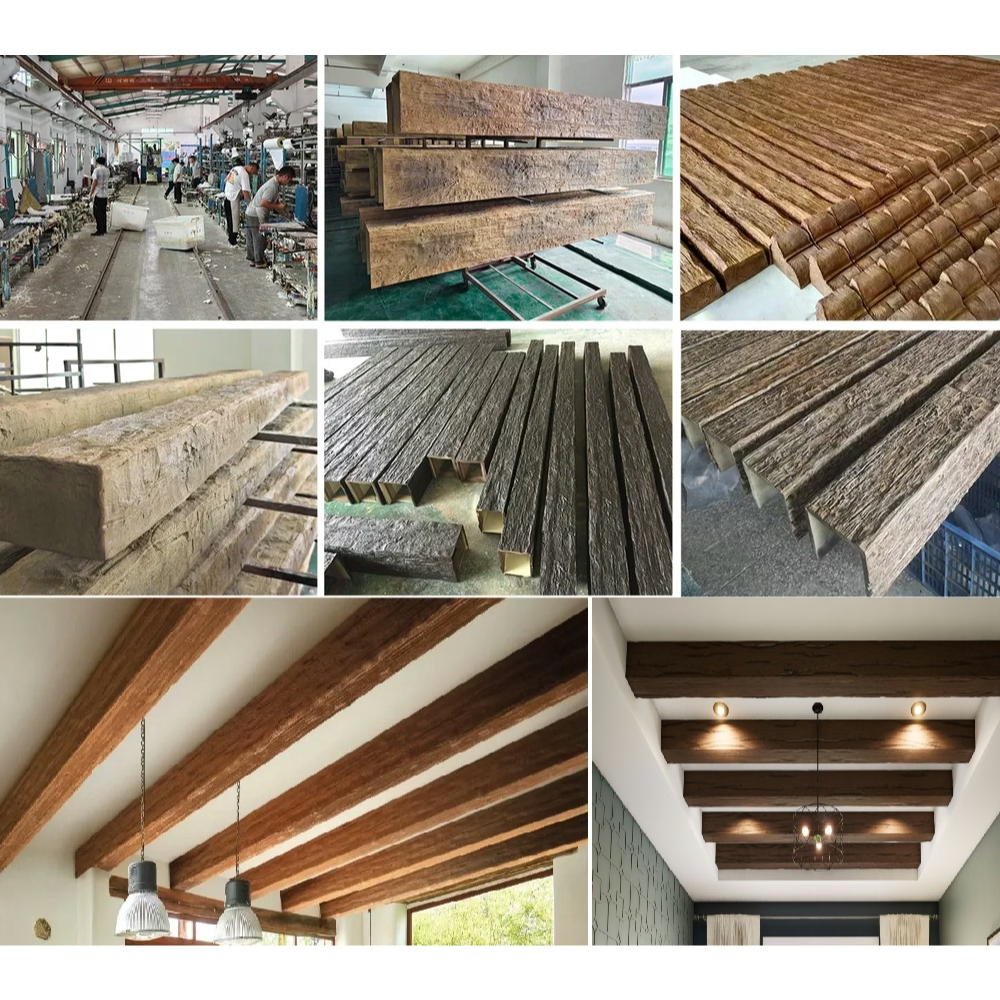
Color and Finish Selection for Refresh Projects
When refreshing an existing room, the beam finish must harmonize with the established color palette rather than jarring against it. The most reliable approach is to bring physical samples of beam finishes into the room and evaluate them under the room's actual lighting conditions at different times of day.
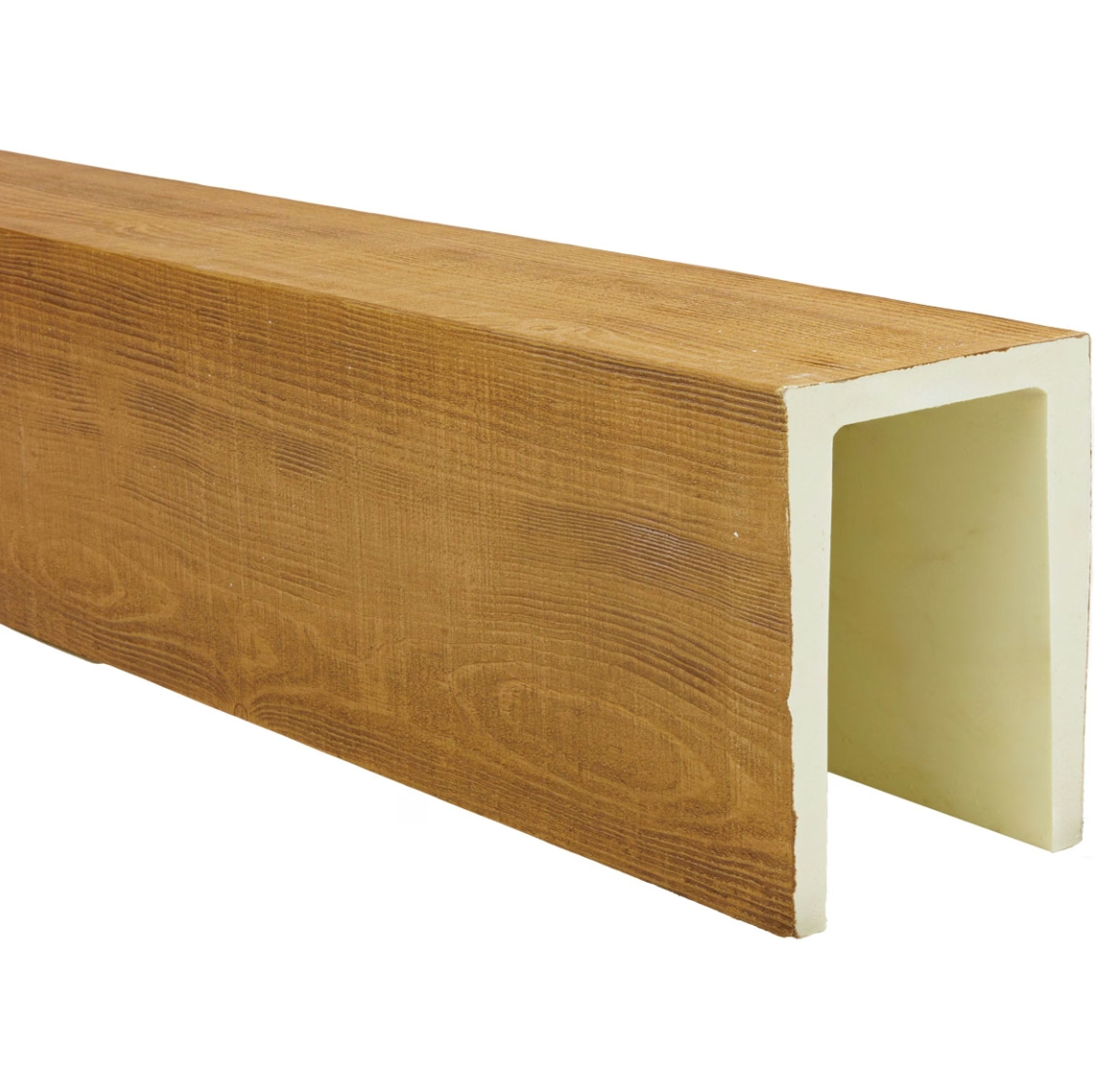
Natural wood tones are the most universally compatible. A warm oak finish with moderate grain texture works across a wide range of interior color schemes, from the cool grays of contemporary interiors to the warmer earth tones of transitional designs. The key is to match the saturation and value of the beam finish to the dominant wood tones in the room. If the room contains dark walnut furniture, beams in a walnut finish will complement rather than compete. If the room has light maple furniture, a blonde oak or natural pine finish will feel more consistent.
White and painted finishes offer a different kind of flexibility. Painted beams in the same color as the ceiling, or in a slightly lighter or darker shade of the same hue, create dimensional interest without introducing a new color into the room's palette. This approach works particularly well in rooms with strong existing color schemes where adding wood tones would complicate the design.
Making the Most of Existing Architecture
A refresh should work with what is already there, not fight against it. In rooms with existing architectural features such as crown molding, wainscoting, or a fireplace surround, the beams should be positioned to complement rather than conflict with these elements.
In a room with crown molding, the beam depth should be selected to maintain a harmonious proportion between the crown molding reveal and the beam projection. A beam that is significantly deeper than the crown molding will dominate the ceiling visually and make the molding feel undersized. A beam that is shallower than the molding will appear underwhelming against the established trim scale.
In rooms with vaulted or sloped ceilings, beam placement should follow the ceiling geometry rather than ignoring it. Beams running parallel to the slope reinforce the sense of height and direction. In a vaulted ceiling with a ridge beam, a single beam following the ridge line can accentuate the vault without overwhelming it.
The Compound Effect of Beam Refresh
The most satisfying beam refresh projects are those where the addition of beams creates a cascade of visual improvements throughout the room. The beams draw the eye upward, which increases the perceived height of the room. The wood texture adds warmth that makes the lighting feel more inviting. The dimensional interest on the ceiling provides a backdrop that makes the wall treatments and furniture arrangement feel more intentional.
This compound effect means that beams often generate requests for additional refresh work: a new lighting fixture that complements the beams, wall paint in a color chosen to harmonize with the beam finish, updated window treatments that coordinate with the newly rich overhead plane. A beam refresh is frequently the beginning of a larger design evolution rather than a standalone project, and that is entirely appropriate. The ceiling upgrade creates an opportunity to reconsider the rest of the room's design with a clearer sense of what the space can become.
Technical References
ASTM standards cited in every specification
Test Data
Lab results from internal testing program
Updated 2026
Reviewed against current product specs