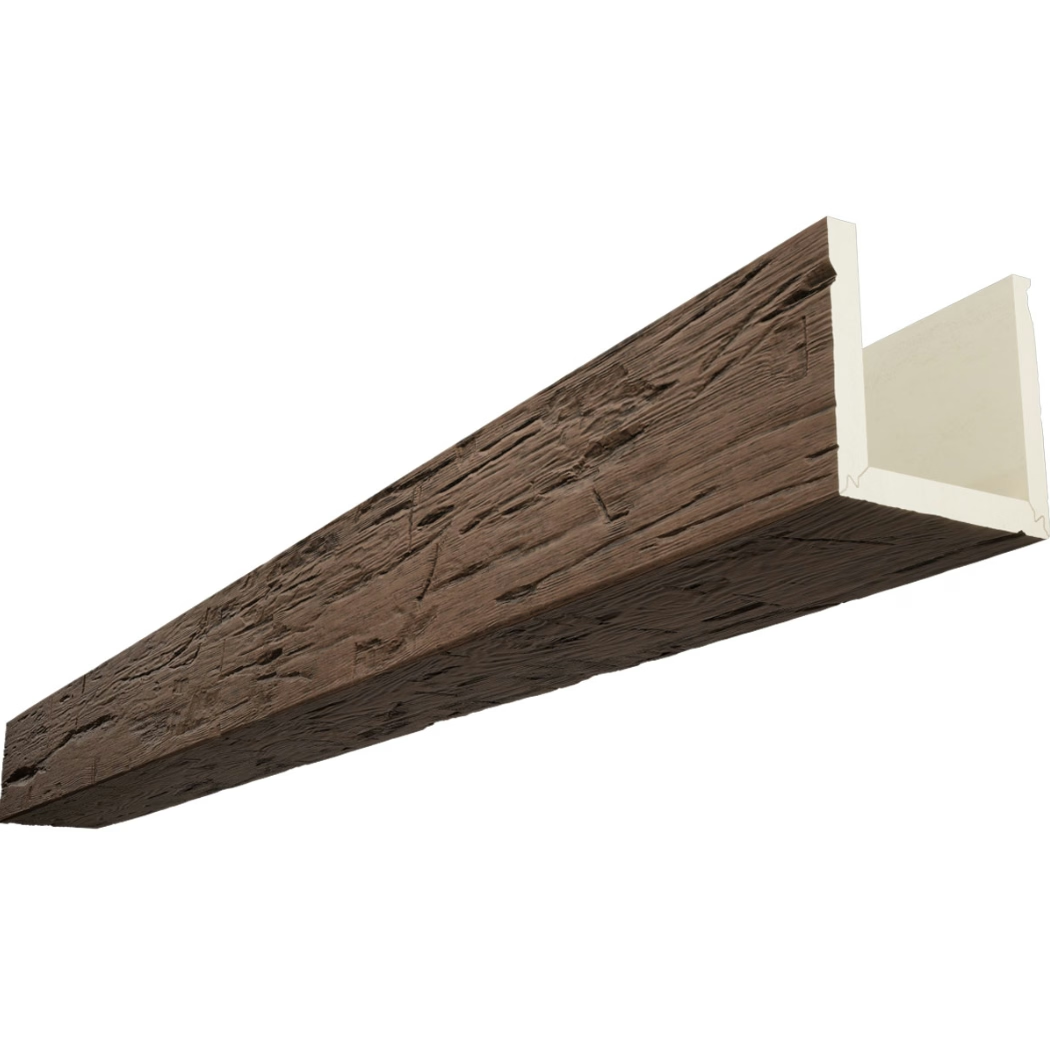
The design is finalized. The client has approved the ceiling treatment. The room is scheduled to be completed in three weeks, and the beam installation must happen during week two if the overall project is to stay on schedule. This is not an unusual situation. Projects move faster than anticipated, priorities shift, and opportunities arise that require quick action. In all of these scenarios, the availability of in-stock ready-to-use faux wood ceiling beams can mean the difference between meeting the deadline and missing it.
Understanding how quick-ship programs work, what in-stock inventory typically includes, and how to plan a project around available products turns a potential procurement bottleneck into a manageable logistical step.
What Quick-Ship Means in Practice
The term "quick-ship" is used somewhat loosely in the building materials industry, and its meaning varies between suppliers. At a minimum, it indicates that the supplier maintains a stock of finished products that can be dispatched immediately upon order confirmation, without waiting for production to begin. In the context of PU faux beams, quick-ship typically means products that are in the supplier's warehouse, fully finished, and packaged for transport.
The lead time advantage of quick-ship products over made-to-order alternatives can be substantial. A custom-order beam with a non-standard profile or finish may require four to eight weeks of production time before it is ready to ship. An in-stock beam in a standard profile and finish can typically be dispatched within one to five business days, with shipping transit time adding additional days depending on the destination.
For projects with tight timelines, this difference is decisive. A project that cannot accommodate an eight-week lead time for custom production can often proceed on schedule with in-stock beams. The design may need to adapt slightly to the available inventory, but the overall aesthetic vision can still be achieved.
Typical In-Stock Profile and Finish Availability
Most suppliers who maintain beam inventory focus on the profiles and finishes most commonly specified in residential and light commercial applications. The most frequently stocked items tend to be the most versatile: medium-depth beams in rectangular andbox beam profiles, in the most popular wood-tone finishes.
Standard rectangular beams in depths ranging from 150mm to 250mm and widths from 150mm to 300mm are typically well-stocked because they suit the widest range of applications. These proportions work well in both traditional and contemporary interiors, and they are large enough to make a visual impact without overwhelming smaller rooms.
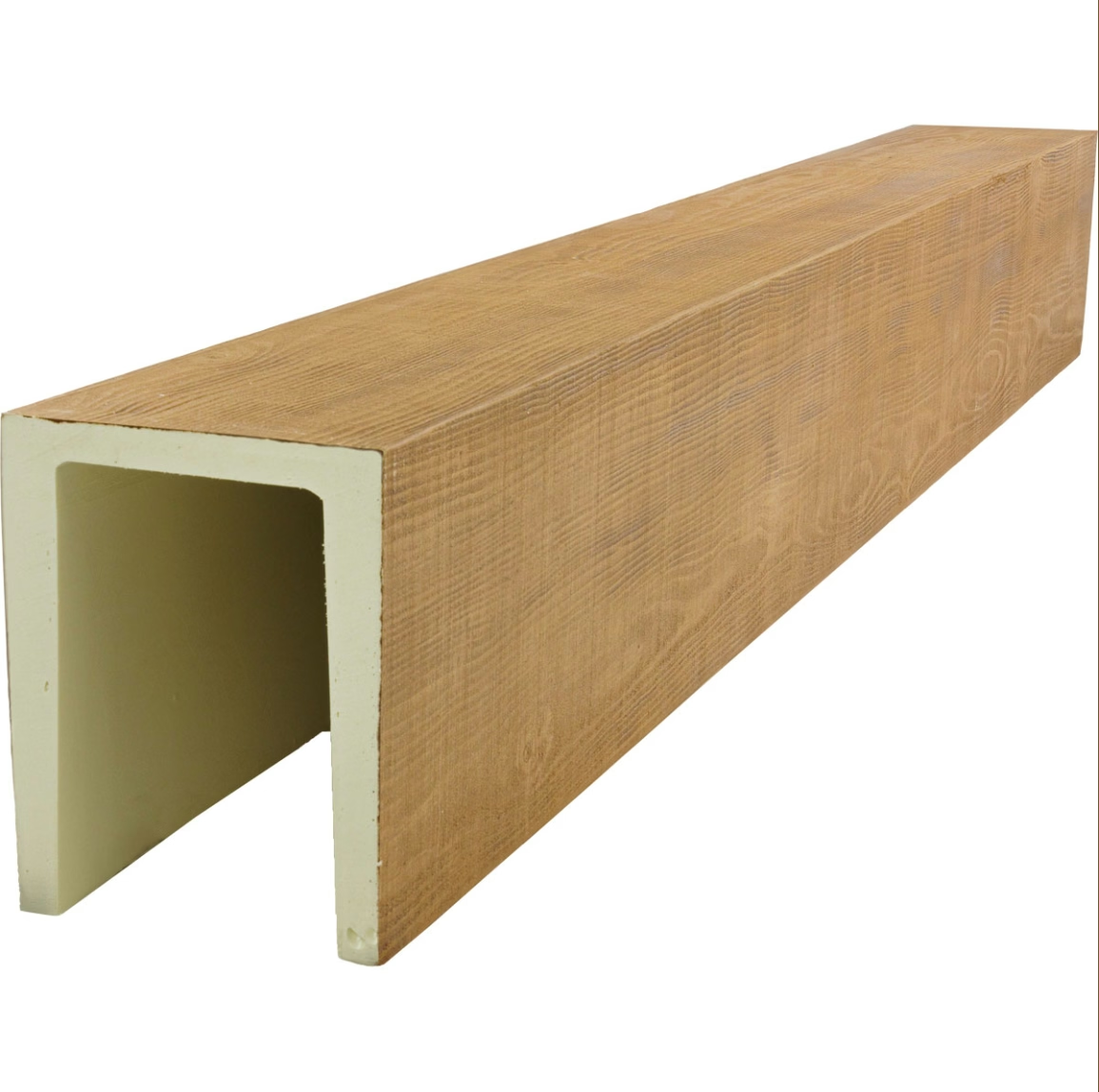
Box beam profiles, which feature a hollow construction with flat faces and square edges, are also commonly stocked because their simple geometry is easy to integrate into a wide variety of design styles. The flat faces of box beams also make them easier to install in tight spaces where a beam with complex moldings or decorative edges might be difficult to position.
In terms of finishes, natural wood tones in the mid-range of the spectrum are the most reliably stocked. Golden oak, honey maple, and medium walnut finishes represent the broadest middle ground of design compatibility, and suppliers naturally prioritize the finishes most likely to sell quickly from inventory.
White and primed finishes are also commonly stocked because they serve both the painted-beam market and the custom-finishing market, where buyers purchase primed beams and apply their own site-painted finish. Specialty finishes such as weathered grey, whitewash, or distressed treatments may or may not be stocked depending on the supplier and the size of their inventory operation.

Planning Around Available Inventory
The most effective approach to using in-stock beams is to begin the design process with an awareness of what is readily available. Rather than designing a ceiling treatment and then discovering that the required beam profile is not stocked, the design process can begin by reviewing available inventory and working backward toward a design that makes the most of what is on hand.
This approach requires a current inventory listing from the supplier, which most reputable suppliers provide on their website or upon request. Reviewing this listing reveals which profiles, dimensions, and finishes are available and in what quantities. The designer can then propose a beam arrangement that uses available products to maximum effect, possibly combining different in-stock items to create a richer visual effect than a single beam type would provide.
For example, a room might be designed with primary beams in a standard rectangular profile and accent beams or trim pieces in a different in-stock profile, creating visual variety while using only products that are available for immediate shipment.
Managing the Logistics of In-Stock Orders
Even with in-stock products, the logistics of getting beams from warehouse to installation site require attention. Beams are long, relatively fragile, and heavy enough to require proper handling, which means they need appropriate packaging and shipping arrangements.
In-stock beam orders are typically shipped via freight carrier on pallets or in custom crates designed to protect the beams during transit. The buyer should confirm the shipping method, estimated transit time, and expected delivery date before the order is placed. For tight timelines, paying for expedited freight service is worthwhile to ensure that the beams arrive before they are needed on site.
Upon delivery, beams should be inspected immediately for any damage sustained during transit. Any damaged pieces should be documented with photographs and reported to the supplier promptly so that replacement pieces can be dispatched while the freight claim is processed. Beginning the installation with damaged pieces is counterproductive and may create the need for emergency reorders that add cost and delay.
The Relationship Between Stock and Custom Products
In-stock availability does not exist in isolation from custom production. Most suppliers who maintain inventory also offer custom tooling and production services for non-standard requirements. Understanding the relationship between these two channels helps buyers make informed procurement decisions.
For a project that primarily uses in-stock beams but has one or two custom requirements, such as a non-standard length or a finish not carried in inventory, many suppliers can accommodate mixed orders where most items ship from stock and the custom items are produced separately. This approach minimizes the overall lead time while fulfilling the complete product requirement.
For projects that are predominantly custom, the lead time is determined by the custom production run, and the in-stock availability becomes less relevant unless the project can begin with in-stock items while custom production is underway.
Building a relationship with a supplier who offers both channels ensures maximum flexibility in procurement. A supplier who understands your typical requirements, maintains reasonable inventory of the products you use most often, and can respond quickly to custom requests is a valuable long-term partner for any ongoing beam-related work.
Technical References
ASTM standards cited in every specification
Test Data
Lab results from internal testing program
Updated 2026
Reviewed against current product specs