The home study has evolved from a Victorian luxury available only to the wealthy to a practical necessity for anyone who works, studies, or creates from home. The pandemic accelerated a trend that was already underway, and today millions of people spend significant portions of their day in spaces that were, a generation ago, guest rooms, dens, or unused corners of a house. The quality of these spaces matters more than ever, and the design choices that shape them have measurable effects on productivity, wellbeing, and sustained focus.
Among the most powerful design choices available for a home study is the treatment of the ceiling. This is a surface that is seen constantly but considered rarely, and when treated thoughtfully, it can contribute to the room's atmosphere in ways that wall treatments, flooring, and furniture cannot match.
Why the Study Room Demands Special Ceiling Attention
A study room serves purposes that distinguish it from most other rooms in the house. It is a space for concentrated work, whether that work involves reading, writing, computing, or creative thinking. It is often a space for extended occupation, where someone may spend eight or more hours at a desk during a work day. It is frequently a space where both function and identity matter: the room must support productivity while also reflecting the personality and taste of the person who uses it.
These demands create specific environmental requirements. The room should feel quiet, not merely in the sense of low ambient noise, but in the sense of visual and spatial calm. Clutter, visual noise, and chaotic spatial arrangements create cognitive load that competes with the focused attention that study work requires. The ceiling, as the largest unbroken surface in the room, has an outsized influence on this sense of visual calm or chaos.
A flat, plain ceiling provides neutrality but not interest. It does not contribute positively to the room's atmosphere; it simply occupies space without adding value. A ceiling with elegant beams adds positive atmospheric value: warmth, visual order, and material richness that support the focused, productive state that the room is meant to enable.
The Acoustic Dimension
Beyond their visual contribution, ceiling beams affect the acoustic environment of a study room in ways that are frequently overlooked. Acoustic comfort is an important factor in spaces designed for sustained intellectual work, and beams contribute to it in several ways.
Hard, reflective ceiling surfaces create standing waves and reverberation that make it harder to concentrate, particularly in rooms with hard flooring and minimal soft furnishings. Beams break up the ceiling plane, introducing surfaces at different angles that scatter sound reflections and reduce reverberation time. The effect is subtle compared to dedicated acoustic treatments, but in a room that cannot accommodate bulky acoustic panels, beam installations provide a meaningful acoustic improvement as a side benefit of their primary visual function.
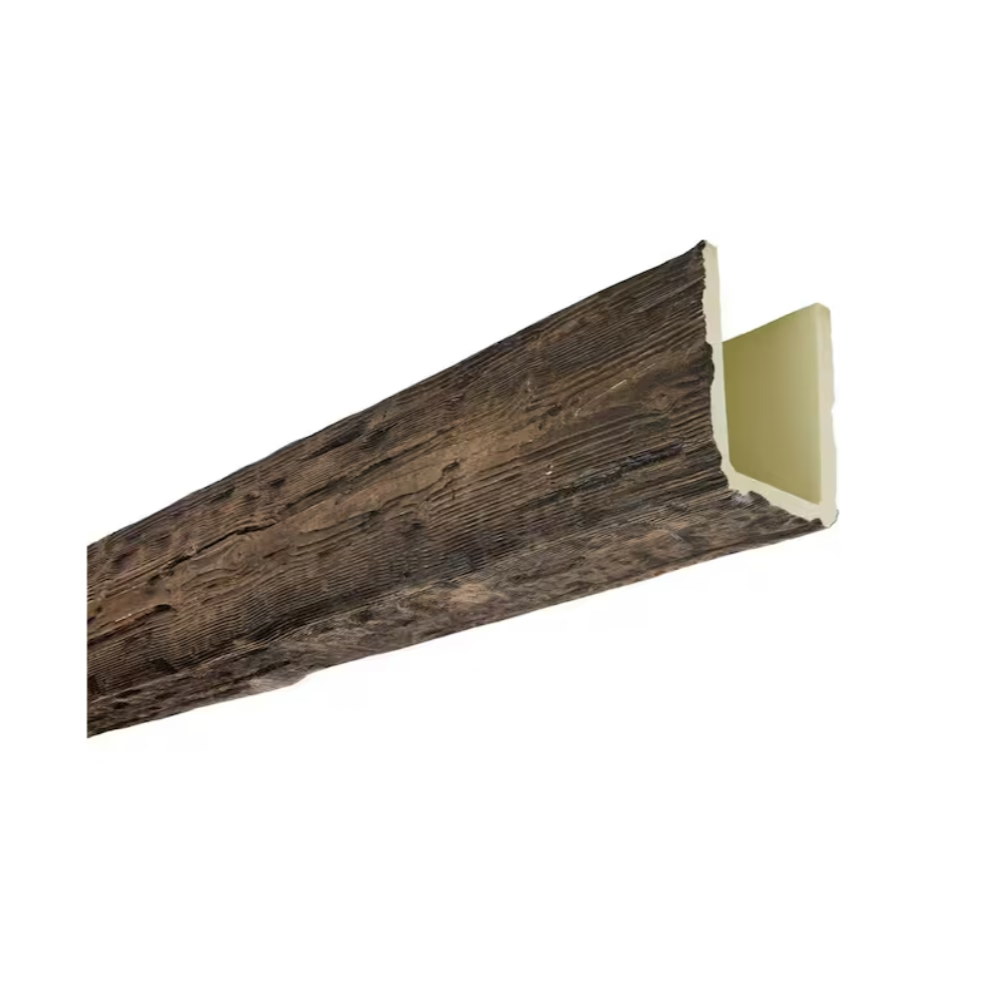
The hollow interior of PU faux beams can also be specified with acoustic dampening material, effectively turning each beam into a tuned acoustic absorber that targets specific frequency ranges. While this is a specialized application, it is worth discussing with the supplier if acoustic performance is a primary concern for the study room.

Design Approaches for Different Study Room Types
The appropriate beam treatment depends on the type of study room and its position within the overall home. A dedicated home office in a modern open-plan house has different requirements from a traditional library in a formal home, and the beam installation should respond to these differences.
In a modern home office with clean lines, minimal ornament, and a contemporary furniture palette, beams should maintain this restraint. A simple rectangular beam profile in a smooth or lightly textured finish, in a tone that complements the desk and shelving materials, adds warmth without introducing visual complexity that would contradict the room's contemporary aesthetic. White or light-toned beams can work particularly well in smaller modern offices, where they add dimension without darkening the space.
In a traditional library or study with dark wood bookshelves, leather furniture, and warm lighting, bolder beams in richer wood tones are more appropriate. The beams should feel like they belong to the same material world as the bookshelves and the desk, creating a cohesive environment that draws on the centuries-long tradition of timber-lined studies and private libraries. Darker finishes, pronounced grain textures, and more substantial beam profiles reinforce the gravitas that a traditional study demands.
In a minimalist or Scandinavian-inspired study characterized by light woods, white walls, and abundant natural light, beams in light natural wood tones maintain the brightness of the space while adding the dimensional interest that a flat ceiling would lack. The beams should feel like an organic addition rather than a contrasting element, reinforcing the natural, unhurried quality of the design.
Integrating Beams with Study Room Architecture
The most successful study room beam installations are those that respond intelligently to the room's existing architecture and the furniture arrangement within it. The beam layout should align with the room's functional organization.
In a study with a single primary desk positioned against one wall, a beam running perpendicular to the wall behind the desk creates a visual canopy over the primary work zone. This beam should be centered over the desk area so that it is visible from the desk chair, providing a sense of enclosure and focus that supports concentrated work. The beam can extend across the full width of the room or be centered over the desk area only, depending on the desired effect.
In a study with a reading nook or conversation area separate from the desk, beams can be used to define these zones without physical partitions. A beam or pair of beams positioned above the reading area creates a distinct visual territory that signals a shift in the room's function, from focused work to relaxed reading or conversation.
For studies with sloped ceilings, such as those in rooms with dormer windows or partial second-story exposure, beams following the slope reinforce the room's architectural character and enhance the sense of space. The slope itself becomes part of the beam composition, with beams running parallel to the slope direction and potentially crossing beams running perpendicular to it, creating a dynamic ceiling that responds to the room's unique geometry.
Material Choices That Support the Study Atmosphere
The material and finish of beams in a study room should be selected with the room's atmosphere and maintenance requirements in mind. A study room is a space of concentration and calm, and the beam material should reinforce this rather than distract from it.
Wood-grain finishes are the most naturally appropriate for study rooms because wood is associated with intellectual tradition, craftsmanship, and the accumulation of knowledge. The visual warmth of wood grain creates an environment that is inviting for extended work sessions, and the tactile quality of the grain texture adds depth that a flat painted surface cannot provide.
The finish sheen should be matte or satin rather than high-gloss. High-gloss finishes reflect light in ways that can create glare on computer screens and produce a colder, more institutional appearance. A matte or satin finish absorbs light more evenly, contributing to the soft, focused illumination that study rooms benefit from.
For study rooms where the maintenance burden must be minimized, factory-finished beams in durable coatings are preferable to site-finished alternatives. The beam's factory finish is designed to resist fading, staining, and surface wear, maintaining its appearance through years of daily use without the need for periodic refinishing.
The Lasting Value of a Well-Designed Study Ceiling
A beam installation in a home study is not a temporary decoration. It is an investment in the quality of the space that will be used for years or decades of focused work, learning, and creativity. The beams will be visible every day, contributing to the atmosphere that either supports or undermines the work that happens in the room.
Choosing quality materials, investing in thoughtful design, and ensuring professional installation produces a result that continues to provide value long after the initial installation cost has been forgotten. The room becomes a place that people look forward to entering, a space that supports the kind of deep, focused work that produces meaningful results.
In this context, the ceiling beams are not merely an aesthetic addition. They are a statement about the importance of the work that happens beneath them, and a commitment to creating an environment worthy of that work.
Technical References
ASTM standards cited in every specification
Test Data
Lab results from internal testing program
Updated 2026
Reviewed against current product specs


