When designing outdoor living spaces, architects and interior designers frequently encounter a persistent tension: clients want the warmth and character of real timber, but Mother Nature has other plans. Natural wood exposed to rain, humidity, and temperature swings tells a different story within just a few seasons — warping, cracking, splitting, and eventually rotting beyond repair. This is where polyurethane resin faux timber beams step in as a genuinely intelligent alternative for outdoor applications.
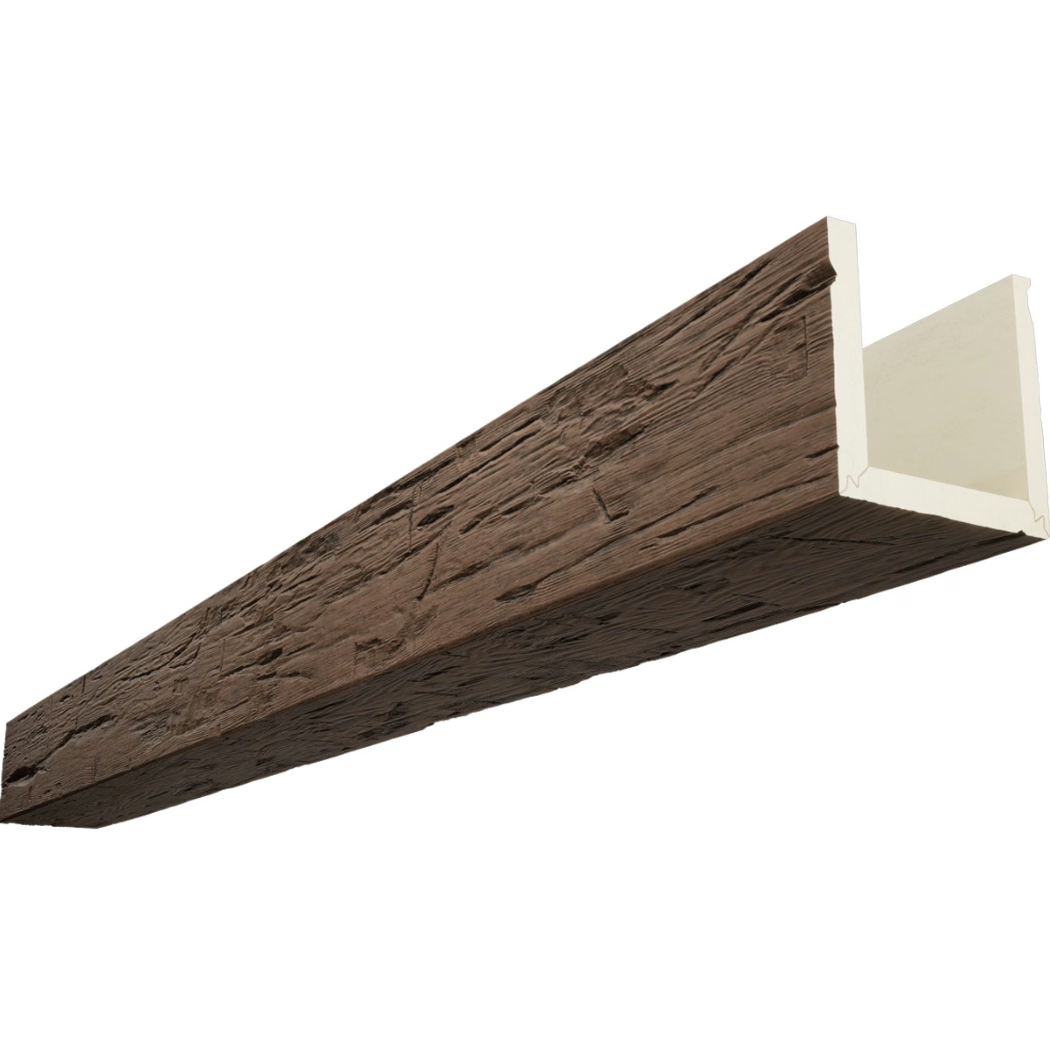
PU resin faux beams are manufactured using a high-density closed-cell foam core that is then coated with a durable polymeric skin layer. This construction gives the beams their characteristic lightweight feel — typically 80 to 90 percent lighter than comparable sawn timber — while simultaneously creating a hydrophobic barrier that repels water at the molecular level. Unlike natural wood, which absorbs moisture through its porous cellular structure, PU resin simply beads water on its surface, allowing it to run off without causing internal damage. For outdoor installations in regions with significant rainfall, snowfall, or coastal humidity, this moisture resistance translates directly into decades of serviceable performance without replacement.

A covered porch or lanai presents one of the most common outdoor scenarios where these beams excel. Picture a craftsman-style home with an expansive front porch featuring exposed beam work under the roof overhang. Real cedar or fir would be partially sheltered but still vulnerable to wind-driven rain and ambient moisture. Installing PU resin faux beams in this context gives the homeowner the visual impact of hand-hewn beams with none of the anxiety that comes with monitoring sealant integrity season after season. The beams arrive pre-finished, often with UV-stable coatings that resist fading under direct sunlight, making them equally suitable for partially shaded pergola structures and fully exposed roof overhangs.
Commercial hospitality projects have embraced this material for a different set of reasons. Rooftop bars, poolside cabanas, and outdoor restaurant pavilions face relentless exposure to pool chemicals, sunscreen residues, and repeated wetting cycles. Natural timber in these environments requires aggressive maintenance schedules and still degrades noticeably within five to seven years. PU resin faux beams withstand these conditions without splintering or developing the grey patina that signals moisture infiltration in real wood. From a facility management perspective, this durability profile reduces long-term maintenance budgets considerably, and the initial material cost differential is frequently offset within the first maintenance cycle.
The thermal expansion characteristics of quality PU resin formulations have improved dramatically in recent years. Early-generation synthetic beams sometimes suffered from noticeable warping when subjected to extreme temperature swings — imagine a sun-baked rooftop terrace reaching 45 degrees Celsius in summer before cooling to near-freezing overnight. Modern formulations incorporate thermal stabilizers that allow the material to flex microscopically with temperature changes without cracking or deforming. This makes PU resin beams suitable for installation in climate zones ranging from tropical coastal regions to continental interiors with harsh winter conditions.
For the professional specifier, one of the most practical advantages of PU resin faux beams in outdoor settings is the simplified installation process. Natural timber beams for exterior use typically require pressure treatment, kiln drying, and on-site sealing of every cut end and fastener hole — points where moisture intrusion begins. PU resin beams eliminate these steps entirely. The material accepts standard wood screws without pre-drilling in most formulations, and any field cuts can be sealed with a compatible polyurethane caulk rather than the specialized wood preservatives required for natural timber. This dramatically reduces on-site labor time and eliminates the need for specialized protective equipment or chemicals.
When evaluating PU resin faux beams for an outdoor project, the quality of the surface coating deserves careful attention. Lower-cost options may use acrylic-based finishes that perform adequately indoors but chalk and degrade under UV exposure. Look for beams finished with aliphatic polyurethane or acrylic urethane coatings, which maintain their color and surface integrity through thousands of hours of accelerated UV testing. Many manufacturers now offer specific outdoor-rated product lines with extended warranties against surface degradation — a meaningful indicator of confidence in the formulation's weather resistance.
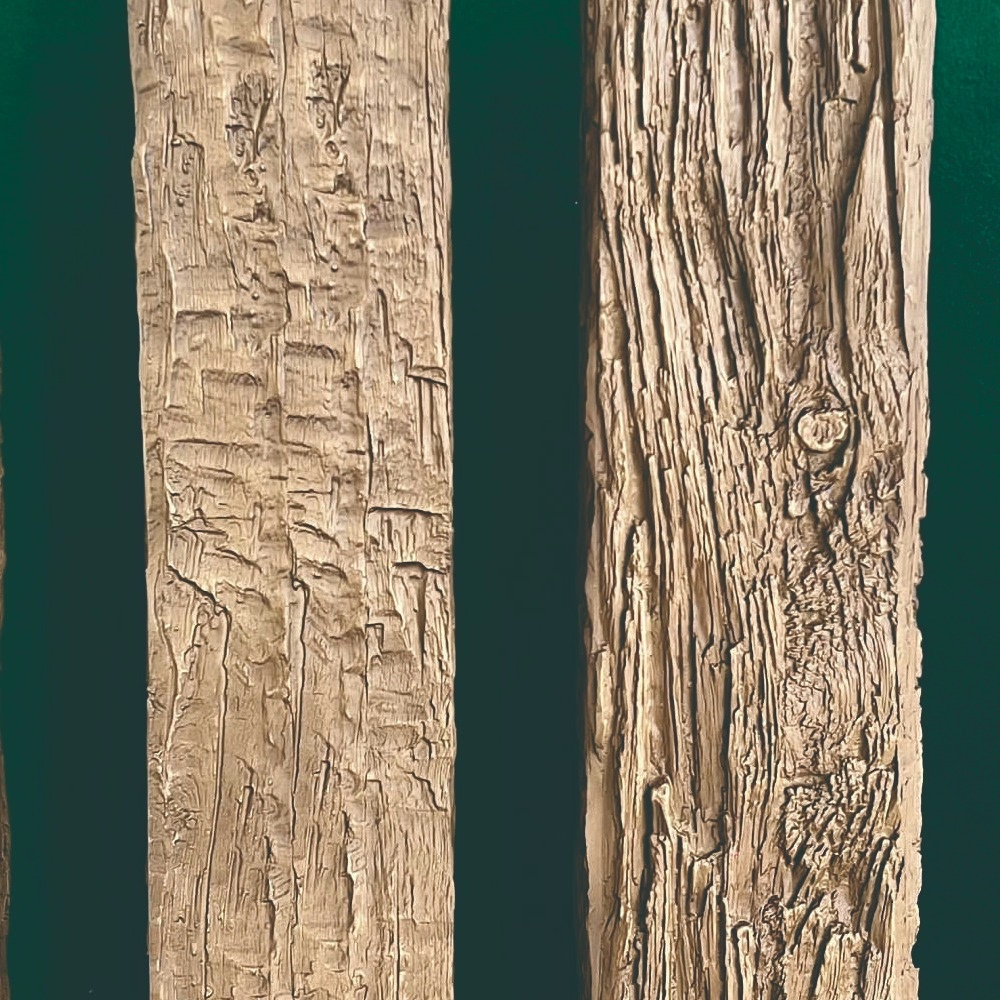
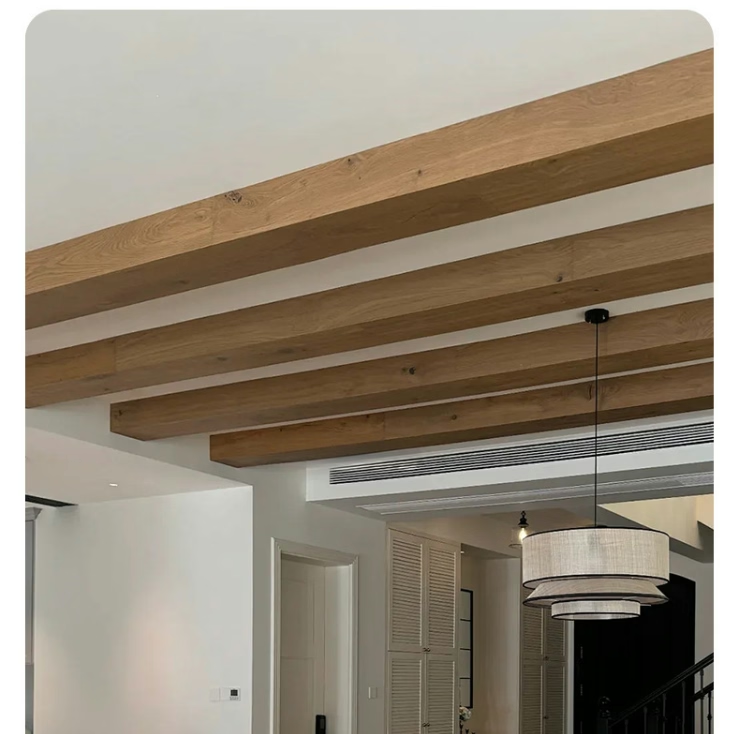
The aesthetic range available in PU resin faux beams has expanded substantially to meet outdoor design expectations. Barn wood textures featuring deep cracks and weathered gray tones create compelling visuals in covered outdoor dining spaces, while more refined wood grain patterns in oak and walnut finishes bring sophisticated warmth to upscale resort lobbies with significant glazing and natural light exposure. The ability to specify color-matched installation hardware and corbels means the finished installation presents as a cohesive design element rather than an obvious substitution material.
For landscape architects working on resort properties or public space projects, the lightweight nature of PU resin beams opens up installation possibilities that would be structurally impractical with natural timber of equivalent visual presence. A large-scale faux beam grid ceiling over an outdoor pavilion might weigh several hundred kilograms if constructed from real Douglas fir, requiring substantial structural support. The same visual effect achieved with PU resin reduces the dead load by an order of magnitude, often eliminating the need for additional structural reinforcement and broadening the range of support structures onto which these beams can be mounted.
Maintenance protocols for outdoor PU resin beams are refreshingly straightforward. Periodic cleaning with mild soap and water removes accumulated dirt and organic debris. Unlike natural wood, there is no need for annual resealing, staining, or application of fungicidal treatments. For commercial properties, this simplicity translates into predictable maintenance costs and reduced reliance on specialized contractors. The beams retain their appearance through these cleaning cycles without the surface wear patterns that accumulate on sealed natural wood over time.
The environmental dimension of outdoor beam selection is worth considering in full. While PU resin is a petroleum-derived material, its extended service life in outdoor environments means it does not require replacement every seven to ten years as natural timber often does in demanding climates. Fewer replacement cycles mean fewer manufacturing, transportation, and disposal impacts over the lifetime of a project. Some manufacturers now offer recycled-content formulations that further improve this profile, though availability varies by region and product line.
Specifying weather-resistant PU resin faux beams for an outdoor project is ultimately a decision that aligns practical performance with aesthetic ambition. The material handles the physics of outdoor exposure — moisture, UV radiation, thermal cycling, and biological threats — without the ongoing intervention that natural wood demands. For architects, designers, and property owners who refuse to compromise on visual warmth and textural authenticity while building for long-term durability, these beams represent a solution that has genuinely matured into a reliable category.
Technical References
ASTM standards cited in every specification
Test Data
Lab results from internal testing program
Updated 2026
Reviewed against current product specs