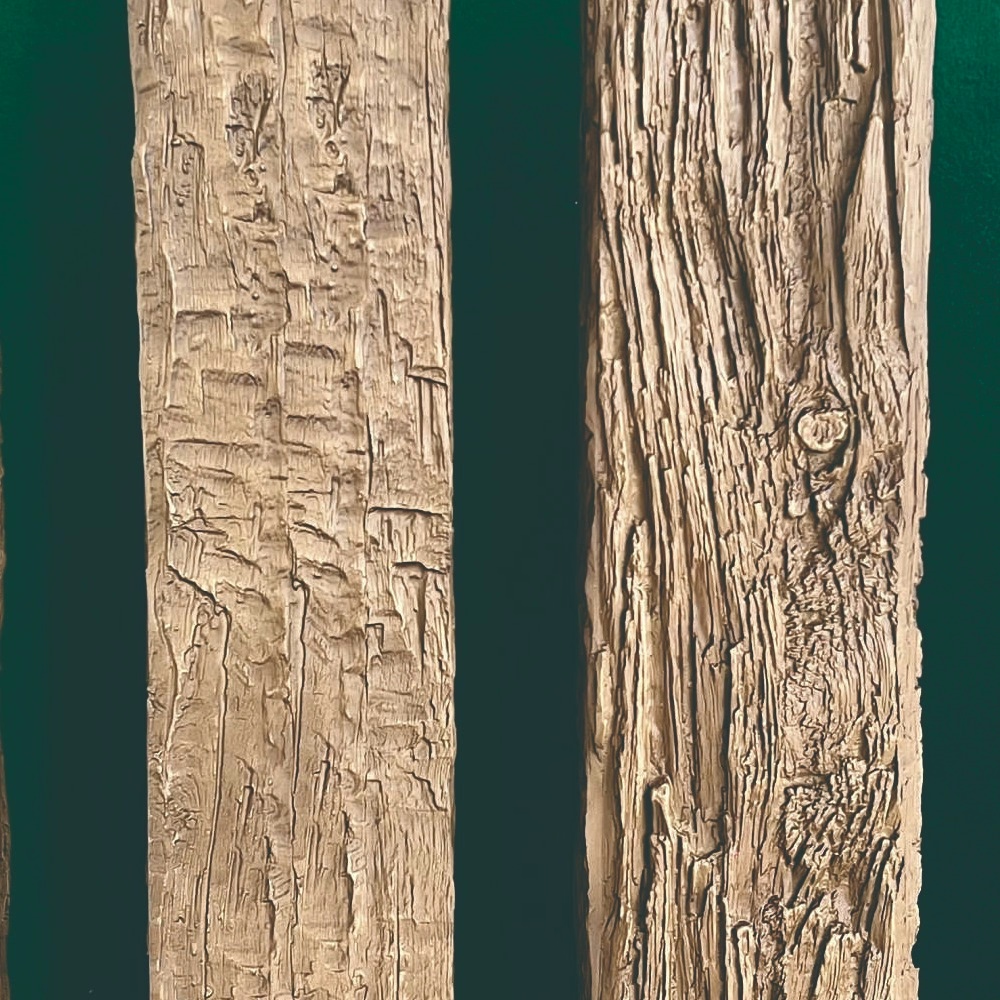
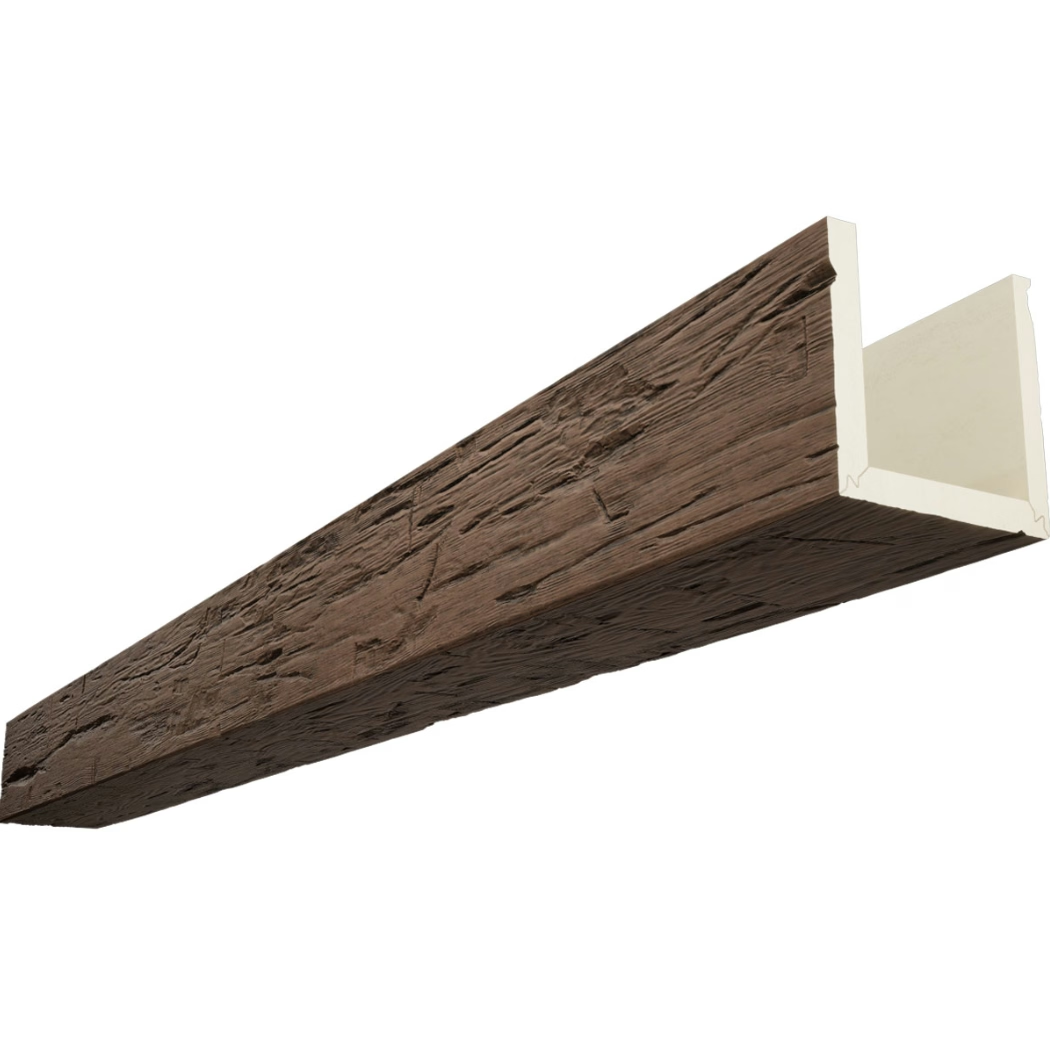
The boundary between interior and exterior in architectural design is not as clear-cut as it once was. Contemporary architectural practice increasingly blurs this boundary through the use of covered outdoor spaces, transitional zones, and building extensions that occupy the territory between fully enclosed interior and fully exposed exterior. Covered porches, porte-cocheres, outdoor dining pavilions, and facade elements that incorporate timber detailing all challenge the assumption that timber beams belong only inside climate-controlled spaces. For these applications, the performance requirements shift from interior comfort to environmental resilience, and the material selection must follow accordingly.
Genuine timber used in exterior applications faces a demanding set of environmental stressors that ultimately determine its service life. Rain and snow provide repeated moisture exposure that drives the biological decay processes of rot and mold. UV radiation from sunlight degrades the lignin matrix that holds wood fibers together, leading to surface erosion and color change. Temperature cycling causes expansion and contraction that stresses the wood structure, leading to checking, splitting, and fastener withdrawal. Insects — termites, carpenter ants, and wood-boring beetles — are attracted to the moisture conditions that compromise wood's natural decay resistance. Managing these threats in genuine timber requires pressure treatment with chemical preservatives, regular reapplication of water-repellent finishes, and ongoing inspection for insect activity. Despite this care, exterior timber eventually succumbs to the combined effects of these stressors.
PU faux wood beams designed for exterior use address these challenges through a fundamentally different material approach. Rather than relying on chemical treatment to resist the biological and environmental threats that affect genuine timber, exterior PU beams use the inherent material properties of polyurethane and its protective surface coatings to create a barrier that simply does not absorb moisture, does not provide food value for insects, and does not undergo the photochemical degradation that causes wood to grey and erode. This is not a compromise solution that attempts to match timber's natural performance — it is a genuinely superior performance profile for the specific conditions of exterior exposure.

The key to exterior PU beam performance is the quality and specification of the surface coating system. Interior-rated coatings may perform adequately for years in protected exterior applications — a covered porch that is shielded from direct rain, for instance — but they will fail prematurely in fully exposed conditions. Exterior-rated beams use multi-coat finishing systems with UV-stable pigments and binders that resist the specific degradation mechanisms of outdoor exposure. Acrylic urethane and aliphatic polyurethane coatings provide the best UV resistance, maintaining color and surface integrity through years of sunlight exposure that would cause less stable coatings to chalk, fade, and erode within a single season.
Architectural applications for exterior PU beams span the full range of covered building elements where timber aesthetics are desired. A porte-cochere at a hotel entrance — the covered driveway structure that allows guests to arrive under shelter — is a particularly compelling application: the structure must read as architecturally intentional and materially rich to establish the quality expectations that guests bring to the property, but it is also fully exposed to weather on its sides. Genuine timber in this application would require regular maintenance that most hotel facilities departments struggle to sustain. Exterior PU beams provide the architectural richness without the maintenance liability.
Covered walkway systems in educational campuses, healthcare facilities, and commercial properties represent another significant exterior application. These transitional spaces — the covered pathways that connect buildings on a campus or provide shelter between parking areas and entrances — benefit from timber beam aesthetics that soften the institutional character that such structures often present. A covered walkway with exposed timber beam ceilings becomes a more welcoming, human-scaled space than the same structure with metal deck roofing. Exterior PU beams make this aesthetic achievable at reasonable cost and with maintenance requirements that are compatible with institutional facilities management budgets.
Outdoor dining structures at restaurants and hospitality venues present some of the most demanding exterior conditions for timber-like materials. These spaces are exposed to the weather on multiple sides, often feature elevated humidity from nearby kitchen operations, and may be subject to salt air in coastal locations. The combination of moisture, temperature cycling, and potentially corrosive airborne substances — salt, chlorine, cooking byproducts — would degrade even pressure-treated timber within a few seasons. Exterior PU beams with marine-grade finish systems handle these conditions without the specialized maintenance that genuine timber would demand. Several restaurant groups with multiple locations have standardized on exterior PU beams for their covered patio structures, citing the consistency of appearance and the elimination of per-location maintenance variation as key operational benefits.
Facade applications extend the timber aesthetic to building exteriors in contexts where genuine timber would be structurally and environmentally impractical. Decorative beam elements on building facades — false timber framing, ornamental beam ends, and beam-and-panel infill systems — create the impression of timber-framed construction without the weight, decay risk, and maintenance requirements of genuine timber on an exterior surface. These applications are particularly popular in mixed-use developments and boutique commercial buildings where the timber aesthetic signals warmth and craft in an urban streetscape dominated by glass and steel.
The installation of exterior PU beams requires attention to specific details that ensure long-term performance. Water infiltration behind or around beam elements must be prevented through proper flashing and sealing at all intersections with building surfaces. Fasteners must be corrosion-resistant — stainless steel or coated fasteners are required in coastal environments where salt air accelerates corrosion of standard hardware. The beams themselves should be installed with a slight clearance from building surfaces to allow any incidental moisture to drain away rather than accumulating behind the beam. These installation details are straightforward and well-documented by quality manufacturers, but they must be followed consistently to achieve the long-term performance that exterior PU beams are capable of delivering.
The longevity expectations for exterior PU beams are favorable compared to genuine timber and comparable exterior wood alternatives. Properly installed exterior PU beams with quality UV-stable coatings should maintain their appearance and structural integrity for 15 to 25 years before any refinishing or replacement becomes necessary. Pressure-treated timber in comparable exterior conditions typically requires maintenance intervention within 5 to 8 years and may need replacement within 15 to 20 years. The total lifecycle cost of exterior PU beams — initial cost plus maintenance over the expected service life — is therefore competitive with or superior to genuine timber alternatives in most exterior applications.
For architects and designers working on projects that extend timber aesthetics into exterior environments, exterior PU beams offer a material solution that respects both the design intent and the practical realities of outdoor exposure. The beams provide the warmth, texture, and material richness that timber brings to a space, with a performance profile that is genuinely superior to genuine timber in the demanding conditions of exterior application. As building codes and sustainability standards increasingly emphasize whole-building lifecycle performance rather than initial material cost, the lifecycle advantages of exterior PU beams become more compelling arguments for their specification over conventional timber alternatives.
Technical References
ASTM standards cited in every specification
Test Data
Lab results from internal testing program
Updated 2026
Reviewed against current product specs