The shift toward sustainable yet visually striking interior elements has brought artificial wood texture ceiling beams into the spotlight. Homeowners and designers seeking the warmth of natural timber without associated challenges increasingly turn to these engineered alternatives. The technology behind polyurethane casting has advanced dramatically, producing textures that convincingly replicate oak, maple, and specialty wood species.
When you first encounter a well-crafted artificial wood beam in a contemporary living space, distinguishing it from genuine timber requires close inspection. Manufacturers now employ high-resolution scanning of authentic wood surfaces, capturing every knot, grain variation, and natural imperfection. This digital master translates into precision molds that capture microscopic details invisible to casual observation but essential for authenticity.
Understanding the Manufacturing Process
The journey from raw materials to finished beam involves several critical stages. Polyurethane resin serves as the foundation, chosen for its excellent dimensional stability and ability to accept detailed surface textures. Production facilities maintain climate-controlled environments during casting, ensuring each beam cures uniformly without air pockets or surface defects that would betray its synthetic origin.
Quality control teams examine every piece under specialized lighting that mimics both natural daylight and interior artificial illumination. This dual inspection ensures consistent appearance regardless of how homeowners illuminate their spaces. Some manufacturers offer custom color matching services, allowing designers to specify exact tones that complement existing hardwood floors or furniture pieces.
The texture application itself has evolved beyond simple paint layering. Modern techniques incorporate multiple finishing stages, including base coat adhesion, grain definition through mechanical embossing, and protective topcoats that resist UV degradation. This layered approach produces surfaces that maintain their appearance for decades without the maintenance requirements of natural wood.

Design Applications in Contemporary Spaces
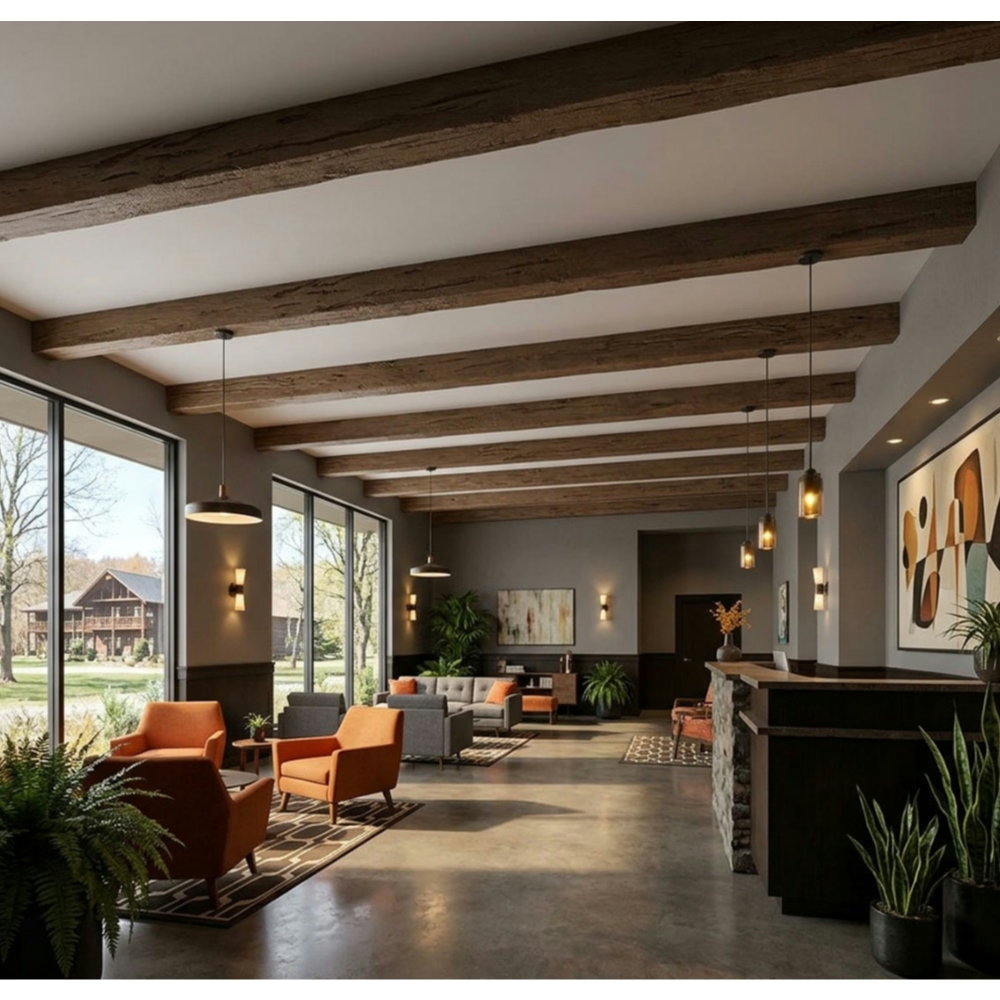
Open floor plans present unique challenges when defining distinct living zones without physical barriers. Faux wood ceiling beams serve as effective visual anchors, creating implied boundaries between kitchen, dining, and seating areas. Designers frequently position single beams perpendicular to exposed structural joists, adding visual interest while maintaining architectural honesty.
Great rooms with vaulted ceilings particularly benefit from artificial wood textures. The height advantage these spaces offer sometimes feels disconnected from human scale, and wooden beams add warmth that grounds the expansive volume. A homeowner recently described her 22-foot vaulted ceiling as finally feeling "lived-in" after installing three pairs of textured beams across the primary span.
Commercial hospitality venues have embraced these materials for reasons beyond aesthetics. Restaurant owners appreciate that polyurethane beams withstand humidity fluctuations common in kitchens and outdoor-adjacent dining areas without the expansion, contraction, or moisture damage that affects genuine timber. Nightclubs use illuminated beam installations where the textured surfaces create subtle shadow play under carefully positioned lighting.
Installation Considerations and Techniques
Professional installers approach faux beam projects with attention to substrate preparation and mounting methods. While lightweight compared to solid timber, these beams still require secure attachment points capable of supporting their weight plus any decorative fixtures. Standard installation involves locating ceiling joists or trusses, then using metal bracket systems designed specifically for the beam profile.
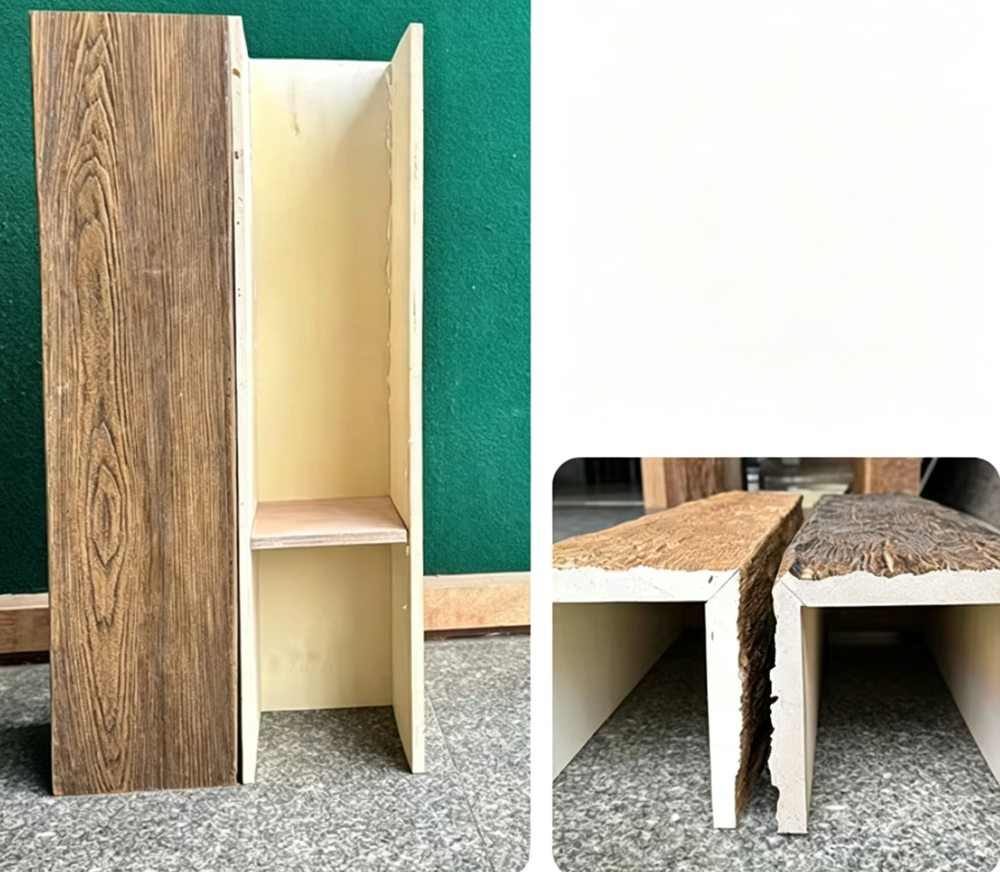
The hollow construction of most artificial beams simplifies routing for electrical fixtures, recessed lighting, and ceiling-mounted HVAC registers. Electricians appreciate the workability, and homeowners gain integrated lighting solutions that enhance rather than compete with beam aesthetics. Some installers create custom junction boxes within beam cavities for seamless fixture mounting.
Adhesive supplements mechanical fastening in many applications, particularly for beams spanning multiple structural supports. Construction-grade adhesives designed for polyurethane substrates ensure lasting bonds while allowing some thermal movement. Combination adhesive-plus-screw methods provide immediate hold during installation while allowing full cure time before the beams bear any incidental load.
Long-Term Performance and Maintenance
Unlike natural wood that requires periodic refinishing, sealing, or pest treatment, polyurethane faux beams maintain their appearance with minimal intervention. Regular dusting during standard household cleaning routines preserves the texture definition, while occasional wiping with mild cleaning solutions addresses accumulated grime in kitchen or high-traffic environments.
The material composition provides inherent resistance to common household threats. Termites, carpenter ants, and wood-boring beetles present no concern, eliminating chemical treatments some jurisdictions require for structural timber. Moisture resistance prevents the rot and mold that plague natural wood in bathrooms, basements, or coastal homes with elevated humidity levels.
Temperature fluctuations that cause natural wood to expand and contract seasonally produce no such movement in polyurethane. Homeowners enjoy consistent beam alignment without the gaps, squeaks, or warping that eventually affect genuine timber installations. This stability proves particularly valuable in vacation properties that experience extended periods without climate control.
Cost Analysis and Value Proposition
Initial investment in quality faux beams typically runs 40-60% below comparable solid wood installations. Beyond material cost savings, reduced installation complexity translates to lower labor expenses. The lightweight nature allows single-person handling in situations where natural timber would require multiple workers or mechanical lifting equipment.
Lifetime cost calculations favor synthetic alternatives when considering maintenance requirements. Natural wood beams in demanding environments may require refinishing every five to seven years, with associated material and labor costs. Polyurethane products essentially eliminate these recurring expenses, often recovering price differential within the first maintenance cycle.
Property value considerations also favor these materials in many scenarios. Appraisers and prospective buyers appreciate the aesthetic warmth beams provide without concerns about hidden structural issues sometimes associated with older genuine timber. Real estate professionals report positive buyer responses to beam installations during staging, particularly in homes where the architectural style suggests wooden beams as original features.

Selecting Quality Products
Not all artificial wood beams merit consideration despite their surface similarities. Density varies significantly between manufacturers, affecting both durability and ease of installation. Higher-density products accept finishing work more readily and resist impact damage that lighter alternatives might suffer.
Warranty coverage provides meaningful differentiation. Reputable manufacturers stand behind their products with decade-long warranties against manufacturing defects, delamination, and significant color change. Products with minimal or implied-only warranties often indicate lower production standards or component quality.
Requesting physical samples before committing to large purchases allows assessment of texture quality, color consistency, and edge detail. Professional designers routinely obtain multiple samples to compare across suppliers, finding meaningful differences in authenticity that photographs cannot convey. The investment in sampling typically proves worthwhile when avoiding installation of disappointing materials.
Technical References
ASTM standards cited in every specification
Test Data
Lab results from internal testing program
Updated 2026
Reviewed against current product specs


