The quest for authentic rustic character often leads homeowners and designers to consider cedar wood, but practical realities frequently intervene. Solid cedar beams present structural challenges, budget constraints, and maintenance requirements that complicate project goals. Realistic fake cedar polyurethane faux wood beams resolve these tensions, delivering the aesthetic qualities associated with genuine cedar while eliminating the practical obstacles that prevent their use in many applications.
Understanding what makes cedar visually distinctive helps appreciate the manufacturing challenges involved in convincing reproduction. Western red cedar exhibits characteristic reddish-brown coloration, prominent growth ring patterns, and natural knotting that creates the rustic appearance designers seek. Capturing these qualities convincingly requires sophisticated production approaches that have matured considerably over recent decades.
Cedar's Visual Characteristics Explained
Red cedar heartwood displays remarkable color range, from salmon pink through reddish-brown to deep chestnut. This variation within single species creates visual interest that uniform coloration cannot match. Quality faux reproduction must capture this natural variation while maintaining overall color coherence appropriate to the cedar family.
Grain pattern intensity distinguishes cedar from finer-grained species. The pronounced growth ring contrast creates visible figure that contributes significantly to cedar character. This bold grain appearance reads as rustic and informal, making it appropriate for cabin, lodge, and country design applications where subtler species might feel insufficiently characterful.
Knot occurrence in cedar varies with timber grade and source. Clear grain sections exhibit uniform texture, while knotty sections feature concentrated grain distortion surrounding dark knot centers. Both characteristics require reproduction in convincing faux products, with knot placement managed to avoid obviously repetitive patterns.
Manufacturing Approaches for Authentic Results
Modern faux cedar production employs multiple techniques refined through years of development. High-resolution scanning of genuine cedar surfaces captures grain detail at resolutions exceeding what unaided vision can distinguish. This documentation informs precision mold manufacturing that reproduces captured characteristics faithfully.
Multi-stage finishing builds authentic appearance through layered color application. Base coats establish foundational reddish tones, while subsequent applications add grain highlighting, shadow depth, and protective topcoats. Each stage requires careful quality control to ensure consistent results across production runs.
Knot reproduction involves separate production stages addressing this distinctive feature. Knot centers exhibit different coloration and texture than surrounding grain, requiring specialized finishing attention. Quality manufacturers address this complexity through dedicated production processes rather than simple color application.
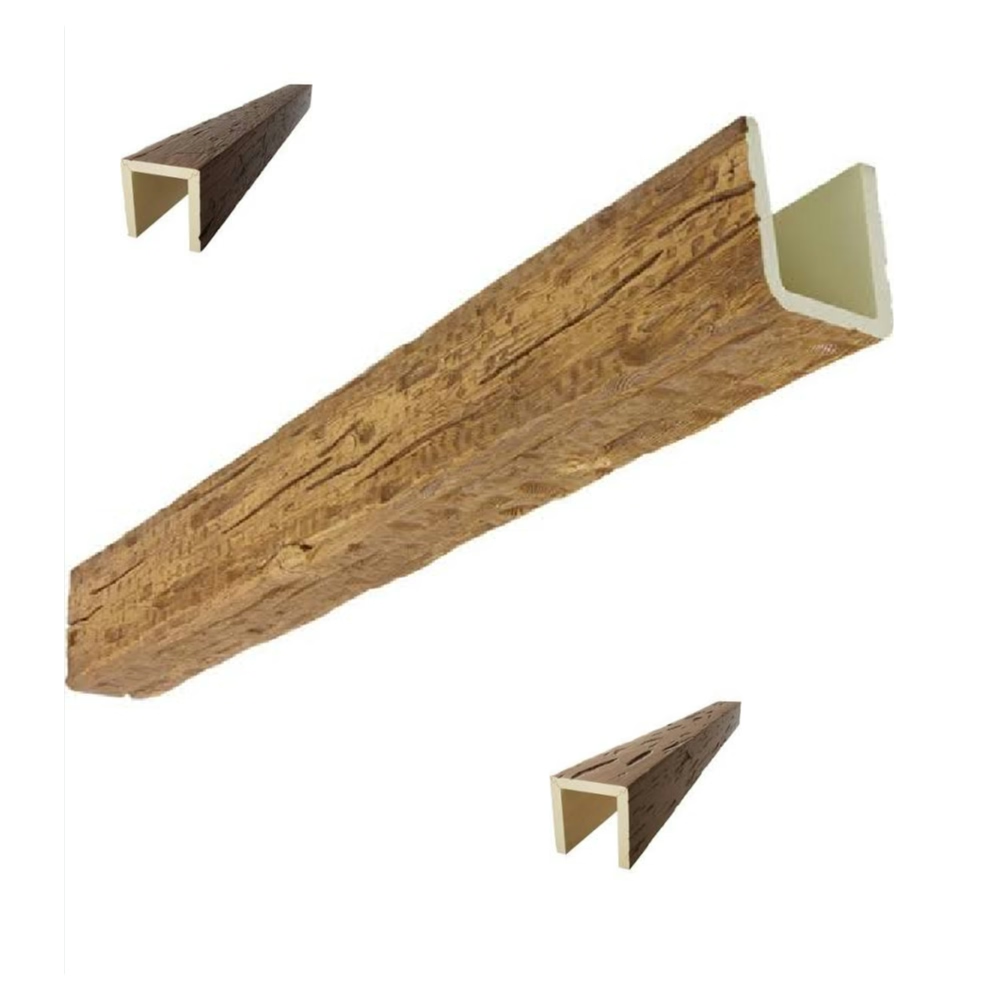
Applications Across Design Styles
Cabin and lodge interiors provide obvious applications for cedar-look faux beams. The species' association with wilderness retreats creates immediate atmospheric alignment when employed in these settings. Whether covering vaulted ceilings in great rooms or accenting bedroom spaces, cedar-toned beams establish warmth that supports rustic design objectives.
Farmhouse and country design schemes embrace cedar aesthetics through different expressions. Here, the warm coloration contributes to comfortable, inviting environments rather than wilderness immersion. Beams in these applications often coordinate with farmhouse tables, rustic lighting fixtures, and vintage-inspired accessories.
Contemporary rustic interiors blend cedar beams with clean-lined modern elements. This hybridization creates spaces that feel current rather than nostalgic while maintaining organic warmth. Beams in these applications should coordinate carefully with contemporary furniture and finishes to achieve successful integration.

Weight and Structural Advantages
The substantial visual presence of cedar beams often misleads observers about their actual weight. Genuine cedar timber weighs considerably less than many hardwoods, but beams of ceiling-spanning size still require significant structural support. Faux cedar beams reduce this concern dramatically, weighing substantially less than equivalent timber sections.
Reduced weight translates to simplified installation across multiple dimensions. Smaller crews handle lighter materials safely. Existing ceiling structures accept beam loads without reinforcement. Logistics around transport and site movement become manageable rather than challenging. These practical advantages expand installation possibilities to properties where timber beam installation would prove impractical.
Structural engineering requirements diminish correspondingly with reduced beam weight. Natural timber beam installations in larger spans may require professional engineering assessment and potential structural modification. Faux beam installations typically avoid these requirements, reducing both cost and project complexity.
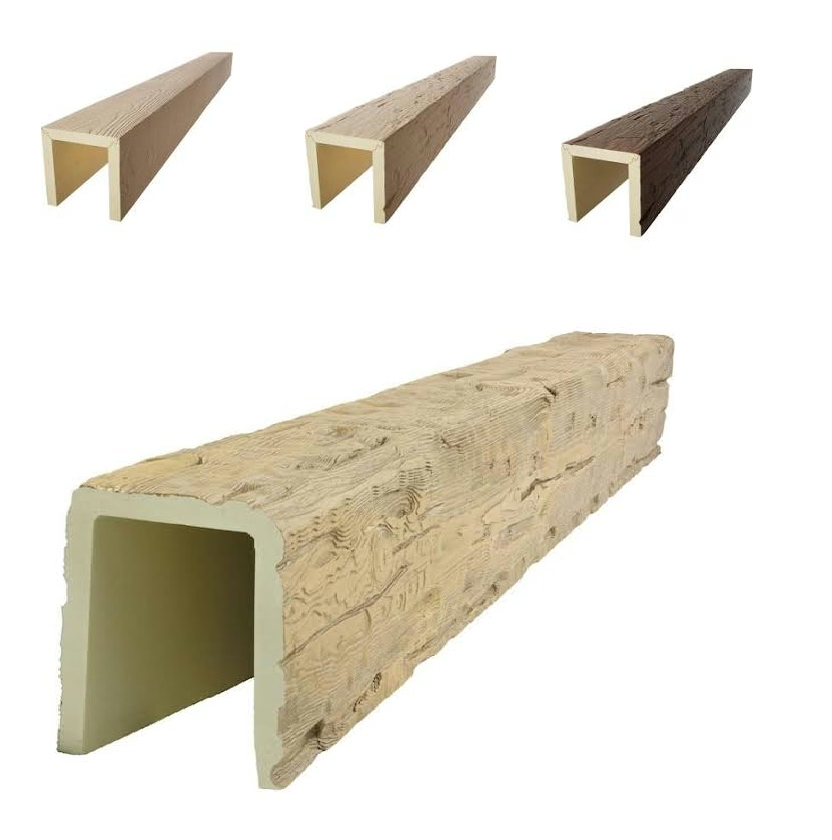
Weather Resistance and Durability
Natural cedar contains oils that provide some resistance to decay and insect damage, but prolonged moisture exposure eventually challenges even resistant species. Polyurethane faux beams face no such limitations, maintaining structural integrity and appearance despite humidity, temperature variation, and environmental exposure.
Indoor air quality variations affect natural and synthetic materials differently. Natural wood responds to humidity changes through expansion and contraction that eventually affects appearance and fit. Polyurethane maintains consistent dimensions regardless of atmospheric conditions, eliminating seasonal adjustments that natural timber requires.
UV exposure presents ongoing challenges for exterior applications regardless of material. Quality faux products incorporate UV stabilizers that retard degradation from sunlight exposure, extending service life in applications with significant sun exposure. Appropriate product selection for specific exposure conditions ensures satisfactory performance.
Maintenance and Long-Term Care
Cedar faux beams require minimal ongoing maintenance compared to natural cedar alternatives. The factory-applied finishes resist scratching, staining, and general wear that would affect natural wood. Occasional cleaning with mild detergents maintains appearance without the refinishing requirements natural cedar periodically demands.
Dust accumulation in grain depressions contributes to authentic appearance rather than indicating neglect. Regular dusting with soft brushes addresses visible accumulation while respecting textured surfaces. More thorough cleaning occasionally removes accumulated grime in kitchen-adjacent or high-traffic applications.
Damage repair possibilities exist for occasional issues requiring attention. Color-matched repair compounds address chips and scratches, while professional refinishing services restore appearance when damage exceeds repair capabilities. Quality products accept repair work more readily than budget alternatives with inferior surface treatments.
Cost Comparison and Value Assessment
Initial pricing for quality cedar faux beams typically undercuts comparable genuine timber alternatives by significant margins. Beyond material costs, installation expenses decrease due to handling advantages and simplified mounting requirements. Combined savings often prove substantial enough to influence project feasibility.
Lifetime cost projections favor synthetic alternatives decisively. Natural cedar requires periodic refinishing to maintain appearance, with associated material and labor costs. Faux products essentially eliminate these recurring expenses, often recovering any initial cost premium within the first maintenance cycle.
Budget allocation strategies should reserve appropriate funds for quality products and professional installation when project requirements warrant. Attempting cost reduction through inferior materials often produces disappointing results that require eventual replacement. The old saying about buying quality once proves particularly applicable to visible architectural elements.
Integration With Other Natural Materials
Stone fireplaces establish natural partnerships with cedar-toned beams, where warm wood tones echo mineral hues in stone surfaces. The combination creates environments feel connected to natural landscapes, whether in mountain retreats or suburban homes seeking cabin character. This material pairing has proven appeal across diverse market segments.
Brick surfaces similarly complement cedar aesthetics through shared organic warmth. Exposed brick walls in renovated industrial spaces, traditional brick fireplaces in period homes, and brick accent walls in contemporary designs all benefit from cedar beam coordination. The reddish-brown tones bridge between red brick and wood finishes.
Natural fiber textiles including leather, wool, and cotton reinforce rustic character that cedar beams help establish. Upholstery, window treatments, and decorative accessories in these materials create cohesive environments where architectural and decorative elements reinforce shared aesthetic values.
Climate Suitability Considerations
Temperature fluctuations challenge materials differently depending on composition and installation. Natural cedar expands and contracts seasonally, potentially creating gaps or alignment issues over years of use. Polyurethane maintains consistent dimensions regardless of temperature conditions, eliminating these concerns.
Humidity variations produce similar effects, with natural wood absorbing and releasing moisture continuously. Properties in humid climates experience more pronounced movement than arid locations, but all timber responds to environmental conditions. Faux products remain stable regardless of humidity conditions, performing reliably in coastal areas, humid summers, and dry winters alike.
High-altitude installations present specific challenges including intense UV exposure and significant temperature swings between seasons. Products specified for these conditions should incorporate appropriate UV protection and formulation adjustments that ensure reliable performance through demanding environmental conditions.
Professional Versus DIY Installation
Capable homeowners successfully install faux cedar beams in many residential applications. Standard beam profiles, accessible ceiling heights, and straightforward mounting scenarios accommodate amateur installation without significant risk. The lightweight nature of polyurethane simplifies handling that would challenge workers with timber alternatives.
Complex installations benefit from professional involvement regardless of homeowner capabilities. Multi-beam compositions requiring precise alignment, integration with existing architectural details, and coordination with lighting or other ceiling elements all present challenges that experienced installers handle routinely. The investment in professional installation often proves worthwhile for demanding applications.
Commercial installations virtually always involve professional contractors. Liability considerations, scheduling requirements, and quality expectations in business contexts demand contractor involvement. Property managers appreciate documented installation by licensed professionals that supports warranty claims if issues arise.
Environmental Responsibility Perspectives
Environmental considerations around faux beams involve nuanced assessment beyond simple material comparisons. The extended service life of quality products reduces replacement frequency and associated resource consumption. Manufacturing efficiency minimizes waste compared to timber processing from forest through finished product.
Recycled content in polyurethane formulations addresses concerns about petroleum-based raw materials. Progressive manufacturers incorporate recycled content that reduces virgin material requirements while providing performance equivalent to traditional formulations. Bio-based polyol development continues advancing, offering renewable alternatives to petroleum-derived components.
Transportation impacts favor lightweight faux products compared to heavy timber alternatives. Reduced shipping weight translates to lower fuel consumption and emissions regardless of distance. This advantage compounds for remote project locations where transportation logistics significantly affect overall environmental impact.

Selecting Quality Products and Suppliers
Physical sample evaluation provides essential information that photographs cannot convey. Requesting samples from multiple suppliers allows direct comparison of texture quality, color accuracy, and finish durability. The small investment in sampling often prevents purchasing disappointments that full orders might produce.
Warranty coverage indicates manufacturer confidence in product performance. Products backed by extended warranties typically reflect higher production standards than those with minimal coverage. Clear warranty terms specifying covered conditions and claim procedures protect purchaser interests and simplify resolution if issues arise.
Supplier reliability matters beyond product specifications. Communication responsiveness, order accuracy, and problem resolution capabilities distinguish reliable partners from price-only competitors. Building relationships with dependable suppliers simplifies future project planning and ensures consistent quality across multiple purchases.
Technical References
ASTM standards cited in every specification
Test Data
Lab results from internal testing program
Updated 2026
Reviewed against current product specs


