When the design team at a boutique hotel in Austin needed to create a mountain lodge atmosphere in the heart of the Texas hill country, they faced an interesting challenge. The aesthetic called for weathered timber beams throughout the lobby and common areas, but the building's modern steel frame couldn't support the weight of genuine rough-sawn beams. The solution came from an unexpected direction: synthetic beams so convincingly realistic that guests routinely mistake them for authentic timber upon first glance.
This scenario illustrates a fundamental shift in how designers and homeowners approach wood aesthetics in contemporary construction and renovation. The question has evolved from "can we use real wood?" to "which material best achieves our aesthetic goals?" For most applications, modern polyurethane faux beams answer this question affirmatively, delivering the visual qualities that make wood desirable while eliminating the practical obstacles that once limited its use.
The Art of Convincing Wood Reproduction
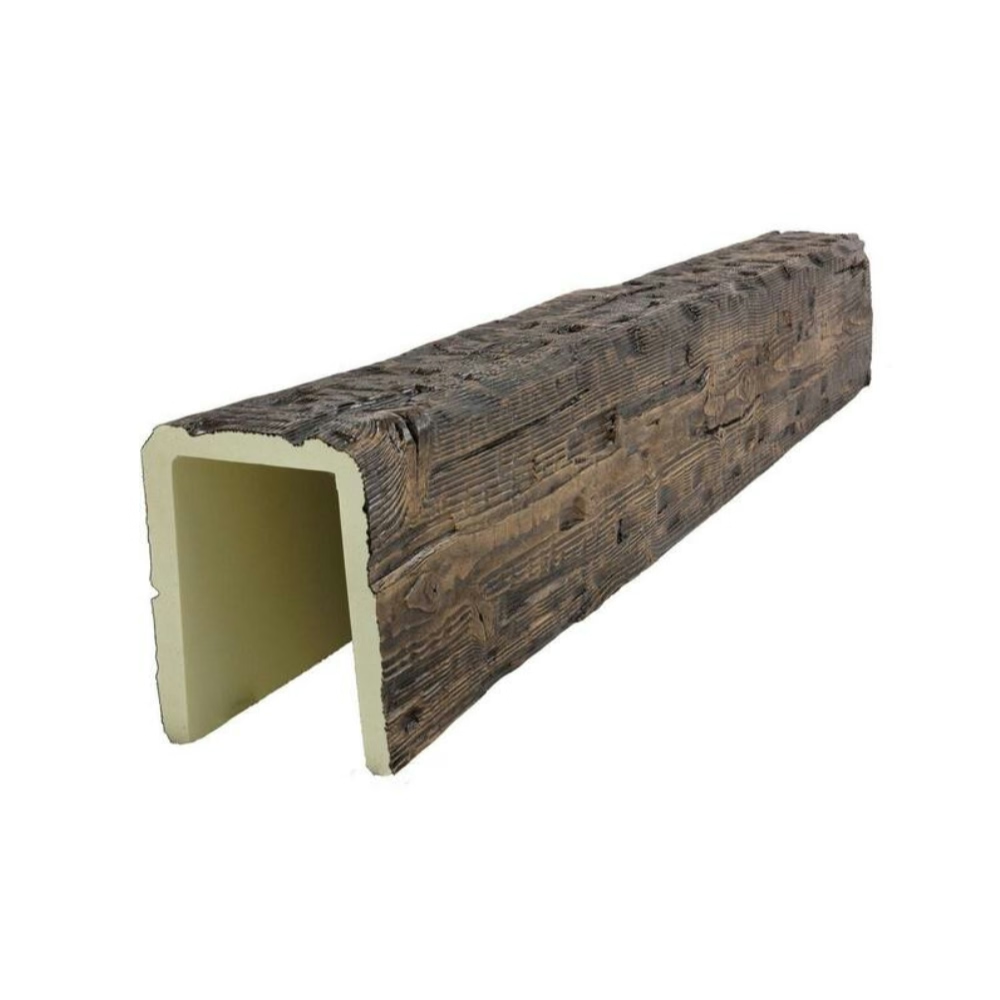
Creating faux beams that pass scrutiny requires more than surface-level imitation. Authentic wood's appeal derives from qualities that operate at multiple scales, from the broad patterns visible across room-sized views to the microscopic details observed only upon close examination. Quality reproductions address this multi-scale challenge through manufacturing processes designed to capture characteristics at every relevant level.
At the macro scale, beam profiles must match the dimensional characteristics of genuine timber. This includes not just width and height but also the slight irregularities that distinguish hand-hewn or saw-textured surfaces from the perfect geometry of manufactured lumber. The most convincing reproductions incorporate controlled variations that prevent the machine-perfect appearance that betrays synthetic origins.
Grain patterns demand particular attention, as they vary significantly both between and within wood species. Oak's pronounced grain differs fundamentally from maple's subtle figure, requiring different approaches to texture reproduction. Beyond species-typical patterns, individual beams should display the natural variation found in genuine timber—darker and lighter areas, tighter and more open grain zones, the occasional dramatic figure that makes each piece unique.
Material Properties That Enable Realism
The polyurethane formulations used in quality faux beams achieve realistic results through carefully balanced material properties. Density affects both the tactile experience and the visual perception of weight, with higher-density formulations providing more substantial feel while maintaining the lightweight advantage over natural wood. Premium products typically target densities that approach genuine wood's weight-to-volume ratio while remaining significantly lighter overall.
Surface hardness and flexibility exist in careful balance. Too soft, and the material mars easily during handling and installation; too hard, and it cracks under impact or temperature stress. The optimal formulation allows slight flexing without permanent deformation while resisting the surface damage that would compromise appearance over time. This balance typically requires sophisticated chemical formulations refined through extensive testing.
Color stability represents another critical property. Quality beams incorporate UV-stable pigments that resist the fading that would eventually occur in direct sunlight. This stability ensures that installations maintain their appearance for decades without the repainting or staining required by natural wood exposed to similar lighting conditions. The color formulations themselves often include subtle variations within individual beams, mimicking the natural color gradients found in genuine timber.
Applications Across Building Types
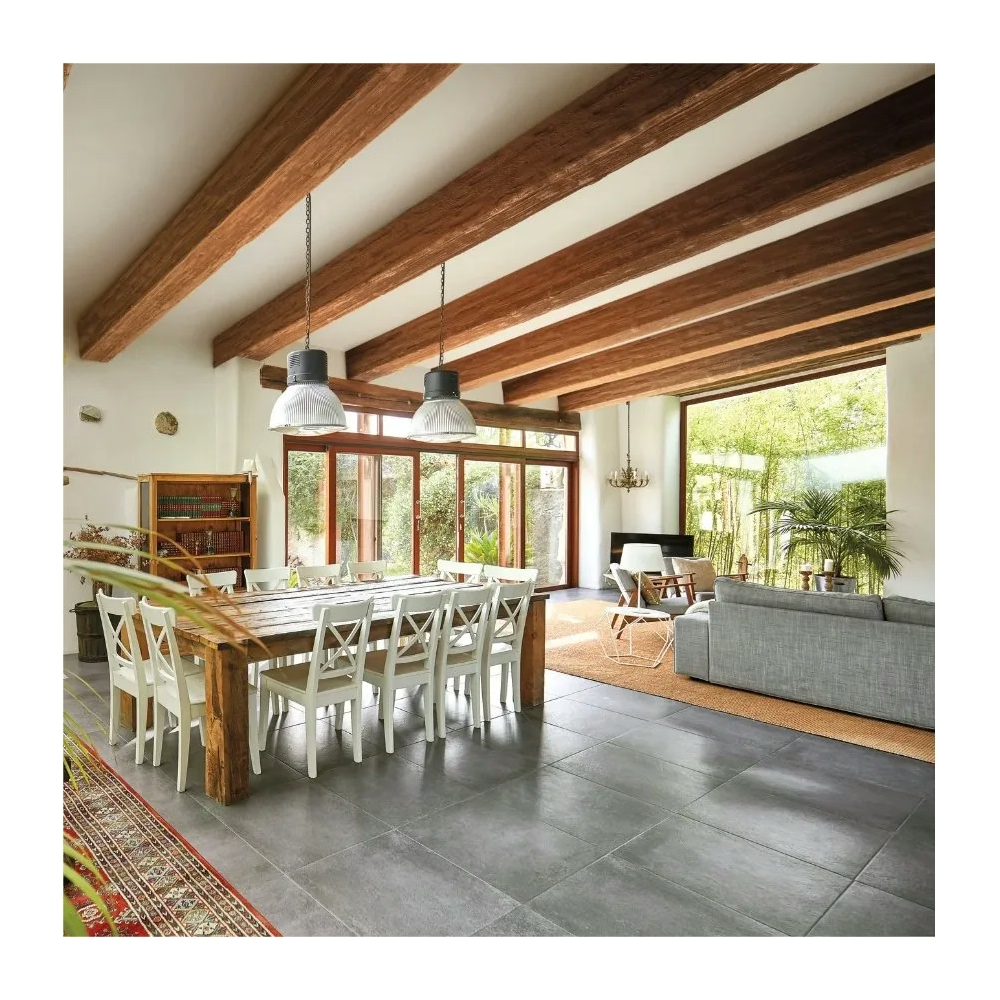
Residential applications represent the largest market for faux wood beams, with living rooms, dining areas, and master bedroom suites providing the most common installation locations. The material's versatility enables everything from rustic farmhouse aesthetics to sleek contemporary treatments, depending on beam style selection and installation approach. A single beam style can appear dramatically different based on finish selection, mounting height, and surrounding design elements.
Commercial spaces benefit equally from the practical advantages of synthetic beams. Hospitality venues—hotels, restaurants, bars, and event spaces—frequently specify faux beams to create atmosphere without the maintenance demands of genuine timber. The material's cleanability proves particularly valuable in food service environments where grease, moisture, and cleaning chemicals would affect natural wood surfaces.
Institutional applications including churches, civic buildings, and educational facilities also embrace synthetic beams for similar reasons. The durability and maintenance simplicity appeal to facility managers responsible for large building portfolios, while the aesthetic options allow historic or traditional appearances appropriate to institutional settings. Museums and performance venues, where appearance quality significantly impacts visitor experience, particularly favor the controlled aesthetics achievable with manufactured products.
Design Integration Strategies
Successful beam installations integrate with surrounding design elements rather than appearing as isolated additions. Color relationships between beams and adjacent surfaces—ceiling drywall, wall finishes, trim work—shape the overall visual effect. Beams painted to match ceiling surfaces recede visually, emphasizing form over texture. Contrasting finishes draw attention to beams as design features, creating the dramatic statement that often motivates beam installation in the first place.
Proportion relationships deserve careful attention during design development. Beam dimensions should relate logically to room dimensions, ceiling heights, and other architectural elements. Oversized beams in modest rooms create uncomfortable visual weight, while undersized beams in grand spaces disappear into the background. The goal involves achieving presence and impact appropriate to the specific installation context.
Lighting integration significantly affects beam installation success. Recessed lighting positioned between beams creates layered illumination that emphasizes texture and depth. Beam-mounted fixtures can reinforce the rustic authenticity of timber-mimicking styles while providing functional task lighting. The interplay between beams and lighting warrants design consideration before installation, as repositioning either element after completion often proves difficult or impossible.
Maintenance-Free Ownership Experience
The maintenance profile of quality faux beams represents one of their most compelling advantages over natural wood alternatives. Once installed, these products require essentially no ongoing care beyond occasional cleaning to remove dust accumulation. No sealing, no staining, no painting, no pest inspections, no rot monitoring—these tasks that define natural wood ownership simply do not apply.
This maintenance-free characteristic proves particularly valuable in hard-to-access locations. Vaulted ceilings, tall walls, and spaces with limited scaffolding access all present maintenance challenges for natural wood installations. Faux beams, once installed in such locations, remain beautiful indefinitely without any access requirements. This advantage compounds over time as the cumulative maintenance burden of natural wood alternatives grows with each passing year.
Cleaning approaches for polyurethane beams follow simple protocols: dry dusting for loose debris, damp wiping with mild cleaners for accumulated grime, and occasional deeper cleaning for installations in kitchens or other challenging environments. The cleaning frequency required depends entirely on environmental conditions rather than material requirements, as polyurethane cannot be "damaged by neglect" in the manner that affects natural wood.
The Economic Case for Synthetic Alternatives
Economic analysis of beam material selection must consider lifecycle costs rather than purchase prices alone. Natural wood's lower initial cost often reverses dramatically when lifecycle expenses enter the calculation. Maintenance materials and labor, repair and replacement costs, and the intangible costs of disruption during maintenance activities all favor synthetic alternatives over extended ownership periods.
For commercial applications, maintenance access costs can exceed material expenses significantly. A restaurant beam requiring annual refinishing might need several thousand dollars in rental equipment, lost revenue from closed dining areas, and coordination complexities that exceed the actual finishing materials cost. The same beams in polyurethane require no access for maintenance, eliminating these costs entirely.
Investment durability also favors synthetic materials. Natural wood installations may require complete replacement after fifteen to twenty-five years, depending on environmental conditions and maintenance quality. Quality faux beams routinely maintain acceptable appearance for fifty years or longer, representing a one-time purchase that serves the building's entire functional lifetime. When replacement eventually becomes desirable, the removal and disposal costs for synthetic materials remain modest compared to natural wood containing potentially hazardous finishes or treatments.
Technical References
ASTM standards cited in every specification
Test Data
Lab results from internal testing program
Updated 2026
Reviewed against current product specs


