The distinctive reddish-gold tones of western red cedar have made it a favorite for outdoor applications where its natural beauty can be fully appreciated. Porch ceilings, pergolas, and covered patio structures showcase the wood's warm character while benefiting from cedar's natural resistance to decay. Yet genuine cedar's vulnerabilities—its softness, its tendency to silver with age, its demanding maintenance requirements—often make it impractical for applications that demand both beauty and durability.
Modern polyurethane technology addresses these challenges directly, producing cedar-look beams that capture the species' distinctive aesthetics while eliminating the practical drawbacks that limit natural cedar's useful applications. The result enables design approaches previously impractical due to environmental challenges or maintenance constraints, opening new possibilities for rustic aesthetic applications both inside and outside the home.
Cedar's Distinctive Visual Signature
Western red cedar possesses immediately recognizable characteristics that distinguish it from other coniferous species. The heartwood displays rich reddish-brown tones with occasional darker streaks, while the narrow sapwood appears pale yellow to nearly white. This contrast between heart and sap creates visual interest in beam applications, particularly when edges expose both colors in single pieces.
The grain pattern in cedar runs relatively straight but includes distinctive characteristics that skilled observers can identify. Growth rings appear subtle in flat-sawn stock but become more pronounced in quarter-sawn samples. Knots, common in lesser grades, create additional visual interest; in premium clears, the absence of knots emphasizes the wood's subtle figure. Quality cedar-look beams reproduce these grain characteristics appropriate to the target grade and appearance level.
Cedar's famous aromatic qualities—often described as fresh, spicy, or pleasant—contribute to its appeal despite being purely olfactory rather than visual. While synthetic reproductions cannot literally smell like cedar, they can achieve surface textures that visually suggest the wood's distinctive cell structure, contributing to overall authenticity even without the scent component.
Outdoor Applications and Environmental Resistance
The performance requirements for outdoor beam installations differ substantially from interior applications. UV radiation, precipitation, temperature cycling, and biological threats all challenge materials in exterior environments. Natural cedar handles some of these challenges well—its natural oils provide insect resistance and moderate decay resistance—but ultimately succumbs to weathering in ways that require maintenance intervention to slow.
Polyurethane cedar-look beams face these same environmental challenges with complete indifference. The synthetic material contains no organic components that could serve as food for insects or as nutrients for biological growth. UV-stable colorants resist the fading that would eventually affect even carefully maintained natural cedar. Temperature cycling produces no dimensional changes or stress cracks.
Moisture performance proves particularly valuable in outdoor applications. Genuine cedar, despite its natural resistance, still absorbs water and responds to humidity changes. This absorption leads to the silvering that many homeowners appreciate, but also to the warping, checking, and eventual decay that shortens service life. Polyurethane absorbs essentially no moisture, maintaining dimensions and appearance regardless of precipitation exposure or humidity levels.
Indoor Rustic Decor Possibilities
Indoor applications for cedar-look beams emphasize aesthetic qualities rather than environmental resistance. The wood's warm reddish tones create inviting atmospheres in living rooms, dining spaces, and bedrooms seeking rustic character. The material pairs naturally with other natural elements—stone, leather, wrought iron, cotton textiles—creating layered textures that convey handcrafted authenticity.
Bathroom installations demonstrate cedar-look beams' practical advantages over genuine wood in humid environments. Natural cedar handles occasional moisture exposure reasonably well but suffers in perpetually humid conditions. Polyurethane reproductions remain unaffected by the steam and splashing common in bathroom environments, maintaining their authentic appearance where genuine cedar might eventually show moisture damage.
Kitchen applications similarly benefit from polyurethane's resistance to the grease, smoke, and cleaning chemicals common in cooking environments. The warm wood tones add rustic character to kitchen ceilings and hood surrounds without creating the cleaning challenges that affect natural wood in these demanding locations. Occasional cleaning restores original appearance without affecting the underlying material.
Finish Selection for Cedar Appearance
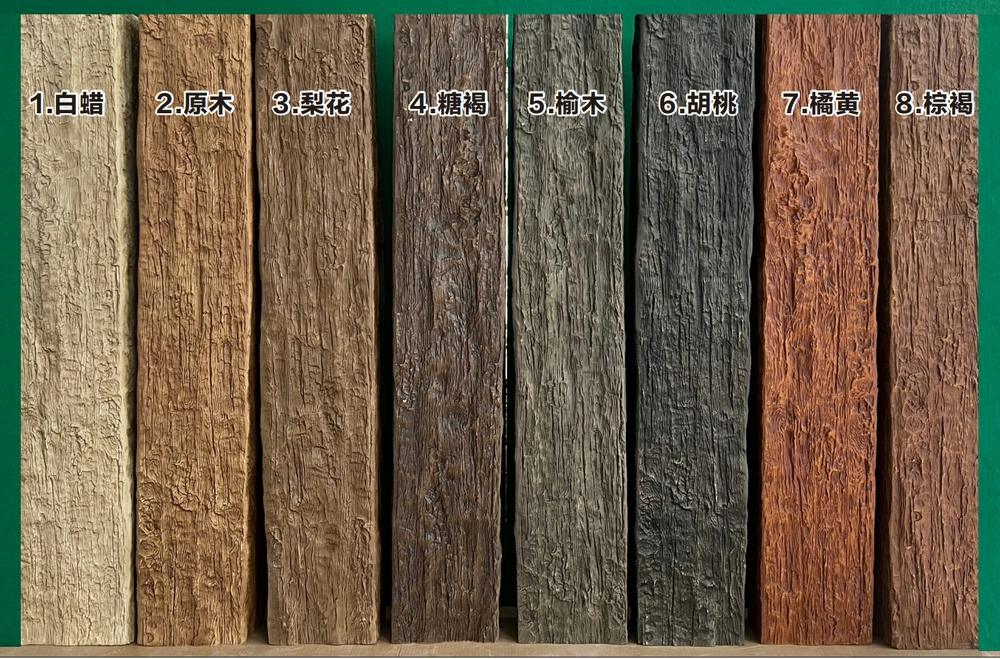
Achieving convincing cedar appearance requires careful attention to color matching. The species' characteristic reddish-brown tones vary from relatively pale honey-amber in some samples to deep reddish-brown in others. Quality reproductions include this natural variation, with individual beams displaying appropriate tonal diversity. Stated color ranges should reference actual cedar samples rather than idealized or average appearances.
Clear finishes preserve natural cedar appearance, allowing the wood's inherent color variation to provide visual interest. These finishes suit contemporary and transitional interiors seeking the organic texture of wood without dramatic coloration. The application maintains authentic cedar aesthetics while providing the surface protection that genuine cedar would require to resist soiling and moisture damage.
Tinted finishes can enhance specific cedar characteristics or shift appearance toward particular target looks. Bleached finishes reduce the reddish tones, creating paler appearances suitable for coastal or Scandinavian-influenced interiors. Darker stains can deepen the warmth, creating more dramatic rustic appearances appropriate to lodge or mountain cabin aesthetics. Finish selection should coordinate with overall interior color schemes.
Weathering and Aging Behavior
Genuine cedar weathers predictably in outdoor applications, gradually silvering to a characteristic gray as the surface oxidation destroys lignin and exposes underlying cellulose fibers. This transformation, while beautiful to many observers, may not match the original design intent, requiring either acceptance of the changed appearance or ongoing maintenance to preserve original coloring.
Polyurethane cedar-look beams avoid this transformation entirely. The colorants are integrated throughout the material rather than applied to the surface, so UV exposure affects the entire cross-section uniformly rather than creating differential weathering patterns. The appearance remains consistent year after year, decade after decade, without any maintenance intervention required to preserve original character.
This consistent aging behavior proves particularly valuable for design professionals specifying materials for client projects. Natural cedar outcomes vary based on environmental exposure, maintenance quality, and specific species characteristics, potentially diverging from design intent over time. Polyurethane alternatives deliver predictable, repeatable results that maintain design intent throughout the structure's lifetime.
Structural Considerations for Covered Outdoor Spaces
Outdoor beam installations often serve functional purposes beyond aesthetic contribution. Pergolas, covered patios, and similar structures may require beams capable of supporting shade fabric, climbing plants, or decorative elements. These load requirements must be addressed regardless of material selection, with structural calculations informing appropriate beam sizing and mounting approaches.
For decorative applications where beams carry no load beyond their own weight, polyurethane products provide sufficient capability through adhesive and mechanical fastening to existing support structures. The beam profiles can match or exceed the dimensional appearance of structural timber while relying on the underlying construction for any load-bearing requirements.
Span limitations affect both natural and synthetic beam installations similarly. Longer spans may require intermediate support or the use of engineered products designed for specific load conditions. The lightweight nature of polyurethane actually assists in these applications, as the supported structure carries less weight than it would with genuine timber, potentially allowing more economical underlying support design.
Making Cedar Aesthetics Accessible
The practical and economic advantages of cedar-look polyurethane beams have expanded the range of projects capable of achieving authentic cedar aesthetics. Expansive outdoor installations that would require enormous budgets for genuine cedar become financially feasible using synthetic alternatives. Maintenance-intensive applications that would demand ongoing care for natural wood can proceed with maintenance-free polyurethane.
This expanded accessibility benefits both residential and commercial projects. Homeowners can achieve the outdoor living space aesthetics previously available only to those with unlimited budgets and maintenance resources. Commercial hospitality venues—restaurants, resorts, event spaces—can specify cedar-like aesthetics knowing that their maintenance teams can clean and maintain the installations without specialized knowledge or equipment.
The environmental implications deserve consideration as well. While genuine cedar, particularly from sustainably managed forests, represents a renewable resource, the maintenance requirements involve chemical treatments, sealants, and eventual replacement that carry environmental costs. Polyurethane beams, manufactured once and lasting indefinitely without treatment, may represent more sustainable choices for certain applications despite their petroleum-based origins.
Technical References
ASTM standards cited in every specification
Test Data
Lab results from internal testing program
Updated 2026
Reviewed against current product specs


