The enduring appeal of timber beams in interior design reflects fundamental human responses to natural materials and organic aesthetics. Throughout architectural history, exposed structural timber has represented both functional necessity and aesthetic opportunity, with civilizations from ancient Scandinavia to medieval England incorporating timber construction into their most significant buildings. This historical resonance gives timber beams automatic design credibility that synthetic materials have historically struggled to match.
Modern polyurethane technology has fundamentally changed this equation, producing replicated timber beams that achieve convincing authenticity while eliminating the practical limitations that have historically restricted timber beam installation. The result expands design possibilities dramatically, enabling timber beam aesthetics in applications where genuine timber would prove impractical, prohibitively expensive, or maintenance-prohibitive.
The Authenticity Challenge
Creating replicated beams that genuinely satisfy requires understanding what makes timber beams appealing in the first place. The appeal extends beyond simple visual resemblance to encompass tactile qualities, dimensional characteristics, and the accumulated associations that humans have developed with wood as a material throughout evolutionary history.
Visual authenticity demands attention to wood's multi-scale characteristics. At room scale, beam proportions and arrangement patterns establish overall presence. At arm's length, grain patterns, color variation, and surface texture create authentic character. Under close examination, edge details, end grain treatment, and mounting approach all contribute to convincing appearance. Quality replication addresses characteristics at all scales, creating products that satisfy casual observation and close inspection alike.
The dimensional authenticity of timber beams involves not just external measurements but internal relationships. The proportions of width to depth, the ratios between beam dimensions and room measurements, the relationships between beam spacing and ceiling height—all these factors influence whether beams appear naturally appropriate or obviously manufactured. Quality replicated products offer dimensional options that accommodate diverse room scales, allowing appropriate selection for each installation context.
Interior Decoration Applications
Interior decoration with replicated timber beams spans diverse applications, from whole-room transformations to subtle accent additions. The specific approach should align with overall design objectives and the role beams are intended to play in completed spaces.
Great room applications typically involve substantial beam installations that establish the primary ceiling treatment. These installations often combine multiple beam types—main beams, cross beams, secondary framing—creating layered treatments that add significant architectural presence. The investment in these installations reflects their transformative impact, with entire room aesthetics changing based on beam installation.
Accent applications use limited beam installations to add character without dominating spaces. A single beam crossing above a dining table, beams flanking a fireplace, or partial beam installations along room perimeters can add significant warmth and interest while preserving contemporary aesthetics. These restrained applications often prove more versatile than dramatic installations, working well in spaces that might eventually undergo style evolution.
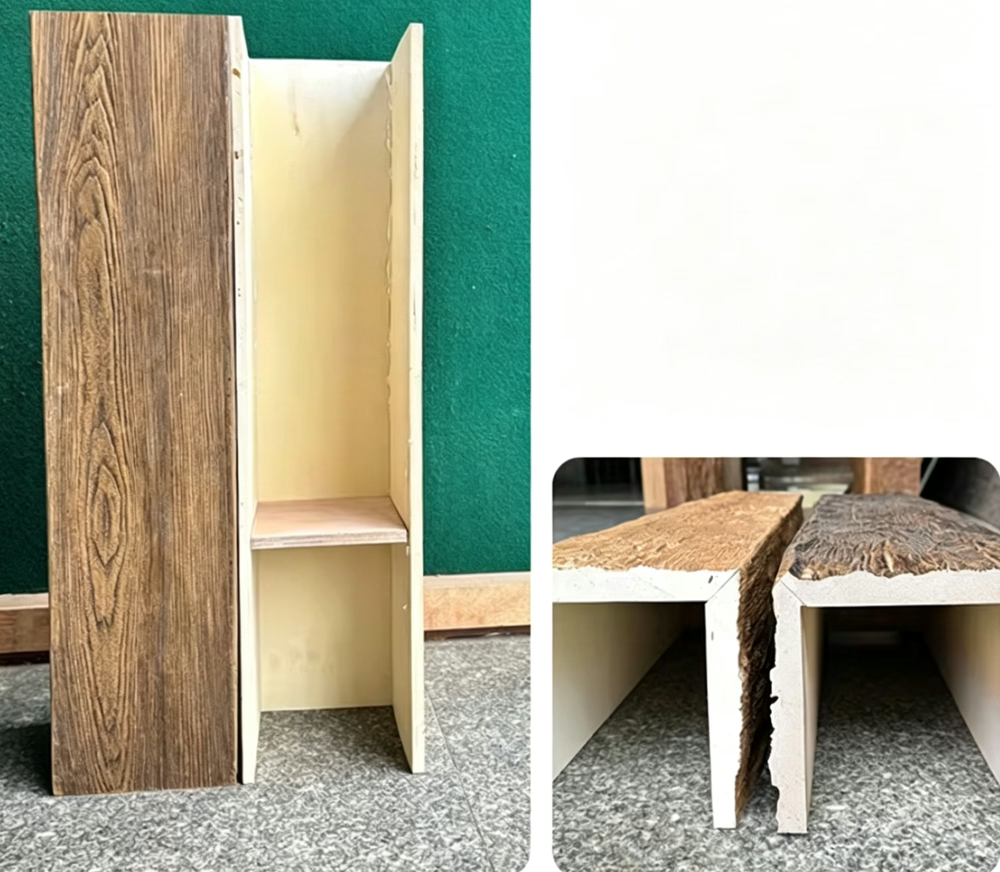
Built-in integration extends beam applications to shelves, mantles, and other millwork elements. Replicated timber components can combine with manufactured cabinetry and shelving to create hybrid installations that achieve timber aesthetics without requiring complete timber construction. This integration approach expands design possibilities while managing costs and practical constraints.
Style Coordination and Design Harmony
Successful interior decoration with timber beams requires attention to coordination with existing and planned design elements. Beams that clash with surrounding materials or contradict established styles create visual discord rather than enhancement.
Traditional interiors featuring period furniture, classic architectural details, and established design conventions typically accommodate more substantial beam installations with traditional wood appearances. The warmth and craftsmanship associations of timber reinforce traditional design values, creating spaces that feel appropriate to their design context.
Contemporary and minimalist spaces present different challenges and opportunities. Beams in these contexts might feature cleaner profiles, more refined finishes, and more restrained installation approaches. The organic texture of wood can provide valuable warmth and visual interest against contemporary surfaces, but the treatment should respect rather than conflict with minimalist principles.
Transitional interiors seeking to bridge traditional and contemporary elements often benefit from beam installations that combine traditional material character with contemporary execution. Beams featuring modern finishes applied to traditionally proportioned profiles create bridges between design eras, enabling cohesive spaces that draw from multiple stylistic sources.
Practical Installation Considerations
Interior installation of replicated timber beams involves practical considerations that affect both immediate results and long-term satisfaction. Thoughtful attention to these factors during planning and execution ensures successful outcomes.
Ceiling construction type significantly affects installation approach. Wooden joist ceilings accept direct mounting readily, with fasteners driven into structural members for secure attachment. Metal joist construction requires different approaches, potentially including blocking or specialized mounting hardware. Suspended ceilings may require assessment of grid capacity and potentially specialized support systems.
Lighting integration requires planning that anticipates fixture positions relative to beam locations. Recessed lighting can be positioned between beams, within beams, or on tracks that span across beam arrangements. Surface-mounted fixtures attach directly to beams, adding functional illumination while reinforcing beam presence as architectural features. The specific lighting approach should align with overall design objectives and practical illumination requirements.
Ventilation and mechanical considerations may affect beam placement in some installations. Heating and cooling ducts, return air grilles, and other mechanical elements may occupy ceiling space that beam installations should avoid. Coordination with mechanical plans during layout planning prevents conflicts that would require redesign after installation.
Durability and Long-Term Performance
Interior replicated timber beams should provide decades of service maintaining appearance and structural integrity. Understanding the factors that affect long-term performance helps ensure satisfying ownership experiences.
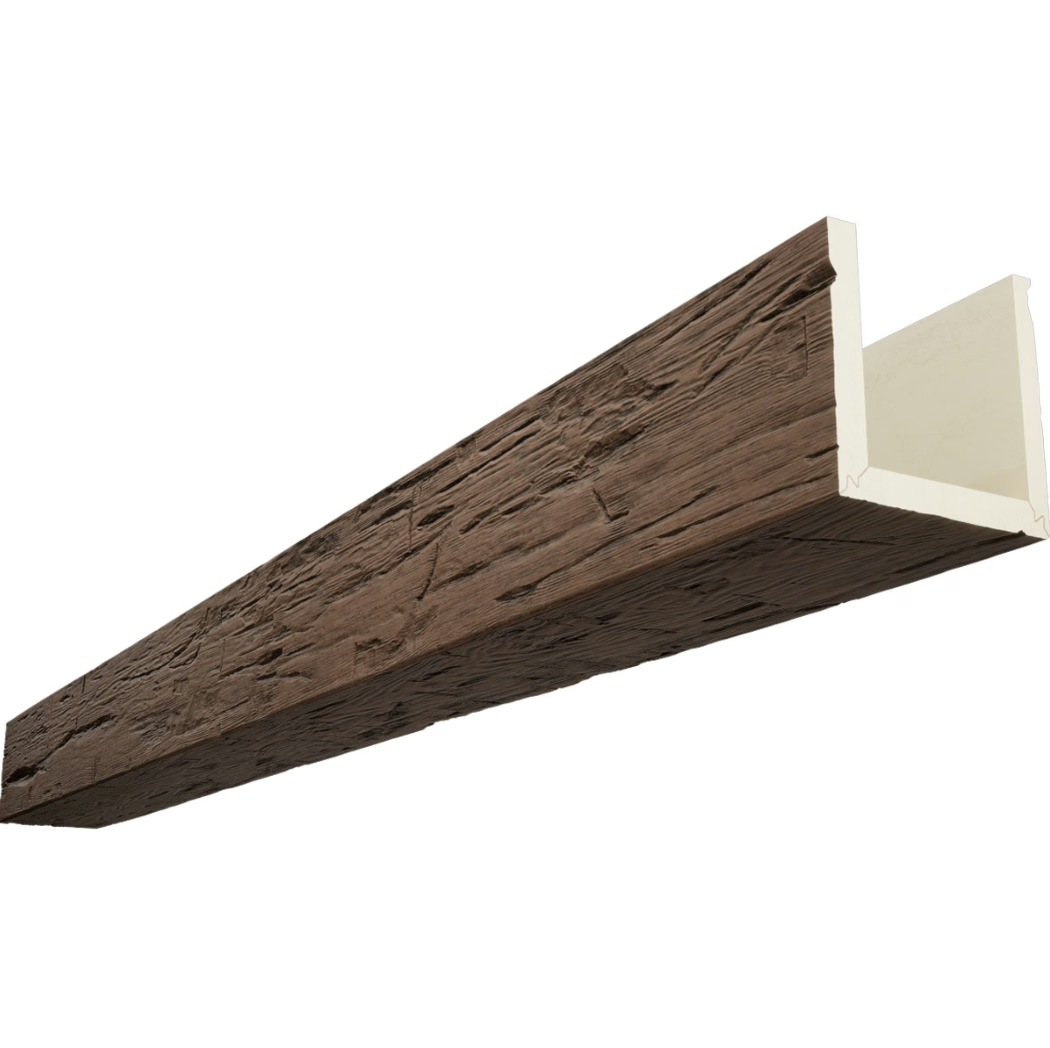
Quality polyurethane formulations resist the environmental factors that degrade natural wood in interior applications. Moisture absorption, the primary cause of wood deterioration, affects polyurethane minimally or not at all. UV exposure, which gradually breaks down wood surfaces, affects polyurethane only when formulations lack adequate UV stabilizers—quality products include these stabilizers as standard.
Surface durability affects how beams handle the minor impacts and contact that occur in living spaces. Quality products resist scratching and marring better than natural wood while maintaining authentic surface textures. When damage does occur, repair approaches vary from simple touch-up to section replacement depending on severity and location.
The consistent appearance retention of quality replicated beams eliminates the renovation cycles that genuine timber requires. Natural wood eventually shows wear patterns, discoloration, and weathering that require refinishing to address. Polyurethane beams maintain initial appearance indefinitely with routine cleaning, providing lasting satisfaction without periodic maintenance investment.
Selecting Quality Products
The market for replicated timber beams includes products ranging from budget alternatives to premium offerings. Understanding the characteristics that distinguish quality products helps ensure purchases that meet expectations.
Physical sample examination provides the most reliable quality assessment. Texture depth and consistency, color quality and variation, edge treatment, and overall construction quality become apparent through direct observation. Photographs and descriptions cannot convey the tactile qualities and subtle variations that determine whether products will satisfy.
Manufacturer reputation and warranty coverage indicate production quality and confidence. Established companies with strong market presence have invested in quality processes that ensure consistent results. Substantial warranty coverage—ten years or longer—suggests materials designed for long-term performance rather than disposability.
Price correlation with quality exists but is not absolute. The highest-priced products may include features or brand positioning that add cost without proportional benefit. The goal involves identifying the quality threshold where products satisfy inspection and selecting products at or above that threshold rather than assuming that any higher-priced option necessarily provides better value.
Technical References
ASTM standards cited in every specification
Test Data
Lab results from internal testing program
Updated 2026
Reviewed against current product specs


