The competitive real estate market demands that properties stand out among listings, with first impressions determining whether potential buyers schedule viewings and ultimately make offers. Professional home staging has emerged as a proven strategy for creating compelling property presentations that capture buyer attention and communicate value effectively. Among the various staging techniques available, ceiling enhancement through quality faux wood beams ranks among the most impactful investments for properties seeking competitive positioning.
The appeal of ceiling beams in staging contexts derives from their ability to transform spaces instantly while communicating established quality and design investment. Properties that might otherwise feel generic or builder-basic gain immediate architectural character through beam installation. The warm, organic quality of wood textures counters the sterile impression that bare drywall and standard finishes can create, helping properties feel like homes rather than commodities.
The practical demands of home staging, however, differ significantly from permanent installation contexts. Properties must be prepared quickly, maintained easily, and potentially restored to original conditions after sale. Genuine timber beams rarely accommodate these staging requirements, but quality polyurethane faux alternatives have been specifically designed to address the unique challenges of professional property enhancement.
Staging-Specific Requirements
Professional home staging operates under constraints that differentiate it from residential renovation or new construction projects. Understanding these constraints helps select appropriate materials and installation approaches that serve staging objectives effectively.
Time constraints represent the primary challenge for most staging projects. Properties often need preparation within days of listing decision, with staging windows that may last only weeks before showing schedules demand change. Materials and installation approaches must accommodate these compressed timelines without sacrificing quality results. Polyurethane faux beams install rapidly compared to genuine timber alternatives, often completing substantial transformations within single-day installations.
Temporary or reversible installation often proves necessary for staged properties. Whether due to rental situations, pending inspections, or uncertain sale timelines, staging installations may need removal capability that genuine timber cannot provide. Polyurethane beams accommodate reversible installation through mounting approaches that leave underlying surfaces largely undamaged when removal becomes necessary.
Budget constraints in competitive real estate markets demand efficient allocation of staging investments. The cost per impact achieved matters more than absolute material costs, with staging budgets typically ranging from modest to moderate. Polyurethane beams provide substantial visual impact at costs compatible with staging budgets, enabling dramatic transformations that justify the investment through accelerated sales and improved offers.
Visual Impact for Buyer Psychology
Buyers respond to ceiling beams through psychological mechanisms that extend beyond simple aesthetic appreciation. Understanding these responses helps staging professionals leverage beam installations for maximum effect on buyer perception and decision-making.
The sense of established permanence that ceiling beams create affects how buyers evaluate properties. Beams suggest that a home has been thoughtfully designed and maintained over time, characteristics that transfer to perceived property value. Even obviously decorative installations trigger these associations, with buyers registering the presence of quality architectural details regardless of construction method.
Warmth perception increases significantly in spaces featuring wood-textured elements. The organic, natural qualities of wood create psychological comfort that contrasts with the institutional feel of plain drywall ceilings. This warmth effect proves particularly valuable in客厅 and dining spaces where family gatherings and social activities create emotional associations that influence buyer decisions.
Visual interest created by ceiling beams draws attention upward, emphasizing ceiling height and architectural presence. Properties with substantial ceiling height often fail to communicate this feature effectively through photography or initial viewing. Beam installations that draw the eye upward help buyers appreciate available space, potentially increasing perceived value for rooms with generous proportions.
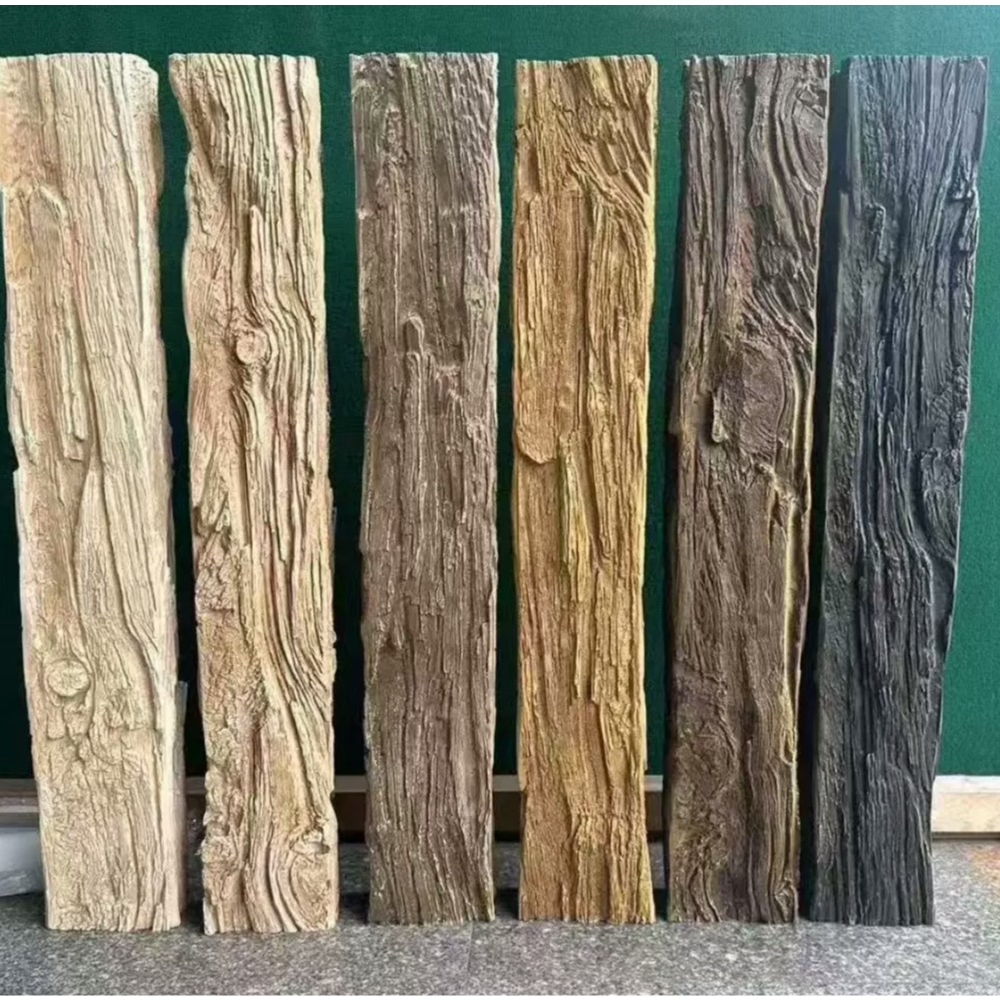
Quick Installation Approaches
Efficient installation techniques maximize staging impact while respecting time constraints. The most effective approaches balance installation speed with result quality, achieving professional appearances without excessive time investment.
Adhesive mounting provides the fastest approach for most ceiling applications. Construction-grade adhesive bonds create secure attachment while avoiding the fastener holes that complicate eventual removal. The adhesive cures quickly, allowing immediate use of staged spaces without extended waiting periods.
Hybrid mounting combining adhesive with limited mechanical fasteners provides additional security for situations where extra assurance proves valuable. Fasteners driven into structural elements supplement adhesive bonding, with fastener locations selected to minimize visibility. This approach requires slightly more time but provides installation confidence that adhesive-only methods cannot match.
Wall mounting expands beam application beyond ceiling installations, enabling dramatic architectural effects in spaces where ceiling mounting proves impractical. Beams mounted to walls can create wainscoting effects, fireplace surrounds, or architectural dividers that contribute warmth and character without requiring ceiling access.
Property Type Considerations
Different property types present distinct staging opportunities and challenges that should inform beam installation decisions. Understanding these variations helps staging professionals select appropriate approaches for specific properties.
Luxury properties typically accommodate more substantial beam installations, with larger rooms and higher ceilings supporting dramatic treatments. The investment in quality materials and professional installation returns through enhanced property positioning and buyer perception of quality. These properties often justify premium beam products that would exceed budget parameters for modest homes.
Entry-level and starter homes benefit from more restrained beam applications that add character without overwhelming modest spaces. Single-beam accent installations, partial ceiling treatments, or wall-mounted beams can provide warmth and interest appropriate to smaller properties. These applications often prove highly effective relative to investment, transforming generic spaces without requiring extensive material quantities.
Condominiums and townhouses present unique challenges due to association rules, shared infrastructure, and limited ceiling access in some cases. Beam installations in these properties may require creative approaches that work within existing constraints while still achieving staging objectives. The lightweight nature of polyurethane beams often accommodates mounting situations where genuine timber would exceed structural limitations.
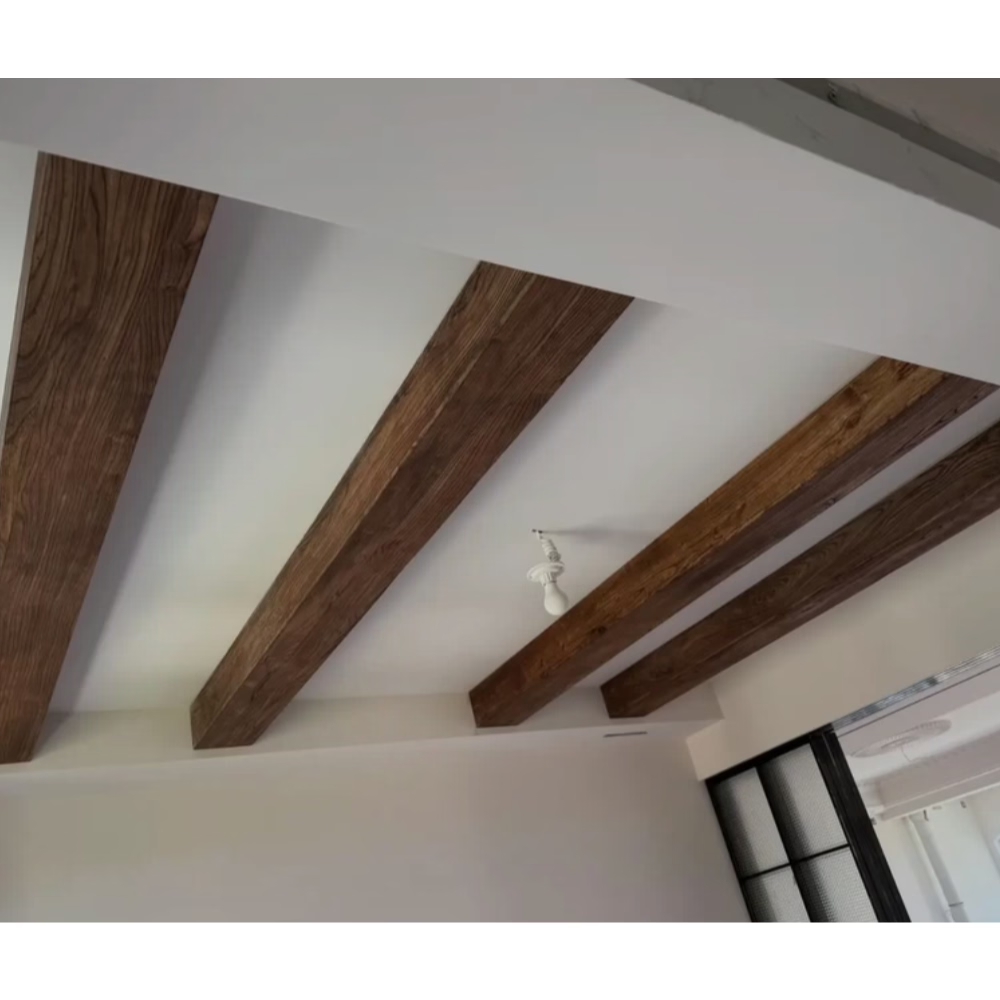
Photography and Marketing Enhancement
Modern real estate marketing relies heavily on professional photography and virtual tours that must capture property appeal effectively. Ceiling beams create dramatic visual elements that photograph exceptionally well, providing marketing imagery with architectural interest that plain ceilings cannot match.
The three-dimensional quality of beam installations creates visual interest in still photography that draws viewer attention. Light interaction with beam surfaces creates shadows, highlights, and texture variations that animate images, preventing the flat appearance that characterizes poorly photographed spaces. This visual dynamism helps properties stand out among listings where buyers scroll rapidly through numerous images.
Virtual tour presentations benefit similarly from beam installations, with the architectural interest creating compelling spatial experiences as viewers navigate through spaces. The warmth of wood textures counters the clinical feel that virtual environments can create, helping viewers emotionally connect with properties despite the mediated nature of virtual presentation.
Investment Return Analysis
Professional home staging has demonstrated consistent returns through accelerated sales and improved offers across multiple market studies. Beam installations contribute to these returns through specific mechanisms that affect buyer perception and property positioning.
The cost per square foot of beam installation typically proves lower than alternative staging investments that provide comparable impact. Furniture rental, artwork, and decorative accessories all carry monthly costs that accumulate over staging periods. Beam installations, by contrast, represent one-time investments that work throughout staging periods regardless of duration.
Quality materials contribute to positive buyer impressions that affect negotiation dynamics. Properties featuring quality finishes communicate care and investment that buyers appreciate. The presence of quality architectural details like ceiling beams reinforces these perceptions, potentially affecting how buyers perceive other property aspects and influencing offer strength.
Removal and reuse potential extends value further for staging professionals managing multiple properties. Quality polyurethane beams can be removed, stored, and reinstalled across multiple staging assignments, distributing initial investment across several property presentations. This reusability improves the economics of beam-based staging compared to single-use decorative elements.
Technical References
ASTM standards cited in every specification
Test Data
Lab results from internal testing program
Updated 2026
Reviewed against current product specs


