Farmhouse style is one of the most enduring and widely adopted interior design aesthetics in the residential market. Its appeal lies in its authenticity: the use of natural, imperfect materials, the warmth of worn surfaces, and the connection to a simpler way of building and living. The challenge for homeowners and designers working in this tradition is that authentic reclaimed timber — wood salvaged from old barns, factories, and warehouses — is expensive, difficult to source consistently, and carries structural uncertainties. Polyurethane faux beams with a convincing reclaimed timber look solve this problem, offering the aesthetic of genuine reclaimed wood with none of the practical complications.
The reclaimed timber look is defined by weathering: the marks left by decades of exposure to sun, rain, and temperature changes. Saw marks from historic milling methods, nail holes from previous installations, surface checking and cracking from repeated wet-dry cycles, and the overall patina of age all contribute to the character that makes reclaimed wood so visually appealing. A quality polyurethane reclaimed beam replicates all of these characteristics through careful texturing, color layering, and finishing techniques.
Understanding the Reclaimed Timber Aesthetic
Real reclaimed timber carries the evidence of its previous life. Every dent, crack, and discoloration tells a story. The challenge in reproducing this aesthetic is capturing not just the individual marks but the overall impression of age and use that accumulates over decades. A reclaimed beam does not look uniformly weathered — it shows patches of different weathering levels, areas where the surface has been worn smooth, and areas where it remains rough and textured.
For polyurethane faux beams, the manufacturing process must achieve this uneven quality through careful texturing and multi-stage finishing. The beam surface should have areas of varying texture: some smooth where it might have been protected from the elements, some rough where the grain has been exposed and weathered. The color should vary subtly across the surface, with darker tones in recessed areas and lighter tones on raised surfaces. This creates the illusion of depth and age that distinguishes genuine reclaimed timber from flat, uniform reproductions.
Choosing the Right Reclaimed Finish for Your Farmhouse
The term "reclaimed" covers a wide range of finishes, from subtle weathering that suggests age without being obvious to dramatic surface treatment that makes a bold rustic statement. Choosing the right level requires understanding the other design elements in the space and selecting a reclaimed finish that contributes to the overall character without overwhelming it.
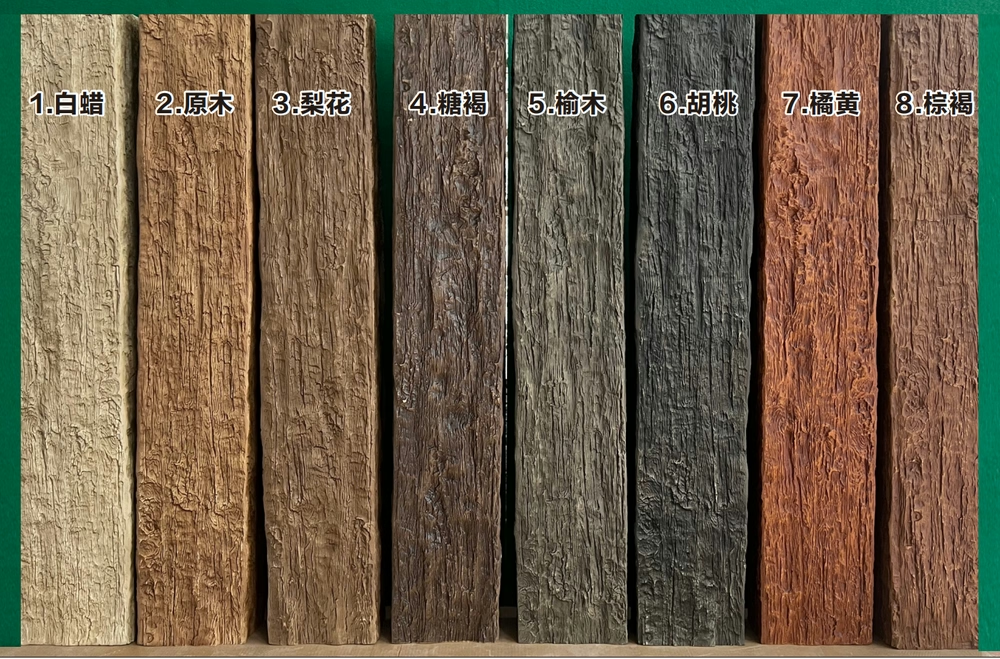
A light reclaimed finish — sometimes described as "barn oak" or "weathered natural" — suggests age through subtle surface checking and a slightly muted color compared to new wood of the same species. This level of weathering is the most versatile and works in farmhouse interiors that are more refined than rustic, where the beams should add character without dominating the design.
A medium reclaimed finish introduces more visible weathering: deeper grain patterns, more pronounced surface texture, and subtle gray or silver tones that suggest long exposure to sun and rain. This finish suits farmhouse interiors with more rustic furniture and rougher finishes, where the beams should feel like a genuine find rather than a decoration.
A heavy reclaimed finish — with pronounced cracking, deep checking, and bold gray or charcoal tones — is the most dramatic option and works best in spaces where the beams are the primary design element. Use this level in a room with simple, clean walls and minimal furniture, where the beams become the centerpiece rather than one element among many.
Farmhouse Room Applications
The Farmhouse Kitchen
The kitchen is the heart of the farmhouse home and benefits enormously from reclaimed timber beams on the ceiling. The warmth of the weathered wood softens the often-utilitarian surfaces of the kitchen — countertops, appliances, cabinetry — and creates a sense of permanence and history. In an open-plan kitchen and dining area, beams over the kitchen zone mark the functional transition while unifying the space visually.
In a farmhouse kitchen, reclaimed beams pair naturally with shiplap walls, open shelving, a farmhouse sink, and cabinet hardware in unlacquered brass or matte black. The materials feel related to each other: weathered wood, natural metal, and white-painted wood all belong to the same material family of honest, functional finishes.
The Farmhouse Living Room
The living room in a farmhouse home should feel like the best room in an old house: comfortable, welcoming, and full of character. Reclaimed timber beams contribute this character without requiring the structural modifications that real reclaimed timber might demand. In a living room with a large fireplace, beams above the mantel or running across the ceiling create a visual anchor that connects the fireplace to the room and draws people into the seating arrangement.
Furniture in a farmhouse living room with reclaimed beams should be a mix of vintage and new, with natural materials dominating. A leather sofa, a worn wooden coffee table, a linen armchair, and a jute or wool rug create layers of texture that complement the beam ceiling without competing with it.
The Farmhouse Entryway
An entryway with reclaimed timber beams sets the tone for the entire home. The transition from exterior to interior is marked by the change from the raw outside environment to the warmth and character inside. A reclaimed beam spanning the entry ceiling, paired with a console table in a matching finish and a framed mirror, creates an arrival moment that feels both grand and welcoming.

Sourcing Quality Reclaimed Look Beams
For trade buyers, the quality of the reclaimed timber look depends almost entirely on the manufacturing process. Injection-molded PU beams with a painted-on finish may look convincing in a catalog photograph but will fail close inspection. A quality reclaimed beam is manufactured with deep-textured surfaces that catch light realistically, multiple color layers that create the impression of uneven weathering, and surface details — simulated nail holes, saw marks, and checking — that are placed intentionally rather than uniformly.
Request physical samples before committing to a large order, and evaluate them in the lighting conditions of the intended installation. The quality of a reclaimed finish is most apparent in how the light interacts with the surface texture. A good sample will look different at different angles, with highlights shifting across the grain pattern and weathering marks. A poor sample will look flat and uniform regardless of viewing angle.
Maintenance and Longevity
One of the practical advantages of polyurethane reclaimed beams over real reclaimed timber is their stability. Real reclaimed wood can continue to react to environmental conditions, developing new cracks or warping slightly as it adjusts to a new environment. PU beams are dimensionally stable and will not change over time, meaning the reclaimed finish looks exactly the same after ten years as it did on the day of installation.
Cleaning is straightforward: a soft brush or cloth removes dust, and a damp cloth with mild soap handles any accumulated grime. Unlike real reclaimed wood, PU beams do not require periodic resealing or refinishing to maintain their appearance, which makes them particularly suitable for busy households and commercial hospitality environments.
Technical References
ASTM standards cited in every specification
Test Data
Lab results from internal testing program
Updated 2026
Reviewed against current product specs


