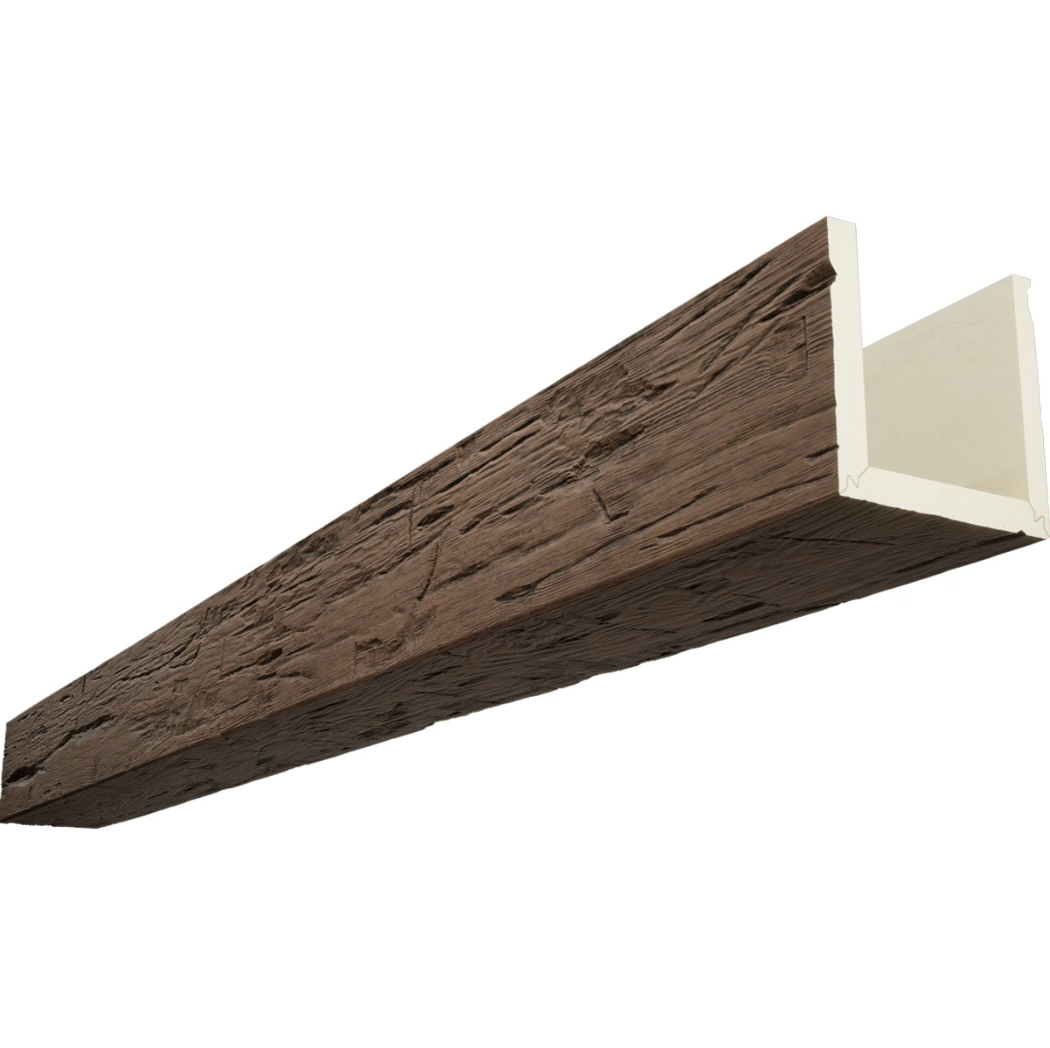
The global construction and interior design industries increasingly recognize polyurethane faux wood beams as essential components in both new builds and renovation projects. This growing demand has fostered a sophisticated B2B supply chain connecting specialized manufacturers with distributors, contractors, and design firms operating across diverse markets. Understanding how to identify and partner with reliable suppliers for custom specifications and bulk orders enables businesses to secure consistent quality, competitive pricing, and dependable supply that supports project success.
Customization requirements distinguish professional procurement from simple catalog purchasing. Projects with unique design visions often require non-standard dimensions, specialized finishes, or modified profiles that mass-produced items cannot provide. Working with suppliers capable of accommodating these requirements expands the range of achievable designs while streamlining the procurement process through single-source ordering.
Bulk ordering presents distinct challenges compared to small-quantity purchases. Quality consistency across large shipments, logistics coordination for substantial volumes, and payment terms appropriate to business relationships all require different approaches than consumer-oriented purchasing. B2B suppliers structure their operations specifically to address these commercial requirements, providing services that support efficient bulk procurement.
Evaluating Supplier Capabilities
Assessing potential suppliers requires systematic evaluation of capabilities relevant to bulk custom orders. Manufacturing capacity determines whether a supplier can fulfill large orders within required timeframes without compromising quality. Visiting facilities or requesting virtual tours reveals production capabilities, quality control processes, and organizational competence that inform partnership decisions.
Customization capabilities deserve particular attention during supplier evaluation. Not all manufacturers offering custom products maintain equivalent capabilities across all customization options. Some suppliers excel at non-standard dimensions while others specialize in custom finishes or unusual profiles. Matching supplier strengths to specific project requirements optimizes outcomes while ensuring that customization requests receive appropriate expertise.
Quality management systems demonstrate supplier commitment to consistent product excellence. ISO certifications, third-party testing, and documented quality procedures indicate mature manufacturing operations that deliver predictable results. Suppliers willing to share quality documentation and testing results show transparency that supports informed procurement decisions.
Pricing Structures for Bulk Procurement
Understanding how suppliers structure bulk pricing enables procurement strategies that optimize value across multiple orders. Volume discounts typically apply when order quantities exceed defined thresholds, with discount percentages increasing as order sizes grow. Negotiating these thresholds based on anticipated purchasing patterns secures better pricing without requiring commitment to impractical order volumes.
Long-term partnership arrangements often provide pricing advantages beyond simple volume discounts. Suppliers valuing reliable, ongoing relationships may offer loyalty pricing, extended payment terms, or priority production scheduling that benefits both parties. These arrangements require commitment from both supplier and buyer, creating partnerships that evolve beyond transactional purchasing.
Customization costs frequently apply differently than standard product pricing. Setup fees for custom colors, tooling costs for non-standard profiles, and handling charges for special requirements should be clearly understood before finalizing procurement budgets. Transparent suppliers provide detailed cost breakdowns that enable accurate budgeting and comparison shopping.


Logistics and Delivery Coordination
Bulk orders require logistics planning that differs significantly from small-shipment fulfillment. Transportation costs often represent substantial portions of total procurement costs, particularly for international shipments. Understanding freight options including full container loads, less-than-container loads, and specialized freight services enables cost-effective procurement strategies.
Lead time coordination becomes increasingly important with larger orders. Manufacturing schedules, finishing processes, and quality inspection extend total production time beyond simple processing periods. Building realistic lead times into project planning prevents costly rush orders or construction delays that result from unrealistic delivery expectations.
Customs clearance and import documentation represent additional considerations for international procurement. Experienced B2B suppliers understand export documentation requirements and can provide certificates of origin, commercial invoices, and packing lists formatted to facilitate customs clearance. Suppliers offering these services reduce the administrative burden on buyers and minimize delays at international borders.
Communication and Account Management
Effective B2B relationships depend on clear communication channels and responsive account management. Dedicated account representatives provide single points of contact who understand specific business relationships and can coordinate across departments to address concerns efficiently. Access to technical support for specification questions and installation guidance adds value beyond simple product provision.
Digital communication platforms increasingly support efficient B2B interactions. Online ordering systems, real-time inventory visibility, and shipment tracking enable procurement teams to manage orders without extensive back-and-forth communication. However, the availability of human support for complex issues or unusual requests remains important, as automated systems cannot address every procurement scenario.
Documentation quality reflects supplier professionalism and organizational competence. Order confirmations, shipping notifications, and invoice documentation should be accurate, timely, and formatted for efficient processing. Suppliers whose documentation requires extensive correction or clarification create unnecessary administrative burden that erodes relationship value.
Building Sustainable Supplier Partnerships
Long-term supplier relationships deliver benefits beyond individual transaction efficiency. Established partnerships enable better understanding of buyer requirements, supporting proactive communication about product improvements, market developments, and supply chain considerations that might affect procurement.
Joint planning for anticipated demand helps suppliers maintain appropriate inventory levels and production capacity. Sharing seasonal patterns, project pipelines, and growth forecasts enables suppliers to prepare for buyer needs rather than simply reacting to orders. This collaborative approach benefits both parties through improved service levels and optimized operations.
Quality feedback loops contribute to continuous improvement in both products and services. Constructive communication about product performance, service experiences, and areas for improvement helps suppliers address issues and capitalize on opportunities. Suppliers who value and act on customer feedback demonstrate partnership orientation that distinguishes them from purely transactional vendors.
Strategic B2B supplier partnerships provide the foundation for successful bulk procurement of custom polyurethane faux beams. By evaluating capabilities systematically, understanding pricing structures, coordinating logistics effectively, and building collaborative relationships, businesses secure supply chain advantages that support competitive positioning and project success. The investment in identifying and developing reliable supplier partnerships pays dividends across numerous future orders and projects.
Technical References
ASTM standards cited in every specification
Test Data
Lab results from internal testing program
Updated 2026
Reviewed against current product specs