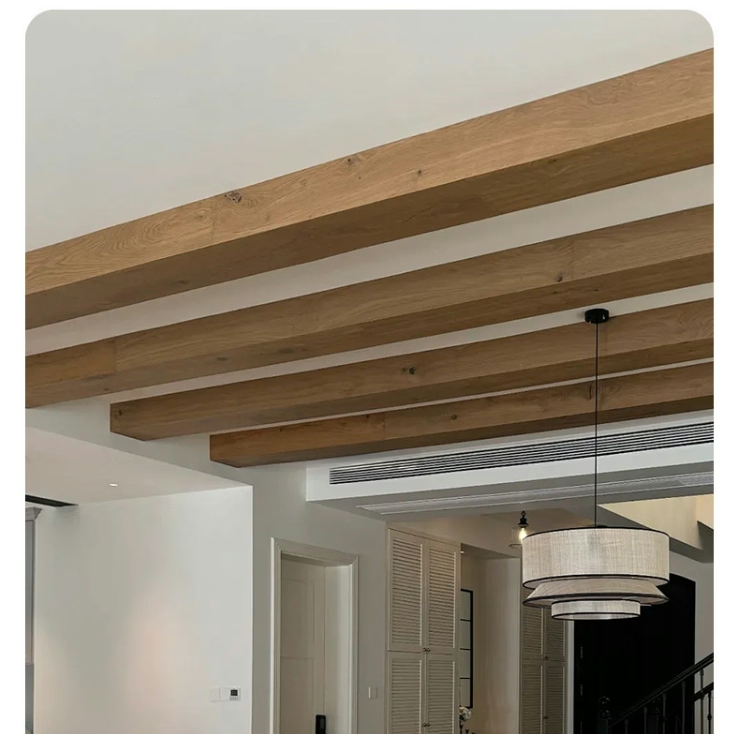
China has established itself as a dominant force in polyurethane architectural product manufacturing over recent decades, with production capabilities that serve markets worldwide. The country's manufacturing infrastructure combines advanced technology, experienced workforce, and economies of scale that enable competitive pricing without sacrificing product quality. International buyers seeking polyurethane faux wood beams increasingly recognize Chinese manufacturers as preferred sourcing destinations that deliver reliable quality alongside cost advantages.
Understanding the Chinese manufacturing landscape helps buyers make informed sourcing decisions. Not all manufacturers operate at equivalent capability levels, and distinguishing between suppliers requires systematic evaluation of production facilities, quality systems, and export experience. The investment in identifying genuinely reliable manufacturers pays dividends through consistent product quality and dependable partnership experiences.
The logistics connecting Chinese manufacturers with global buyers have matured significantly, creating supply chain infrastructure that handles international freight efficiently. Container shipping, customs brokerage, and inland transportation connect factories with project sites worldwide, making overseas manufacturing a practical procurement option even for time-sensitive projects.
Manufacturing Capabilities and Technology
Contemporary Chinese manufacturers of polyurethane faux wood beams operate advanced production facilities equipped with sophisticated molds, mixing systems, and finishing equipment. Computer-controlled manufacturing processes ensure consistent product quality across production runs while enabling the customization that distinguishes premium products from commodity alternatives.
Material formulations vary between manufacturers, with established producers investing in research and development to optimize polyurethane characteristics for architectural applications. These formulations balance durability, weight, surface appearance, and cost considerations to deliver products appropriate for diverse market requirements. Manufacturers willing to share technical specifications enable buyers to verify that products meet required performance standards.
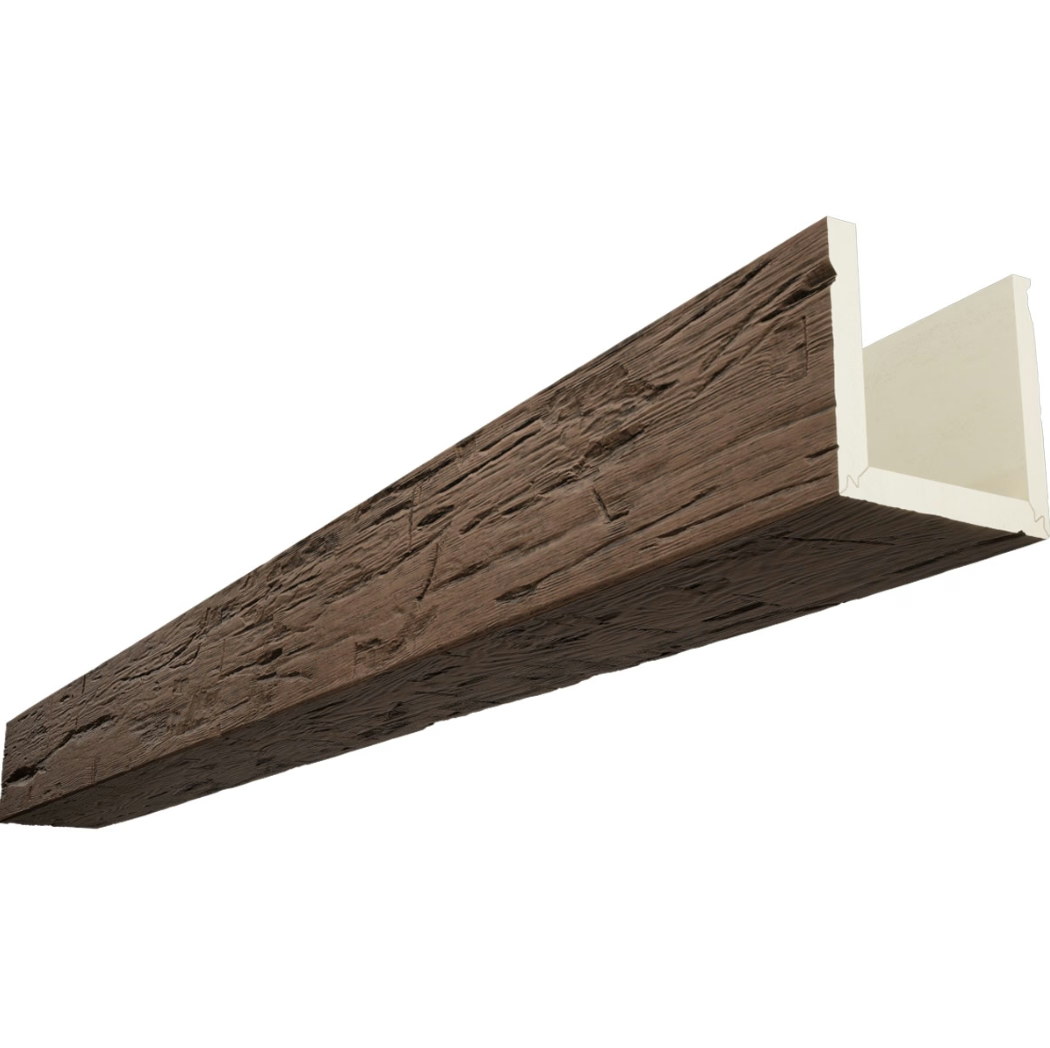
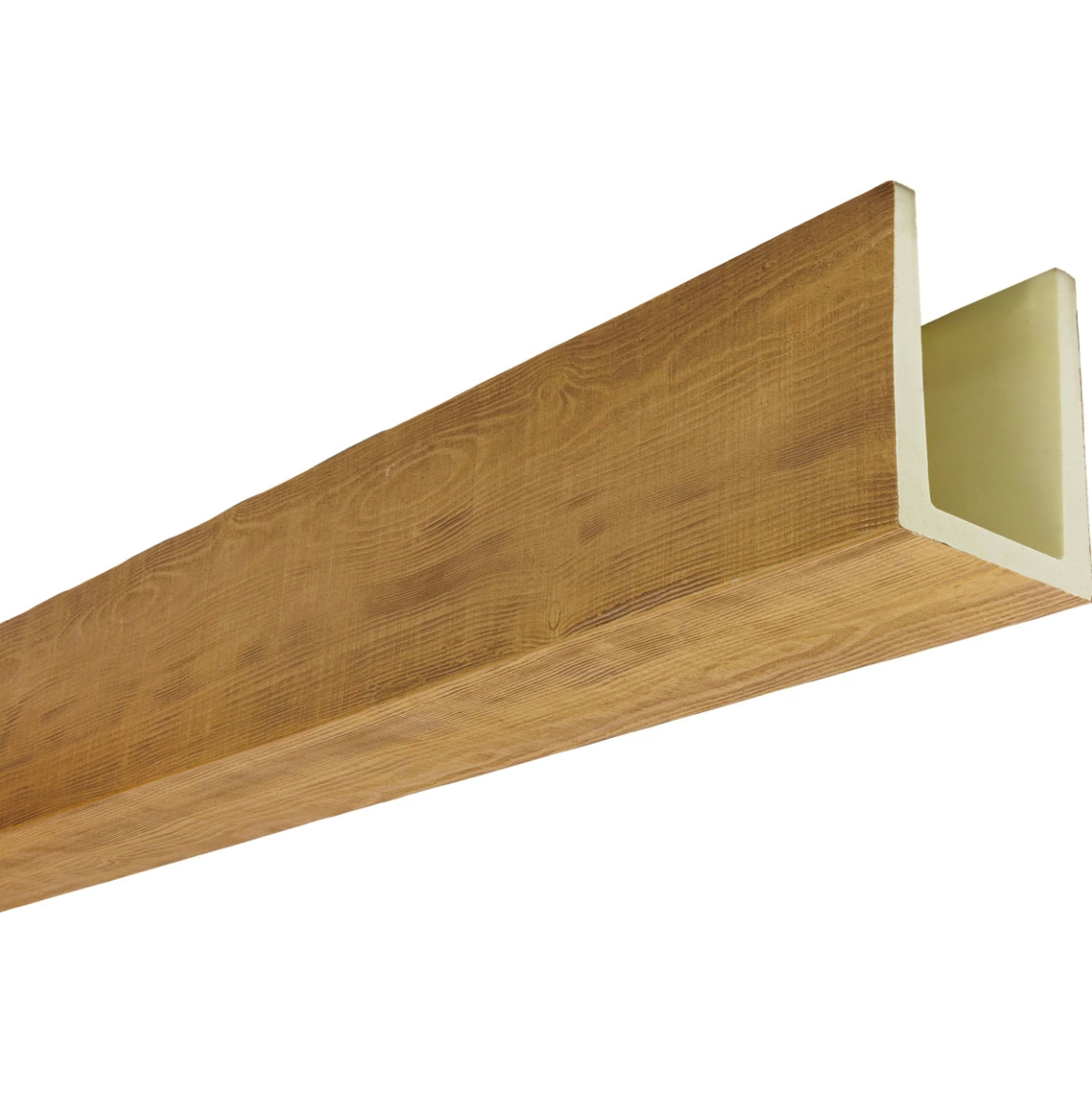
Surface texturing technology has advanced significantly, with modern manufacturing producing convincingly authentic wood grain patterns that replicate both common species and specialty appearances. High-definition molds capture fine wood characteristics including subtle grain variations, knotholes, and weathering patterns that create genuinely realistic appearances. The visual quality achievable through modern manufacturing rivals or exceeds natural wood in some respects.
Quality Assurance Systems
Professional manufacturers serving international markets implement comprehensive quality management systems that ensure consistent product excellence. These systems typically align with international standards like ISO 9001, providing documented procedures for production control, inspection protocols, and non-conformance management. Buyers can request quality documentation that demonstrates system implementation and effectiveness.
Pre-shipment inspection services provide additional quality verification before products leave manufacturing facilities. Third-party inspection companies operating in China offer independent assessment of product quality, quantity verification, and specification compliance. These services reduce buyer risk and provide objective evidence regarding shipment contents and condition.
Sample approval processes enable buyers to verify product quality before committing to full production. Professional manufacturers expect sample approval cycles and incorporate adjustments based on buyer feedback before proceeding with bulk production. This iterative process ensures that final products meet buyer expectations and reduces costly quality disputes after shipment.

Export Documentation and Compliance
International trade requires documentation that facilitates customs clearance and demonstrates regulatory compliance. Experienced export manufacturers provide certificates of origin that establish product nationality for tariff determination and trade agreement eligibility. These certificates derive from documented manufacturing processes and may require supporting documentation that reputable manufacturers maintain systematically.
Product compliance documentation addresses relevant regulations in destination markets. Fire safety certifications, emission standards, and material content declarations may be required depending on the importing country and intended application. Manufacturers accustomed to serving diverse international markets understand these requirements and provide appropriate documentation without requiring extensive buyer guidance.
Intellectual property considerations affect sourcing relationships, particularly for products with distinctive designs or proprietary surface treatments. Professional manufacturers respect legitimate intellectual property while avoiding unauthorized reproduction of protected designs. Clear agreements regarding design ownership, exclusivity provisions, and confidentiality protections establish appropriate boundaries that protect both parties.
Communication and Cultural Considerations
Effective collaboration with Chinese manufacturers requires attention to communication practices that bridge cultural differences. Language considerations affect both written correspondence and spoken communication during calls or video conferences. Manufacturers providing dedicated English-speaking account managers facilitate clearer communication that reduces misunderstandings and accelerates decision-making.
Time zone differences require scheduling adjustments that accommodate productive overlap between buyer and supplier working hours. Establishing regular communication windows that work for both parties enables real-time discussion of complex issues that email cannot resolve efficiently. Professional manufacturers accommodate these scheduling needs as part of responsive customer service.
Relationship building practices in Chinese business culture differ from Western norms, with greater emphasis on long-term partnership development and personal connection. Understanding these cultural dimensions enables buyers to build relationships effectively while maintaining professional boundaries appropriate to business contexts. The investment in relationship building typically yields improved service and priority treatment over time.
Payment Terms and Financial Security
International payment arrangements require careful structuring to protect both buyer and supplier interests. Letter of credit arrangements offered through reputable banks provide financial security that benefits both parties, though administrative complexity and banking fees affect total transaction costs. Experienced manufacturers understand these arrangements and can coordinate with buyer banks efficiently.
Progressive payment structures matching payments to production milestones reduce risk while providing manufacturers with operating capital. Common structures involve deposits confirming orders, payments upon production completion, and final balances following shipment or delivery. These arrangements balance cash flow considerations across both buyer and supplier positions.
Account terms for established relationships enable efficient ongoing procurement after initial verification of supplier reliability. Net-30 or Net-60 terms following successful initial transactions streamline purchasing for regular buyers while rewarding demonstrated reliability. These arrangements require sufficient trust and track record that reputable suppliers build progressively with valued customers.
Chinese manufacturers of polyurethane faux wood beams offer compelling combinations of capability, quality, and cost-effectiveness for international buyers willing to invest in supplier identification and relationship development. Systematic evaluation, clear communication, and appropriate contractual protections enable successful partnerships that serve buyers across diverse market segments and geographic regions.
Technical References
ASTM standards cited in every specification
Test Data
Lab results from internal testing program
Updated 2026
Reviewed against current product specs