
Decoration material wholesalers serve as critical intermediaries between manufacturers and final customers, aggregating product varieties and providing distribution efficiency that benefits both supply and demand sides of the market. For this distribution model to function effectively, wholesalers require supplier relationships characterized by reliable product availability, consistent quality, and pricing structures that preserve appropriate margins through the distribution chain.
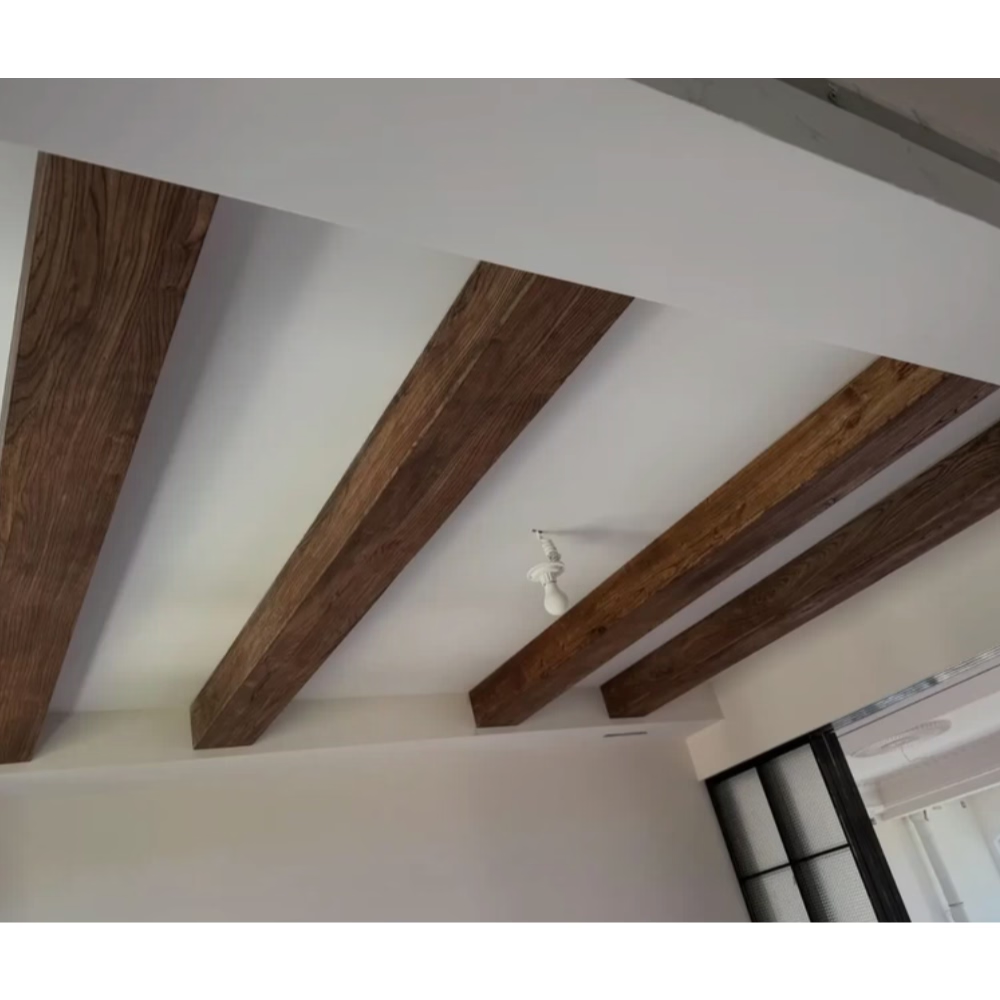
Faux wood beams represent attractive additions to decoration material wholesale portfolios. Strong visual appeal drives customer interest, while practical advantages including lightweight construction and moisture resistance expand potential applications beyond what natural wood can address. The growing awareness of these products among contractors, designers, and homeowners creates demand that wholesalers can profitably serve.
Successful wholesale supply relationships extend beyond simple transactional purchasing. They involve collaborative planning, information sharing, and mutual commitment that enables both parties to optimize their operations. Wholesalers who invest in supplier relationship development discover advantages that translate into competitive differentiation and improved business performance.
Wholesaler-Supplier Relationship Dynamics
The wholesale distribution model creates distinct dynamics compared to direct-to-consumer sales. Wholesalers typically maintain inventory that serves multiple customers with varying requirements, requiring product availability that enables rapid order fulfillment. Suppliers serving wholesalers must understand these inventory dynamics and plan production accordingly to maintain availability without requiring prohibitively large order volumes.
Return and exchange policies become particularly important for wholesale relationships. Damaged goods, specification mismatches, and overstock situations all generate returns that require clear handling procedures. Suppliers offering reasonable return accommodations provide wholesalers with flexibility that supports confident inventory stocking while preventing disputes that damage relationships.
Credit arrangements for wholesale relationships typically involve higher volumes and longer terms than retail transactions. Wholesalers require payment terms that accommodate inventory investment and customer payment cycles, creating working capital requirements that suppliers must understand and accommodate. Professional suppliers offer terms appropriate to wholesale volume levels.
Product Assortment Planning
Effective wholesale offerings require thoughtful product assortment that balances breadth against inventory complexity. Offering too few products limits customer appeal, while excessive variety diffuses inventory investment and increases carrying costs. Analyzing sales patterns by product category helps wholesalers optimize assortment decisions.
Price tier structuring enables wholesalers to serve diverse customer segments profitably. Entry-level products attract price-sensitive customers and drive transaction volume, while premium offerings provide higher margins from customers prioritizing quality. Suppliers offering products across multiple price tiers enable wholesalers to implement effective tiered pricing strategies.
New product introduction processes help wholesalers maintain fresh offerings that attract customer interest. Suppliers providing advance notice of new products, sample availability, and marketing support enable effective new product launches. Collaborative product development opportunities allow wholesalers to influence offerings based on market feedback.


Inventory Management and Demand Planning
Wholesalers must balance inventory availability against carrying costs, requiring demand forecasting that anticipates customer requirements without excessive overstock. Supplier communication regarding production capacity, seasonal patterns, and potential supply constraints informs demand planning that prevents both stockouts and excessive inventory.
Safety stock levels appropriate to product characteristics and demand variability protect against stockouts during demand spikes or supply disruptions. Products with stable demand and reliable supply require less safety stock than items with variable demand or supply uncertainty. Understanding these dynamics enables efficient inventory investment.
Lead time variability affects inventory strategy, with longer or more variable lead times requiring larger safety stocks to maintain service levels. Suppliers providing reliable lead time performance enable inventory optimization that reduces carrying costs while maintaining availability. Evaluating and selecting suppliers based on lead time consistency supports inventory efficiency.
Marketing and Sales Support
Supplier marketing support adds value to wholesale relationships beyond product provision. Product imagery, marketing materials, and sales training help wholesaler sales teams communicate product benefits effectively. Suppliers investing in these support resources demonstrate partnership orientation that distinguishes them from purely transactional vendors.
Trade show participation coordinated between suppliers and wholesalers amplifies market presence. Joint booth displays, coordinated promotional timing, and shared demonstration activities create marketing impact exceeding what either party could achieve independently. Professional suppliers understand trade show value and participate constructively in these opportunities.
Digital marketing resources including product photography, video content, and website assets help wholesalers develop effective online presence. High-quality digital assets increasingly drive purchasing decisions, making these resources valuable for wholesaler marketing operations. Suppliers maintaining comprehensive digital asset libraries provide resources that support wholesaler marketing effectiveness.
Quality Control and Customer Satisfaction
Wholesalers bear direct responsibility for customer satisfaction, making quality control throughout the distribution chain essential. Inspection procedures upon receipt identify shipping damage and specification issues before products reach customers. Clear quality standards and inspection protocols enable consistent quality verification.
Customer complaint handling reflects on wholesaler competence regardless of underlying cause. Professional complaint resolution that addresses customer concerns while coordinating appropriately with suppliers maintains customer relationships and identifies systemic issues requiring attention. Wholesalers excelling at complaint resolution develop reputation advantages that support customer loyalty.
Product education for wholesaler staff and customers improves specification accuracy and reduces returns. Understanding product characteristics, appropriate applications, and installation requirements enables informed selling that matches products to customer needs. Suppliers providing comprehensive product education support these knowledge development efforts.
Long-term success in decoration material wholesale distribution depends fundamentally on supplier relationships that provide reliable quality, competitive pricing, and genuine partnership orientation. By selecting suppliers thoughtfully and investing in relationship development, wholesalers build supply chain advantages that translate into competitive differentiation and sustainable business performance. The faux beam category offers attractive opportunities for wholesalers prepared to develop these supplier partnerships systematically.
Technical References
ASTM standards cited in every specification
Test Data
Lab results from internal testing program
Updated 2026
Reviewed against current product specs

