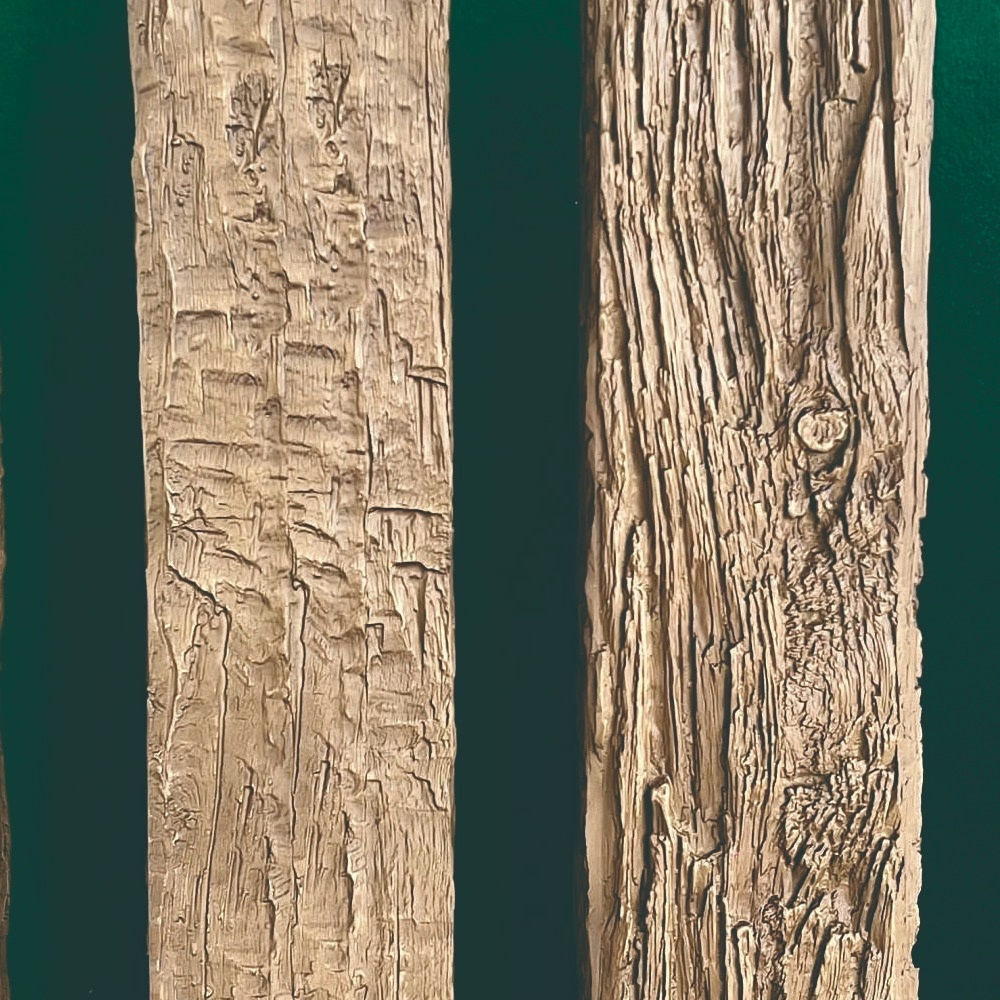
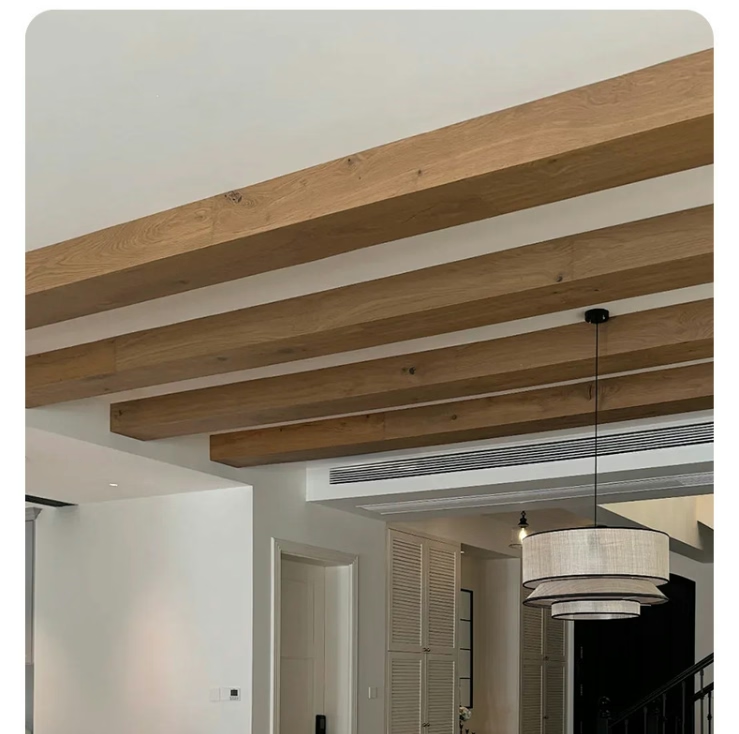
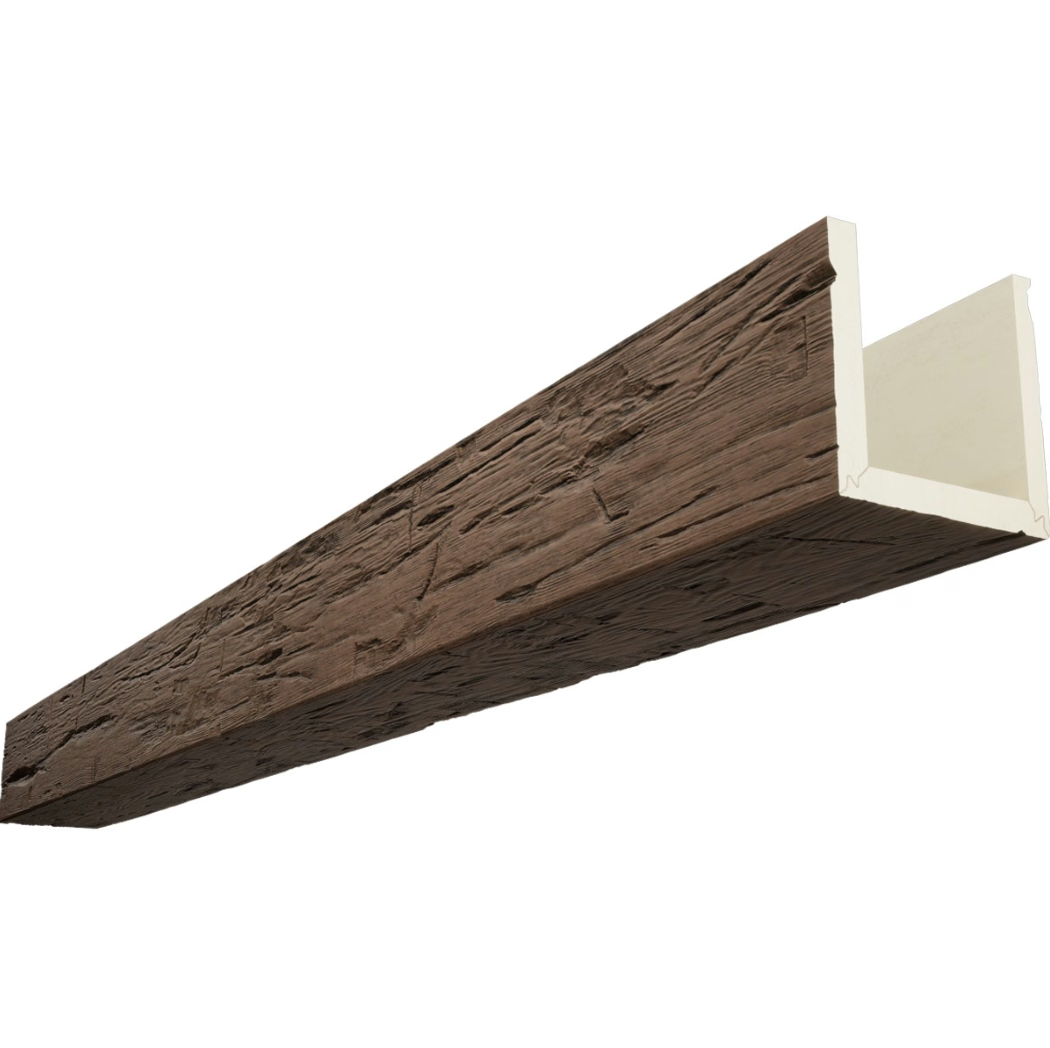
High-end hospitality design demands attention to detail that distinguishes exceptional properties from merely adequate accommodations. Guests at luxury hotels notice and appreciate the refinement that separates premium experiences from standard offerings, often without consciously analyzing what creates their sense of quality. Architectural trim elements including corbels and beam ends contribute significantly to this refinement, providing visual terminations that demonstrate care and craftsmanship.
The hospitality market has witnessed increasing competition as brands expand offerings and travelers gain access to diverse accommodation options. This competition has elevated design expectations throughout the industry, with even mid-market properties incorporating details once reserved for ultra-luxury segments. PU resin corbels and finished beam ends enable this design elevation by providing affordable access to architectural details that historically required expensive custom craftsmanship.
Understanding how these elements function within comprehensive hotel design schemes helps designers specify appropriately for specific project requirements. The selection process must balance aesthetic goals against practical constraints including budget, maintenance requirements, and installation feasibility in occupied properties.
The Language of Architectural Refinement
Architectural details communicate meaning through visual relationships that sophisticated viewers interpret subconsciously. The presence of corbels, the treatment of beam ends, and the refinement of transitions all contribute to perceptions of quality that influence guest experiences. These details create the sense of considered design that distinguishes memorable hotels from forgettable ones.
Scale appropriateness communicates understanding of luxury expectations. Elements that appear undersized suggest cost-cutting and compromise, while oversized elements appear garish and tasteless. The correct scale for corbels and beam ends relates to beam dimensions, ceiling heights, and room proportions in ways that feel naturally right rather than consciously noticed.
The finish quality of architectural trim reveals construction standards throughout properties. Guests who examine details closely discover consistency or inconsistency between visible elements and hidden construction. High-quality corbels and beam ends signal that the entire property has been built to similar standards, building confidence in overall quality.
Historical references in corbel and beam end design connect contemporary properties to architectural traditions that guests recognize even without specialized knowledge. These references create associations with quality, permanence, and craftsmanship that support luxury positioning. The references must be handled sensitively, however, avoiding direct historical copying that reads as pastiche rather than sophisticated interpretation.

Spatial Applications in Hotel Interiors
Lobby installations represent the highest-impact applications for corbels and beam ends in hospitality properties. The lobby establishes first impressions that color subsequent experiences, making detail quality in this space essential for luxury positioning. Corbels at beam supports and finished beam terminations create immediate impressions of architectural consideration.
Corridor ceiling treatments in guest room wings benefit from simplified corbel applications that provide visual interest without excessive ornament. The repetition of consistent detail creates rhythm that guides circulation while establishing the design vocabulary that guests encounter throughout their stay. Consistency between corridor and guest room treatments reinforces the sense of designed environment.
Ballroom and event space ceilings often feature dramatic corbel installations that establish grandeur appropriate for significant occasions. These spaces host weddings, conferences, and celebrations where impressive surroundings contribute to event success. The investment in substantial corbel and beam end treatment pays dividends through event satisfaction and positive referrals.
Executive lounge and club space ceilings require detail refinement that justifies premium pricing for exclusive access areas. The corbels and beam ends in these spaces should exceed quality levels in public areas, communicating the elevated status that club access provides. This quality hierarchy reinforces the value proposition that motivates club enrollment.
Specification Considerations
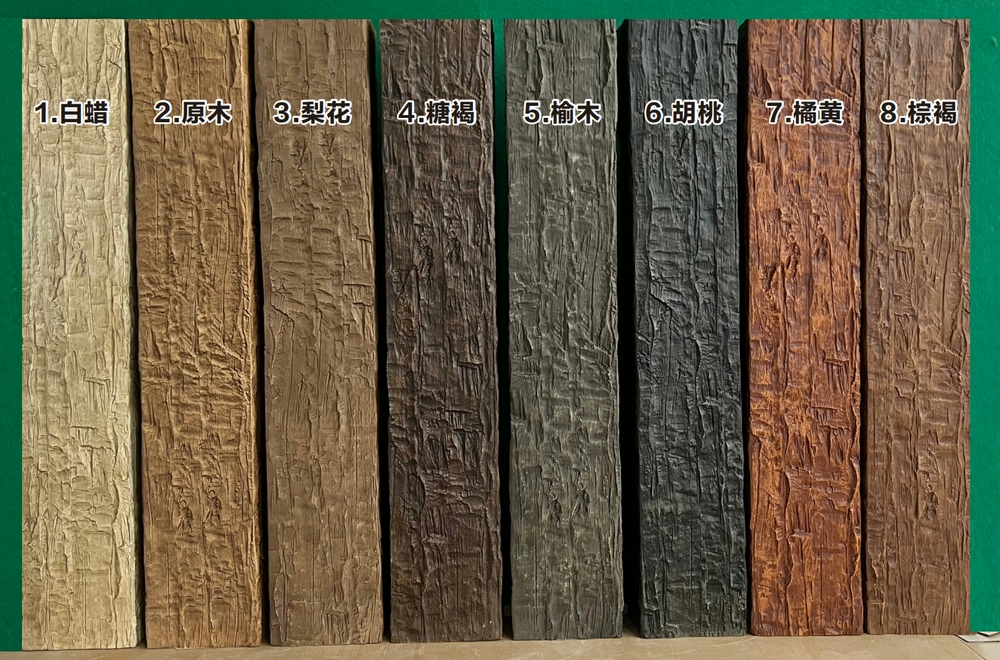
Material selection for hotel applications must account for traffic levels, cleaning requirements, and brand consistency across multiple properties. PU resin corbels address these requirements through durability, cleanability, and manufacturing consistency that enables brand standard replication across hotel portfolios.
Fire performance requirements in hospitality properties may mandate specific material formulations for corbels and beam ends. Building codes for public assembly spaces often require fire-retardant materials in specific locations, making compliance verification essential during specification. Products with certified fire ratings provide the documentation that code officials require.
Impact resistance matters in high-traffic areas where furniture, service carts, and luggage may contact wall and ceiling trim. Corbels at beam ends present vulnerable points that can be damaged by impact. Quality PU formulations resist impact damage better than plaster or less-dense materials, reducing maintenance costs and appearance degradation.
Finish durability ensures that corbels and beam ends maintain appearance despite cleaning, touching, and environmental exposure. The finish should resist scratching, scuffing, and gradual wear that degrades appearance over time. Factory-applied finishes typically outperform field-applied alternatives in durability and consistency.
Installation in Operating Properties
Hotel renovation projects must minimize disruption to ongoing operations while achieving quality results. The installation approach for corbels and beam ends should accommodate occupied conditions without generating excessive noise, dust, or odor that disturbs guests.
Prefinished components reduce on-site work that generates disturbance and extends project timelines. Corbels and beam ends arriving ready for installation eliminate sanding, filling, painting, and other finishing operations that characterize traditional millwork installation. This prefinishing proves particularly valuable in occupied properties where guest disturbance must be minimized.
Modular installation approaches enable rapid completion that limits service disruption. Components designed for efficient installation reduce labor time and simplify coordination with other work trades. The installation efficiency translates to reduced project duration and earlier property reopening.
Connection methods should accommodate existing construction conditions that renovation projects encounter. The backing, fastening, and adjustment approaches should work with actual wall and ceiling conditions rather than requiring modifications that would extend project scope.
Maintenance and Long-Term Appearance
Hotel properties require maintenance approaches that preserve appearance without excessive cost or disruption. The maintenance burden for corbels and beam ends should be minimal compared to genuine timber alternatives, with cleaning and occasional repair representing the extent of ongoing care.
Cleaning protocols should be simple enough for regular housekeeping staff to implement without specialized training. The surfaces should tolerate standard hospitality cleaning products without damage or appearance change. This simplicity ensures consistent appearance throughout properties regardless of staff turnover or training variations.
Repair accessibility matters when damage occurs despite impact resistance. The repair approach for PU resin corbels should be simpler than repair for genuine timber or plaster alternatives. Patching compounds, touch-up finishes, and component replacement should all be viable options depending on damage severity.
Replacement availability ensures that damaged components can be replaced without extended delays. Manufacturers should maintain inventory of standard items or have capacity for rapid production of custom items. The availability assurance protects property appearance by enabling timely repairs.
Technical References
ASTM standards cited in every specification
Test Data
Lab results from internal testing program
Updated 2026
Reviewed against current product specs