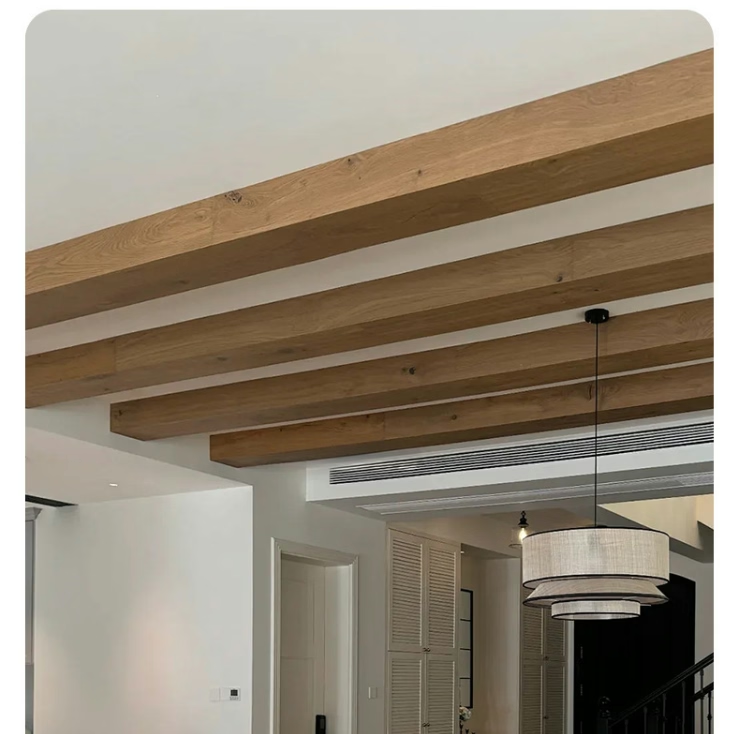
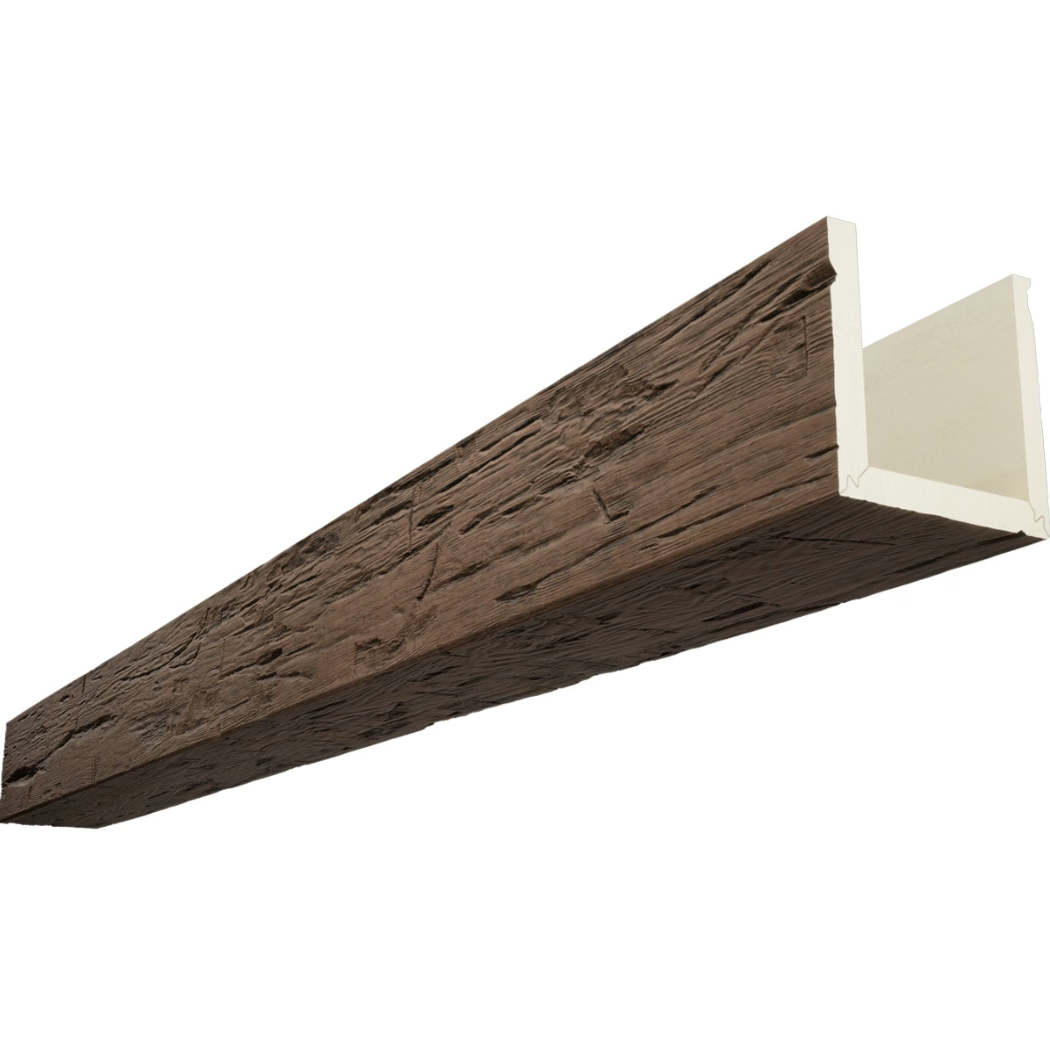
The home improvement center's seasonal reset had transformed their building materials aisle, and the new faux beam display caught customer attention immediately. Rather than bare samples requiring imagination, the display showed complete beams in room settings with pricing clearly visible. Within two weeks, the display had generated more sales than the entire previous quarter's beam section—a testament to the power of retail-ready presentation.
Understanding what makes beams retail-ready helps dealers and retailers optimize their product selection and merchandising strategy. The distinction matters because it affects everything from shelf placement to customer conversion rates to return frequency.
Retail-ready beams arrive with finishes fully applied. Whether stained, painted, or clear-coated, the surface treatment is complete and consistent across the product line. This eliminates the retailer-side finishing labor that would otherwise be required, reducing handling costs and ensuring uniform appearance. Customers see exactly what they'll receive, eliminating the uncertainty that drives returns and complaints.
Packaging design serves dual purposes in retail environments. On the sales floor, packaging provides the visual presentation that attracts attention and communicates value. During shipping and warehousing, packaging protects product integrity. Effective retail packaging balances these needs, using materials substantial enough to prevent damage while remaining light enough to avoid excessive shipping costs. Printed information on packaging surfaces answers common customer questions without requiring staff intervention.
Barcode and pricing label integration has become standard in retail-ready offerings. Universal Product Codes scan correctly at checkout, while shelf pricing labels integrate with the retailer's labeling systems. Some manufacturers offer custom labeling programs that include retailer-specific branding, supporting exclusive product lines that differentiate competitors. These programs require volume commitments but generate margin benefits that justify the investment.
Display options range from simple shelf presentations to elaborate floor displays. Lightweight polyurethane beams enable displays that would be impractical with genuine timber—freestanding units customers can examine without staff assistance, hanging displays that utilize vertical space, and modular configurations that adapt to different store layouts. Manufacturers increasingly offer display design services, providing layout plans and graphics that create professional presentations without retailer design investment.
Product information accompanying retail-ready beams reduces staff training requirements and customer service burden. Hang tags or shelf talkers explain key features: easy installation, lightweight handling, moisture resistance, and similar benefits that differentiate from natural wood alternatives. Care instructions help customers understand maintenance expectations, reducing post-purchase confusion that generates complaints and returns.
Quality consistency matters critically in retail environments. Individual beams within a product line should appear nearly identical, preventing the customer experience of receiving a product that looks different from the display sample. Manufacturing processes that maintain tight tolerances on color, texture, and dimensions ensure this consistency. Retailers evaluating manufacturers should request samples from multiple production runs to verify ongoing quality rather than accepting initial samples that may not represent production reality.
Seasonal demand patterns affect retail inventory strategy. Faux beams see increased interest during spring and fall renovation seasons, with summer installation projects and winter interior refreshes driving additional volume. Retail-ready packaging facilitates rapid inventory turnover, allowing retailers to stock heavily during peak seasons without carrying costs from slow-moving inventory. Just-in-time replenishment becomes feasible when supplier lead times accommodate retailer sales velocity.
Return rates in building materials categories often exceed general merchandise averages, and several factors drive this phenomenon. Product received may differ from display sample—addressed through consistency manufacturing. Customers may misjudge quantity requirements—addressed through calculation guides and estimator tools. Installation may prove more challenging than expected—addressed through detailed installation instructions and video tutorials. Retail-ready offerings address these concerns through clear communication and realistic expectation-setting.
Consumer confidence factors also influence retail success. Warranty coverage provides risk transfer that encourages purchase. Manufacturer reputation affects perceived quality before customers examine products. Third-party certifications—such as fire ratings or indoor air quality testing—provide independent verification that supports marketing claims. Retailers should evaluate these factors when selecting suppliers, recognizing that shelf space investment deserves supplier partners who perform as promised.
Cross-merchandising opportunities increase average transaction value in retail environments. Beams pair naturally with complementary products including LED rope lighting for cove illumination, bracket hardware for exposed mounting, and finish touch-up kits for minor damage. Retail-ready beams can include or suggest these accessories, creating bundle opportunities that benefit both customers and retailers. Some manufacturers offer coordinated accessory lines designed to work specifically with their beam products.
E-commerce integration has become essential even for primarily brick-and-mortar retailers. Product photography that accurately represents finish and texture reduces the gap between online browsing and physical purchase. Detailed specifications support customers researching products before store visits. Inventory visibility tools let customers check local availability, reducing disappointment from out-of-stock situations. These digital touchpoints complement physical retail presence rather than competing with it.
The wholesale relationship between manufacturer and retailer involves terms beyond simple product pricing. Payment terms affect cash flow management. Minimum order quantities influence inventory strategy. Shipping terms determine landed cost calculations. Marketing development funds support local advertising and promotion. Understanding this full relationship context helps retailers optimize their beam category performance rather than treating procurement as purely transactional.
Staff training investments generate returns through increased conversion and reduced returns. Understanding product benefits and limitations helps staff guide customers appropriately, matching expectations to reality. Installation guidance—either from staff directly or through referral to contractor networks—ensures successful outcomes that generate positive word-of-mouth and repeat business. Retail-ready materials facilitate this training by providing consistent products that behave predictably.
Technical References
ASTM standards cited in every specification
Test Data
Lab results from internal testing program
Updated 2026
Reviewed against current product specs