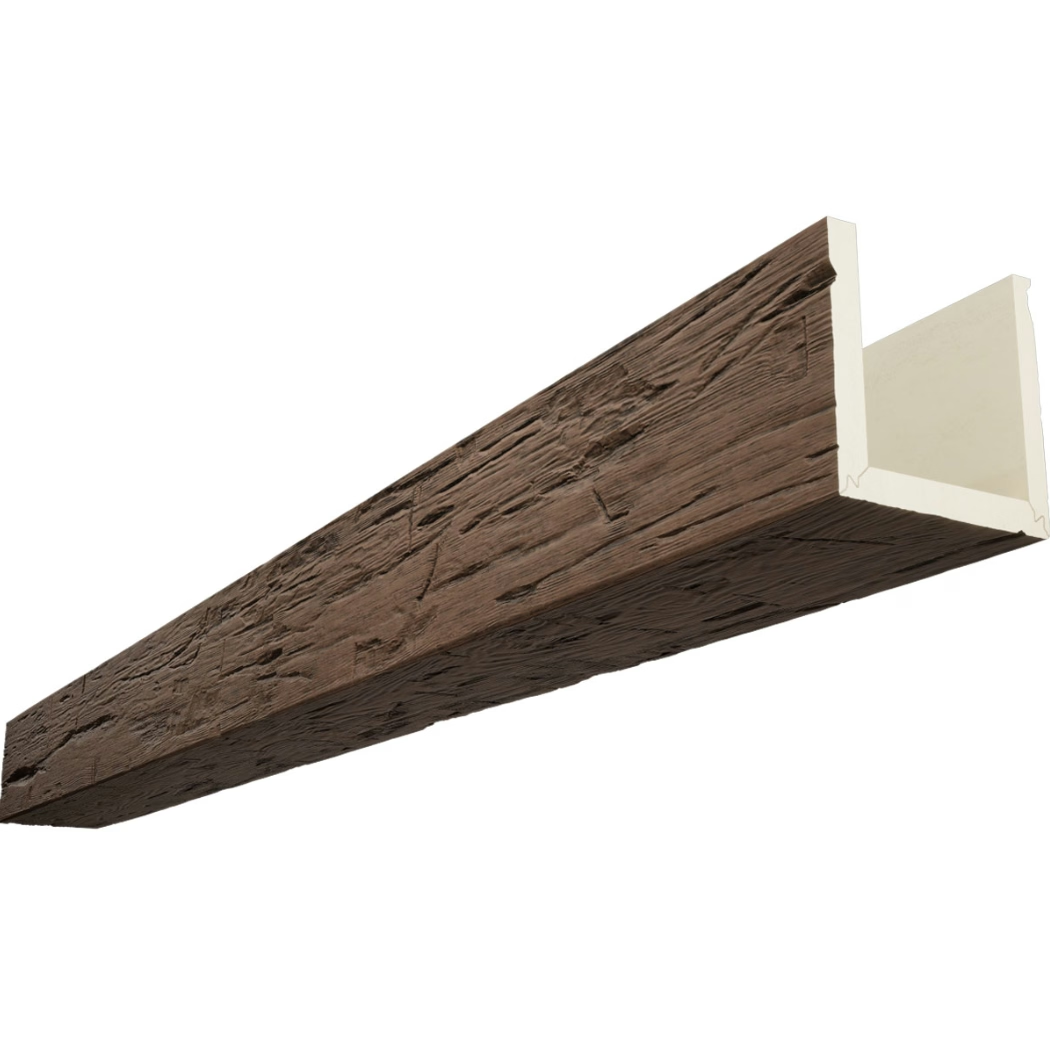
The warehouse club buyer scrutinized the product specifications with practiced efficiency. Weight per linear foot, packaging dimensions, units per pallet, and retail shelf life—each factor influenced her decision about whether this product would perform in her retail environment. The faux ceiling beams met every criterion, and three months later they had become one of the seasonal department's top performers.
Packaging for retail distribution serves purposes that extend well beyond simple product protection. Understanding these purposes helps buyers evaluate options and select products that will succeed rather than create operational headaches.
Physical packaging requirements differ based on distribution channel and store format. Club stores require pallet-ready packaging that survives forklift handling and survives warehouse storage without damage. Traditional home improvement retailers need individual unit packaging that customers can carry to checkout and transport home. Specialty design showrooms may accept minimal packaging focused on protecting finish quality during white-glove delivery. Matching packaging to channel eliminates unnecessary costs while ensuring adequate protection.
Material selection for protective packaging balances multiple considerations. Cardboard provides adequate protection for most applications while offering printing surfaces for product information. Edge protectors prevent shipping damage at vulnerable corners. Wrapping materials—whether paper, foam, or film—hold components securely during transit. The optimal combination depends on product fragility, shipping distance, and handling conditions expected in the distribution chain.
Dimensional optimization affects shipping efficiency and storage costs. Packaging that cubes out before weighing out wastes trailer capacity and increases per-unit shipping costs. Excessive packaging volume similarly wastes warehouse and store shelf space. Effective packaging engineering finds the minimum material sufficient to ensure product arrival in sellable condition, balancing protection against efficiency.
Barcode placement follows retail scanning requirements that vary by channel. General retail requires Universal Product Codes visible on external packaging, typically in the lower right corner. GS1 registration ensures code uniqueness across the industry. Some channels require additional symbologies or specific placement that must be accommodated in package design. Manufacturers offering retail-ready products have typically worked through these requirements, but buyers should verify compliance before committing to large orders.
Tamper evidence has become increasingly important across retail categories. While decorative beams face less theft concern than some products, customers do appreciate assurance that packaging hasn't been opened and resealed before their purchase. Easy-open features that don't compromise tamper evidence during shelf life balance these competing needs.
Sustainable packaging options have progressed substantially in recent years. Recycled content, recyclable materials, and reduced packaging volume all address environmental concerns without necessarily increasing costs. Some retailers have committed to sustainable packaging requirements for suppliers, making this consideration essential for vendors seeking those partnerships. Communicating environmental attributes through packaging also serves marketing purposes with increasingly eco-conscious consumers.
Package graphics communicate product value before customers open the box. Photography showing installed applications helps customers visualize results. Feature callouts highlight benefits that differentiate from alternatives. Installation difficulty ratings set realistic expectations. The best packaging functions as silent salesperson, conveying essential information without requiring staff explanation.
Instructions integration within packaging serves customers who research and purchase independently. QR codes linking to installation videos provide visual guidance that paper instructions cannot match. Measurement worksheets help customers calculate requirements accurately. Tool checklists prevent mid-installation trips to the hardware store. These additions increase first-attempt installation success rates, reducing returns and increasing satisfaction.
Channel-specific packaging sometimes requires different configurations from the same manufacturer. The same beam product might be packaged individually for home improvement retail, bundled in sets for decorator showrooms, and palletized for warehouse clubs. Understanding these variations helps buyers select appropriate configurations for their specific channel and store format.
Package durability testing validates that proposed packaging will survive actual distribution conditions. Drop tests, vibration tests, and compression tests simulate the handling that products will experience. Manufacturers with quality systems typically conduct these tests before commercializing products. Buyers importing directly may need to arrange independent testing to verify packaging adequacy for their specific supply chain.
Cost accounting for packaging should include all components: primary packaging holding the product, secondary packaging for shipping, and tertiary packaging for palletization. Each layer involves material and labor costs that affect final product economics. Optimization across all layers often yields greater savings than focusing narrowly on any single component.
Supplier relationships influence packaging quality and consistency. Long-term partners invest in packaging improvements knowing they will recover development costs across extended production. New suppliers may cut corners on packaging to win business, generating initial cost savings that later become problems when damage rates spike. Evaluating supplier stability and commitment helps buyers avoid these pitfalls.
Package tracking through the supply chain increasingly relies on technology. RFID tags enable pallet and carton tracking that improves inventory accuracy. QR codes support authentication and warranty registration. Some advanced systems track package conditions—temperature, humidity, shock events—providing data that supports quality improvement. These capabilities vary by manufacturer but represent the direction of supply chain evolution.
The ultimate test of packaging effectiveness is customer experience at point of purchase and product arrival at home. Products that arrive damaged generate returns, negative reviews, and lost customers. Products that arrive pristine generate satisfaction, positive word-of-mouth, and repeat purchases. The packaging investment pays for itself through this customer experience pathway.
Technical References
ASTM standards cited in every specification
Test Data
Lab results from internal testing program
Updated 2026
Reviewed against current product specs