The farmhouse aesthetic has undergone a remarkable transformation over the past two decades, evolving from nostalgic tribute to dominant interior design language that influences everything from luxury kitchen showrooms to budget-friendly home improvement retail. This popularity stems partly from the style's fundamental approachability—farmhouse design values honesty, utility, and connection to agricultural heritage over ostentation and display. At its heart lies authentic material: wood that shows its history, metal that reveals its function, and fabrics that improve through use rather than deteriorate. For designers and homeowners seeking to incorporate these qualities into contemporary spaces, barn lumber texture faux beams offer a practical pathway to achieving the aesthetic without the sourcing challenges and performance limitations of authentic reclaimed material.
Barn lumber carries a specific visual vocabulary distinct from other rustic wood sources. These boards spent decades exposed to weather, temperature fluctuation, and the activities of agricultural life—stacked with grain exposed to sun and rain, used as stall walls subject to animal contact, or incorporated into structural members bearing continuous loads. The weathering patterns that resulted tell stories of orientation, exposure, and use that make each piece unique. Reclaimed barn wood has become increasingly scarce as demand outstrips supply, driving prices to levels that put authentic material beyond most residential budgets. Faux beam technology addresses this gap, providing the barn lumber aesthetic at accessible price points while delivering performance characteristics that surpass authentic material in several respects.

Understanding Barn Lumber Characteristics
The weathering process that transforms new lumber into barn siding involves complex chemical and physical changes that unfold over years of exposure. Initial surface degradation removes softwood fibers, creating the silver-gray patina that distinguishes weathered barn wood from artificially gray-stained material. Beneath this surface layer, wood develops checking patterns that follow grain lines, creating the checks and cracks that authentic barn lumber displays. These features result from the freeze-thaw cycles, UV exposure, and moisture fluctuation that rural structures endure throughout their service lives.
Color development follows predictable patterns in barn lumber, progressing from original tones through various stages of weathering toward the distinctive silver-gray that collectors prize. Southern exposures develop deeper grays than northern surfaces, while protected areas may retain traces of original color. This variation within individual boards creates the visual complexity that distinguishes weathered barn wood from uniformly applied gray finishes. Quality faux beam manufacturers replicate this graduated aging through multi-stage coloring processes that build depth and variation rather than achieving appearance through single-coat application.
Insect damage and mechanical wear contribute additional character to barn lumber, creating the pitted surfaces and missing chunks that speak to years of agricultural service. Beetles excavate tunnels that catch light at angles, producing the stippled appearance visible across weathered boards. Knotholes from branch failures create focal points around which surrounding grain develops unusual patterns. Nail holes from former attachments mark locations where boards served different purposes before their current application. These imperfections collectively create the sense of history that barn lumber embodies, and convincing faux reproductions must incorporate them as intentional design elements rather than manufacturing defects to be minimized.
Farmhouse Design Applications
Modern farmhouse interiors employ barn lumber aesthetic across diverse applications, from dominant ceiling beam installations to subtle accent pieces that reward closer examination. Open floor plans common in contemporary homes create opportunities for substantial beam installations that define zones and add visual weight without introducing physical barriers. A single substantial beam crossing a kitchen ceiling can anchor the cooking area, while parallel beams establish rhythm across larger great room spaces. The key lies in achieving balance—enough visual presence to establish the farmhouse language without overwhelming surrounding elements.
Kitchen installations represent the most common application for barn lumber faux beams in farmhouse design, reflecting the room's traditional role as the agricultural farmhouse's functional center. Beams above islands create natural gathering points that invite conversation while food preparation continues, and the overhead timber provides visual separation between cooking zone and surrounding spaces. Full ceiling coverage, where beams span the entire kitchen in grid or parallel pattern, establishes the farmhouse aesthetic as the dominant design language for the entire home visible from the kitchen vantage point.
Accent applications allow homeowners to incorporate barn lumber character without committing to extensive ceiling beam installations. Faux beam corbels supporting shelf brackets, beam wraps around existing structural elements, and decorative beam panels mounted to walls all provide farmhouse character in smaller doses. These applications prove particularly valuable in contemporary homes where extensive beam installations might feel incongruous, allowing strategic introduction of rustic elements that complement rather than overwhelm modern architecture.
Performance Advantages for Residential Applications
Polyurethane construction provides several advantages particularly relevant to residential farmhouse applications, where family use and maintenance considerations influence long-term satisfaction. Unlike authentic reclaimed barn lumber, which may harbor insects, fungal growth, or structural compromise from its previous service, polyurethane delivers predictable quality free from biological concerns. This cleanliness proves important for families with children who may contact beam surfaces during play, and for allergy sufferers sensitive to biological contaminants that can persist in reclaimed wood products.
The material's resistance to moisture absorption addresses farmhouse applications in ways that authentic barn lumber cannot match. While barn wood developed its character through exposure to the very conditions that now threaten its survival, polyurethane maintains dimensional stability regardless of humidity levels. This characteristic proves particularly valuable in kitchens and bathrooms where moisture exposure is routine, and in homes located in humid climates where authentic wood faces constant environmental challenge. Faux beams maintain their appearance through seasonal humidity fluctuation without the checking, cracking, or warping that affects authentic material under similar conditions.
Installation simplicity distinguishes polyurethane from authentic timber options, whether reclaimed barn lumber or newly harvested material. The reduced weight—typically sixty to seventy percent lighter than equivalent solid wood—allows installation using standard construction hardware and techniques, eliminating the specialized skills and equipment that handling heavy timber requires. This accessibility enables DIY installation for capable homeowners while reducing labor costs for professionally managed projects. The practical advantage becomes significant when ceiling beam installations require multiple beams, where weight differences compound rapidly.
Achieving Convincing Barn Aesthetic
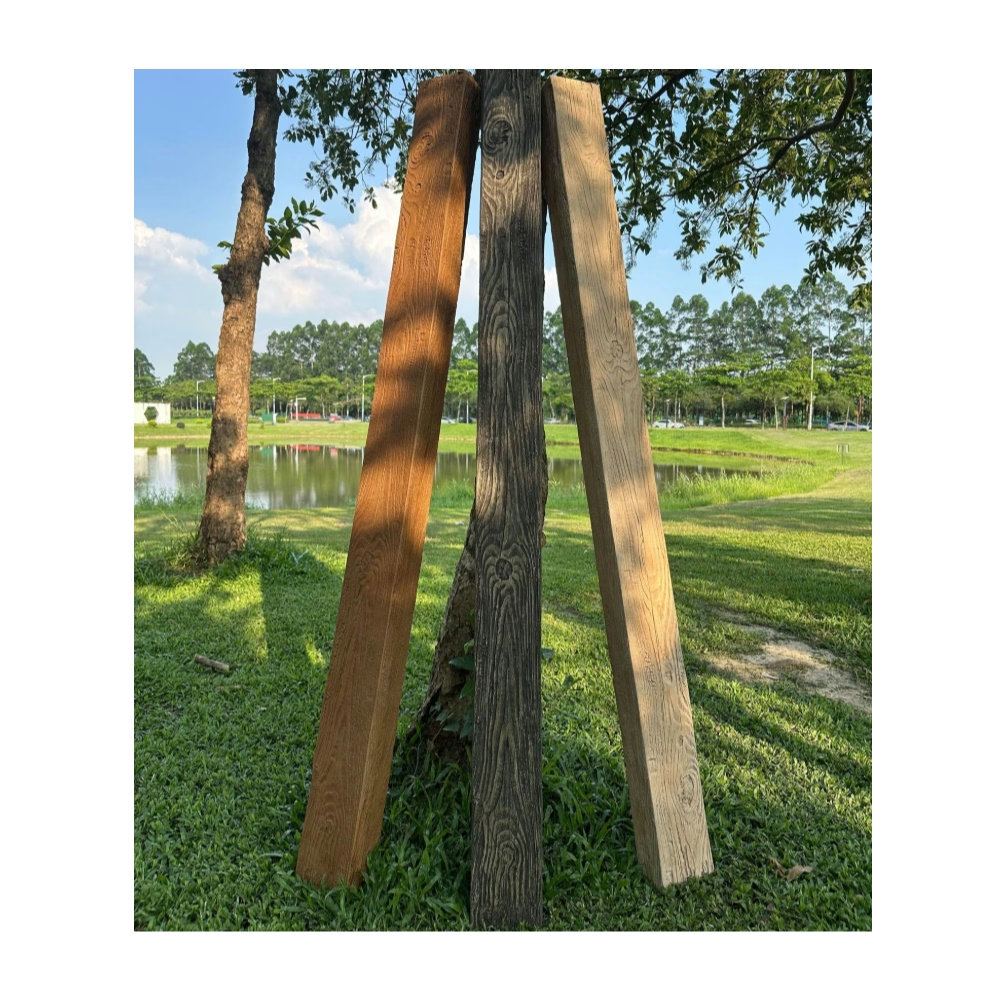
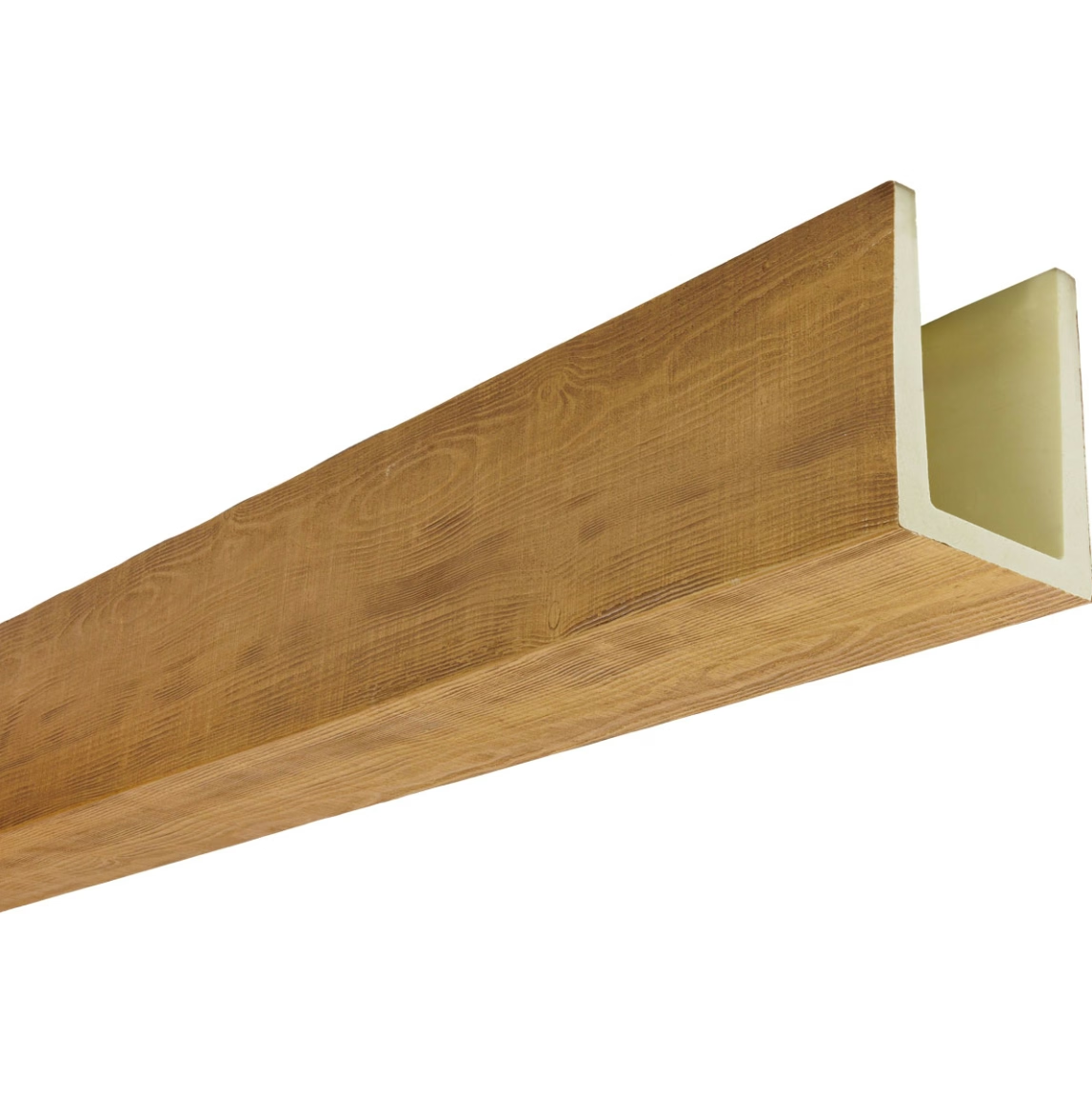
Surface texture development represents the critical factor distinguishing convincing barn lumber faux beams from obviously artificial alternatives. The weathering patterns that define barn wood cannot be applied as simple surface coating but must be integrated into the beam's physical structure through careful molding and finishing processes. The silver-gray patina must transition smoothly into deeper tones within checks and around knots, creating the impression of differential weathering that develops naturally over years of exposure.
Edge treatment requires particular attention for barn lumber authenticity, as weathered boards characteristically show wear concentrated along edges and corners. Natural barn boards accumulate wear from handling, stacking, and contact with adjacent materials, creating rounded edges and slightly worn surfaces that distinguish aged material from freshly milled boards. Faux beams must replicate this edge wear through subtle radius treatment and selective surface texturing, ensuring that edges read as naturally worn rather than manufactured with sharp corners.
Finish selection influences both appearance and durability in barn lumber faux beam applications. Matte or satin finishes appropriate to rustic aesthetics provide insufficient surface protection in high-traffic applications, while high-gloss finishes appear inappropriately synthetic. Quality manufacturers balance these concerns through careful formulation that maintains authentic appearance while providing adequate surface protection for residential use. The selected finish should resist moisture penetration and surface wear while preserving the subtle color variations and texture that distinguish weathered barn wood from painted surfaces.
Barn lumber texture faux beams democratize the farmhouse aesthetic, making authentic rustic character accessible to homeowners regardless of budget, location, or access to genuine reclaimed material. The combination of convincing appearance, practical performance, and installation simplicity positions these products as ideal solutions for farmhouse-inspired interiors across the full range of residential applications.
Technical References
ASTM standards cited in every specification
Test Data
Lab results from internal testing program
Updated 2026
Reviewed against current product specs


