The farmhouse aesthetic has earned its staying power by proving that homes can prioritize warmth and authenticity without sacrificing functionality or breaking budgets. Unlike trend-driven styles that date quickly and demand continuous updates, farmhouse design draws on enduring human values—comfort, practicality, and connection to simpler ways of living—that remain relevant regardless of shifting fashion. Central to this design language is the honest use of materials that reveal their origins and history rather than concealing them behind perfect surfaces. Faux wood ceiling beams provide accessible pathway to incorporating this material honesty, adding overhead character that transforms ordinary rooms into spaces with genuine farmhouse soul.
Understanding what makes farmhouse decor work requires looking beyond surface aesthetics to the underlying principles that guide successful implementations. The best farmhouse spaces feel collected rather than designed, assembled over time through choices guided by personal preference rather than coordinated showroom packages. This accumulated quality comes through deliberate choices that prioritize substance and character over trend alignment. Faux beams contribute to this accumulated feeling by adding texture and history that reads as discovered rather than purchased.

Kitchen Transformations with Faux Beam Accents
Kitchens anchor farmhouse homes, serving as command centers where family life happens amid cooking, homework, and casual conversation. The best farmhouse kitchens balance practical efficiency with the warmth that encourages gathering, using materials that improve through use rather than demanding protection from it. Faux wood beams contribute to this balance by adding overhead warmth that softens the hard surfaces—stone counters, stainless appliances, and porcelain fixtures—that modern cooking requires.
The kitchen island provides natural focal point for beam installation, where overhead timber creates enclosure that defines the preparation and gathering zone within larger open-plan spaces. Single beam installations work well for modest islands, establishing presence without overwhelming the furniture below. Larger islands may benefit from parallel beam arrangements or cross-beam patterns that create more substantial overhead canopy. The beams should position to accommodate pendant lighting at comfortable heights, with fixtures suspended between beams rather than conflicting with their visual mass.
Full ceiling coverage using parallel beams establishes farmhouse character as the dominant theme throughout kitchen spaces. This approach works particularly well in kitchens with high ceilings, where beams provide necessary visual mass to prevent the space from feeling cavernous. Beam spacing should relate to ceiling dimensions, with closer spacing creating more intimate atmosphere and wider spacing allowing ceiling planes to read more clearly. The goal is achieving balance where beams enhance rather than dominate the space.
Living Room Beam Applications
Living rooms in farmhouse homes serve as family gathering spaces where comfort takes priority over formal presentation. The best farmhouse living rooms feel genuinely lived-in, with furniture positioned for conversation rather than camera angles and surfaces accumulated through years of family activity. Faux beams contribute to this lived-in atmosphere by adding overhead texture that suggests history and character, grounding contemporary furniture within design language that references earlier eras.
Fireplace arrangements in farmhouse living rooms benefit from beam installation that frames the hearth and creates visual anchor for seating groupings. Beam mantles spanning above fireplace openings provide display space for family photographs and collected objects, while supporting corbels or brackets add additional timber character to the fireplace composition. The beams should scale appropriately to the fireplace dimensions, with larger fireplaces accommodating more substantial timber elements.
Coffered ceiling patterns using faux beams create sophisticated farmhouse aesthetics that elevate living room design beyond rustic simplicity. This approach employs beams to divide ceiling planes into geometric sections, introducing architectural interest that rewards extended observation. The grid pattern works well in square or nearly square rooms, while rectangular spaces may employ rectangular coffers that relate to room proportions. White or cream painted beams create visual separation that emphasizes the architectural pattern, while stained beams maintain more traditional rustic character.
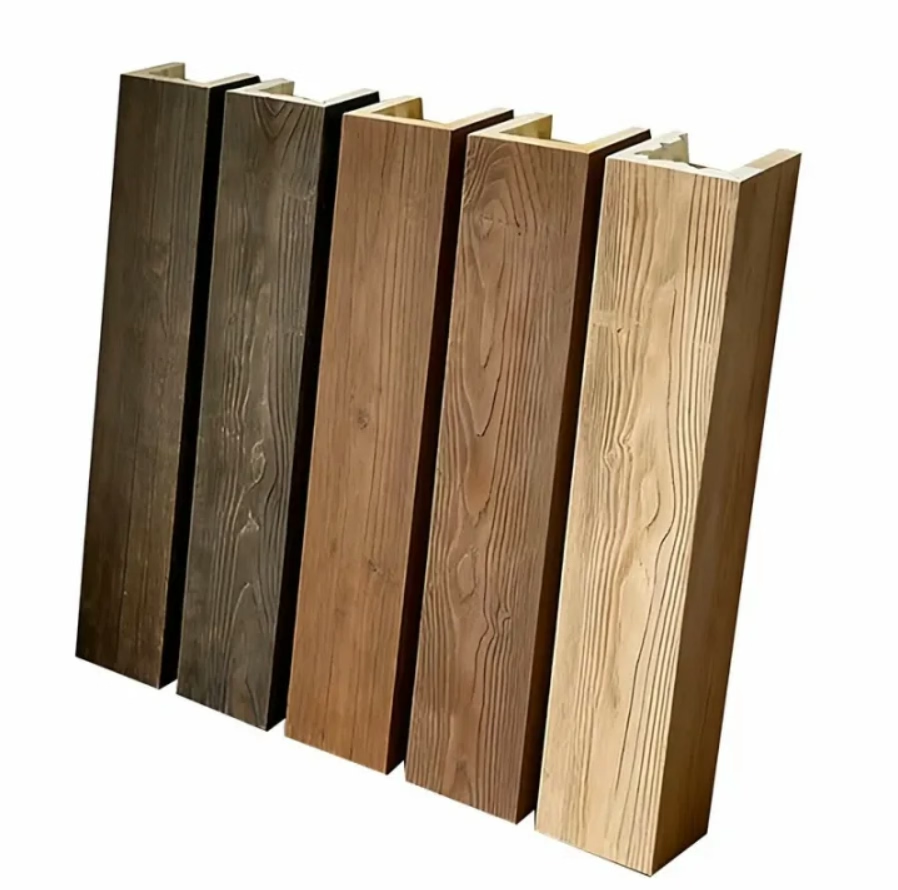
Bedroom Installations for Cozy Retreats
Farmhouse bedrooms emphasize rest and retreat, creating sanctuary spaces where accumulated stresses of daily life can dissolve into restorative sleep. The best farmhouse bedrooms achieve this through warmth and enclosure rather than elaborate decoration—textures that invite touch, colors that soothe rather than stimulate, and overhead elements that create protective canopy effects. Faux beam installation contributes directly to this cozy character, adding visual weight that draws attention downward while introducing the natural texture that promotes relaxation.
Bed placement determines beam orientation in bedroom applications. Headboard walls provide natural anchor points for single beams spanning perpendicular to the wall, creating overhead framing that emphasizes the bed as room focal point. Parallel beam arrangements across the entire bedroom ceiling establish consistent rhythm that unifies the space while adding texture that prevents flat overhead planes from feeling sterile.
Vintage and antique furniture selections complement beam installations, creating layered character that accumulated over time rather than purchased in coordinated sets. The combination of rustic overhead beams with vintage bed frames, painted dressers, and family heirloom accessories creates the curated collected feeling that distinguishes authentic farmhouse style from manufactured imitation.
Accessorizing Around Faux Beam Installations
Successful farmhouse decor integrates beams with surrounding elements rather than treating them as isolated features. Light fixtures should coordinate with beam character, with industrial-inspired pendants and rustic chandeliers complementing timber textures. The wrought iron and aged metal common in farmhouse lighting echoes the utilitarian materials that authentic barn and agricultural structures employed, creating continuity between overhead elements and their supporting context.
Textiles throughout farmhouse spaces should respond to beam textures, with woven fabrics, knotted fibers, and natural materials contributing to layered textural richness. The rough textures of linen, cotton duck, and wool provide natural complement to timber surfaces, while leather accents introduce textural variety that prevents monotony. Window treatments should remain relatively simple, allowing beam textures to dominate rather than competing for attention.
Wall treatments in farmhouse spaces typically emphasize neutral backgrounds that let furniture and beams provide visual interest. Shiplap paneling, whitewashed brick, and plaster finishes create surfaces that coordinate with beam character while maintaining the light, airy quality that farmhouse interiors favor. The goal is achieving balance where beams contribute warmth without overwhelming the overall composition.
The farmhouse aesthetic rewards thoughtful integration over dramatic gesture, creating spaces that invite habitation rather than admiration. Faux wood ceiling beams provide accessible entry point to this design language, allowing homeowners to achieve authentic rustic character without the sourcing challenges and maintenance demands that authentic timber would require. The result proves that farmhouse style remains accessible to anyone willing to prioritize substance over trend.
Technical References
ASTM standards cited in every specification
Test Data
Lab results from internal testing program
Updated 2026
Reviewed against current product specs


