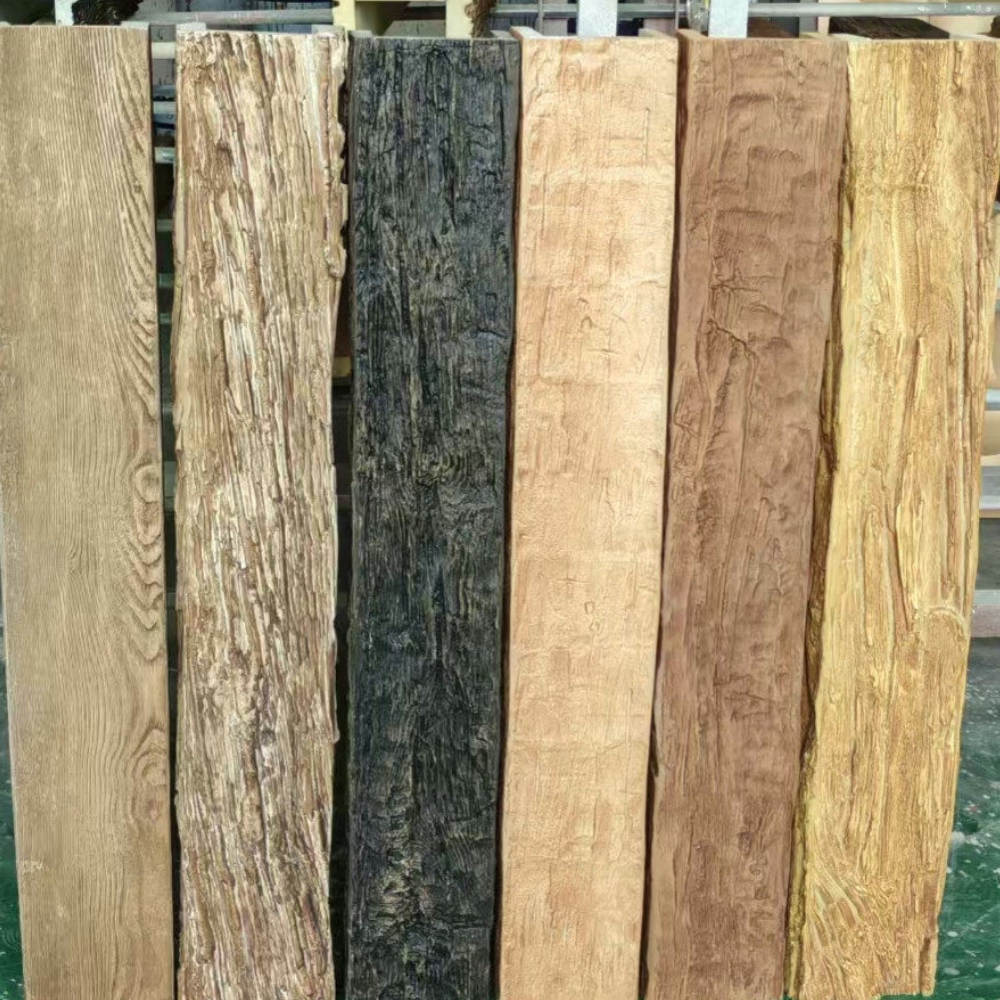
The combination of rustic wood and black metal represents one of interior design's most enduring partnerships. This pairing appears across architectural styles from farmhouse to industrial loft, from cabin retreat to contemporary urban apartment. The reason for its persistence lies in the fundamental contrast between organic and industrial—warm wood grain against cool metal, hand-crafted texture against machined precision, natural imperfection against deliberate uniformity. When thoughtfully combined, these elements create spaces that feel both authentic and curated.

Rustic faux wood beams provide the perfect foundation for black iron accents because they deliver genuine wood character without competing for attention. The natural variations in beam texture—saw marks, grain patterns, color shifts—create visual interest that draws the eye while establishing the space's rustic foundation. Black iron hardware then appears as punctuation rather than competition, adding definition and sophistication that elevates the overall composition. The result feels intentional and layered rather than cluttered or overdone.
Pendant lighting represents the most common and effective way to introduce black iron into beam-enhanced spaces. Hanging fixtures from beams accomplishes several design objectives simultaneously. The iron fixtures provide task and ambient illumination exactly where needed—over kitchen islands, dining tables, or reading nooks. The vertical lines of pendant cords and chains create visual flow that connects ceiling beams to living spaces below. The juxtaposition of warm wood surfaces and cool iron fixtures generates the tension that makes this pairing so visually compelling.

When selecting pendant fixtures for beam installations, consider scale relationships carefully. Fixture diameter should relate proportionally to beam dimensions—a delicate pendant looks lost hanging from substantial beams, while an oversized fixture overwhelms smaller beam profiles. The fixture's visual weight matters as well; darker, more solid iron fixtures require more breathing room than lighter interpretations with openwork designs. Hanging height significantly impacts overall effect—fixtures should clear sightlines when standing but hang low enough to create intimate pools of light.
Stair railings and balustrades extend black iron throughout multi-level spaces, creating continuity that ties beam installations into broader interior compositions. A black iron staircase with wooden handrail rising through a two-story space with exposed beams makes a powerful architectural statement. The iron posts and balusters repeat the material language introduced at the ceiling plane, while the handrail adds warmth that makes the staircase inviting rather than industrial. This vertical integration creates environments where every design choice reinforces every other.
Door hardware, window frames, and architectural accents provide additional opportunities to reinforce the wood-iron partnership throughout interiors. Black iron door handles, hinges, and plate hardware add authenticity to rustic beam installations. Window frames in matte black frame views while coordinating with ceiling beams. Fireplace screens, tool sets, and accessories bring the pairing into the most intimate family spaces. These distributed accents prevent the ceiling from reading as an isolated improvement, instead integrating beams into comprehensive design schemes.
The balance between wood and iron requires careful calibration. Too much iron overwhelms the space with cold, heavy feeling. Too little iron makes the pairing seem accidental rather than designed. A useful guideline suggests using iron for functional elements—lighting, hardware, structural supports—while allowing beams to dominate decorative surfaces and major architectural planes. This distribution keeps iron in a supporting role while preventing it from competing with the organic warmth that makes wood beams so appealing.
Color temperature provides another consideration when combining these materials. Pure black iron can feel harsh against warm wood tones. Many designers prefer softer black finishes—matte black, charcoal, or dark bronze—that integrate more smoothly with wood palettes. These darker metallics read as black from a distance while revealing subtle warmth upon closer inspection. For spaces with cooler color schemes, true black iron works beautifully, creating sharper contrast that suits contemporary industrial aesthetics.
The practical benefits of polyurethane beams become particularly valuable in black iron pairings. Metal hangers, brackets, and mounting hardware attach easily to solid polyurethane surfaces. Unlike hollow metal or decorative beam boxes that might dent under impact, polyurethane beams maintain pristine surfaces that complement rather than compete with iron details. The consistent manufacturing tolerances of quality faux beams ensure that mounting points align properly, simplifying installation of hanging fixtures, shelving brackets, and other hardware.
Technical References
ASTM standards cited in every specification
Test Data
Lab results from internal testing program
Updated 2026
Reviewed against current product specs