The farmhouse kitchen occupies a unique position in residential design mythology. It represents abundance, warmth, family gathering, and the satisfying work of preparing food for loved ones. This emotional charge makes farmhouse aesthetics enduringly popular despite—or perhaps because of—their departure from contemporary minimalism. When homeowners pursue farmhouse kitchen renovations, they seek to recover these qualities, transforming sterile efficiency-focused spaces into environments that nourish the soul as well as the body.
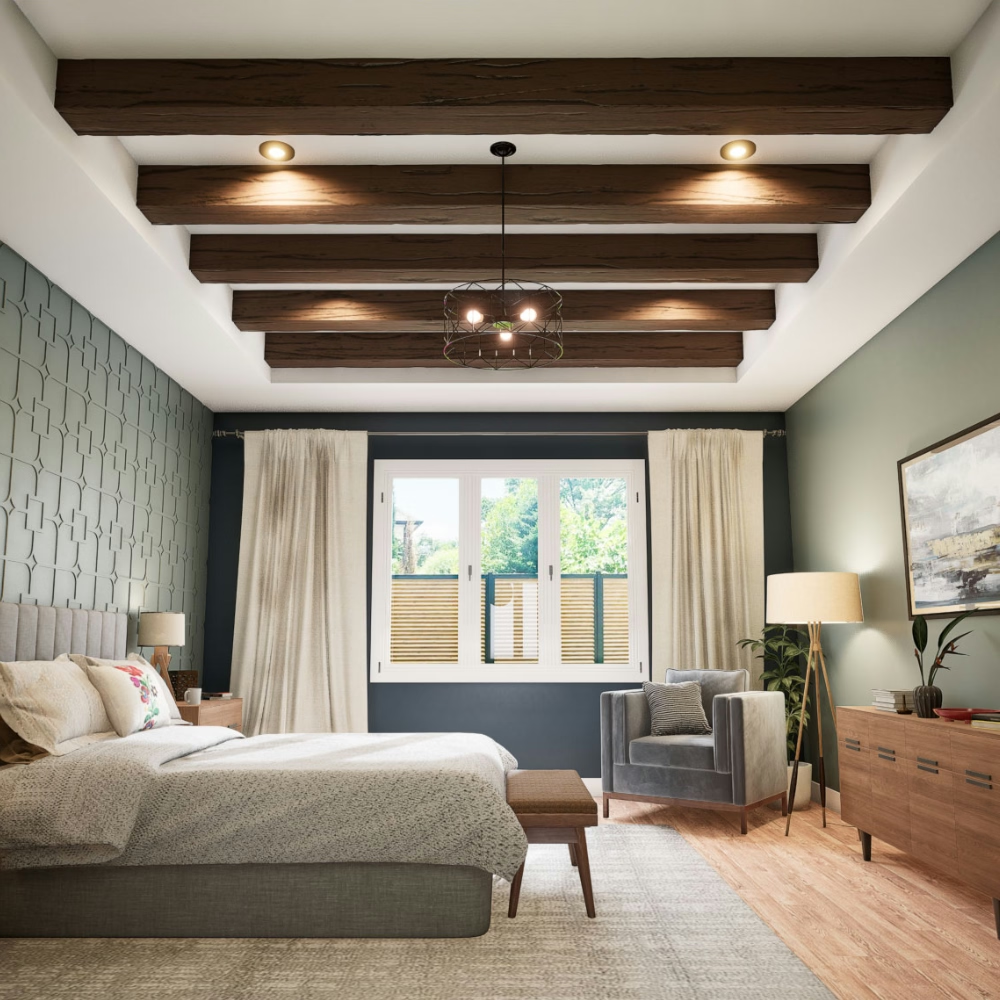
Ceiling treatment provides architectural opportunity that many kitchen renovations overlook. The overhead plane receives little attention in standard kitchen design, typically settling for flat drywall or generic acoustic tile that contributes nothing to spatial character. Adding beams transforms this forgotten surface into a design element that establishes the farmhouse atmosphere homeowners seek. The visual weight of timber overhead creates enclosure and warmth that counteracts the clinical quality afflicting many contemporary kitchens.
The Farmhouse Kitchen Aesthetic
Farmhouse design emerged from centuries of practical evolution rather than aesthetic theory. Kitchens in working farms served multiple purposes: food preparation, food preservation, tool storage, laundry, and family gathering during long winters. The design prioritized durability, cleanliness, and efficiency while accommodating the social dynamics of household activity. Windows admitted light for detailed work, while heavy work surfaces withstood the impact of daily use. Storage accommodated both dry goods and preserves in quantities sufficient for seasonal variation.
What emerged from these practical requirements was an aesthetic vocabulary that modern homeowners find deeply appealing. Open shelving displayed practical dishware while keeping items accessible. apron-front sinks occupied prominent positions. Wood countertops developed patina through generations of use. Ceiling beams, often structural elements exposed for practical reasons, became defining features that anchored the room's identity.
Contemporary farmhouse renovations adapt this vocabulary for current lifestyles while preserving its essential warmth. Open floor plans that connect kitchens to living areas require careful treatment to maintain farmhouse character despite spatial fluidity. Modern appliances and materials must coexist with traditional finishes. Lighting systems serving contemporary cooking needs must complement rather than conflict with vintage aesthetics. These reconciliations require thoughtful design that integrates rather than merely layers historical references.

Ceiling Beams and Kitchen Functionality
Kitchens present particular challenges for ceiling treatments due to the moisture, heat, and airborne grease characteristic of cooking activities. Ventilation systems address some of these concerns but cannot eliminate environmental challenges entirely. Natural wood in kitchen applications requires sealing and ongoing maintenance to resist moisture penetration, grease absorption, and the surface degradation that humidity cycles cause. These demands make genuine timber a high-maintenance choice that many homeowners find impractical.
Polyurethane faux beams offer superior performance in kitchen environments while maintaining the visual qualities that farmhouse aesthetics require. The material does not absorb moisture or grease, maintaining dimensional stability despite exposure to cooking byproducts. Surface finishes resist staining from airborne grease particles that would penetrate natural wood grain. Temperature tolerance accommodates the warm, humid conditions that cooking generates without the expansion and contraction that stresses natural materials.
The practical installation advantages matter significantly in kitchen renovation contexts. Cabinets, countertops, and appliances create obstacles that complicate ceiling work. Polyurethane beams can be cut and fitted around these elements without specialized equipment, whereas genuine timber might require on-site modification that reveals manufactured origins or demands professional woodworking skills. The lighter weight of polyurethane simplifies handling in confined spaces crowded with existing finishes and fixtures.
Design Approaches for Kitchen Beam Installations
Kitchen beam installations benefit from understanding how the space functions during actual use. Cooking activities concentrate at specific stations: cooktop, sink, and refrigerator form the classic work triangle that organizes kitchen function. Beam placement should consider how shadows and visual weight affect these activity areas. Beams positioned to provide overhead illumination at the cooktop serve practical needs while adding decorative interest.
Island and peninsula configurations create distinct zones that benefit from varied ceiling treatment. The area above an island might feature beams running perpendicular to ceiling joists, creating a grid pattern that defines the island as a separate spatial element. Open-plan kitchens connecting to dining or living areas can extend beam patterns across the full volume, creating visual continuity that links functional zones while maintaining distinct identities.
Lighting integration deserves particular attention in kitchen applications. The bright, even illumination that cooking tasks require might seem incompatible with the atmospheric beam installations that farmhouse aesthetics favor. The solution involves layered lighting design: functional task lighting at counters and cooktops supplemented by ambient illumination from other sources, allowing beam lighting to operate at atmospheric intensity during non-cooking hours while providing adequate task light when needed.

Finish and Texture Selection
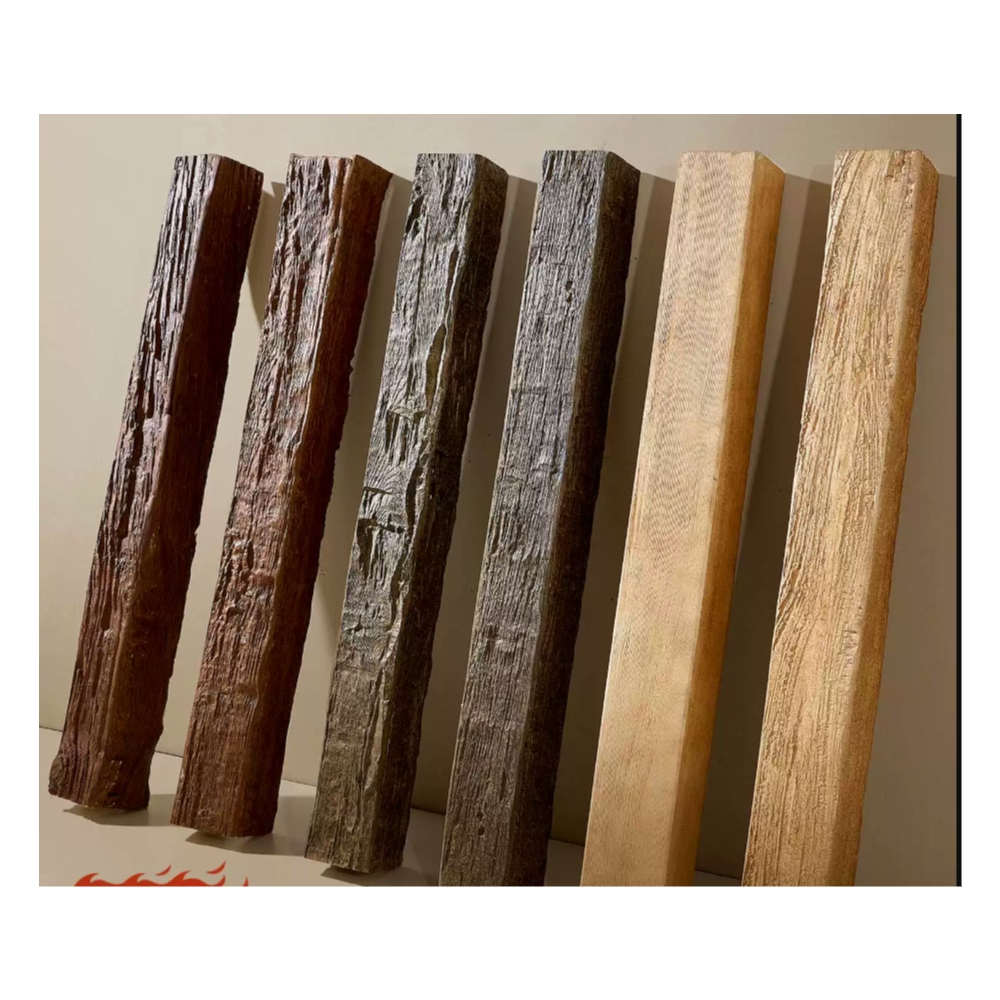
Farmhouse kitchen aesthetics typically favor natural finishes that reveal wood character rather than obscuring it with heavy paint or stain. The grain patterns, growth ring formations, and natural color variations of authentic timber create visual interest that manufactured surfaces struggle to replicate. Premium polyurethane beams overcome this limitation through sophisticated manufacturing techniques that capture wood's organic variety in durable polymer.
Texture selection should align with the specific farmhouse variant being pursued. Shaker-influenced farmhouse design favors clean, relatively refined surfaces appropriate to that tradition's utilitarian ethos. More rustic farmhouse interpretations embrace rougher textures—rough-sawn surfaces, exposed knots, pronounced grain patterns—that suggest less refined construction methods. Colonial farmhouse revival typically incorporates hand-hewn beams with visible tool marks and deliberately irregular edges.
Color selection in farmhouse kitchens typically emphasizes warmth: honey-toned oak, rich walnut, amber maple. These colors complement the neutral backgrounds—white subway tile, grey stone countertops, natural wood flooring—that form farmhouse kitchen palettes. The beam color anchors these surrounding finishes, providing the warm wood tone that distinguishes farmhouse kitchens from modern spaces dominated by grey and white.
Integration with Kitchen Cabinetry and Storage
Successful farmhouse kitchen design creates visual relationship between ceiling beams and cabinet elements. Matching wood species between beams and cabinet faces establishes material continuity that makes the space feel cohesive rather than assembled from unrelated components. When cabinet finishes differ from beam finishes, the relationship should feel intentional—perhaps contrasting warmth against coolness or roughness against refinement.
Open shelving, a hallmark of farmhouse kitchen design, complements beam installations by extending the wood-forward aesthetic vertically. Shelves mounted between beams or in spaces adjacent to beam installations create layered display opportunities. The combination of overhead timber and vertical wood shelving fills the kitchen with organic warmth that makes the space inviting rather than merely functional.
Pot racks and hanging storage systems integrate naturally with beam installations. The structural capacity of genuine timber to support hanging weight does not apply to polyurethane beams, which are decorative rather than structural elements. However, mounting systems designed for installation directly into ceiling joists above beam positions can support substantial weight while allowing beams to remain purely aesthetic elements.
Maintenance for Kitchen Environments
Kitchens require cleaning protocols that accommodate ceiling installations without special difficulty. Polyurethane beams tolerate standard kitchen cleaning using mild detergents and soft cloths or sponges. The smooth surfaces of premium beams resist grease accumulation that might adhere to rough natural wood textures. Occasional cleaning maintains appearance without the refinishing demands that genuine timber would require.
Physical protection from cooking activities should inform beam positioning decisions. Installing beams too close to cooktop locations subjects them to concentrated grease exposure and heat that accelerates surface degradation even in durable materials. Adequate distance from cooking stations preserves appearance while maintaining the visual contribution that beam installations provide.
Long-term performance in kitchen applications demonstrates polyurethane's advantages over natural alternatives. The material maintains appearance through years of cooking activity without the surface degradation, discoloration, or structural concerns that affect natural wood. Homeowners can expect their farmhouse kitchen ceiling beams to provide lasting satisfaction with minimal maintenance attention.
Technical References
ASTM standards cited in every specification
Test Data
Lab results from internal testing program
Updated 2026
Reviewed against current product specs


