The modern kitchen frequently gravitates toward cool, clean surfaces—gleaming white tiles, polished stone countertops, stainless appliances, and minimalist fixtures. These choices create bright, hygienic-feeling spaces that appeal to contemporary sensibilities. Yet without careful design attention, such spaces can feel clinical or unwelcoming. The solution often lies in introducing warmth through natural material textures, and few approaches achieve this balance as effectively as rustic wood beams.
Adding authentic rustic timber to a kitchen presents genuine challenges. The space demands practical functionality alongside aesthetic appeal, and heavy wooden beams introduce complications that conflict with kitchen realities—moisture exposure, grease accumulation, cleaning requirements, and structural considerations that transform straightforward design intentions into complex renovation projects.
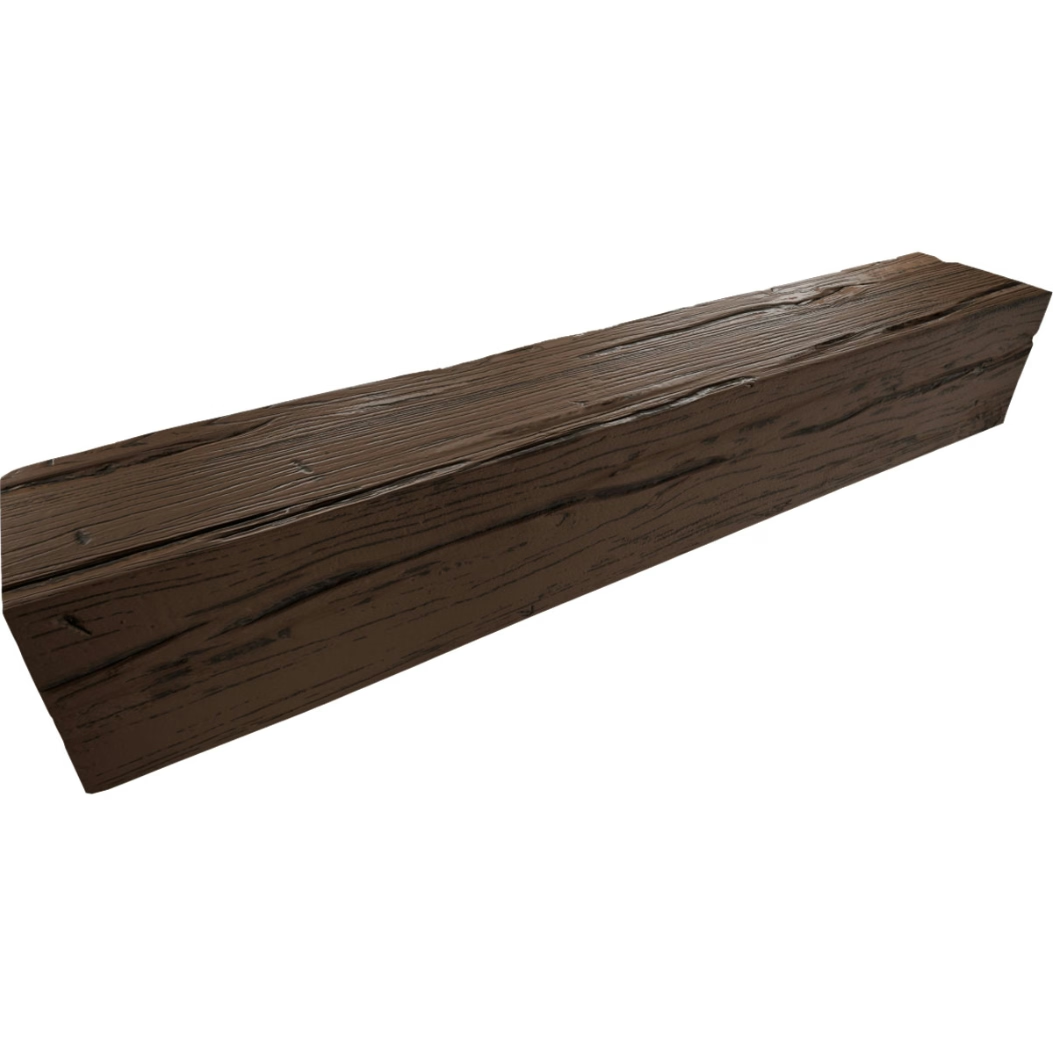
Modern faux beam technology addresses these concerns directly, providing the rustic wood aesthetic that transforms kitchen design without introducing the practical problems that plague natural timber in cooking environments.

The Design Principle of Warm-Cool Balance
Effective interior design frequently operates through contrasts. Light balances dark, rough complements smooth, warm tones counter cool surfaces. Kitchens with extensive white tile installations benefit enormously from introducing elements that establish visual warmth without disrupting the clean aesthetic.
Rustic wood brings exactly this quality to kitchen design. The amber and honey tones found in many wood species provide immediate warmth that reads as inviting rather than heavy. These natural colors create visual resting points amid the brightness of white tiles, preventing the space from feeling harsh or unwelcoming.
The texture contrast proves equally important. While tile surfaces often feature glossy or semi-gloss finishes that reflect light uniformly, wood introduces organic texture variation that catches and scatters light differently throughout the day. Morning light creates different effects than afternoon illumination; artificial lighting after dark produces yet another aesthetic. This dynamic quality keeps the kitchen visually interesting regardless of time or lighting conditions.
Practical Advantages of Faux Over Authentic
Kitchens present uniquely demanding conditions for any material installation. Temperature fluctuations, humidity changes, cooking grease, moisture from sinks and dishwashing, and the general bustle of household activity all affect surfaces. Materials that perform well elsewhere may struggle in kitchen environments.
Polyurethane faux beams handle these conditions with remarkable resilience. The material resists moisture absorption, preventing the swelling and warping that affects natural wood. Grease and cooking residues wipe clean without damaging the surface finish. Temperature variations don't cause the expansion and contraction that creates gaps and failures in natural timber installations.
The cleaning advantage deserves particular emphasis. Kitchen hygiene matters enormously, and surfaces that accumulate grime or harbor bacteria create genuine concerns. Polyurethane accepts standard kitchen cleaning products without damage, allowing the rigorous sanitation that food preparation spaces require. Authentic wood often demands gentler treatment that may not achieve adequate cleaning.
Weight considerations also favor faux materials for kitchen applications. Cabinets, appliances, and storage already impose significant loads on kitchen ceiling structures. Adding heavy timber beams compounds these loads, potentially requiring structural reinforcement that transforms a finishing project into a construction undertaking. Lightweight faux alternatives avoid this concern entirely.
Style Variations for Different Kitchen Aesthetics
Rustic wood beams accommodate remarkably diverse kitchen styles. The key lies in selecting the appropriate beam profile, color, and finish to complement the specific design vocabulary of each space.
Farmhouse and country kitchens embrace beams that display significant character—prominent grain patterns, visible knots, substantial proportions that anchor the room visually. Such beams might feature stain finishes that enhance natural color variations, creating depth and visual interest that matches the comfortable, lived-in aesthetic of traditional farmhouse design.
Transitional and modern farmhouse kitchens often favor cleaner rustic presentations. Beam profiles remain substantial but may feature more refined detailing. Finishes emphasize natural wood appearance without extreme weathering or distressing. The result provides warmth and texture while maintaining the generally clean aesthetic that defines contemporary interpretations of farmhouse style.
Minimalist and Scandinavian-influenced kitchens might select beams with the simplest profiles—rectangular sections with minimal detailing. Such restrained applications introduce wood's warmth through color and texture rather than dramatic visual presence. The beams become part of the architectural background rather than focal points.
Installation Approaches for Kitchen Environments
Kitchen ceiling beam installation requires attention to practical details that affect both appearance and functionality. The placement strategy significantly influences visual impact and practical clearance for cabinetry, lighting, and ventilation systems.
Island-focused kitchens often benefit from beams that run perpendicular to the island, creating visual framing that defines the cooking and prep zones. The beams might terminate at parallel walls or continue across the entire ceiling plane. Each approach produces distinct aesthetic results that suit different spatial configurations.
Linear kitchens with runs of cabinets along walls might feature beams running parallel to the cabinet runs, emphasizing the kitchen's linear nature and creating visual rhythm through repetition. Three or five parallel beams often prove more effective than even numbers, which can create uncomfortably symmetrical arrangements.
Beam spacing relative to other ceiling elements—lights, vents, structural features—requires careful coordination. Professional installation often involves creating detailed drawings that ensure proper alignment before any mounting occurs. This preparation prevents the disappointment of discovering that beam positions create awkward relationships with other ceiling elements after installation.

Lighting Integration Strategies
Kitchen lighting requirements create opportunities for creative beam integration. Recessed fixtures, pendant lights, and surface-mounted fixtures all interact with ceiling beams in ways that either enhance or complicate both elements.
Beams positioned to frame recessed fixture locations create intentional negative space that draws attention to lighting elements. The beam edges define and accentuate the fixtures, making them feel deliberately placed rather than randomly distributed.
Pendant lights suspended from beams gain additional design significance. The beam provides a visual anchor that grounds the pendant aesthetically, creating compositions that feel considered rather than arbitrary. Kitchen islands often feature pendant arrangements where beams provide mounting points and visual framework simultaneously.
The shadows that beams cast introduce additional lighting dynamics. Overhead lighting creates beam shadows on surfaces below, adding subtle texture and depth that enhances the three-dimensional quality of the space. Strategic fixture positioning maximizes these shadow effects for enhanced visual interest.
Budget and Project Timeline Considerations
Kitchen renovations frequently operate under significant budget and timeline constraints. Faux beam installation offers favorable economics compared to authentic timber alternatives while completing more quickly due to simplified handling and installation requirements.
The overall project cost includes material, hardware, and labor considerations. Faux beams typically cost substantially less than comparable reclaimed timber while providing equivalent or superior visual results. The weight reduction eliminates structural engineering and reinforcement expenses that authentic timber often requires.
Installation timelines benefit from the predictability that factory-manufactured faux beams provide. Unlike reclaimed timber with its inherent variability, each faux beam arrives matching specifications exactly. This consistency allows accurate scheduling without contingency time for addressing unexpected material conditions.
The transformation that rustic wood faux beams provide makes them particularly valuable for kitchen refreshes that don't involve full renovation. When cabinets, countertops, and appliances remain, introducing beams creates significant visual change with minimal disruption to the existing kitchen infrastructure.
White tile kitchens achieve their full design potential when balanced with warm natural elements. Rustic wood faux beams provide that warmth authentically, creating spaces that feel both modern and inviting, contemporary yet timeless.
Technical References
ASTM standards cited in every specification
Test Data
Lab results from internal testing program
Updated 2026
Reviewed against current product specs

