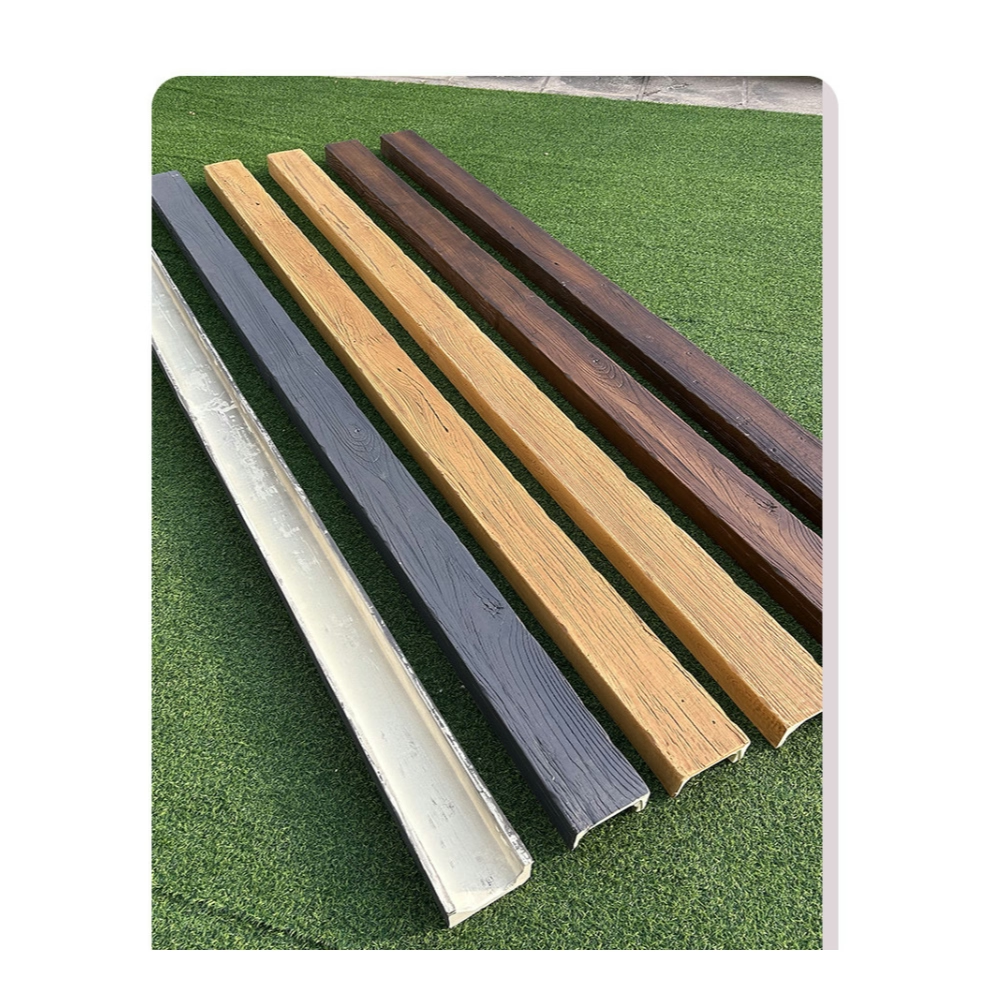
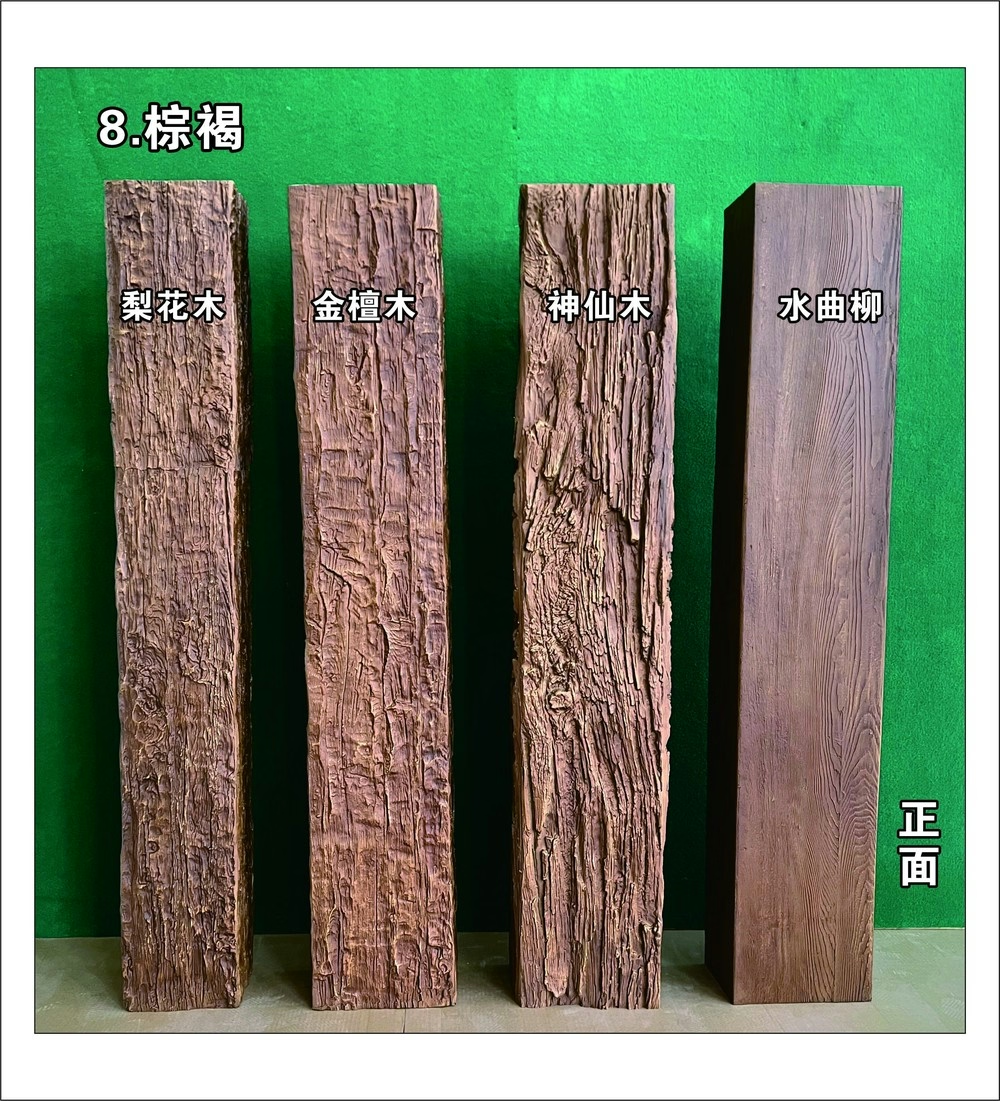
The invisible elements of any installation determine its long-term success. Beautiful faux wood beams that appear perfectly installed may fail prematurely if mounting hardware corrodes, weakens, or degrades over time. Understanding mounting bracket options—particularly those designed to resist rust and weather—ensures that beam installations remain secure and attractive for decades of service.
Professional installers recognize that hardware selection significantly impacts installation quality. The best beams deserve the best attachment methods, and specialized brackets designed for faux beam applications provide advantages that generic hardware cannot match. These purpose-built solutions address the specific challenges that beam mounting presents while ensuring corrosion resistance appropriate to diverse environments.
Understanding Corrosion and Environmental Attack
Metal corrosion occurs through electrochemical reactions between metallic surfaces and their environments. The specific mechanisms vary depending on conditions, but the results are consistently problematic for construction hardware. Understanding what causes corrosion helps in selecting appropriate resistant materials.
Standard steel corrodes readily when exposed to moisture, particularly in humid environments or where temperature fluctuations cause condensation. This orange-brown rust weakens metal progressively, eventually compromising structural integrity. Steel mounting brackets installed in kitchens, bathrooms, or outdoor spaces face particularly aggressive corrosion conditions.
Marine environments present extreme challenges due to salt exposure. Coastal installations require hardware rated for marine conditions, where standard stainless steel may still experience corrosion. The salt spray and humid salt air accelerate corrosion rates dramatically compared to inland conditions.
Chemical exposure creates additional degradation pathways. Cleaning products, cooking residues, and atmospheric pollutants can attack certain metals. Indoor pool areas, spa environments, and industrial spaces all present chemical challenges that generic hardware may not withstand.
Stainless Steel Solutions for Most Environments
Stainless steel provides excellent corrosion resistance for the majority of installation environments. The chromium content in stainless steel creates a passive oxide layer that resists corrosion even when scratched or damaged. Different stainless steel grades offer varying levels of protection appropriate to different conditions.
Grade 304 stainless steel handles typical indoor environments with complete reliability. Kitchen installations, bathrooms, living spaces, and general residential applications perform well with 304 stainless hardware. The material resists staining and corrosion from normal household exposure without concern.
Grade 316 stainless steel adds molybdenum content that significantly improves corrosion resistance, particularly against chlorides. This grade suits coastal installations, pool environments, and spaces with chemical exposure that would challenge 304 stainless. The additional cost proves worthwhile in demanding applications.
Stainless steel brackets are available in configurations specifically designed for faux beam mounting. These purpose-made products include features that generic hardware lacks—appropriate load ratings, suitable mounting geometries, and finishes that complement beam aesthetics. The investment in proper hardware prevents the false economy of inadequate generic alternatives.
Alternative Materials and Coatings
Beyond stainless steel, other materials and treatments provide corrosion resistance for specialized applications. Each approach offers distinct advantages that may suit specific installation requirements.
Aluminum alloys provide good corrosion resistance with lighter weight than stainless steel. Marine-grade aluminum hardware handles coastal conditions reasonably well while reducing overall installation weight. The material works well for many indoor applications and protected outdoor installations.
Powder coating applied to steel hardware provides a protective barrier that prevents direct metal exposure to corrosive elements. Quality powder coating properly applied creates a durable finish that resists chipping and scratching. However, coating damage at edges, drill holes, or mounting points creates vulnerability where corrosion can begin.
Hot-dip galvanizing coats steel with zinc that protects both the coating surface and any exposed steel at scratches or damage points. This cathodic protection makes galvanizing particularly effective for outdoor applications. The thick zinc layer withstands substantial abuse before underlying steel becomes exposed.

Bracket Styles and Load Requirements
Faux beam mounting brackets come in various configurations designed for different beam sizes, installation scenarios, and load requirements. Selecting appropriate styles ensures secure attachment that handles beam weight safely.
Suspended mounting brackets support beams from overhead structural elements. These brackets typically feature horizontal mounting plates that attach to ceiling structure and vertical supports that cradle beam undersides. Load ratings indicate maximum weight capacity, and installations should include safety factors of at least four to one.
Face-mounted brackets attach beams to vertical surfaces such as walls or the faces of existing beams. These L-shaped brackets provide lateral support that prevents beams from pulling away from mounting surfaces. Face mounting often supplements suspended mounting rather than providing sole support.
Structural adhesive pairing with mechanical fasteners provides the most secure installations. Adhesive distributes load across bonding surfaces while mechanical fasteners provide immediate holding power during adhesive cure and backup support if adhesive fails. This combination approach delivers maximum reliability for critical applications.
Installation Best Practices
Even the highest quality brackets perform poorly when improperly installed. Attention to installation details ensures that hardware performs as designed throughout the installation's service life.
Structural mounting requires identifying actual structural members rather than finish materials. Beams must anchor to ceiling joists, rafters, or other load-bearing structure. Anchoring to drywall, plaster, or other finish materials will eventually fail as those materials cannot support beam weight.
Proper fastener selection matters as much as bracket selection. Bolts rather than screws provide superior shear and withdrawal resistance for structural connections. Length must ensure adequate penetration into structural members while avoiding penetration through finish surfaces on opposite sides.
Pilot holes for screws prevent splitting in structural members and ensure clean fastener entry. The pilot hole diameter should equal approximately seventy percent of fastener shank diameter in hardwoods and sixty percent in softer materials. Washers under fastener heads distribute load and prevent pull-through.
Environmental Considerations for Outdoor Installations
Outdoor faux beam installations face environmental challenges that indoor applications avoid. Bracket selection must account for direct weather exposure, UV radiation, and temperature extremes that accelerate corrosion and material degradation.
Direct burial or concrete embedding of metal brackets requires specialized treatment. Standard hardware embedded in concrete experiences corrosion from moisture and alkaline chemicals within the concrete matrix. Hot-dip galvanized or stainless steel hardware rated for concrete embedment is essential for such applications.
UV exposure affects polymer components in some bracket designs. Plastics used for washers, bushings, or decorative covers may degrade under prolonged sun exposure. Quality outdoor-rated hardware uses UV-resistant polymers or replaces these components with metal alternatives.
Winter conditions present particular challenges in cold climates. Freeze-thaw cycles can force water into joints and accelerate corrosion. Proper drainage and sealing prevent water accumulation that would otherwise create these problems. Installing brackets with slight downward slope toward exterior surfaces promotes water runoff.
Maintenance and Inspection Protocols
Establishing maintenance schedules for beam installations ensures early identification of developing problems. Regular inspection catches corrosion, loosening, or other issues before they compromise installation integrity.
Annual visual inspection should examine bracket conditions, checking for signs of corrosion, bending, or other degradation. Particular attention to areas hidden behind beams reveals problems that would otherwise go unnoticed until failure occurs.
Torque verification confirms that bolted connections remain secure. Thermal cycling and vibration can gradually loosen fasteners over time. Periodic retorquing maintains proper clamping force and prevents the creeping loosening that can eventually cause failure.
Cleaning brackets removes accumulated contaminants that accelerate corrosion. In demanding environments—coastal areas, industrial spaces, kitchen hood proximity—more frequent cleaning may prove necessary. Mild detergent and thorough rinsing generally suffices; harsh chemicals should be avoided as they may damage protective coatings or adjacent materials.
The investment in quality rustproof weatherproof mounting brackets protects faux beam installations throughout their service life. These essential hardware elements deserve the same attention to quality and appropriateness as the beams themselves.
Technical References
ASTM standards cited in every specification
Test Data
Lab results from internal testing program
Updated 2026
Reviewed against current product specs