Senior living facilities face unique design challenges that distinguish them from standard residential or commercial interiors. Safety requirements, accessibility standards, maintenance constraints, and the specific needs of aging residents all influence material and design decisions. Ceiling treatments that might work well in other contexts require careful evaluation before specification in these specialized environments.
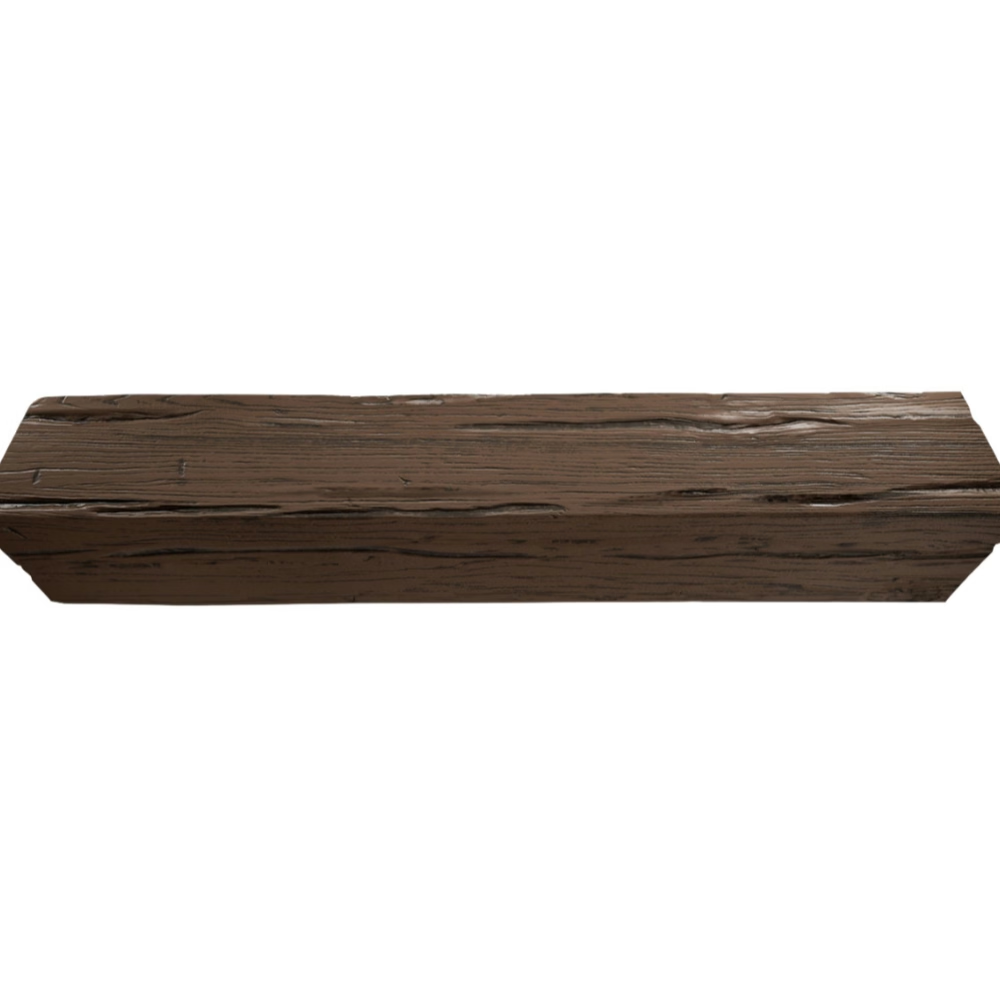
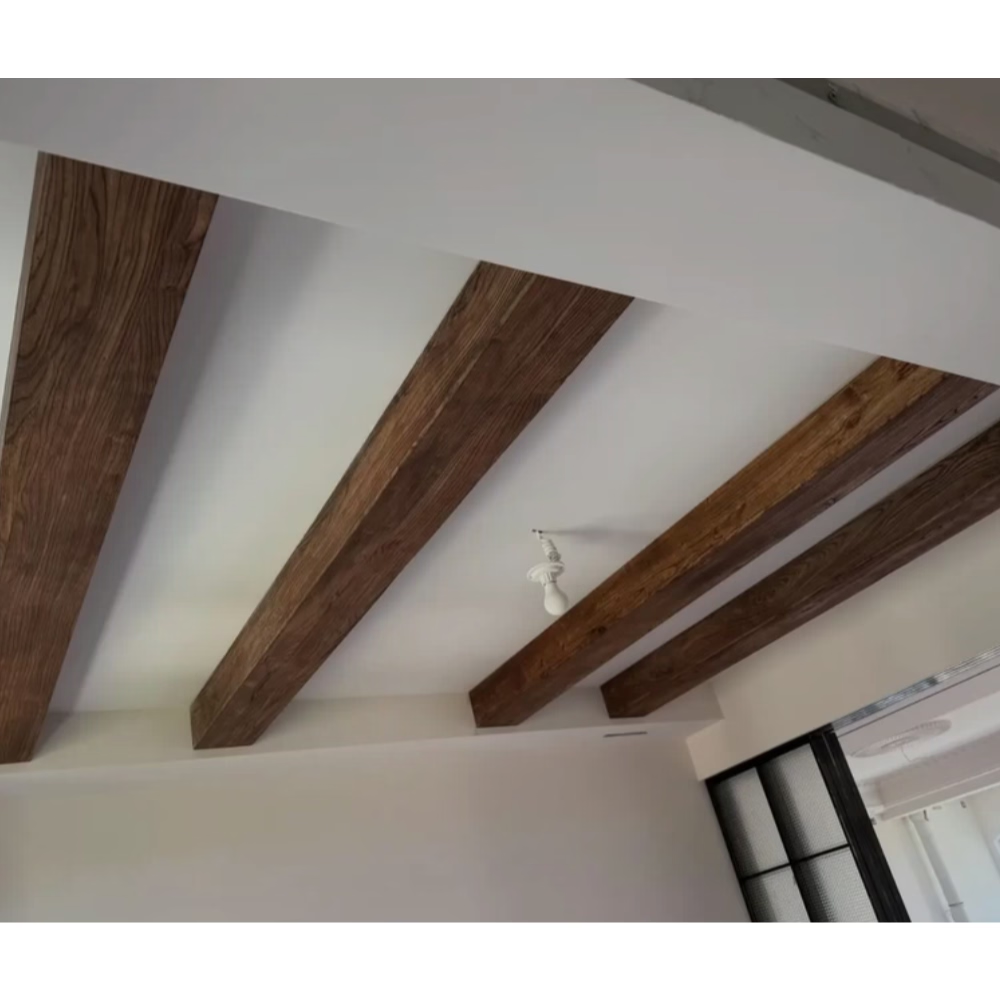
The desire for warm, residential aesthetics in senior living creates particular tension with practical requirements. Residents and their families want spaces that feel like home rather than institutions, yet operational realities demand materials that perform reliably under continuous use with limited maintenance resources. Faux timber beams crafted from polyurethane navigate this balance effectively, providing aesthetic warmth while meeting the demanding requirements of senior care environments.
Designing for Aging Eyes and Cognitive Considerations
Vision changes significantly with age, affecting how older adults perceive and navigate spaces. Understanding these changes helps inform beam specification decisions that enhance rather than complicate resident experiences.
Contrast sensitivity decreases with age, making subtle differences in surface appearance harder to perceive. Beams that create strong visual contrast with surrounding ceiling surfaces help residents perceive architectural elements more easily. This visibility aids spatial orientation and reduces confusion in common areas and corridors.
Depth perception challenges affect how aging eyes judge distances and elevations. Beam installations that create strong visual boundaries can inadvertently suggest changes in floor level or suggest obstacles. Beam undersides should maintain sufficient height clearance to prevent any perception of low-hanging obstacles.
Glare sensitivity increases with age, making highly reflective surfaces problematic. Beam finishes should avoid glossy or shiny appearances that create glare under lighting. Matte or satin finishes provide warmth without creating vision difficulties.
Safety Considerations in Senior Care Environments
Fall prevention represents the primary safety concern in senior living environments. Any ceiling element must be evaluated for how it might contribute to fall risk or complicate fall recovery.
Beam weight and mounting security deserve particular attention. While all ceiling installations require secure mounting, senior living facilities must account for the possibility that residents might inadvertently contact ceiling elements during falls or while using mobility aids. The reduced weight of polyurethane versus authentic timber significantly reduces potential injury from any mounting failure.
Impact-absorbing qualities matter for beams positioned over seating areas. Polyurethane provides some inherent cushioning compared to rigid materials, potentially reducing injury severity if头部 impact were to occur. While avoiding such contact remains preferable, realistic safety planning accounts for improbable but possible scenarios.
Fire safety in senior living facilities receives heightened regulatory attention. Polyurethane beams with appropriate fire ratings contribute to overall building safety compliance. Documentation of fire performance characteristics facilitates regulatory approval processes.

Maintenance Simplicity for Limited Staff Resources
Senior living facilities operate under staffing constraints that make intensive maintenance problematic. Materials that require minimal ongoing care provide significant operational advantages in these environments.
Authentic timber demands periodic inspection for pest activity, moisture damage, and finish degradation. These concerns require attention regardless of whether problems are evident. Facilities without specialized maintenance staff struggle to provide adequate monitoring.
Polyurethane faux beams resist the biological and environmental factors that affect natural wood. No pests target polyurethane; moisture doesn't cause swelling or rot; the material doesn't absorb stains or odors. These resistances translate directly to reduced maintenance requirements.
Cleaning faux beams involves nothing more than periodic dusting or wiping with mild cleaners. Staff can accomplish this during regular cleaning rounds without specialized training or equipment. The consistent surface quality ensures uniform appearance even when different staff members handle cleaning.
Aesthetic Warmth in Institutional Settings
The institutional feeling that plagues many senior living facilities results partly from design elements that prioritize function over aesthetics. Ceiling treatments contribute significantly to whether spaces feel residential or clinical.
Wood tones introduce warmth that benefits elderly residents who may already struggle with cold institutional environments. The psychological comfort of natural materials supports wellbeing in ways that benefit overall health outcomes.
Residential scale in common areas encourages social engagement and reduces isolation. Beams that create intimate zones within larger spaces support smaller gathering areas that feel more naturally social than large open plans.
Wayfinding benefits from architectural features that create distinctive locations within facilities. Residents and visitors can describe meeting "under the beams in the dining room" rather than relying on confusing corridor numbering systems.
Infection Control and Hygiene Considerations
Healthcare settings, including senior living facilities, require attention to infection control that affects material selection. Surfaces that harbor pathogens or complicate sanitation create operational challenges and potential health risks.
Porous materials present particular concerns because they can harbor microorganisms that standard cleaning cannot fully address. Polyurethane's non-porous surface doesn't provide these harborage opportunities, supporting infection control protocols.
Cleanability under practical conditions matters as much as theoretical resistance. Faux beams that staff can access and clean without specialized equipment or procedures support rather than complicate infection control efforts.
The smooth surfaces of quality polyurethane beams don't accumulate dust and allergens as readily as textured natural wood. This characteristic benefits residents with respiratory sensitivities while reducing cleaning demands.
Regulatory Compliance Documentation
Senior living facilities must document compliance with numerous regulations affecting building construction and renovation. Material specifications should include documentation that facilitates these compliance demonstrations.
Fire ratings for ceiling materials often fall under specific code requirements. Polyurethane beams with tested fire performance characteristics provide documentation that satisfies building officials and surveyors.
Accessibility compliance extends to how ceiling elements interact with mobility equipment and resident capabilities. Beams installed with adequate clearance don't create obstacles for residents using walkers, wheelchairs, or other mobility aids.
Building officials may require verification that ceiling treatments don't compromise structural elements or fire-rated assemblies. Proper installation techniques that preserve rated assemblies can be documented and certified.
Cost-Effectiveness for Healthcare Budgets
Healthcare budgets face continuous pressure to contain costs while maintaining quality. Material decisions that reduce long-term costs while maintaining resident satisfaction provide operational benefits beyond initial specification.
The extended service life of quality faux beams compared to authentic timber represents ongoing savings. No refinishing costs, no replacement reserves for damaged sections, no emergency repairs for moisture or pest damage.
Installation cost advantages compound over multiple units in larger facilities. The savings per unit multiplied across dozens or hundreds of identical spaces creates substantial budget impact.
The positive impression that attractive environments create for prospective residents and their families influences occupancy and reputation. Aesthetic investments that attract residents pay indirect returns beyond their direct contribution to facility quality.
Safe, durable faux beams enable senior living facilities to create the warm residential atmospheres that residents deserve while meeting the demanding practical requirements of healthcare environments.
Technical References
ASTM standards cited in every specification
Test Data
Lab results from internal testing program
Updated 2026
Reviewed against current product specs


