Assisted living facilities serve populations with distinct needs that influence every aspect of interior design. Residents often face mobility limitations, visual impairments, cognitive challenges, and increased susceptibility to injury. The environments we create for these individuals must address these vulnerabilities while preserving dignity and supporting independence as much as possible.
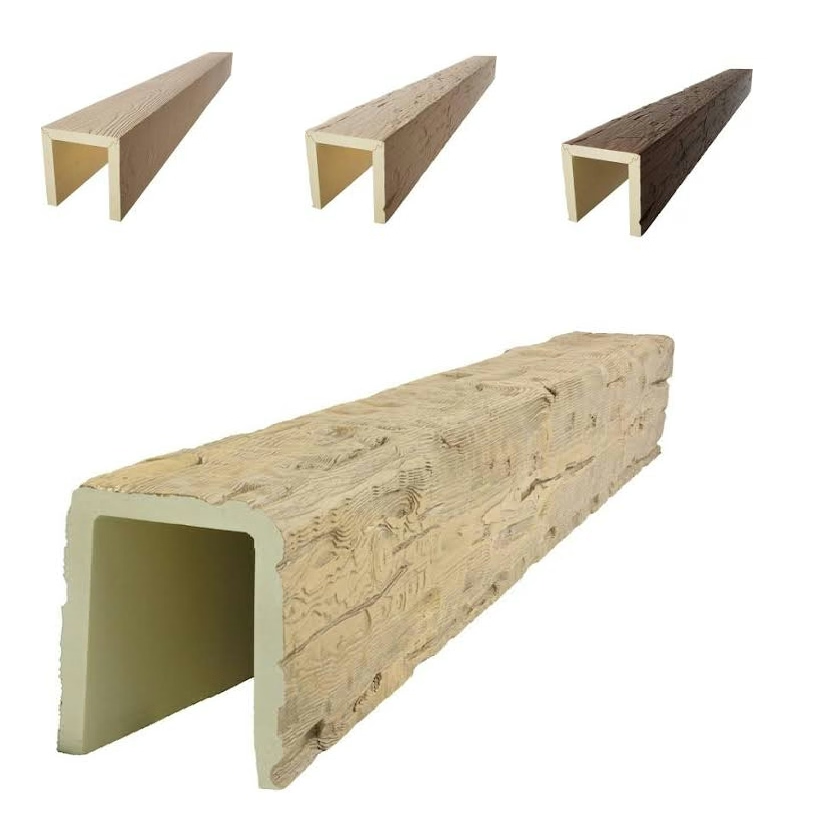
Ceiling treatments significantly influence assisted living interiors, affecting everything from perceived spaciousness to wayfinding to resident safety. Authentic timber and some decorative materials create hazards or maintenance challenges that make them inappropriate for these specialized environments. Polyurethane faux beams offer solutions that honor aesthetic goals while meeting the stringent practical requirements that assisted living demands.
Mobility Challenges and Environmental Response
Many assisted living residents use mobility aids that influence how they perceive and navigate spaces. Wheelchairs, walkers, and canes create different spatial relationships than unimpaired ambulation, requiring design responses that accommodate rather than frustrate these users.
Ceiling height perception affects perceived space for seated residents. Beams that visually lower ceilings create different psychological impacts for those viewing from seated positions compared to standing visitors. The warm scale that beams create can feel cozy to standing adults but potentially claustrophobic or obstructive to those seated in wheelchairs.
Beam mounting heights require careful attention in assisted living contexts. Minimum clearance standards ensure that residents using tall mobility aids or standing with support can pass beneath without concern. Professional installation considers these requirements from the outset rather than discovering clearance problems after completion.
Visual contrast between beams and surrounding surfaces helps residents with reduced vision perceive architectural elements. Strong color or tonal differences create boundaries that guide spatial understanding even when visual acuity limits detailed perception.
Infection Control in Senior Care Settings
Healthcare-associated infections present serious risks in any care environment. Senior residents with compromised immune systems or chronic conditions face heightened vulnerability. Material selection influences infection control effectiveness in ways that affect resident outcomes.
Surface porosity determines how readily microorganisms colonize materials. Porous surfaces like unsealed wood provide microscopic crevices where bacteria and fungi establish communities that resist cleaning. Smooth polyurethane surfaces deny these harborage opportunities.
Cleanability under field conditions differs from theoretical cleanability. Materials that require specialized cleaners or equipment for effective sanitation create practical problems when facilities lack such resources. Polyurethane responds to standard healthcare disinfectants without damage or performance loss.
Joint and connection details affect cleaning thoroughness. Beams with complex profiles accumulate dust and debris in crevices that cleaning may not reach. Simpler profiles with minimal detailing simplify sanitation and ensure more complete cleaning.
Cognitive Support Through Environmental Design
Cognitive impairment affects many assisted living residents to varying degrees. Environmental design that supports cognitive function improves quality of life and reduces challenging behaviors that complicate care.
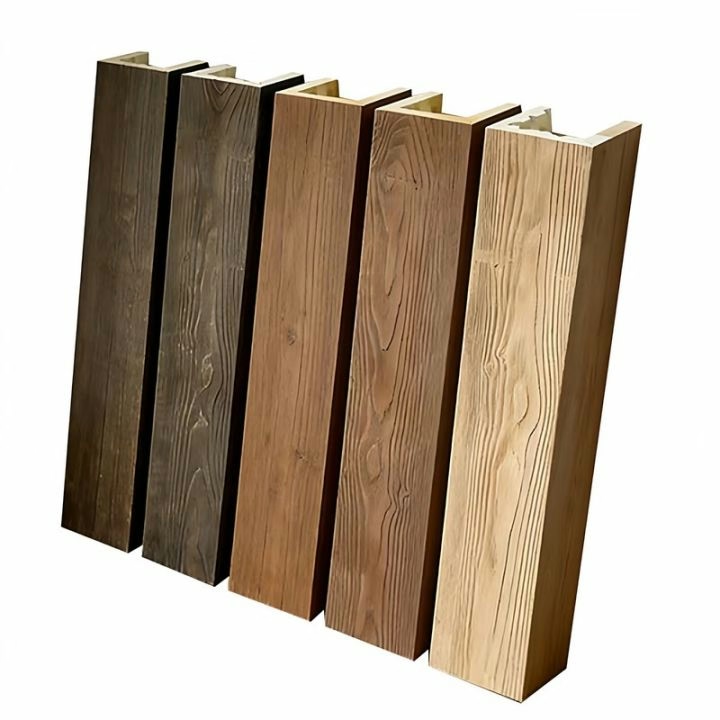
Familiar aesthetic elements help residents with dementia or similar conditions feel oriented and secure. Wood tones and textures that reference home environments create comfort that clinical or institutional aesthetics cannot match.
Consistency in beam appearance throughout a facility aids wayfinding for cognitively impaired residents. If beams appear in dining areas but not corridors, confusion results when residents attempt to use beams as navigational landmarks. Consistent application creates reliable environmental cues.
Excessive visual complexity overwhelms cognitively impaired individuals. Beams that introduce character and detail should do so within overall compositions that remain calm and readable. Balance between visual interest and simplicity supports rather than challenges cognitive function.
Staff Safety and Operational Considerations
Assisted living facility staff face physical demands that influence how spaces function operationally. Materials that simplify care tasks improve staff effectiveness and reduce injury risk.
Ceiling elements that accumulate dust or require access for cleaning create additional work demands. Faux beams with cleanable surfaces and secure mounting that permits access without concern support efficient operations.
Wheelchair and stretcher maneuvering through spaces with ceiling obstacles requires adequate clearance and maneuvering room. Beam positioning shouldn't create narrow passages that complicate resident transport during emergencies or routine care activities.
Cleaning staff working from ladders or lifts near beam installations need secure footing and adequate working clearances. Installations that require awkward positioning or create unstable work conditions increase staff injury risk.
Acoustic Considerations for Care Environments
Sound quality significantly affects both resident wellbeing and care effectiveness. Spaces that are too reverberant create challenging conditions for residents with hearing difficulties while complicating communication between staff and residents.
Beam installations affect room acoustics through surface area, texture, and the acoustic properties of spaces above or around beams. Properly designed beam treatments can improve acoustic environments rather than degrading them.
Background noise in assisted living facilities often includes mechanical systems, activity noise, and conversational sound from common areas. Beams that provide some sound absorption help manage these noise levels, creating more comfortable environments for residents trying to rest or communicate.
Private residence rooms benefit from acoustic privacy that prevents sound transmission between units. While beams alone cannot provide significant sound isolation, they can be integrated with assemblies that do contribute to privacy.
Regulatory Framework Compliance
Assisted living facilities operate under regulatory frameworks that affect material selection and installation. Understanding these requirements helps ensure that beam installations support rather than complicate compliance.
Fire safety codes often specify requirements for interior finishes based on occupancy classification. Healthcare occupancies typically face stringent requirements that must be documented and verified. Faux beams with tested fire ratings provide the documentation that regulatory surveys require.
Building officials may review ceiling treatments during construction or renovation inspections. Beams installed in ways that compromise rated ceiling or floor-ceiling assemblies create code violations that facilities must address. Proper installation techniques preserve required fire ratings.
Americans with Disabilities Act requirements extend to spatial clearances and obstacle considerations that affect beam placement. While the ADA primarily addresses mobility access, cognitive accessibility considerations increasingly influence design guidance as well.
Long-Term Economic Considerations
Assisted living facilities represent long-term investments where decisions made during construction or renovation affect operating economics for years or decades. Material selections that reduce long-term costs improve financial sustainability.
Maintenance cost projections should account for material lifecycles and replacement reserves. Faux beams with fifty-year service expectations require far less financial reserves than authentic timber requiring periodic refinishing and eventual replacement.
Turnover cleaning between resident occupancies benefits from materials that clean quickly and thoroughly. Faster unit preparation enables more efficient operations and potentially higher occupancy rates.
The reputation effects of attractive, well-maintained facilities influence market position and occupancy rates. Aesthetic quality that impresses prospective residents and families supports marketing efforts and premium pricing.
Safe, durable PU faux beams provide the aesthetic warmth that makes assisted living feel like home while meeting the demanding practical requirements of healthcare environments.
Technical References
ASTM standards cited in every specification
Test Data
Lab results from internal testing program
Updated 2026
Reviewed against current product specs


