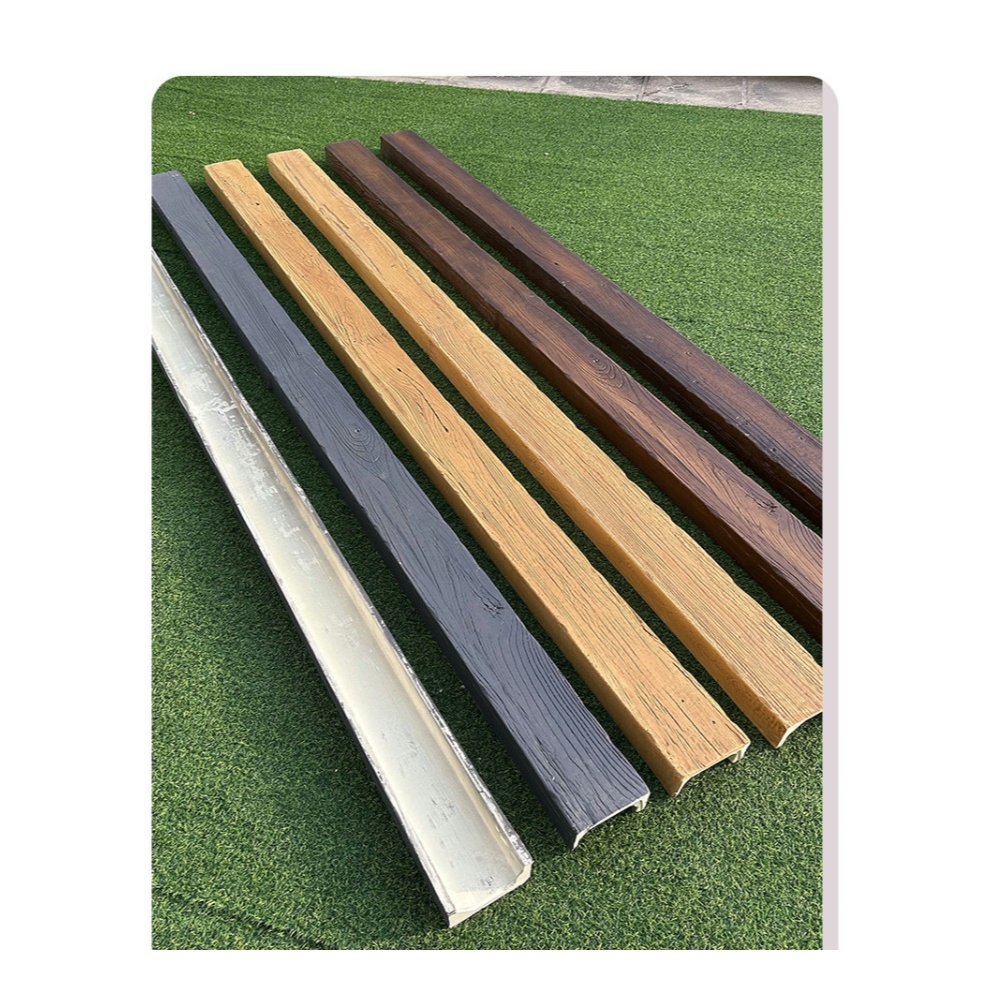
Experienced observers can spot a poorly installed beam ceiling from across the room. The telltale signs include visible seams where beam sections meet, slight misalignments that catch light at wrong angles, and finishing inconsistencies that draw attention to joints. These imperfections undermine what might otherwise be a successful installation, making the work appear amateurish despite potentially excellent materials and design intentions. Professional installers understand that the goal is not merely attaching beams to ceilings but creating the illusion that those beams belong there naturally—that they are original structural elements rather than decorative additions.
Seam concealing represents the craft knowledge that distinguishes professional work from DIY attempts. These techniques transform visible joints into invisible transitions that the eye simply doesn't register as separate elements. Understanding the principles and implementing the practices that achieve this invisibility elevates any beam installation toward professional quality results.
The Psychology of Visual Perception in Beam Installation
Human visual perception operates on certain principles that installers can leverage to create seamless appearances. The eye follows continuous lines and patterns, transitioning smoothly between connected elements unless something interrupts that flow. When grain patterns align across joints, the eye follows the pattern rather than stopping at a seam. When color and texture transition gradually rather than abruptly, the boundary between elements becomes difficult to perceive.
Shadows play crucial roles in how we perceive depth and connection. Sharp shadow lines create visual separation between elements, making joints obvious. Soft shadows that blend gradually across surfaces create continuity that conceals boundaries. Professional installers understand lighting in their installations and position elements to take advantage of shadow behavior.
Scale affects perception as well. Large features with obvious seams read as multiple pieces. Smaller elements with subtle or no visible seams appear as unified objects. For beam installations, this means that narrower beams with appropriate detailing can appear more seamless than wider beams with poorly concealed joints. Understanding this relationship helps guide product selection and installation approach.
Pre-Installation Planning for Seamless Results
Successful seam concealment begins long before beams reach the ceiling. Matching beam sections during material selection maximizes opportunities for invisible joints. Purchasing beams from the same production batch ensures consistent color and texture across pieces that will join together. When ordering multiple beams, specifying consecutive runs from manufacturing minimizes variation.
Grain pattern orientation affects seam visibility dramatically. Purchasing beams with consistent grain direction ensures that patterns flow across joints naturally. Some manufacturers offer grain-matching services that align patterns between adjacent beams. While this service adds cost, it virtually eliminates seam visibility for applications where perfection is required.
Layout planning positions joints where they will be least visible. Corners, positions behind light fixtures, and areas with existing shadows naturally conceal seams. Active viewing areas and positions directly under task lighting demand the most invisible joints. Mapping joint positions during planning ensures that effort concentrates where it matters most.
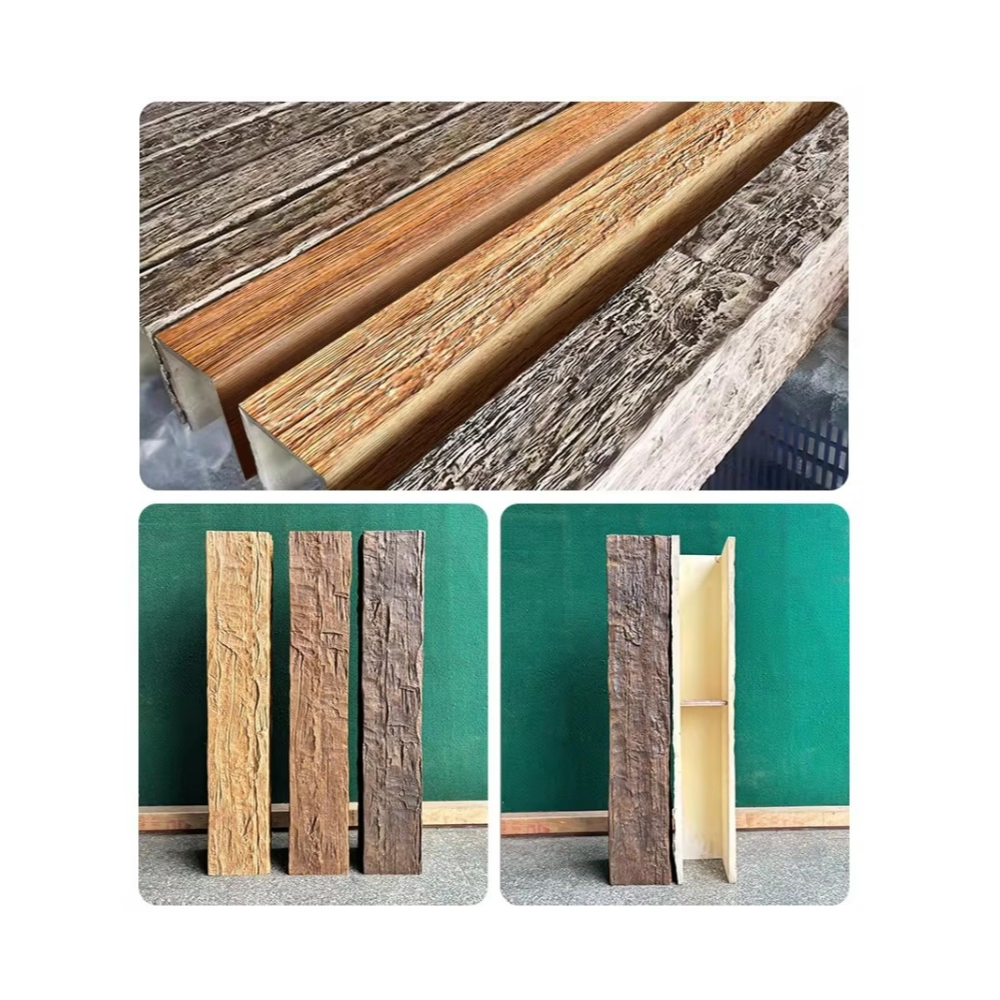
Alignment Techniques for Invisible Joints
Precise alignment creates the foundation for seamless joints. Beams must be perfectly coplanar where they meet—any height difference creates a shadow line that marks the joint location. This alignment must be maintained throughout the entire joint interface, not just at visual inspection points. Settlement, thermal movement, or load stress should not cause alignment drift over time.
Temporary support during installation maintains alignment while adhesive cures. Without support, beams may shift as adhesive sets, creating misalignment that becomes visible after completion. The support system must maintain position throughout the full cure cycle, which may extend over multiple hours or days depending on adhesive type and ambient conditions.
Mechanical joining techniques supplement adhesive bonding for joints requiring maximum security. Internal splines, dowels, or bracket systems create physical connections that maintain alignment regardless of adhesive performance. These hidden reinforcements work behind the scenes, providing stability that allows adhesive to focus on surface bonding without bearing structural loads.
Surface Preparation and Matching
The surfaces being joined must match in texture and color for invisibility to succeed. Variations in surface texture catch light differently, creating visible boundaries. Some preparation of both surfaces ensures that they will accept finish identically, absorbing and reflecting light at the same rates.
Sanding or scoring surfaces before joining creates mechanical keys that improve adhesive bonding while potentially helping with texture matching. This preparation must be consistent across both surfaces to maintain texture uniformity. Any difference in preparation becomes a difference in finished appearance.
Cleaning surfaces removes contamination that might affect either bonding or finishing. Dust, oils, and handling residue all interfere with achieving invisible joints. Thorough cleaning immediately before joining ensures optimal conditions for both adhesion and appearance matching.
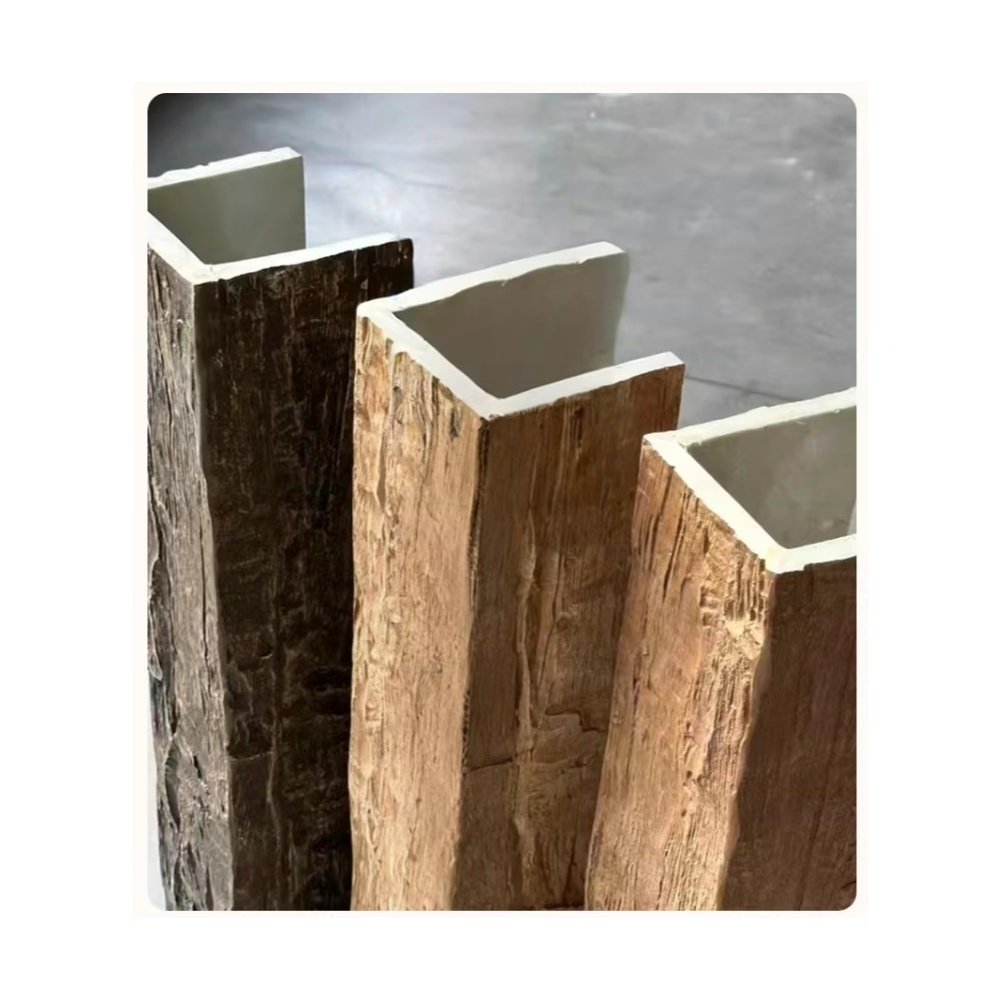
Finishing Approaches That Disappear
Finish application requires techniques that create continuous appearance across joints. Any variation in finish thickness, color concentration, or texture creates visible boundaries. Thin, even coats applied consistently across entire surfaces produce the uniform appearance that conceals joints.
Blending finishes across joint lines requires feathering techniques that create gradual transitions. The eye perceives abrupt changes but accepts gradual ones as natural variations within a single surface. Working finish beyond joint lines and then feathering back creates these gradual transitions that the eye doesn't register as boundaries.
Clear coating over repaired and finished surfaces unifies appearance by creating a continuous protective layer with consistent sheen. Variations in substrate or repair materials become invisible beneath uniform clear coat. This final step ties everything together, creating the seamless appearance that distinguishes professional work.
Working in appropriate lighting conditions affects finishing quality significantly. Lighting that reveals surface variations helps identify problems before they become permanent. At the same time, checking appearance under multiple lighting conditions ensures that results satisfy regardless of how spaces are illuminated.
Seam concealment transforms beam installations from mere attachment to artistry. The techniques involved require understanding, practice, and attention to detail, but the results justify the effort. A perfectly seamless beam installation commands admiration precisely because the seams remain invisible—leaving viewers certain that they're seeing something natural and original rather than constructed and added.
Technical References
ASTM standards cited in every specification
Test Data
Lab results from internal testing program
Updated 2026
Reviewed against current product specs