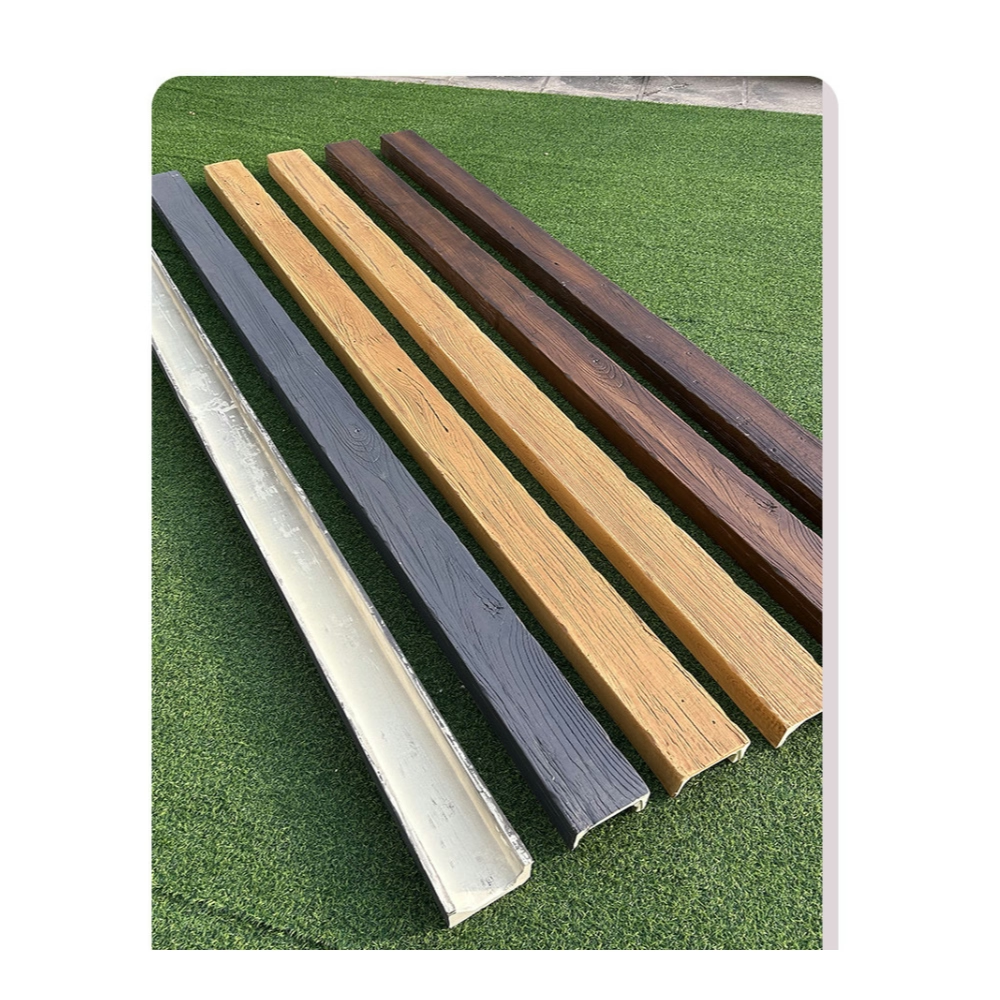
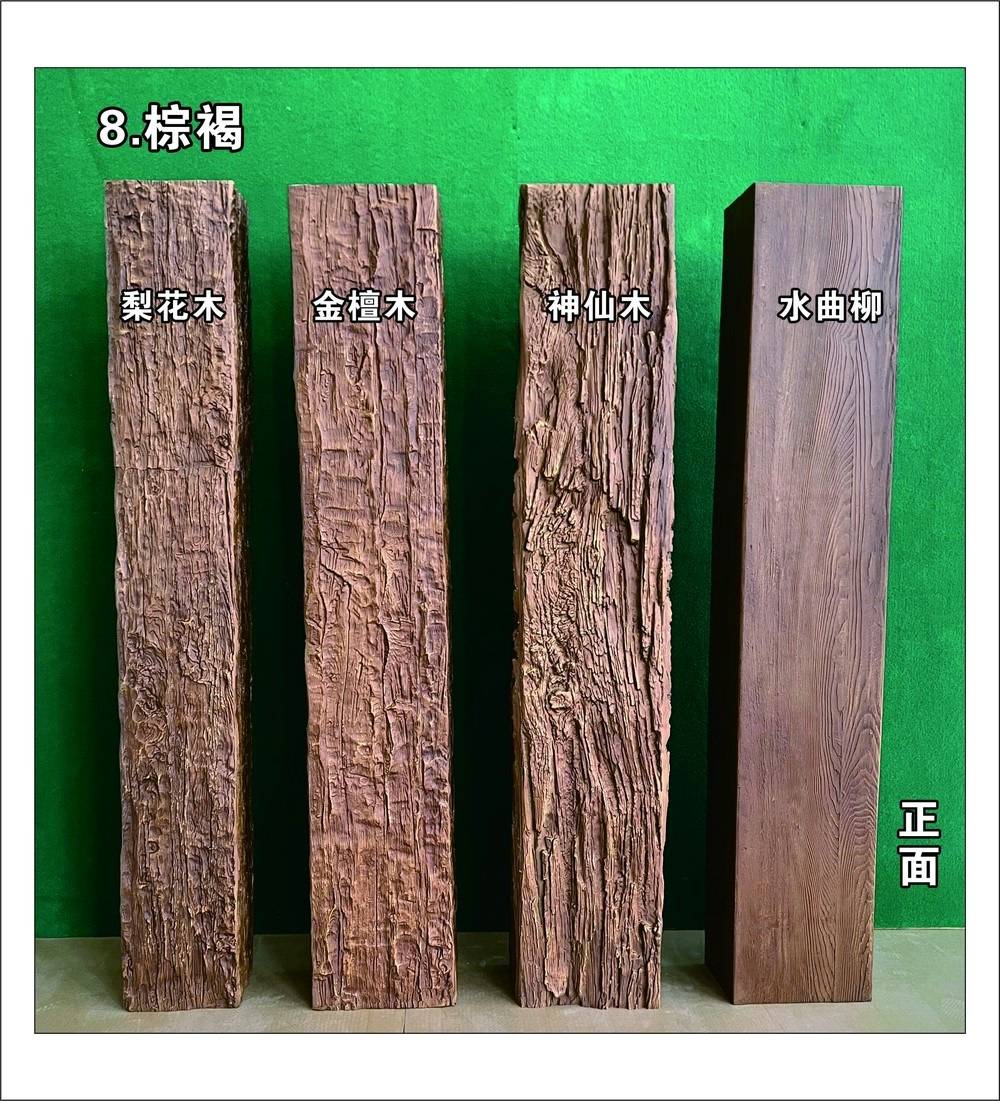
The measure of truly professional beam installation lies not in the visibility of the work but in its invisibility. When joints disappear completely, when beam sections merge into seamless continuations, observers perceive not an installation but an architectural fact. The beams appear to have always been there, part of the original structure rather than additions to it. This level of finish represents the summit of the craft—achievable, but only through understanding the principles that govern visual perception and applying techniques that honor those principles consistently.
Invisible joint design encompasses everything from initial product selection through final finishing. Each step either contributes to or undermines the goal of seamless appearance. Projects that achieve truly invisible joints result from countless small decisions, each made correctly, that together produce extraordinary outcomes. Understanding this comprehensive nature helps installers prioritize their efforts for maximum impact.
The Science of Visual Continuity
Human visual perception operates on principles that designers and installers can leverage for their purposes. The eye follows patterns, colors, and textures, registering continuity when these elements align and registering boundaries when they don't. Exploiting these tendencies requires understanding exactly what creates the perception of separation versus the perception of connection.
Light and shadow play decisive roles in how we perceive edges and boundaries. Sharp shadow lines create strong visual separations that announce joint locations. Soft, gradual transitions create continuity that the eye interprets as natural variation within continuous surfaces. Controlling shadow behavior through alignment and finishing techniques allows installers to guide perception toward seamless interpretations.
Scale affects how imperfections register visually. Tiny variations that would be obvious on small objects become invisible on large ones. Conversely, techniques that work on modest spans may fail when applied to long continuous runs. Understanding how scale interacts with visibility helps set appropriate quality standards for specific applications.
Material Selection for Seamless Results
Achieving invisible joints begins with selecting materials that will cooperate with the goal. Products from the same production batch share consistent color and texture, maximizing opportunities for seamless matching. Variations between batches—even subtle ones—create visible boundaries that prevent truly invisible joints.
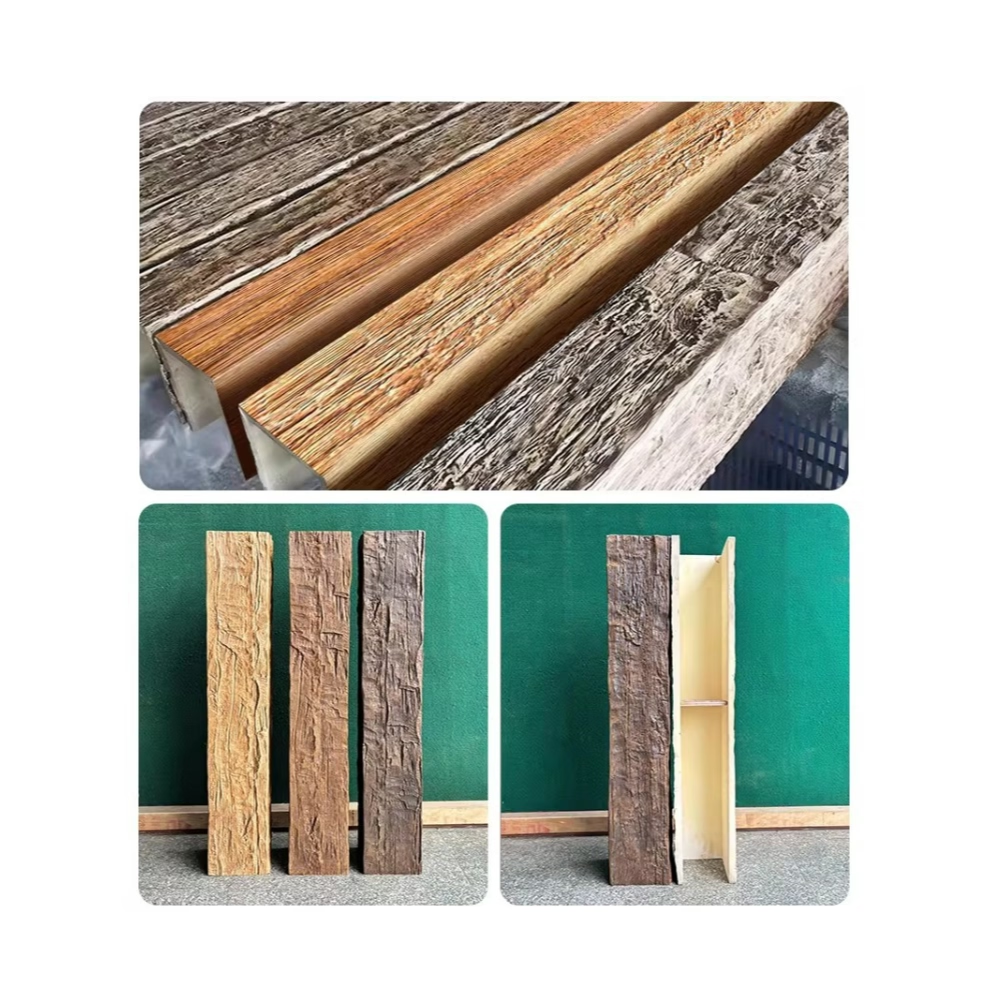
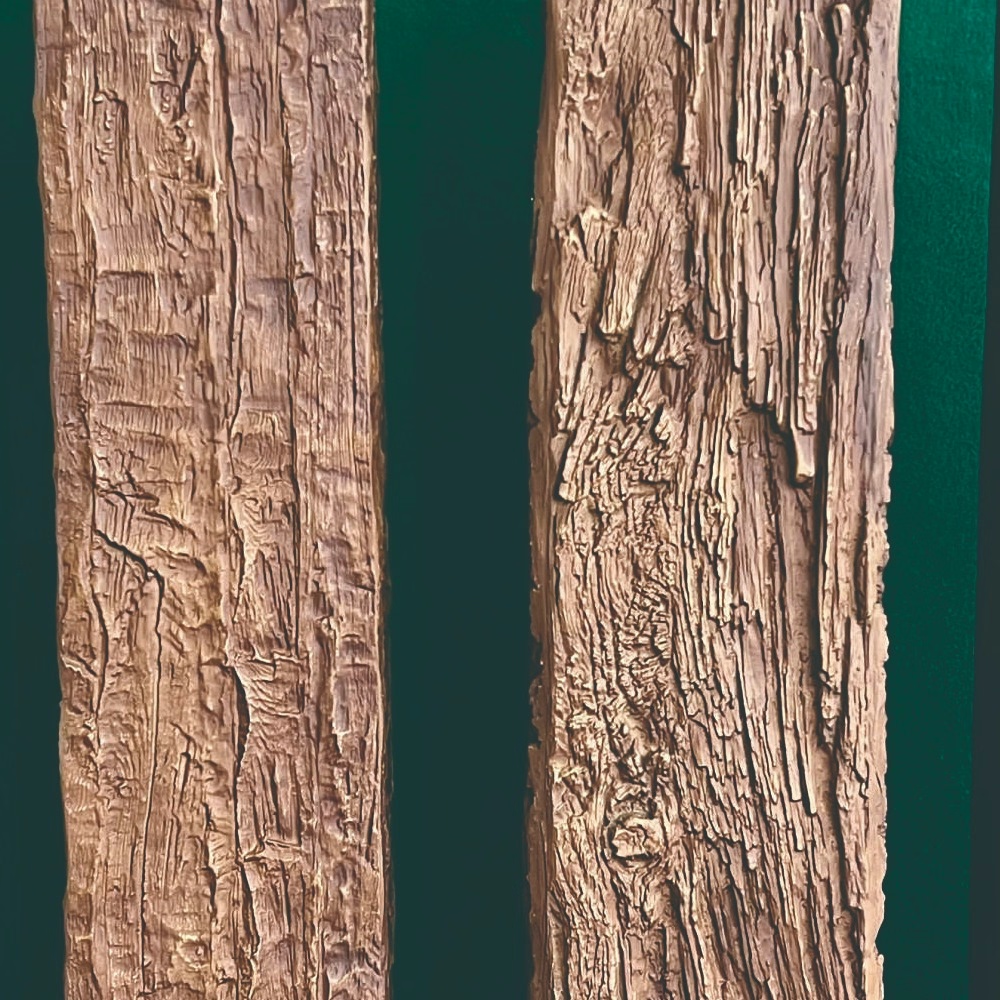
Surface texture uniformity matters as much as color consistency. Some beam textures catch light dramatically, emphasizing any variation in surface characteristics. Others present more matte appearances that tolerate minor differences without announcing them. Understanding how specific textures interact with lighting helps select products appropriate for invisible joint requirements.
Grain pattern orientation affects joint invisibility significantly. Products with consistent grain direction across their lengths create natural flow that supports seamless appearance. Erratic or mismatched grain creates visual interruptions that draw attention to joint locations regardless of how perfectly the physical connection is made.
Precision in Preparation
The preparation phase determines whether invisible joints become possible. Any imprecision in cutting, fitting, or surface preparation creates obstacles that finishing cannot overcome. Spending extra time on preparation invariably saves more time in correction later.
Cutting accuracy for joint preparation requires appropriate equipment and technique. Joints that must be invisible cannot tolerate gaps, misalignments, or dimensional errors. The equipment used—saws, routers, sanding equipment—must be properly set up and operated with attention that matches the quality level being pursued.
Surface preparation for finishing requires creating uniform conditions across entire beam surfaces including joint areas. Variations in texture, porosity, or surface contamination create differences in how finishes appear, potentially revealing joint locations. Complete uniformity across preparation ensures that finishes behave identically everywhere.
Test fitting joints before committing with adhesive or finish allows identifying and correcting problems while correction remains straightforward. This dry run approach identifies issues that would otherwise become permanent once materials are joined. The time invested in testing always returns value through reduced rework.
Assembly Techniques for Invisible Results
Alignment during assembly must be perfect because perfection is the only acceptable standard for truly invisible joints. Any misalignment, however slight, creates shadow lines or surface steps that betray the joint location. Supporting beams during assembly to maintain alignment throughout the process prevents the settling or shifting that creates imperfect results.
Adhesive selection and application affect joint invisibility directly. Adhesive that shrinks during curing may create depressions at joint locations. Adhesive that creates visible residue requires cleanup that might damage surrounding surfaces. Selecting adhesives specifically formulated for invisible joint work ensures that the bonding process doesn't undermine preparation quality.
Clamping technique maintains alignment during adhesive cure while ensuring complete surface contact throughout the joint area. Uneven pressure creates gaps that become visible after finishing. Proper clamping distributes pressure uniformly, creating the complete bond that invisible joints require.
Finishing for Perfection
The finishing phase provides final opportunities to achieve invisibility—or to reveal all previous imperfections. Careful color matching between beam sections prevents tonal variation that would mark joint locations. This matching may require blending techniques, custom tinting, or multiple finish applications to achieve perfect uniformity.
Clear coating unifies appearance by creating consistent surface properties across entire beam installations. Variations in substrate absorption or texture that might be visible under direct examination disappear beneath uniform clear finish. Building up protection through multiple thin coats ensures complete coverage without introducing new surface variations.
Final inspection under varied lighting conditions confirms whether joints have achieved invisibility. Lighting that reveals problems—raking light, direct sun, dramatic shadows—should be employed deliberately to check quality. Joints invisible under all normal viewing conditions and all reasonable lighting scenarios satisfy the highest quality standards.
Professional installers who consistently achieve invisible joints understand that the secret lies not in any single technique but in the comprehensive attention to every detail that affects final appearance. From product selection through final finishing, each decision either supports or undermines the goal. When all decisions support the objective, the results appear not as installations but as architectural facts—timber beams that seem to have always been part of the spaces they occupy.
Technical References
ASTM standards cited in every specification
Test Data
Lab results from internal testing program
Updated 2026
Reviewed against current product specs