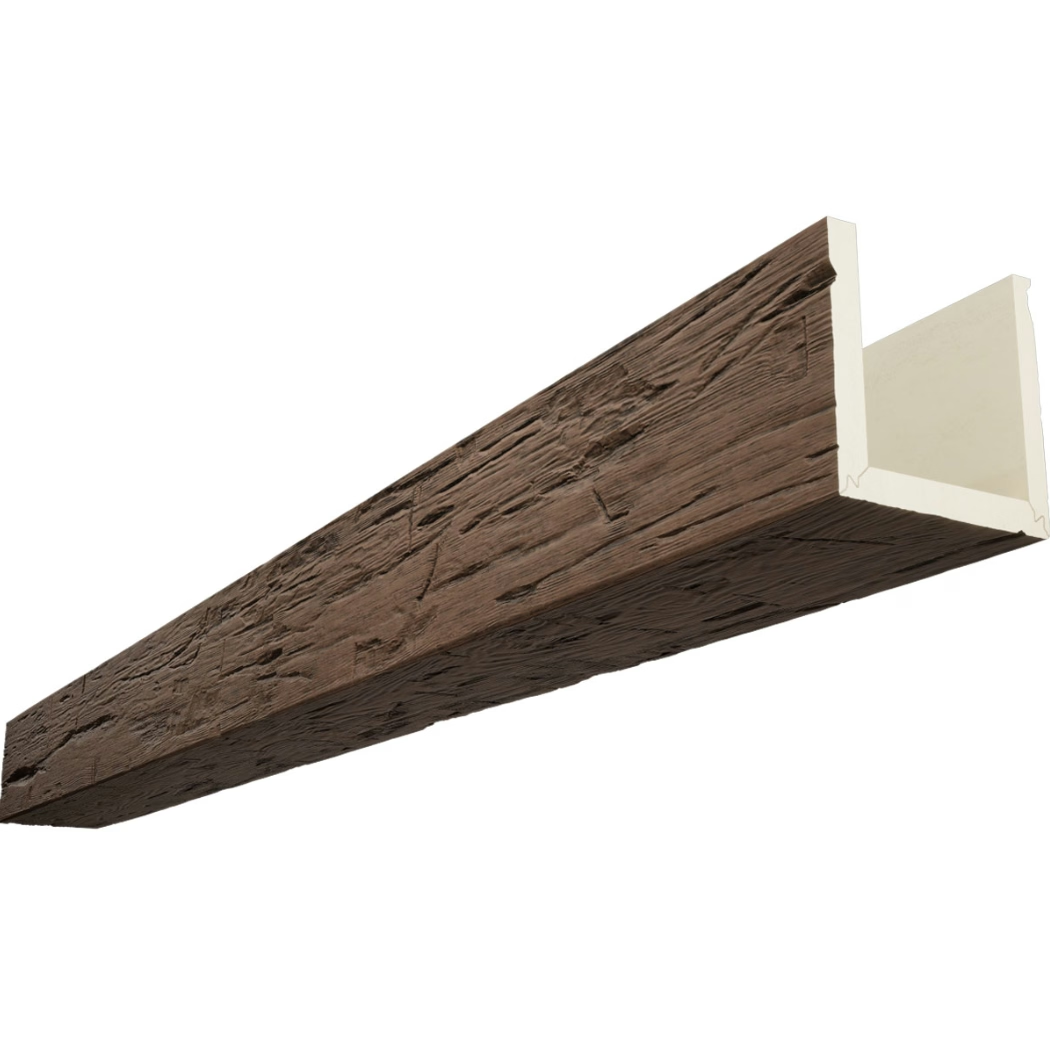
Long-distance shipping transforms products into travelers. Between the moment a polyurethane faux beam leaves the factory and its arrival at a jobsite on another continent, it may pass through a dozen hands, several warehouses, two or three ports, and the extreme conditions inside an ocean container for weeks at a time. Each link in this chain presents opportunities for damage if packaging is inadequate. The exporter's responsibility does not end at the factory loading dock—it extends through the entire journey until the buyer receives goods in usable condition.
Secure export packaging is an engineering discipline that applies material science, logistics knowledge, and quality assurance practices to the challenge of protecting products across international supply chains. For faux beam exporters, mastering these methods reduces damage claims, strengthens customer relationships, and builds the reputation necessary for sustained international business.

Engineering Packaging for Extended Transit Conditions
Standard domestic packaging assumes relatively brief exposure to controlled conditions. Export packaging must account for transit times measured in weeks rather than days, handling by multiple parties who may have different standards, and environmental conditions that vary dramatically across ocean passages. This extended exposure requires packaging designed conservatively rather than just adequately.
Compression testing determines how much weight packaging can withstand before the product inside sustains damage. For export applications, the test should simulate worst-case stacking scenarios: a fully loaded container with heavy cargo positioned above lighter packages. The resulting figure should include a safety margin of at least 25 percent above the expected maximum load. Underestimating stack weights leads to the most common export packaging failure.
Impact resistance testing simulates forklift handling, port crane operations, and trailer loading where packages experience sudden shocks. Drop testing from standardized heights confirms that packaging protects product surfaces and structural integrity during unexpected drops or rough handling. A package that survives a 24-inch drop onto a hard surface without product damage has adequate impact resistance for most export scenarios.
Material Selection for Export-Grade Protection
Export packaging materials must perform under conditions that domestic materials might never encounter. High humidity, salt air exposure during ocean voyages, temperature extremes, and prolonged compression distinguish export requirements from standard domestic packaging.
Corrugated cardboard for export applications should be double-wall construction at minimum, with ECT (Edge Crush Test) ratings of 44 or higher indicating compression resistance. Standard single-wall cardboard used for domestic shipments cannot withstand the stacking loads in containerized ocean shipping. Water-resistant corrugated or wax-coated options maintain structural integrity when humidity is high, preventing the cardboard collapse that leads to product damage.
Strapping materials secure packages to pallets and prevent load shifting during ocean transit. Polyester strapping offers superior tension retention compared to polypropylene, maintaining securement even as temperature changes cause materials to expand and contract. Steel strapping provides maximum strength but introduces ISPM 15 compliance complications that make it unsuitable for most export applications without treatment certification.
Edge protectors made from corrugated cardboard or plastic prevent strapping from cutting into package corners under load. For beams with finished surfaces, edge protectors also prevent strapping marks on the product itself. Metal edge protectors offer the highest protection level but add cost and weight.

Palletization Standards for Container Shipping
Palletization directly affects how safely beams travel inside shipping containers. The pallet serves as the interface between the product package and the container floor, providing a consistent loading height for forklift operations and creating air circulation space between the cargo and any moisture that may accumulate on the container floor.
Pallet dimensions should match standard container interior dimensions to maximize space utilization. A 48x40 inch pallet fits efficiently in standard 20-foot containers, while larger pallets may leave unusable space on the sides. For European destinations, EUR-pallet dimensions (1200x800mm) optimize container loading. Mismatched pallet sizes waste shipping space and can cause load instability.
Pallet construction for export requires kiln-dried lumber to reduce moisture content below 19 percent, preventing the warping and cracking that can destabilize loads. The ISPM 15 heat treatment certification applies to all solid wood pallets used in international trade. Heat-treated pallets carry a visible certification mark and are widely available from pallet suppliers at modest premiums over untreated options.
Block stacking within containers should follow a pyramid pattern, with heavier packages on lower levels. Staggering package positions between layers creates interlock that resists shifting. Strapping individual layers together before loading and securing the entire stack to the pallet with heavy-duty banding prevents movement that damages both packaging and product.
Climate-Adaptive Packaging Strategies
Containers crossing different climate zones experience temperature swings that create internal condensation. A container loaded in a humid Chinese warehouse may encounter temperatures near freezing when the ship enters colder waters, causing moisture to condense on all interior surfaces. Packaging must manage this moisture rather than allowing it to damage products.
Desiccants address moisture accumulation but must be properly sized for the load. Calculating desiccant requirements involves estimating the moisture load from packaging materials, the cargo itself, and air infiltration during container openings. Larger transits, tropical routes, and high-humidity origin points increase desiccant requirements. Manufacturers provide sizing calculators based on container dimensions, transit time, and expected humidity conditions.
Venting holes in containers allow some air exchange that reduces condensation buildup, but excessive venting introduces external humidity. The optimal approach balances these factors based on the specific route and season. Some exporters use vented containers for routes with consistent temperatures and sealed containers for routes with significant temperature variation.
Floor lining with moisture-resistant barriers prevents container floor moisture from reaching cargo. Heavy polyethylene sheeting or kraft-backed floor liner creates a complete barrier between the cargo and the container floor. Combined with desiccants and proper palletization, floor lining provides defense-in-depth against moisture damage.
Loading Sequence and Cargo Securement
The loading sequence inside containers affects how safely beams travel. Loading should proceed from the container door toward the rear wall, with the heaviest packages positioned over the container's structural members—the areas where the floor is reinforced. Packages should contact the side walls to prevent shifting, with blocking and bracing filling any gaps.
Wooden blocking secured to the container walls and floor prevents lateral movement of palletized cargo. These blocks should be sized to fill gaps between packages and walls without crushing. For heavy loads, diagonal bracing creates additional resistance to the acceleration forces that occur when containers are moved by crane or forklift.
Cargo straps run horizontally and vertically through the container add security but require careful placement to avoid damaging packages. Straps should pass over solid surfaces like pallet stringers rather than directly across package corners where they create pressure points. Adjustable ratchet straps allow precise tensioning that secures loads without over-compressing.
Load distribution calculations ensure that container weight stays within legal limits for road and rail transport at both origin and destination. Unevenly distributed weight affects vehicle handling and may violate transport regulations. For ocean shipping, weight certification is required for dangerous goods and for shipments where container weight affects vessel stability calculations.
Inspection and Quality Control Protocols
Packaging quality control should include inspection at multiple stages before shipment. Pre-production inspection of raw packaging materials verifies that cardboard, strapping, and hardware meet specification. In-process inspection during packaging operations confirms proper technique and correct material application. Pre-shipment inspection loads sample packages and subjects them to the tests described earlier.
Documentation of packaging compliance protects exporters in damage claims. Photographs of properly packaged and loaded shipments serve as evidence of packaging adequacy. Test results from compression and impact testing provide objective evidence that packaging meets the requirements of the anticipated shipping conditions.
Independent inspection services like SGS, Bureau Veritas, or Cotecna offer pre-shipment inspection programs that verify packaging quality, loading correctness, and documentation completeness. These services are particularly valuable for new export markets or when establishing relationships with new buyers who require third-party verification of packaging standards.
Sustainable Packaging Options
Environmental awareness influences packaging decisions for many buyers. Sustainable export packaging options reduce the environmental impact of shipping while maintaining adequate protection. Recycled cardboard content in corrugated materials reduces virgin fiber requirements. Water-based inks for printing meet environmental standards without sacrificing durability.
Compressed paper honeycomb panels replace expanded polystyrene foam as void fill and cushioning material. These panels offer comparable protection while being fully recyclable and compostable. The visual quality of paper-based alternatives has improved significantly, making them viable replacements for conventional foam in many applications.
Returnable packaging systems using collapsible crates or specialized containers reduce packaging waste for regular shippers. While the initial investment is higher than disposable options, the per-use cost drops dramatically over multiple shipping cycles. For exporters with established routes to regular customers, returnable systems can achieve net cost savings while demonstrating environmental responsibility.
Damage Prevention Through Communication
Preventing damage requires communication between exporter and buyer about packaging expectations, receiving conditions, and damage reporting procedures. Exporters should provide clear instructions about how packages should be handled and stored upon arrival. Buyers should inspect shipments immediately upon delivery and report any damage within the timeframe specified in the sales contract.
Photography protocols for documenting package condition at each stage—from factory through loading, arrival, and delivery—create a chain of evidence that identifies where damage occurred. Exporters who photograph their packaging before container loading can demonstrate that goods left the factory in proper condition. Buyers who photograph packages on arrival before opening can demonstrate the condition in which they received them.
Clear damage reporting procedures, including specific photo requirements, contact information, and timeframe expectations, reduce disputes about damage responsibility. Both parties benefit from a shared understanding of what constitutes acceptable packaging and what triggers a claim.
Technical References
ASTM standards cited in every specification
Test Data
Lab results from internal testing program
Updated 2026
Reviewed against current product specs