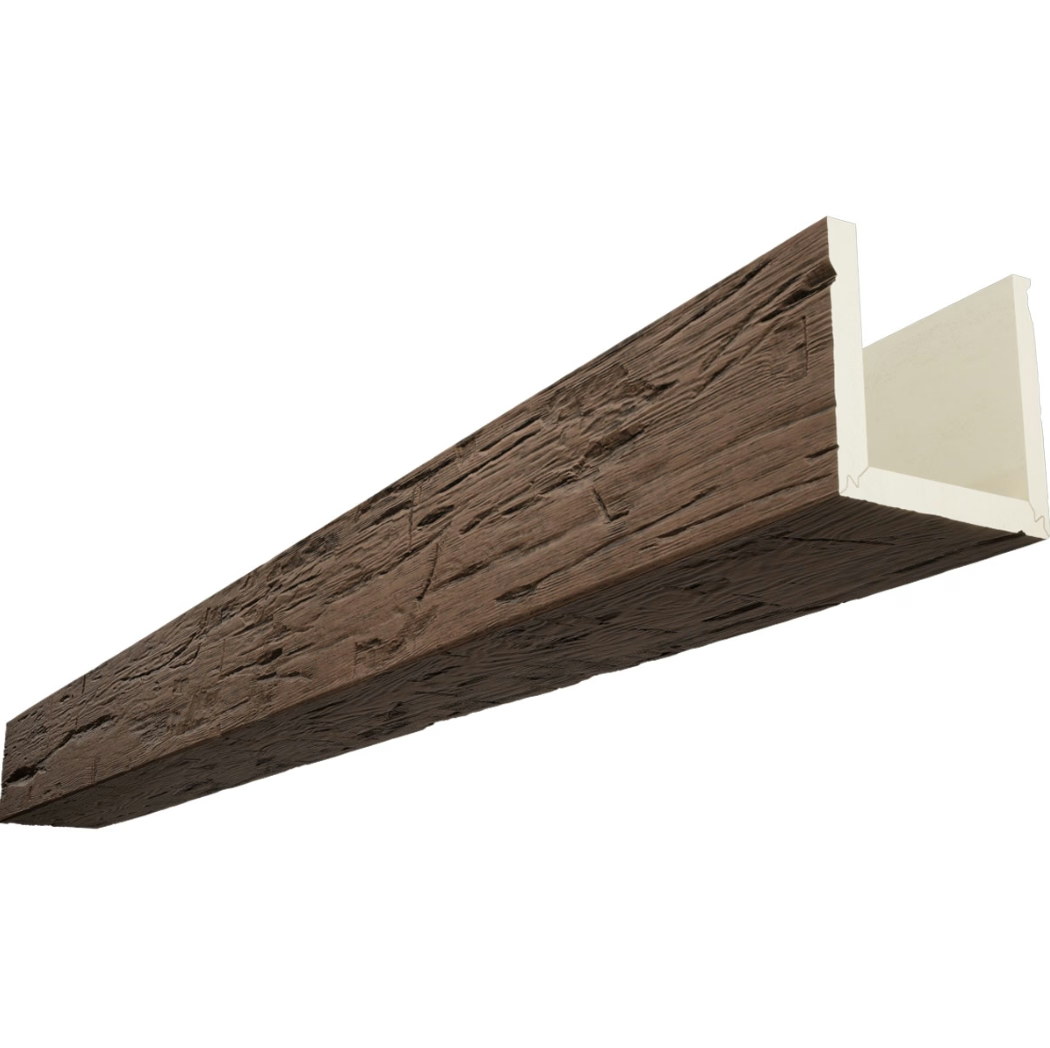
Commercial construction projects consume materials at scales that transform individual product handling into logistics operations. When a hotel renovation requires 200 beams, an apartment complex needs 500, or a resort installation demands 1000, the difference between well-organized and poorly organized delivery can cost days of labor and thousands of dollars in delays. Palletized packaging for commercial beam shipments addresses these realities by creating handling units that integrate with standard construction logistics while protecting products through the distribution chain.
The requirements for commercial palletized packaging differ from retail or small-order packaging in several important ways. Commercial buyers prioritize handling efficiency, predictable delivery logistics, and damage-free receipt over presentation packaging and unboxing experiences. Understanding these priorities helps buyers specify packaging that meets commercial expectations without paying for unnecessary retail-oriented features.

Pallet Specifications for Commercial Beam Orders
Commercial pallet selection balances load capacity, durability, and standard compatibility. The most common pallet for commercial beam shipments is the 48x40 inch hardwood pallet, which matches standard North American warehouse racking and material handling equipment dimensions. For metric-oriented markets or international shipments, the EUR pallet at 1200x800mm serves a similar role.
Pallet load capacity should exceed the actual weight of the packaged beams by a margin that accounts for stacking in warehouses and during transit. A typical beam package might weigh 200 to 400 kilograms depending on beam size and quantity per pallet. The pallet must support this load plus the weight of packages stacked above during warehouse storage or container loading. Specifying pallets with 1500 to 2000 kilogram capacity provides adequate margin.
Pallet condition directly affects handling safety. New pallets provide consistent quality and do not carry contamination risks. Heat-treated pallets meeting ISPM 15 requirements are mandatory for international shipments. For domestic commercial shipments, specifying quality-used pallets in good condition represents an acceptable cost optimization without the ISPM 15 compliance concern.
GMA (General Services Administration) grade pallets meet consistent quality standards for board spacing, cupping, and condition. For commercial applications where appearance of the pallet matters less than structural integrity, industrial grade or economy grade pallets provide cost savings where appearance is less critical.
Unitization and Package Configuration
Unitization groups individual beams into palletized packages sized for efficient handling while protecting products during transport. The optimal package size balances handling convenience against packaging efficiency and protection requirements. Packages too small create excessive handling units; packages too large become unwieldy and may exceed safe handling weights for manual loading.
Weight limits for manual handling typically range from 23 to 32 kilograms, corresponding to one to two person lifts. Packages exceeding these weights require mechanical handling equipment, which must be available at both the delivery point and throughout the jobsite. Specifying packages within manual handling weights increases flexibility for sites with limited equipment access.
Beams are typically bundled together for palletization. Bundling methods include strapping, stretch wrapping, and cardboard sleeve containment. Strapping provides the most secure bundling for long-span beams but requires edge protectors to prevent strapping from cutting into beam surfaces. Stretch wrapping secures bundles while allowing partial access; this approach works well when jobsites need to remove individual beams from packages without cutting wrapping materials.
The number of beams per bundle and bundles per pallet should match project phasing and jobsite access patterns. Projects receiving materials all at once can use larger pallet loads. Projects requiring phased delivery or with limited storage should specify smaller packages that allow partial delivery and storage without full-pallet handling.
Compression Resistance and Load Stability
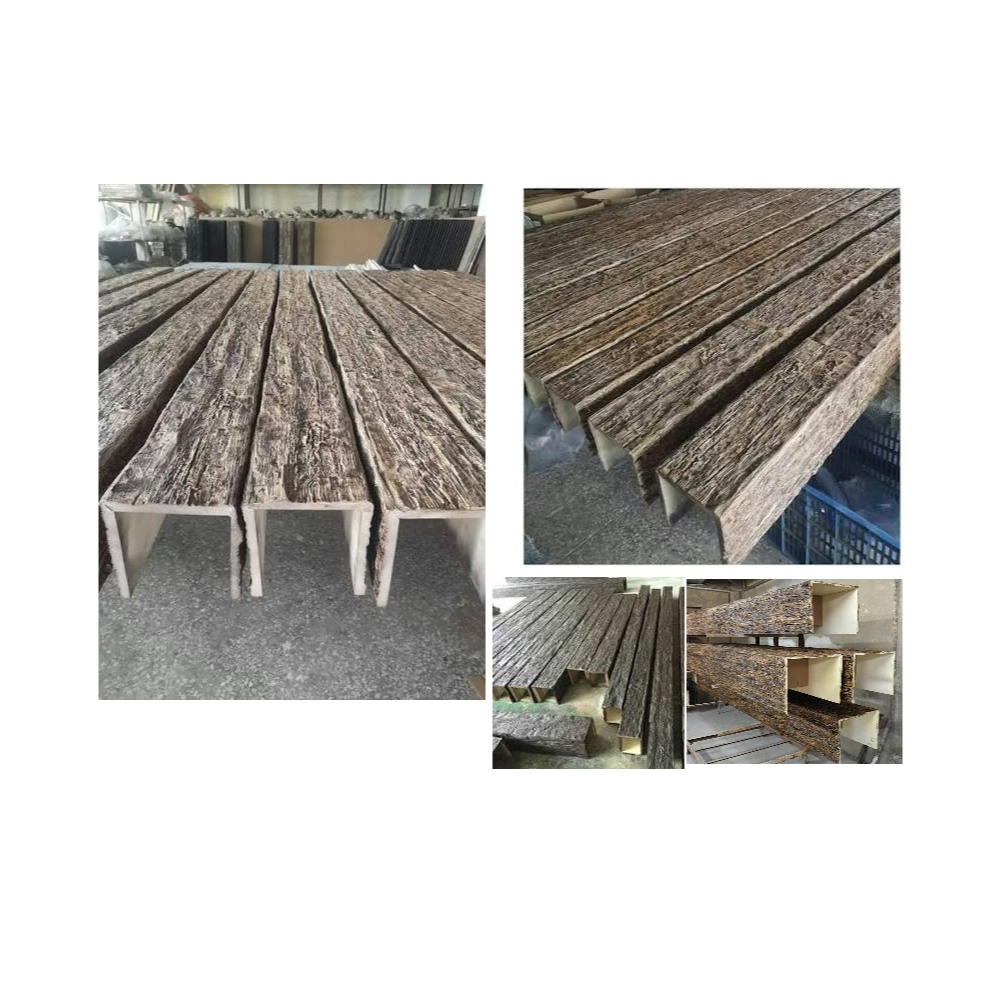
Commercial shipments experience stacking loads that residential packaging never encounters. A warehouse storing 500 beams may stack pallets four or five high to maximize floor space utilization. An ocean container may place heavy cargo on top of beam packages for the full transit duration. Packaging must maintain structural integrity under these sustained loads.
Compression testing of packaging configurations establishes safe stacking limits. The test applies a load equal to or exceeding the maximum expected stack weight for a defined duration—typically 24 to 48 hours to simulate sustained storage conditions. Packages that pass compression testing maintain their shape and protect the product inside. Packages that fail exhibit cardboard crushing, strapping deformation, or beam surface damage.
Load stability prevents package shifting during transport. Unstable loads create impact forces as packages move within containers or trucks. These shifting forces can exceed the loads from simple vertical stacking. Achieving load stability requires adequate strapping tension, proper palletization that distributes weight evenly, and container loading that prevents packages from moving against container walls.
Weather Protection for Extended Storage
Commercial jobsites frequently receive materials before the installation timeline begins, requiring extended outdoor storage in some cases. Packaging for commercial shipments should provide adequate weather protection for the storage conditions anticipated at the destination.
Water-resistant packaging components—waterproof stretch wrap, wax-coated cardboard, moisture barriers—protect products during temporary outdoor exposure. Extended outdoor storage of more than a few days requires additional measures including tarpaulins, plastic sheeting, and elevated storage on pavement rather than bare ground.
Temperature fluctuations cause condensation inside packaging that can damage labels, affect adhesives, and create moisture conditions on beam surfaces. Packages designed for extended storage incorporate desiccants sized for the anticipated storage duration. For tropical destinations or summer shipping, increased desiccant quantities account for higher humidity conditions.
Indoor storage specifications should include storage location requirements—flat, dry surfaces away from direct sunlight and heat sources—and stacking limits that prevent over-stacking damage. Providing these specifications to jobsite personnel prevents misuse that could damage materials before installation begins.
Labeling for Commercial Receiving
Commercial receiving operations depend on accurate labeling to route packages correctly and maintain inventory accuracy. Each pallet should display clear labels showing the purchase order number, product SKU, quantity, and destination information. Bar codes that encode this information enable scanning at receiving docks, eliminating manual data entry and reducing errors.
Pallet position labeling—"Pallet 1 of 12" for example—helps receiving personnel verify complete deliveries. When shipments arrive in multiple packages across multiple pallets, position labels allow quick verification of delivery completeness without counting individual items.
Handling instructions on packaging communicate requirements to warehouse and jobsite personnel who may not be familiar with beam products. "This Side Up" indicators prevent upside-down storage that could damage beams. "Fragile—Surface Finish" warnings alert handlers to the importance of careful treatment. "Do Not Stack" labels, when applicable, prevent over-stacking of packages with limited compression resistance.
Container Loading Optimization
Commercial shipments to international destinations load into shipping containers where space optimization directly affects freight costs. Container utilization rates below 80 percent represent inefficient spending on unused volume. Optimized loading approaches 95 percent utilization while maintaining product safety.
Beam dimensions and pallet dimensions determine container loading patterns. Most beam profiles are long relative to their cross-section, creating opportunities for creative loading that packs beams along container length while using width efficiently. Interlocking patterns that alternate beam direction between layers can improve package stability and container volume utilization.
For mixed-size shipments, loading plans should sequence packages so that the first-accessed materials are loaded last within the container. This approach—known as last-in-first-out loading—allows materials needed first to be unloaded without disturbing the rest of the container. The loading sequence should match the jobsite's receiving and staging workflow.
Weight distribution within containers affects transport safety. Heavy packages should be positioned over container floor stringers, which provide structural reinforcement. Weight should be distributed evenly across the container floor to prevent point loads that could damage container flooring or cause vehicle handling issues during transport.
Damage Prevention and Claims Management
Despite best packaging efforts, some percentage of commercial shipments experience damage during transport. Having clear damage prevention and claims management processes reduces the cost and disruption of damage incidents.
Pre-delivery inspection protocols ensure that damage is identified at receipt rather than discovered during installation when replacement lead times create schedule pressure. Receiving personnel should photograph all packages before unloading, document visible damage on delivery receipts, and open packages within 48 hours of delivery to identify concealed damage.
Claims filing processes should be established before shipments arrive. Knowing which documentation is required, who initiates claims, and what timeline applies reduces confusion when damage occurs. Photographs taken at each stage—packaging, loading, delivery—create evidence chains that identify where in the logistics chain damage occurred.
For repeat buyers with established supplier relationships, damage claim resolution typically involves credit memos, replacement shipments, or price adjustments. The specific resolution depends on the damage severity and the relationship strength between buyer and supplier. Maintaining accurate records supports effective claims negotiation regardless of the resolution approach.
Environmental and Sustainability Considerations
Commercial buyers increasingly consider environmental impact in packaging decisions. Recycled content cardboard, biodegradable strapping materials, and returnable pallet programs reduce the environmental footprint of commercial beam shipments.
Recycled corrugated cardboard maintains the structural properties needed for commercial packaging while reducing virgin fiber requirements. Most major packaging suppliers offer recycled-content options that meet commercial performance requirements.
Returnable pallet programs allow pallets to be collected after delivery, returned to origin, and reused for subsequent shipments. The economics of returnable programs improve with shipment frequency and route consistency. Regular shippers on established routes can achieve significant cost savings while reducing packaging waste.
Supplier packaging audits—periodic reviews of packaging specifications and performance—identify optimization opportunities. As experience with specific routes and handling conditions accumulates, packaging specifications can be refined to reduce over-engineering while maintaining protection levels. These audits should occur at least annually for active commercial shipping programs.
Technical References
ASTM standards cited in every specification
Test Data
Lab results from internal testing program
Updated 2026
Reviewed against current product specs