Small spaces present unique design challenges where every element counts significantly toward the overall feeling of the room. Unlike large rooms where individual features can feel lost in expansive volumes, compact spaces amplify the impact of each architectural choice. Ceiling beams in small rooms can either create welcoming character or overwhelm the limited space entirely. The key lies in proportional design—selecting beam sizes and configurations that enhance rather than dominate the room's intimate scale.
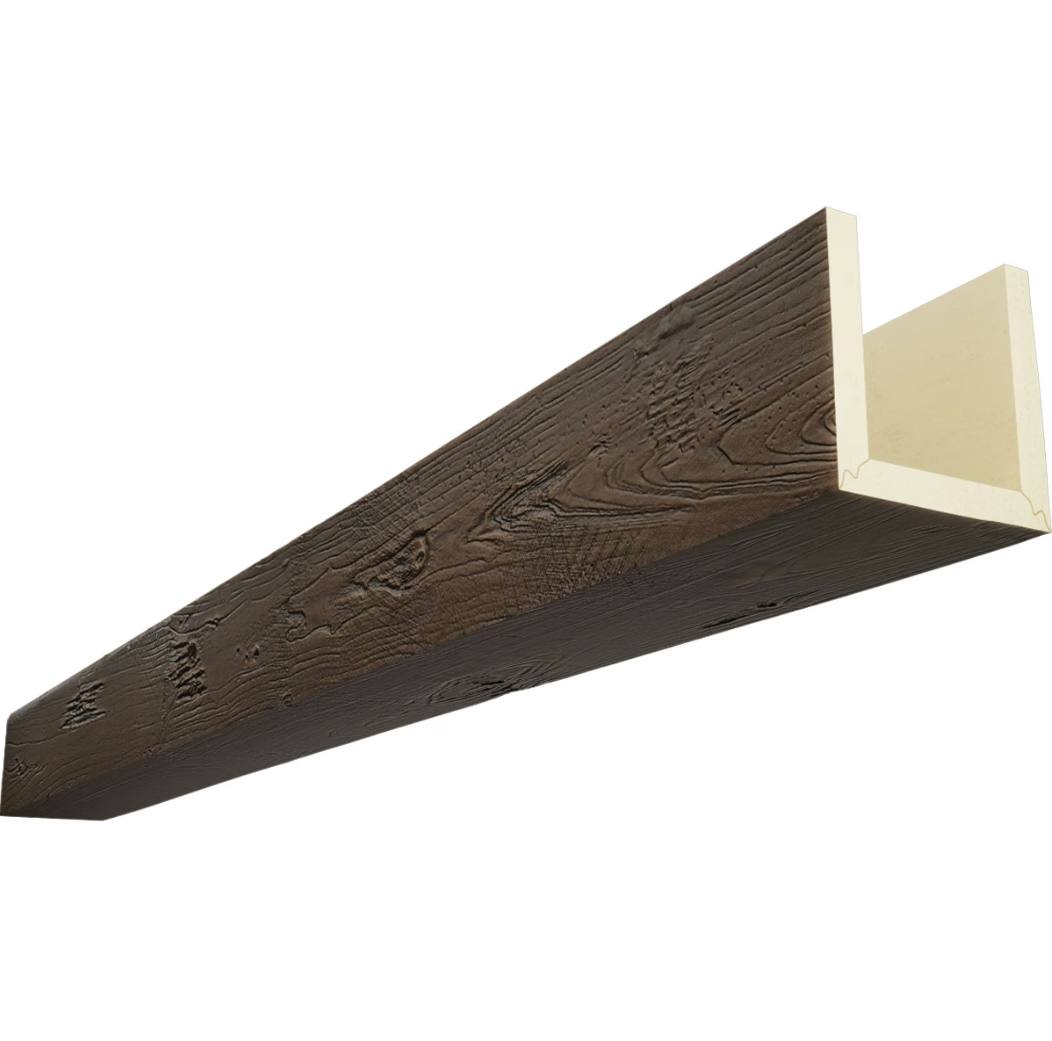
Short length beams offer an elegant solution for smaller spaces, providing architectural interest without the commitment required by long beam runs. A single short beam above a breakfast nook, a pair flanking a kitchen island, or a grouping creating the illusion of a structural ceiling can all work beautifully in compact settings. The lightweight nature of polyurethane faux beams makes these installations practical for spaces where heavy timber would feel inappropriately massive.
Understanding Scale in Small Spaces
The fundamental principle governing beam selection in small spaces is visual weight. Heavy, substantial beams that create dramatic impact in vaulted great rooms become oppressive when installed in modest-sized bedrooms or snug reading corners. The eye should feel invited upward and around the space, not pressed down by ceiling treatments that feel excessive for the room's proportions.
Proportional beam sizing doesn't mean tiny beams—it means beams scaled appropriately to the room's dimensions. A 6-inch by 6-inch beam that seems modest in a large living room might provide perfect proportion in a small bedroom with low ceilings. The beam's relationship to other room elements matters as much as absolute dimensions. A beam that feels right beside a small couch may feel too small above a large dining table.
Color and finish affect perceived weight significantly. Light-colored or whitewashed beams feel lighter visually than dark-stained alternatives, making them more suitable for compact spaces where you want to maintain an airy feeling. Even the texture depth matters—deeply carved wood grain creates shadow and visual weight that shallow textures avoid. Consider these factors alongside dimensional sizing when evaluating options for small rooms.
Effective Short Beam Configurations
Single beams work remarkably well in specific small space applications. A centered beam above a kitchen table creates the suggestion of a structural element without requiring the room-spanning commitment of continuous beam runs. The beam marks the table as the space's focal point while adding warmth to what might otherwise be an unremarkable ceiling surface.
Pairs of parallel short beams define zones within open floor plans. In studio apartments or combined kitchen-dining spaces, two beams running above the dining area while leaving the cooking zone beam-free visually separates functional zones without walls or other physical dividers. This approach maintains spatial flow while creating the organization that makes open plans livable.
Clustered arrangements of shorter beams create visual interest that distributed attention rather than concentrating it in one location. A group of three or four beams at varying positions across a small ceiling can suggest the complexity of structural timber framing without requiring the consistent alignment that long runs demand. This approach works particularly well in spaces with irregular ceiling shapes where long runs would be impractical.
Room-by-Room Applications
Bedrooms benefit enormously from short beam installations, particularly in rooms with sloped ceilings where beams can follow the roofline for a cabin-like atmosphere. Short beams perpendicular to the slope emphasize the room's length while adding the character that many homeowners seek in bedroom renovations. Even a simple painted beam across the ceiling's centerline adds significant visual interest to otherwise plain bedroom spaces.
Home offices and studios gain professional polish from ceiling beams that suggest architectural quality without excessive formality. A single substantial beam crossing above the primary work area creates a visual anchor that organizes the space and provides psychological grounding. Light-colored beams maintain the clarity needed for focused work while adding warmth that improves the space's comfort for extended use.
Narrow spaces like hallways, entryways, and stair landings present particular challenges where long beams would be impractical. Short beams in these locations provide the character benefit while respecting spatial constraints. A beam spanning the narrow dimension at a hallway's midpoint or a series of short beams across a staircase landing adds significant interest to otherwise purely functional spaces.

Installation Practicalities in Compact Spaces
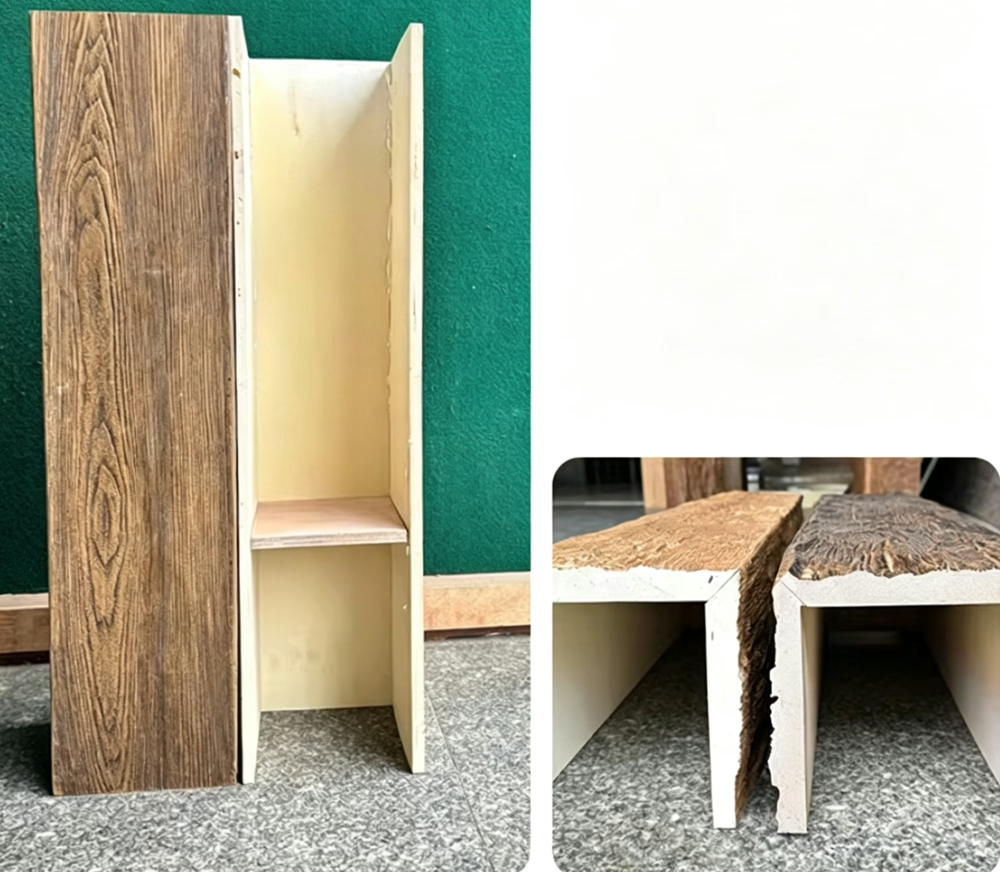
Compact spaces often feature less accessible ceiling structures, making polyurethane's lightweight nature particularly valuable. Short beams require less support infrastructure than longer spans, potentially allowing simpler mounting systems. The reduced handling difficulty means one person can typically manage installation without assistance, important in spaces too small for two people to work comfortably.
Tight corners and limited clearance affect tool access during installation. Battery-powered tools often prove more practical than corded alternatives in small spaces where cord management becomes problematic. Planning the installation sequence to work from accessible areas toward tighter corners helps maintain efficiency throughout the process.
Finishing details matter more in small spaces where every element receives closer scrutiny. Joints between beam segments should be particularly clean in compact rooms where people sit closer to the ceiling. The same goes for mounting hardware locations and any cut edges from custom sizing. Attention to these details ensures the installation looks professional rather than amateurish.
Maximizing Impact with Minimal Installation
The most successful small-space beam installations often achieve maximum effect through restraint rather than excess. One beautifully proportioned beam in the right location can transform a room more effectively than a dozen inappropriately sized beams scattered across the ceiling. This economy of means aligns with good design principles generally—the best solutions accomplish their goals without unnecessary elaboration.
Consider the room's existing architectural features when planning beam placement. An existing soffit, column, or architectural detail might align perfectly with a beam placement that would otherwise require arbitrary positioning. Working with existing features creates more cohesive results than fighting against them with beams that require special treatment to integrate.
Lighting interacts with beams in ways that matter especially in small spaces. Recessed fixtures near beam locations cast interesting shadows across beam surfaces. Track lighting aimed at beams creates dramatic uplighting effects that smaller rooms might find overwhelming but certain design intentions require. Think about how artificial and natural light will interact with your beams during all hours before finalizing placement.
Technical References
ASTM standards cited in every specification
Test Data
Lab results from internal testing program
Updated 2026
Reviewed against current product specs


