Interior doorways and window openings create natural opportunities for architectural enhancement through decorative headers. These horizontal elements frame openings while adding visual weight that grounds architectural elements within room contexts. Traditional construction utilized genuine timber for these details, but modern materials offer compelling alternatives that preserve aesthetic impact while improving practical performance.
The Role of Headers in Interior Architecture
Headers serve both functional and aesthetic purposes in building construction. Structurally, headers transfer loads across openings, allowing walls to accommodate door and window openings without compromising structural integrity. Architecturally, headers establish visual boundaries that frame openings, creating finished appearances that raw framing cannot provide.
In interior applications, decorative headers enhance doorway and window treatments beyond basic functional requirements. Larger headers with elaborated profiles introduce scale and proportion that improve spatial relationships between openings and surrounding walls. These elements draw attention to important transitions within floor plans, guiding occupant movement while establishing design hierarchy.
Ceiling transitions present additional opportunities for header-style elements. Where ceiling heights change or where walls meet ceiling surfaces, header-like elements can create visual continuity and architectural refinement. These applications blur distinctions between doors, windows, and ceiling treatments, creating integrated interior architecture that feels thoughtfully designed throughout.
Traditional Timber Headers and Their Limitations
Authentic timber headers provide undeniable aesthetic qualities that have made them architectural standards for centuries. Wood's natural warmth, distinctive grain patterns, and tactile appeal create premium appearances that synthetic alternatives struggle to match completely. High-quality timber headers command attention and respect, signaling attention to craft and material quality.
However, timber headers present practical challenges in many interior applications. Substantial profiles require adequate structural support from surrounding wall construction. Weight considerations may limit header size or require engineering accommodations. Moisture sensitivity creates concerns in bathrooms and kitchens where humidity fluctuates. Insect damage poses risks in certain climates and building types.
The cost of quality timber further restricts application scope. Wide boards suitable for substantial headers require long, clear sections from mature trees—resources that command premium pricing. Specialty species and custom milling multiply costs substantially. These factors encourage exploration of alternatives that deliver comparable aesthetics more economically.
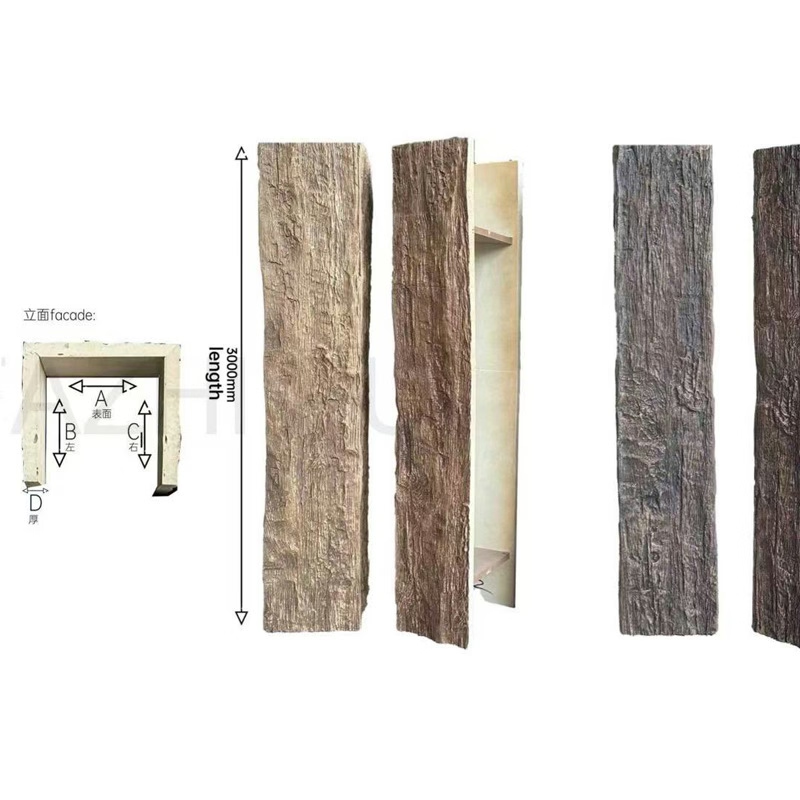
Polyurethane Simulated Timber Technology
Modern polyurethane molding enables accurate reproduction of timber characteristics at scales appropriate for header applications. Molds capture grain details, color variations, and surface textures from authentic wood samples, transferring these qualities consistently to manufactured products. The resulting headers display visual quality that satisfies most aesthetic requirements.
Material properties provide significant practical advantages. Polyurethane weighs substantially less than comparable timber sections, reducing structural requirements and simplifying handling during installation. The material resists moisture absorption, preventing the swelling, warping, and rot that affect natural wood in humid environments. Insects cannot damage polyurethane, eliminating termite concerns that limit timber applications in many regions.
Surface preparation for finishing proves simpler with manufactured products. Unlike natural wood with inconsistent density and embedded impurities, polyurethane surfaces accept stains and paints uniformly. This consistency ensures professional-quality results even when applying finishes on-site. Products can be specified pre-finished for projects requiring immediate appearance or minimal on-site work.
Design Applications for Door Headers
Standard door headers typically span door widths with modest projection beyond opening edges. These elements establish proportional relationships between door height and overall opening height, creating visual balance that bare framing cannot achieve. Header depth establishes apparent structural significance—deeper headers suggest stronger visual weight and more substantial construction.
Fireplace mantels function as extended header applications, requiring substantial projection and depth to accommodate fireplace surrounds. Simulated timber mantels deliver the substantial appearance appropriate for fireplace focal points while avoiding weight and fire-safety concerns associated with authentic wood near heat sources. Appropriate clearances and heat-resistant detailing ensure safe installation.
Architectural post-and-beam construction features headers that span between support columns, establishing structural bays within open floor plans. These substantial elements define spatial volumes while creating strong horizontal lines that organize large spaces. Simulated timber versions provide the visual impact of structural timber without requiring actual structural support systems.
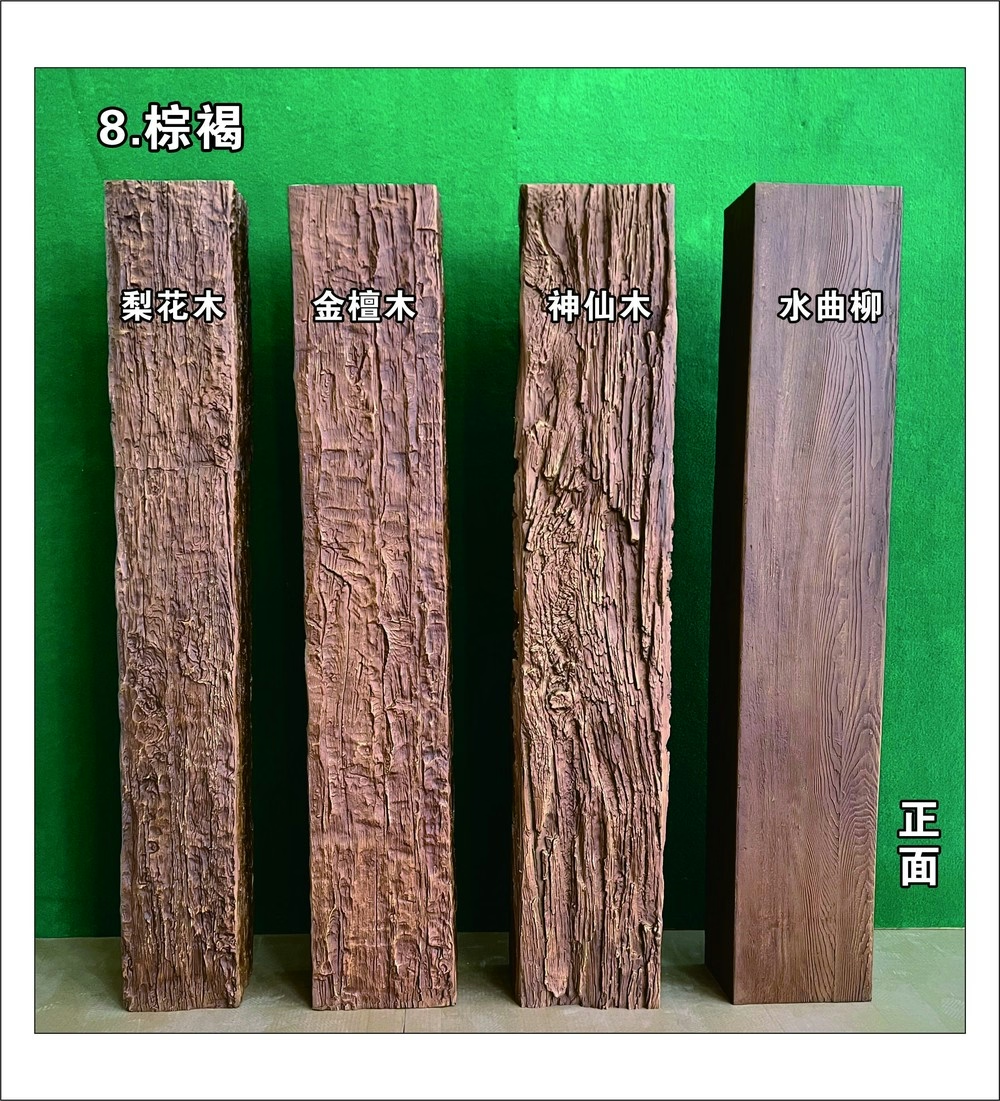
Ceiling Accent Applications
Crown molding represents a ceiling header application with deep historical roots in architectural tradition. These decorative elements transition between wall and ceiling surfaces, introducing visual refinement that distinguishes quality construction from basic building. Simulated timber crown moldings capture traditional profiles while offering improved stability and finish quality.
Beam coffers create recessed ceiling panels framed by simulated timber headers. This classical architectural treatment adds scale and visual interest to ceiling surfaces while defining spatial zones within larger rooms. Coffer construction with faux timber elements achieves traditional aesthetics at practical costs appropriate for contemporary construction budgets.
Dropped ceiling headers address acoustic and visual concerns in spaces with multiple ceiling heights. These transitional elements smooth visual connections between different ceiling elevations, preventing awkward junctions that compromise interior architecture. Simulated timber construction enables substantial appearance without the weight complications of authentic wood.
Installation Techniques and Best Practices
Proper mounting ensures that decorative headers maintain position and appearance throughout building life. Blocking installed behind wall surfaces provides solid attachment points for mounting hardware. Blocking placement should be coordinated with wall construction to ensure availability where needed. Renovation projects may require opening walls to install appropriate blocking.
Mechanical fasteners provide secure attachment when properly selected and installed. Bolts or lag screws penetrate wall surfaces and engage blocking to resist downward and lateral forces. Multiple attachment points distributed along header length prevent localized stress concentrations that could compromise installation over time.
Adhesive bonding supplements mechanical attachment while filling gaps between header and wall surfaces. Construction adhesive applied to back surfaces creates permanent bonds that resist separation from temperature cycling and building movement. Combined mechanical and adhesive attachment provides redundancy that ensures long-term reliability.
Finishing and Maintenance
Factory finishing ensures consistent appearance without on-site finishing work. Pre-finished headers arrive with uniform color and texture ready for immediate installation. This approach suits projects with tight schedules or limited finishing capabilities. Quality pre-finishing includes durable coatings that resist scratches and maintain color stability.
Custom finishing enables precise coordination with surrounding woodwork and color schemes. On-site staining and painting require appropriate surface preparation and controlled application conditions. Water-based products work well with polyurethane substrates, providing good adhesion and color consistency. Test applications on sample pieces verify results before committing to full installation.
Maintenance of simulated timber headers proves simpler than caring for natural wood. Periodic dusting removes accumulated particles that affect appearance. Cleaning with mild detergent removes more substantial soiling without damaging finishes. The absence of moisture absorption eliminates warping concerns and reduces requirements for climate control in surrounding areas.
Technical References
ASTM standards cited in every specification
Test Data
Lab results from internal testing program
Updated 2026
Reviewed against current product specs


