Archways have served architectural purposes for millennia, creating graceful transitions between spaces while adding visual interest to what would otherwise be simple rectangular openings. The curved profiles of arched openings create natural opportunities for decorative enhancement, and timber trim has traditionally provided this architectural enrichment. Modern faux wood products extend these possibilities while addressing practical construction constraints.
The Architectural Appeal of Arched Openings
Archways introduce visual complexity that distinguishes spaces from ordinary rectangular doorways. The curve creates dynamic visual movement that draws attention and guides occupant circulation through buildings. Traditional architecture employed arches extensively for their structural efficiency and aesthetic qualities, establishing cultural associations between curved openings and architectural refinement.
Contemporary interiors benefit from arched openings in multiple ways. The distinctive silhouette adds character that helps spaces feel less generic and more thoughtfully designed. In open floor plans, archways create subtle spatial boundaries without the visual weight of full-height walls. The softer profile feels more inviting than sharp-cornered openings, encouraging movement between zones.
Architectural archways also provide acoustic benefits compared to rectangular openings. The curved surfaces diffuse sound reflections that create echoes in spaces with parallel walls and hard surfaces. This acoustic softening proves valuable in large open rooms where sound management contributes to comfortable environments for conversation and gathering.
Traditional Timber Arch Treatments
Historically, timber provided the primary material for archway trim and decorative elements. Carved wooden moldings followed arch curves, creating frames that emphasized architectural forms while protecting wall surfaces from impact damage. The warmth of wood complemented virtually every interior style, from medieval halls to Victorian parlors.
Timber archway elements required skilled craftsmanship to fabricate and install properly. Curved pieces demanded special techniques—steam bending for gentle curves, segmented construction for tighter radii, or laminated layers building up curved profiles gradually. These processes added substantial cost and limited design complexity to timber archway treatments.
Weight considerations further complicated timber archway construction. Substantial decorative elements required robust attachment to surrounding walls, particularly for pieces extending significant distances from wall surfaces. This weight increased installation difficulty and created concerns about long-term attachment reliability.
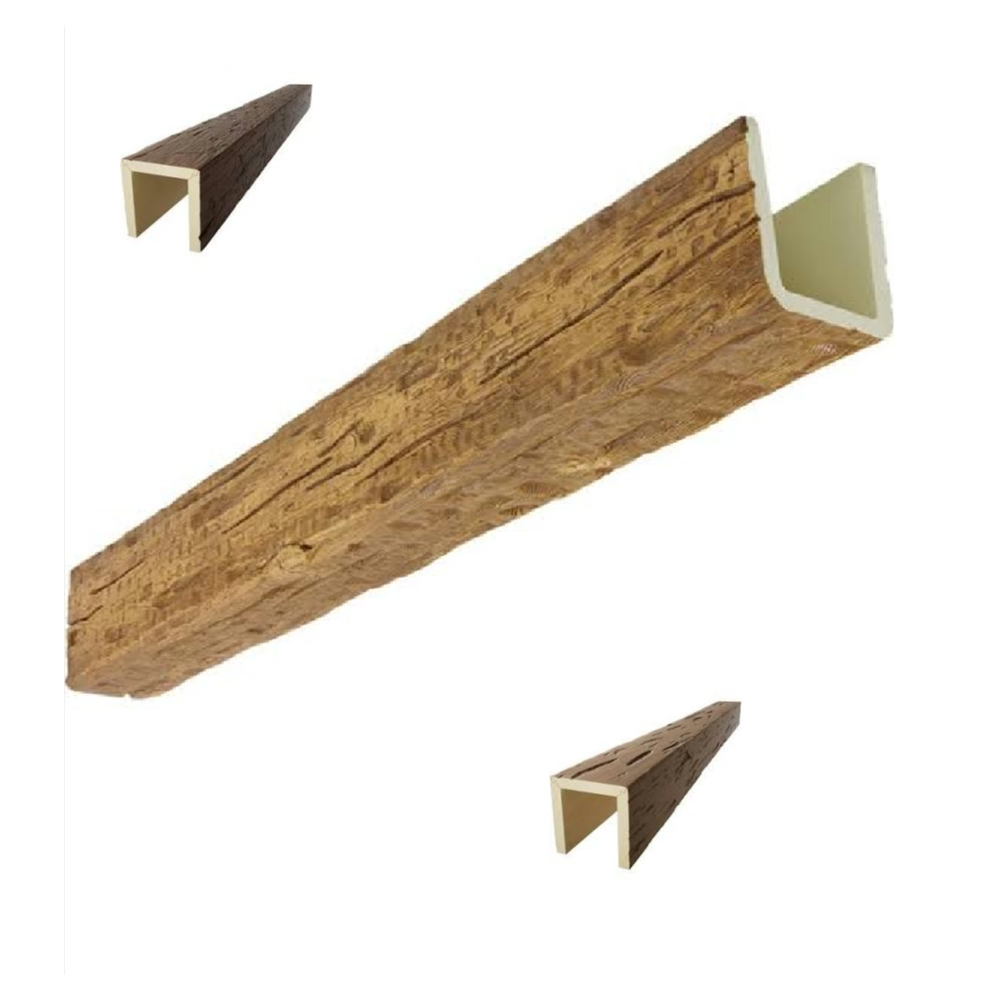
Advantages of PU Faux Wood for Archway Applications
Polyurethane faux wood products address traditional timber limitations while preserving authentic wood aesthetics. Molded pieces capture curved profiles precisely without requiring specialized fabrication techniques. Standard manufacturing processes produce consistent results efficiently, enabling complex archway treatments at practical costs.
The material's lightweight nature simplifies every phase of archway installation. Lighter pieces require less robust mounting hardware and reduce structural concerns that might limit decorative options. A single installer can position and secure pieces that would otherwise require multiple workers and lifting equipment. This accessibility enables more elaborate decorative schemes than timber construction would support.
Environmental stability distinguishes PU faux products from natural wood. Temperature and humidity fluctuations that cause timber to expand, contract, and potentially crack have minimal effect on polyurethane. This stability ensures that archway decorations maintain their appearance and structural integrity regardless of climate conditions—a significant advantage in spaces with variable environmental conditions.
Design Styles for Archway Beam Treatments
Rustic archway treatments emphasize substantial timbers that frame openings with heavy, substantial elements. This approach suits farmhouse, cabin, and lodge interiors where rugged authenticity supports design intentions. Faux timbers with distressed surfaces and pronounced grain patterns enhance rustic character. Stains in earth tones complete appearances that suggest centuries of character.
Coastal and Mediterranean styles favor lighter timber tones with cleaner profiles. Archways in these contexts may feature simpler trim elements rather than massive beams, with finish selections emphasizing blonde and honey tones. The overall effect suggests warm, inviting spaces associated with beach houses and southern European architecture.
Contemporary archways often incorporate geometric beam arrangements rather than following traditional curves. Angular trim pieces intersect at arch apexes, creating contemporary interpretations of classical forms. Single beams positioned above archways provide minimal enhancement that maintains modern aesthetics while introducing subtle textural interest.
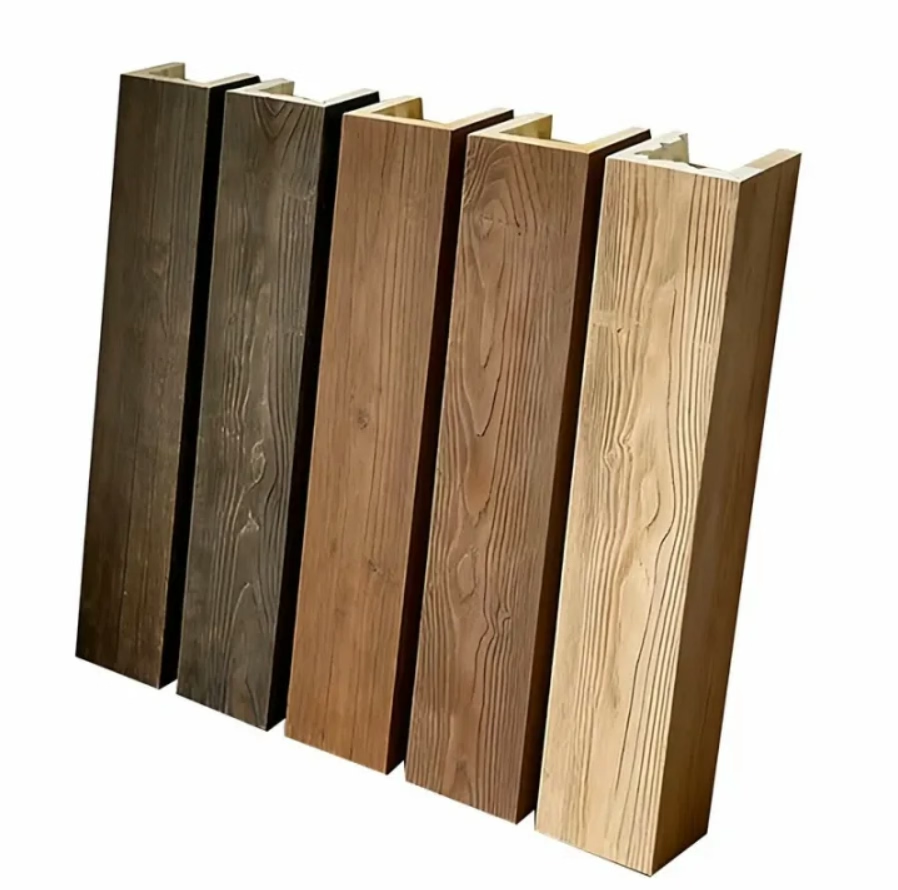
Installation Approaches for Curved Surfaces
Successful archway installation begins with accurate measurement and template creation. Archway curves may follow precise radii or irregular forms depending on construction methods. Measuring devices capture curve geometry accurately, enabling fabrication of pieces that fit properly without gaps or binding. Digital measurement tools accelerate this process while improving accuracy.
Segmented construction divides archway curves into shorter sections that connect to form complete curves. This approach simplifies manufacturing and handling while enabling complex profile variations within single archways. Joint treatment between segments should match overall surface treatment to maintain authentic appearances.
Radius pieces follow continuous curves without joints. Manufacturing curved pieces requires appropriate mold configurations and careful quality control to ensure consistent cross-section throughout the curve. Longer radius pieces handle more easily than tight-radius alternatives, but both can be produced successfully with appropriate techniques.
Coordinating Archway Treatments with Surrounding Architecture
Successful archway enhancement considers relationships between decorative elements and adjacent surfaces. Transitions between faux beams and wall finishes should appear natural rather than abrupt. Quarter-round moldings or similar trim pieces create smooth connections that integrate archway treatments with surrounding wall architecture.
Ceiling connections merit particular attention when archways extend to ceiling height. Treatments that continue archway curves into ceiling surfaces create unified architectural elements that read as cohesive features rather than disconnected additions. This approach works particularly well in spaces with exposed ceiling structures or dropped ceiling areas.
Floor transitions complete archway treatment at lower elevations. Base trim pieces that coordinate with archway materials establish finished appearances at wall-floor junctions. Consistent material usage throughout archway treatment areas ensures unified design that reads as intentional architectural feature rather than superficial decoration.
Maintenance and Longevity
Polyurethane archway elements require minimal ongoing maintenance compared to authentic wood alternatives. The non-porous surface resists staining and soiling that affect natural wood in high-traffic areas. Occasional dusting or light cleaning maintains appearance without specialized treatment products or procedures.
Scratch resistance varies with product quality and surface finish. Quality faux products incorporate durable surface coatings that resist moderate impact and abrasion. High-traffic locations may benefit from additional protective measures, though the material typically withstands normal use without visible damage.
Color stability ensures long-term appearance consistency. Quality products incorporate UV inhibitors that resist yellowing and color shift from light exposure. This stability proves particularly valuable in spaces with substantial natural light, where authentic wood might develop uneven coloration over time.
Cost-Benefit Analysis
Archway enhancement budgets must consider material costs, fabrication complexity, and installation labor. Curved pieces command higher per-unit pricing than straight elements due to manufacturing complexity, but the visual impact often justifies these premiums. Comparing total project costs with alternative materials reveals practical advantages for quality faux products.
Installation savings substantially affect total project economics. Lighter weight pieces reduce labor requirements, while simplified attachment procedures accelerate completion timelines. These efficiencies often offset higher material costs, making faux wood competitive with or superior to timber alternatives on total installed cost basis.
Durability advantages contribute to long-term value. Reduced maintenance requirements and elimination of refinishing needs save time and expense throughout product lifetimes. When considered across typical lifespans of interior treatments, quality faux products often deliver superior value despite initial cost premiums.
Technical References
ASTM standards cited in every specification
Test Data
Lab results from internal testing program
Updated 2026
Reviewed against current product specs


