Vaulted ceilings create dramatic interior volumes that reward thoughtful treatment. Without appropriate detailing, these ambitious architectural forms can feel incomplete or merely unfinished. Decorative faux rafters provide finishing touches that elevate vaulted designs, adding the refinement and textural interest these spaces deserve.
The Role of Detailing in Vaulted Ceiling Design
Architectural detailing addresses the transitions, edges, and termination points where different surfaces meet. In vaulted ceiling applications, these details occur at ridge lines, eaves, corners, and intersections with walls and other building elements. Without attention to these points, vaulted forms appear to simply stop rather than conclude gracefully.
Quality detailing establishes visual hierarchy that guides occupant attention through spaces. Primary elements like dominant ceiling beams draw initial focus, while secondary trim pieces refine appearances and address details that primary elements leave unresolved. This hierarchy creates satisfying visual experiences that simple installations cannot provide.
The cost of detailed finishing often represents small portions of total project budgets while contributing disproportionately to perceived quality. Investing in appropriate detailing maximizes return on vaulted ceiling investments, ensuring that ambitious architectural forms deliver corresponding visual rewards.
Material Selection for Vaulted Detailing
Natural wood has traditional served detailing purposes in vaulted ceiling applications. The material's workability enables custom fabrication of complex profiles, while its warmth complements virtually every interior style. However, timber's weight, environmental sensitivity, and cost encourage exploration of alternatives for contemporary applications.
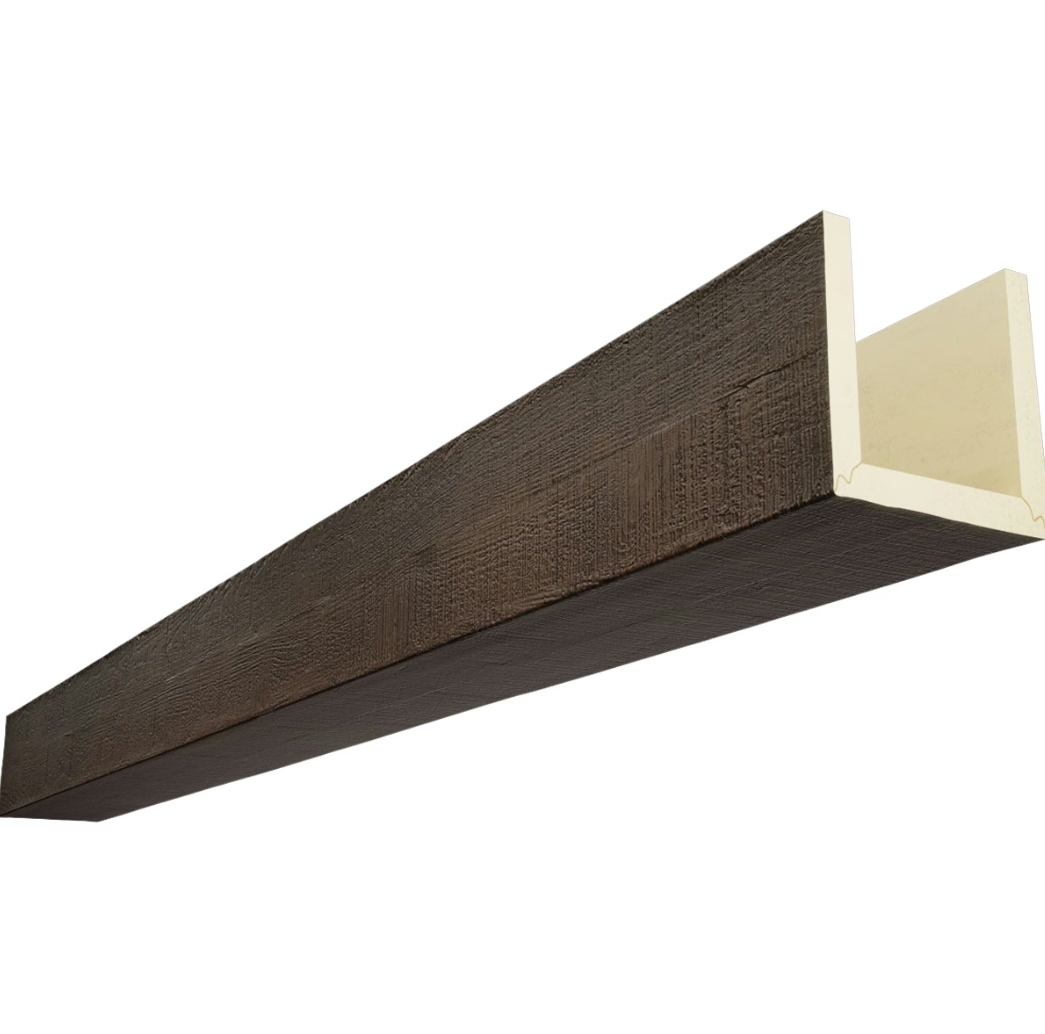
Polyurethane faux materials offer compelling advantages for vaulted detailing. Manufacturing processes produce consistent results that custom woodwork cannot match reliably. The material's workability enables complex profile reproduction at scales appropriate for detailed trim work. Weight advantages simplify handling in elevated positions typical of vaulted ceiling applications.
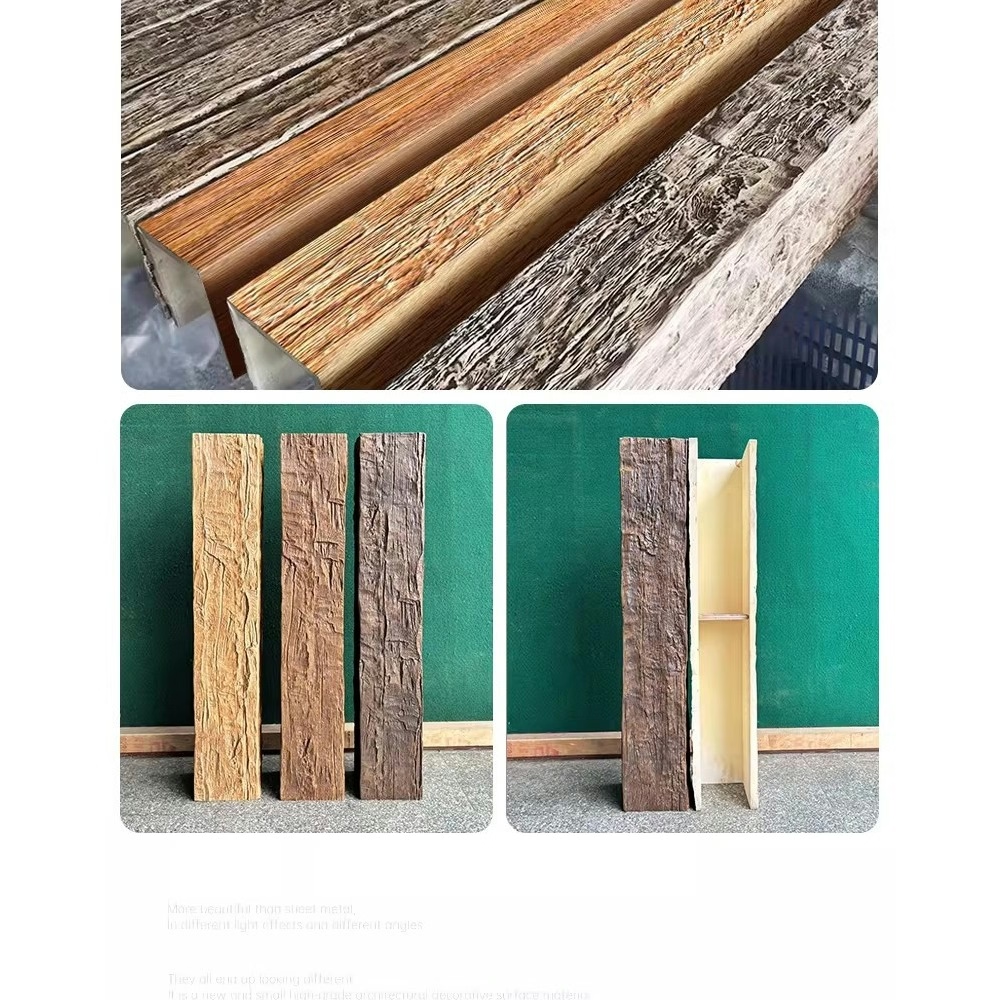
Surface quality distinguishes quality faux products from inferior alternatives. Premium ureththane formulations accept stains and paints uniformly, enabling finish quality comparable to natural wood. Detail definition remains crisp throughout manufacturing and installation, avoiding the blurred edges and compressed details that affect lower-quality products.
Configuration Strategies for Vaulted Rafter Treatment
Parallel rafter treatments running along vault slopes establish primary visual rhythm in vaulted spaces. These continuous elements create directional movement that guides occupant attention through spaces. The spacing between rafters determines overall visual density, with closer spacing creating richer texture and wider spacing emphasizing individual elements.
Perpendicular cross-members spanning between parallel rafters create grid patterns that add geometric complexity. These secondary elements frame ceiling bays, creating visual divisions that organize large vaulted surfaces into comprehensible units. Grid density should balance visual interest against complexity that might overwhelm simpler design intentions.
Collar ties spanning between slopes near their bases create horizontal elements that interrupt vertical emphasis. These traditional structural elements in real roof construction can be replicated decoratively, adding visual weight at lower ceiling heights while supporting design continuity between different ceiling zones.
Termination and Transition Details
Ridge line treatments address where vaulted slopes meet at ceiling apexes. Continuous rafter runs that meet at ridge lines create unified compositions, while rafter caps or finials at termination points add refinement. The choice depends on overall design intentions—continuous treatments suggest continuity, while punctuated treatments suggest more dynamic compositions.
Eave treatments address where vaulted slopes meet exterior walls. Fascia boards running along eave edges create clean terminations that frame vaulted forms against wall surfaces. Returns at building corners establish continuity that prevents awkward terminations. These details should coordinate with exterior fascia treatments for integrated building appearance.
Wall intersections require trim pieces that transition between vaulted surfaces and vertical walls. Quarter-round moldings or custom profiles create finished appearances where different planes meet. Consistent detail language throughout spaces ensures unified design that appears intentionally composed rather than randomly assembled.
Integration with Vaulted Geometry
Faux rafters should complement rather than compete with vaulted ceiling geometry. Elements running parallel to slopes reinforce ceiling direction, creating unified visual effects. Perpendicular or diagonal elements introduce contrast that may enhance or disrupt depending on design intentions and execution quality.
Scale relationships between rafters and vault dimensions require careful consideration. Oversized rafters may overwhelm modest vaulted spaces, while undersized elements disappear against expansive ceiling surfaces. Proportional relationships should relate to human scale and typical viewing distances, ensuring that details read appropriately from normal occupancy positions.
Symmetry and asymmetry both have appropriate applications in vaulted rafter treatment. Symmetrical arrangements create formal order suitable for traditional and classical interiors. Asymmetrical treatments introduce dynamism appropriate for contemporary and eclectic spaces. Understanding these relationships enables informed decisions about treatment approaches.
Finish Approaches for Detailed Installations
Stained finishes that penetrate polyurethane surfaces create authentic wood appearances with grain patterns and color variations. Multiple stain layers build depth that mimics natural wood aging, producing realistic appearances that satisfy demanding observers. Color selection should consider surrounding materials and overall design intensity.
Painted finishes provide flexibility that stained alternatives cannot match. White and off-white treatments brighten spaces while adding textural interest. Bold colors create focal points that make rafters dominant design elements. Painted faux materials accept touch-up readily, maintaining finished appearance despite normal wear and occasional damage.
Distressed and antiqued finishes add character appropriate for traditional and farmhouse interiors. These treatments create surfaces that appear weathered by age and use, introducing warmth that new materials cannot provide. Quality distressing appears organic rather than mechanical, suggesting genuine aging rather than artificial treatment.
Maintenance of Detailed Rafter Installations
Dust accumulation affects detailed installations more noticeably than simpler treatments. Ornate profiles collect particles that dull surfaces and obscure crisp details. Periodic cleaning maintains appearance, though cleaning methods should consider finish type and profile complexity. Compressed air and soft brushes often work better than wet cleaning in detailed areas.
Touch-up requirements for detailed installations differ from simpler treatments. Individual details may require localized attention without affecting surrounding areas. Having appropriate finish products available enables prompt attention to damage before visible deterioration spreads. Quality faux products accept touch-up readily when proper materials and techniques are employed.
Structural monitoring ensures that mounting systems continue performing adequately over time. Vibration from HVAC systems, building movement from wind or seismic activity, and normal settling may affect mounting connections. Periodic inspection identifies developing problems before failures occur, enabling preventive attention that maintains installation integrity.
Budget Optimization for Detailed Projects
Detailed installations require more material and labor than simple treatments, increasing project costs proportionally. However, detailing contributes disproportionately to perceived quality, making investment in quality detailing worthwhile despite higher costs. Value optimization focuses spending on visible details while simplifying less prominent areas.
Material selection affects total project costs significantly. Premium faux products cost more per unit but often provide better value through superior appearance and durability. Budget products may require replacement sooner, increasing lifetime costs despite lower initial investment. Quality assessment through sample evaluation enables informed purchasing decisions.
Installation efficiency affects labor costs substantially. Well-designed products that install efficiently reduce labor requirements that may exceed material costs in detailed projects. Fastening systems, alignment features, and pre-assembled components improve installation efficiency while ensuring quality results.
Technical References
ASTM standards cited in every specification
Test Data
Lab results from internal testing program
Updated 2026
Reviewed against current product specs


