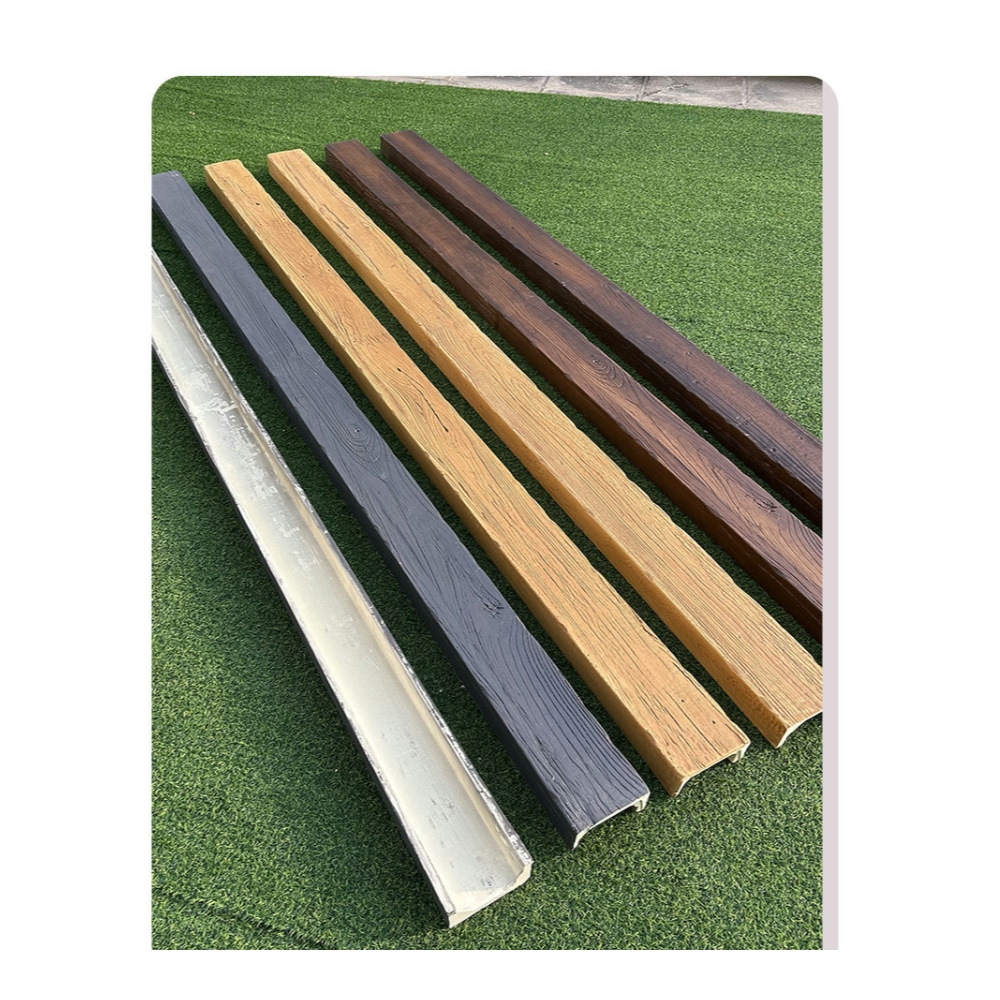
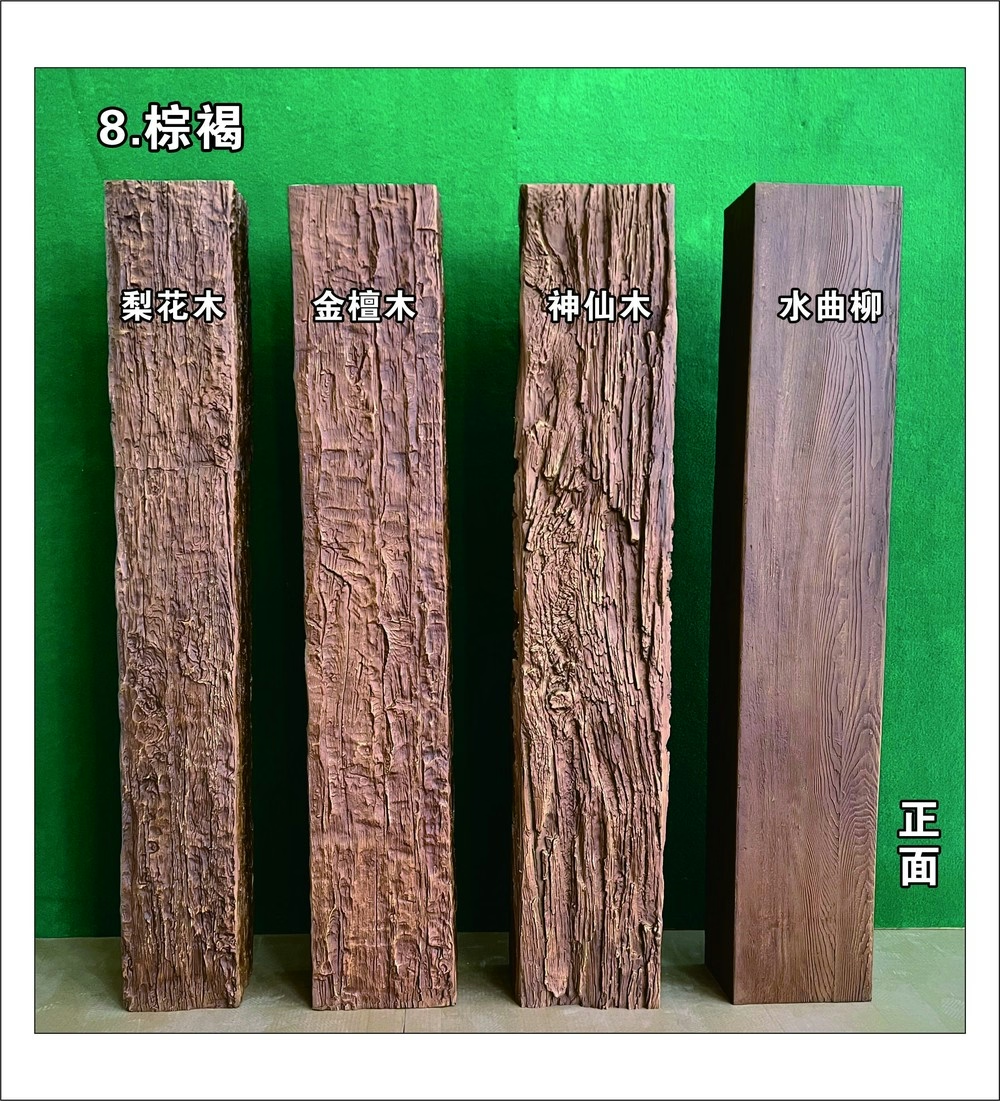
Installation speed matters on job sites. When a contractor can mount a single ceiling beam in minutes rather than hours, that efficiency translates directly into lower labor costs, faster room turnarounds, and the ability to schedule more projects in the same calendar period. Integral single-piece PU faux beams are engineered precisely with this efficiency in mind, removing the steps that make multi-piece beam installation time-consuming and replacing them with a single, direct mounting process.
What Integral Single-Piece Means
The term integral refers to the construction method. An integral beam is manufactured as one complete piece, not assembled from multiple shorter sections in the factory or on the job site. The mold captures the full beam profile, including end caps, decorative chamfers, and any surface detailing, in a single casting operation. The result is a beam that is complete upon removal from the mold and requires no further assembly before installation.
This differs from beams described as single-piece in the sense that every feature of the beam, including end treatments and surface profiles, is formed in one step. Some beams marketed as single-piece still require factory-applied end caps or surface overlays that are bonded to a core. An integral beam has no such secondary operations; what you receive is what was cast, fully formed.
Eliminating the Splice Saves More Than Time
When installers talk about splicing, they refer to joining two beam sections end to end to extend the overall length. Splicing is necessary when standard beam lengths fall short of a room's span, but it introduces several problems beyond the obvious time investment.
A splice requires precise end cuts, typically 45-degree mitered angles, which must match perfectly or the joint will be visible. Even perfect cuts require adhesive, clamping, and sometimes mechanical fasteners to hold the joint while the adhesive sets. After curing, the joint needs to be filled, sanded, and finished to blend with the surrounding surface. Each of these steps introduces a chance for error and adds time to the installation.
Integral single-piece beams remove this entire sequence of operations. There is no joint to cut, no adhesive to apply, no clamping to manage, and no finishing work at a seam. The installer measures the span, cuts the beam to length, and mounts it. For a typical room with three or four beams, this can reduce installation time by 30 to 50 percent compared to a multi-piece system.
Handling and Logistics on the Job Site
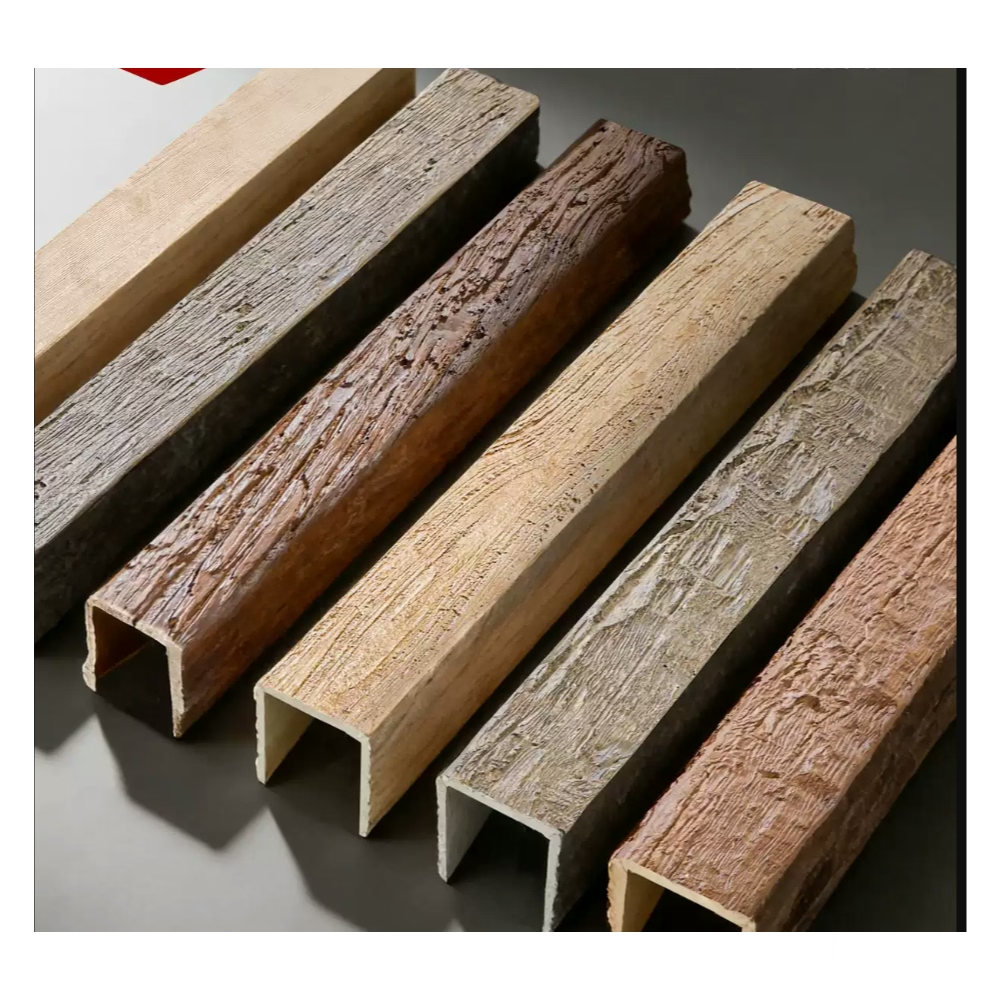
Despite their length, integral PU beams remain light enough for one person to manage in most cases. A 12-foot integral beam weighing 8 pounds can be carried under an arm and lifted overhead without the awkwardness that characterizes long rigid pieces. The material's flexibility, while limited, is enough to allow the beam to flex slightly when navigating corners or passing through doorways, making job-site delivery significantly easier than a comparable wood or fiberglass piece.
For very long spans, manufacturers produce integral beams in lengths up to 20 feet or more, covering the vast majority of residential ceiling spans without any splicing. When spans exceed available integral lengths, the recommended approach is to position any required joints at the ends of the beam runs, near the walls, where they are less visually prominent and benefit from natural shadowing at the wall-ceiling intersection.
Mounting Efficiency with Integral Beams
The mounting process for integral beams benefits from the same efficiency gains. With no joints to protect from stress, mounting cleats can be spaced according to structural requirements rather than joint locations. This allows for cleaner mounting patterns and fewer interruptions in the fastener sequence.
Installers typically use a hybrid mounting approach for integral beams: construction adhesive applied to the top interior surface of the beam combined with mechanical fasteners driven through the bottom flange into ceiling joists. The adhesive provides a continuous bond that distributes load across the full beam length, while the fasteners provide immediate holding strength and allow for fine adjustment of the beam's position before the adhesive sets.
The single mounting approach for integral beams also simplifies inventory and staging. Rather than managing kits that include multiple components for each joint, the installer needs only the beam, the adhesive, the mounting clips or cleats, and basic fasteners. Fewer components mean fewer items to track, fewer packages to open, and fewer opportunities for pieces to go missing during a multi-day project.
Cost Implications and Value Assessment
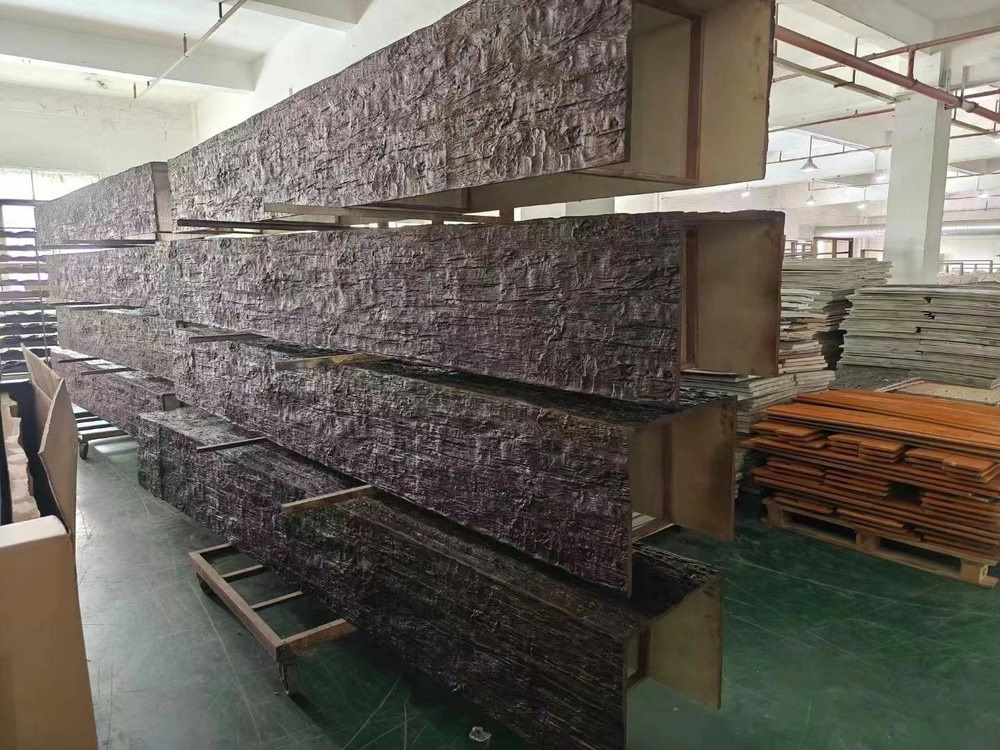
The per-unit cost of integral single-piece beams is higher than comparable multi-piece beams because the manufacturing process is more involved. However, when you factor in installation labor, the total installed cost often favors the integral option, particularly for contractor installations where labor represents the majority of the project budget.
Homeowners evaluating options should request a total installed cost comparison from their contractor rather than comparing material prices in isolation. The calculation should include labor time estimates, the number of adhesive tubes and fasteners required, the need for joint finishing materials, and any additional time needed to protect and manage joints during the adhesive cure period.

When Integral Is the Right Choice
Integral single-piece PU beams are the appropriate choice for new construction projects, full-room renovations where all beams are being installed at once, commercial spaces where speed and consistency matter, and any application where the visual continuity of the ceiling is a primary design goal. They are slightly less suitable for retrofits in rooms with limited access, where maneuvering long pieces through tight doorways might be challenging, or for projects with extremely tight budgets where the labor cost difference is not a constraint.
The efficiency and visual quality of integral single-piece PU beams represent a meaningful step forward in the evolution of faux beam products. By removing the splice from the installation process, the product category has become accessible to a wider range of projects and installers, with benefits that extend well beyond the obvious time savings.
Technical References
ASTM standards cited in every specification
Test Data
Lab results from internal testing program
Updated 2026
Reviewed against current product specs