Modern interior design prizes restraint. Clean sight lines, unadorned surfaces, and purposeful absence of ornamentation define the aesthetic. At first glance, decorative ceiling beams might seem at odds with this language. But contemporary PU ceiling beams are designed specifically to bridge this gap, offering the warmth and architectural depth that wood ceiling elements provide while respecting the visual discipline that modern interiors demand.
The Contemporary Beam Profile
The profile of a contemporary beam differs fundamentally from its rustic counterpart. Where rustic beams emphasize mass, texture, and the appearance of age, contemporary beams emphasize clean geometry, smooth surfaces, and proportion that feels deliberate rather than found. A contemporary beam might be rectangular with sharp edges, or it might feature a subtle chamfer or radius that softens the geometry just enough to feel approachable without becoming decorative.
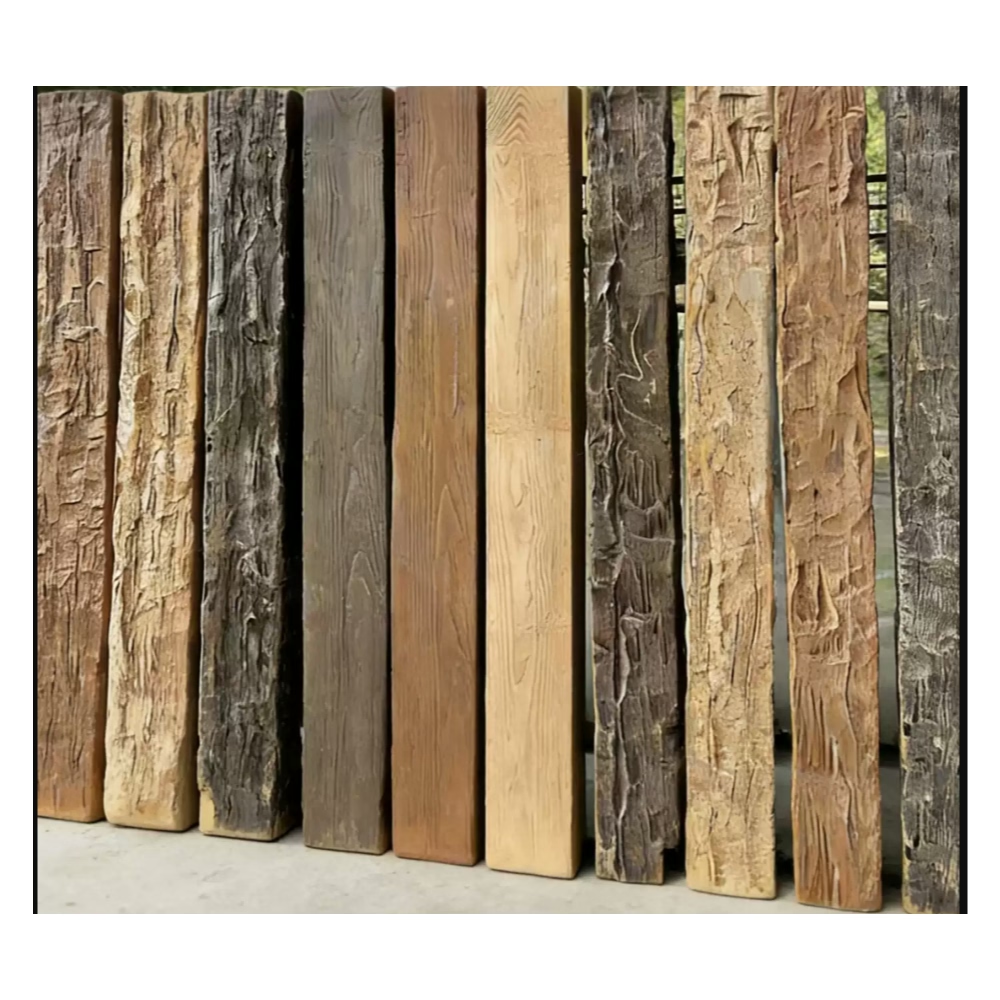
The surface finish of contemporary beams tends toward refinement rather than authenticity. A contemporary beam may have wood grain, but the grain is typically subdued—fine lines rather than bold patterns, subtle tonal variation rather than dramatic color contrast. Alternatively, a contemporary beam may present a more uniform appearance, with a smooth or lightly textured surface that reads as material rather than wood species.
The key design principle is that the beam should contribute to the contemporary aesthetic rather than fighting against it. This means the beam's proportions should be clean, its lines should be consistent, and its surface character should complement rather than contrast with the room's other finishes.
Color and Finish Considerations for Contemporary Spaces
In contemporary interiors, the color palette is typically restrained. Whites, grays, warm neutrals, and black form the foundation, with occasional accent colors in furniture or art. Contemporary beams should fit within this palette rather than introducing a jarring tonal element.
Painted beams in contemporary spaces most commonly use a finish that matches or complements the ceiling color. A beam painted in the same white as the ceiling appears to recede, adding warmth through its shadow and form without introducing a competing color. A beam painted in a slightly darker shade of the ceiling color creates subtle definition that reads as architectural rather than decorative.
For contemporary spaces with warmer neutrals—cream, greige, taupe—a beam finished in a complementary warm tone works well. The beam introduces wood's inherent warmth without the strong color identity of a species-specific stain. Gray-tinted beams have become increasingly popular in contemporary interiors, as they introduce the texture and form of wood while maintaining the cool, sophisticated palette that characterizes many modern spaces.
Integrating Beams into Open-Plan Contemporary Layouts
Open-plan layouts present both an opportunity and a challenge for faux beam installation. The opportunity is that the ceiling is a continuous plane across multiple functional zones, which allows beams to serve as a unifying element that connects the kitchen, dining, and living areas visually. The challenge is that the beams must work coherently across all these zones, each of which may have different furniture groupings and visual focal points.
In an open-plan contemporary layout, parallel beams are typically the most effective arrangement. They create a sense of direction that guides the eye across the space, reinforcing the flow from one functional zone to the next. The beams should be spaced consistently across the entire ceiling plane, with the spacing derived from the dominant room dimension rather than adjusted for each zone.
Consider using beam placement to create subtle visual zones within the open plan. Beams positioned above the living area can be centered on that zone's seating arrangement, while beams above the kitchen align with the cabinetry or island. When viewed together, the beams create a framework that visually organizes the open space without imposing hard divisions.
For open-plan ceilings with exposed ductwork or electrical conduit, beams can serve a dual purpose by running parallel to and partially concealing these elements. This approach integrates functional infrastructure into the design language rather than treating it as an eyesore to be hidden behind dropped ceilings or soffits.
Contemporary Beams in Different Room Types
The living room is the most natural setting for contemporary faux beams. The living room's function as a social space means it benefits from the warmth and visual interest that beams provide, and its scale typically accommodates beam installation without the spatial constraints found in smaller rooms. In a contemporary living room, beams can serve as the primary ceiling treatment, with the rest of the room's finishes selected to complement rather than compete with them.
The kitchen requires additional consideration because of its functional demands. Contemporary kitchens with large central islands and open shelving rely on visual lightness, and beams in these spaces must be sized and finished carefully to avoid visual heaviness. Narrow, shallow beams in a finish that matches the ceiling work better in kitchens than deep, substantial beams, which can overwhelm the space and make the kitchen feel smaller.
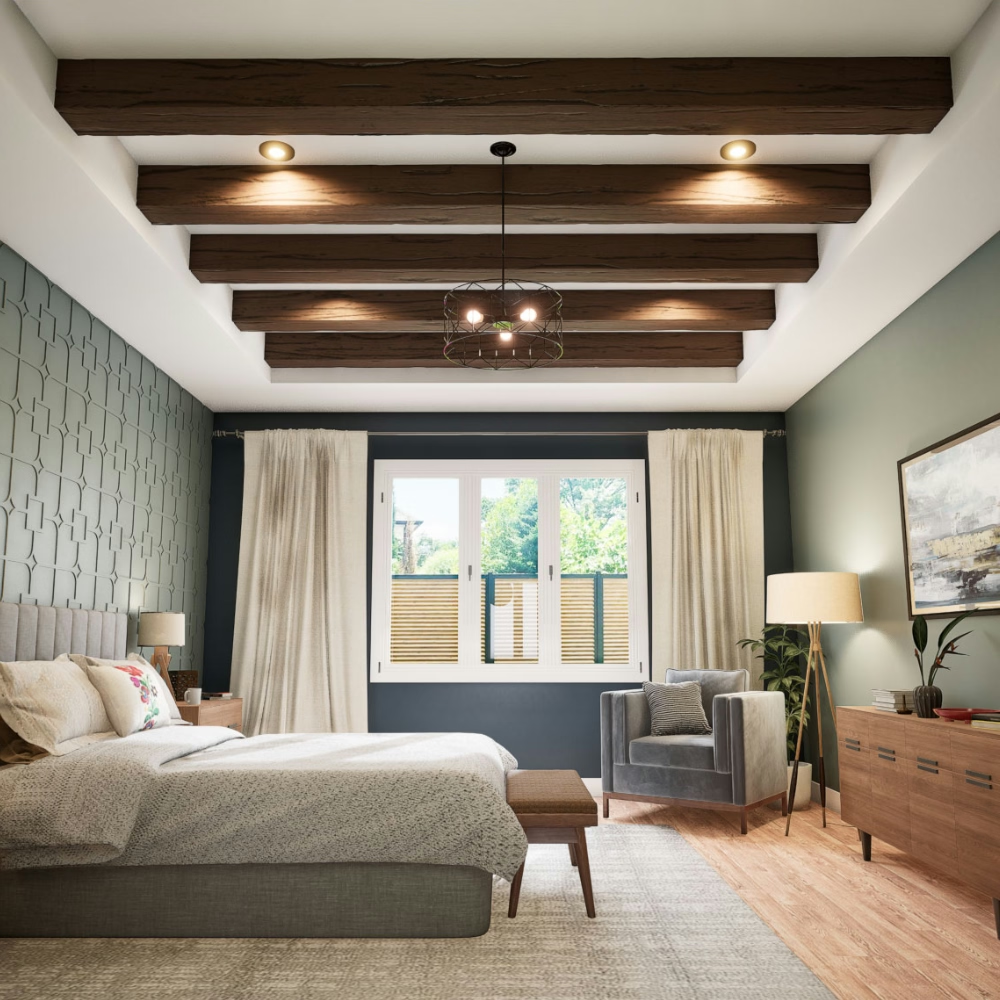
Bedrooms in contemporary homes often benefit from a restrained approach to beams. A single beam running perpendicular to the bed, centered on the ceiling above the bed, creates a focused design element that anchors the sleeping area. This approach delivers the warmth of wood without the complexity of a full ceiling beam arrangement.

Furniture and Decor Coordination
The contemporary beam installation should feel like an extension of the furniture and décor choices in the space rather than an independent design element. In a contemporary living room with low-profile seating and a geometric coffee table, beams should maintain the same visual weight and geometric precision. In a contemporary bedroom with a platform bed and clean-lined nightstands, the beams should reinforce rather than disrupt that sense of considered minimalism.
Lighting coordination is particularly important in contemporary spaces with beams. Recessed downlights positioned between beams can create a layered lighting effect that emphasizes the beam geometry. Alternatively, a single statement pendant or linear light fixture suspended between beams creates a focal point that draws attention to the beam arrangement as part of a larger composition.
The goal of contemporary beam design is not to hide the beams' decorative nature but to ensure that their decoration is in service of the same aesthetic language that governs the rest of the space. A contemporary beam is not pretending to be structural timber; it is a contemporary design element that happens to borrow the form and warmth of wood. When this distinction is clear, the beams contribute to the overall design rather than complicating it.
Technical References
ASTM standards cited in every specification
Test Data
Lab results from internal testing program
Updated 2026
Reviewed against current product specs


