Exposed wiring on ceilings is one of those practical realities that homeowners and designers learn to work around, often grudgingly. Whether it is a heavy-usage entertainment system with multiple cable runs, a room with overhead lighting on separate circuits, or a home office with network cabling that needs to reach the ceiling for a wireless access point, the cables exist because the functions they serve are necessary. The question is whether they need to be visible.
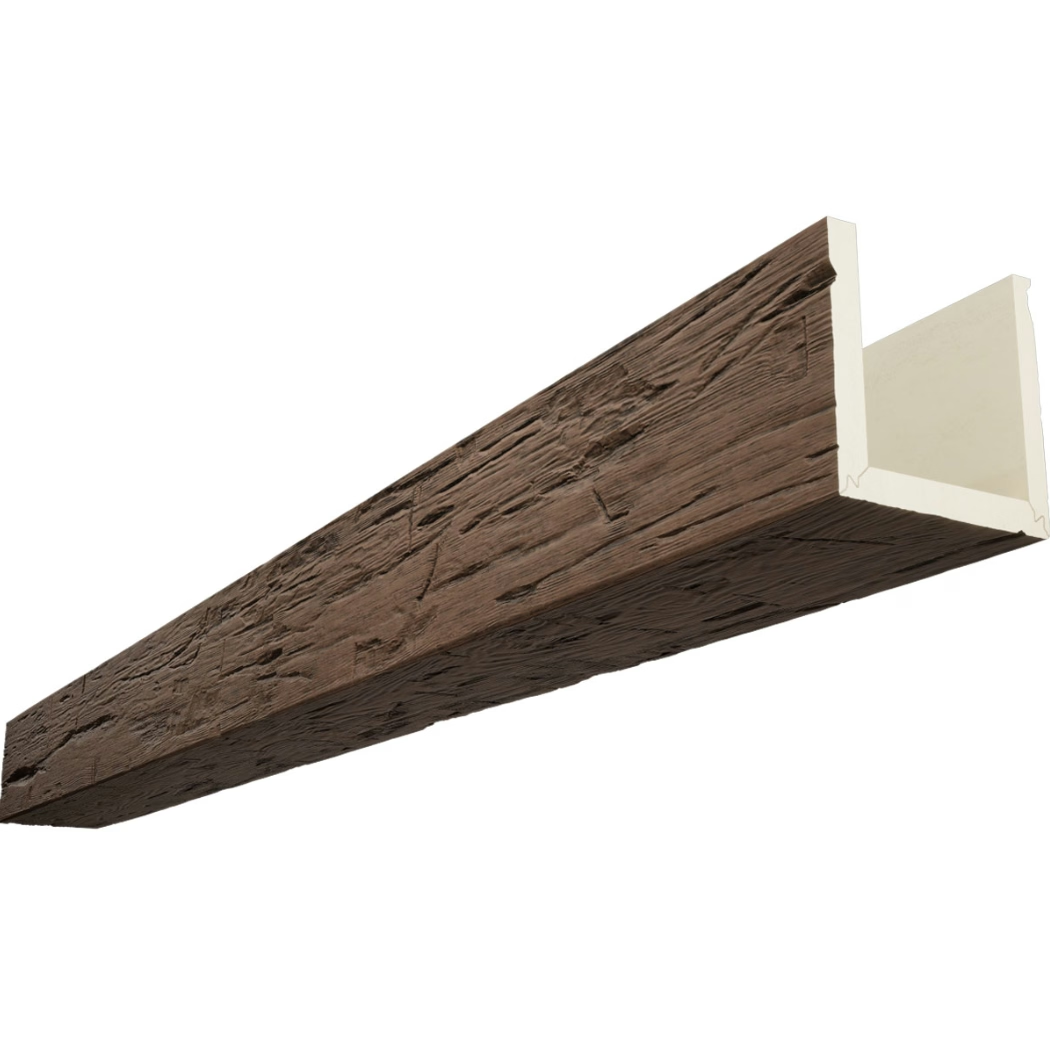
PU faux beams designed with cable management capability offer a solution that treats exposed wiring not as an inconvenience to be tolerated but as an infrastructure challenge to be elegantly resolved. By incorporating channels, hollow cores, or internal routing paths, these beams provide a concealed pathway for cables that runs parallel to the beam, completely hidden from view once the beam is installed.
How Beam Cable Management Systems Work
The most common cable management approach uses a hollow core running the length of the beam. When the beam is installed, this hollow core is accessible through a small opening at each end or through access ports spaced along the beam's length. Cables are routed into the core from one end and exit at any desired location through the access ports.
This approach works well for long cable runs that need to travel across a room without interruption. A single beam can carry multiple cable types—power, HDMI, Ethernet, speaker wire, or low-voltage lighting wiring—as long as the cables are rated for use within an enclosed space. It is important to verify that the cables used meet any relevant electrical codes for concealed installation, particularly for power cables.
For beams without a hollow core, manufacturers offer surface-mount channel systems that attach to the top of the beam and create a cable raceway that remains hidden once the beam is in place. These channels are typically used in retrofit applications where the existing beams do not have integrated cable management.
Planning the Cable Routing Before Installation
Effective beam-based cable management requires planning that precedes the beam installation. Before any beams go up, map out every cable that needs to be routed through the ceiling, including its origin point, its destination, and the path it will follow along the beam runs.
Identify the access points where cables will enter and exit the beam system. Entry points are typically located near wall boxes, recessed lighting fixtures, or other termination points where the cable connects to a device or junction. Exit points are located where the cable needs to drop down to a device, connect to a fixture, or pass through the ceiling plane to reach a different area of the room.
Label every cable at both ends before routing it through the beam system. Once cables are inside the beam core, identifying individual wires without labels requires fishing them out, which is time-consuming. Pre-labeled cables eliminate this problem and make future modifications or troubleshooting much simpler.

Common Cable Types and Code Considerations
Low-voltage cables, including Ethernet, coax, speaker wire, and audio/video cables, are generally the simplest to route through beam systems because they generate minimal heat and are not subject to the same electrical codes as power wiring. These cables can be bundled together and routed through the same beam channel without concern for interference, as long as the bundle does not exceed the capacity of the channel.
Power cables require more careful consideration. In most jurisdictions, power cables routed through enclosed spaces must be installed according to the National Electrical Code or local equivalent, which specifies minimum bend radii, fill capacities for conduits and raceways, and requirements for cable types and ratings. A hollow beam channel may qualify as a raceway under some codes and not under others, depending on how it is constructed and whether it is accessible.
Before routing power cables through beam systems, consult with a licensed electrician or your local building department to verify compliance with applicable codes. The last thing any installer wants is to complete a beautiful beam installation only to fail an inspection because the cable routing does not meet code requirements.
Retrofitting Cables Through Existing Beam Installations
For homeowners who installed beams without cable management and now need to add wiring, there are retrofit options that do not require removing the beams. Glow rods—flexible fiberglass rods designed for fishing cable through existing walls and conduits—can sometimes be used to route new cables through beam hollow cores if the access points are large enough to accommodate the rod.
For beams without hollow cores, surface-mount cable channels can be installed on top of the beam to create a new routing pathway. These channels are typically painted to match the beam, making them invisible from below. The installation requires removing the beam, attaching the channel to its top surface, and reinstalling the beam, which is more involved than routing cables during initial installation but is still a practical option.
In some cases, the most practical solution is to run new cables through a different pathway—behind the drywall, through conduit along the wall, or through surface-mount raceways that follow the wall rather than the ceiling. The beam system does not need to carry every cable in the room; it is most effective for the cables that benefit most from ceiling routing, such as those connecting overhead displays, suspended speakers, or central lighting controls.
Maintaining Cable Accessibility
One of the trade-offs of concealing cables within beam systems is reduced accessibility. If a cable fails or needs to be replaced, the beam may need to be partially removed to access it. This is why proper cable labeling and documentation are so important—they reduce the likelihood that you will need to fish through the beam system to diagnose a problem.
Some installers address accessibility by creating labeled access panels in the beam ends that can be removed without tools to expose the cable termination points. These panels, while technically visible, are designed to blend with the beam's end treatment and remain unobtrusive when the system is functioning normally.
For commercial installations where code requires accessible cable pathways, beams with removable covers or hinged access panels provide the necessary accessibility while maintaining the concealed appearance from normal viewing angles. These systems cost more than standard beams but satisfy both aesthetic and regulatory requirements simultaneously.

When properly planned and executed, beam-based cable management is one of the most elegant solutions available for dealing with ceiling infrastructure. It eliminates visual clutter from exposed cables while providing a organized, labeled routing system that is far easier to maintain and modify than exposed cable runs. The beams become functional infrastructure as well as decorative elements, delivering double the value for the installation.
Technical References
ASTM standards cited in every specification
Test Data
Lab results from internal testing program
Updated 2026
Reviewed against current product specs