Minimalism is not the absence of warmth; it is the discipline of achieving warmth through carefully selected elements rather than accumulated detail. A minimalist space that contains nothing feels cold. A minimalist space where every element contributes genuine beauty feels complete. Knot-free modern wood-look PU beams are designed for the second scenario, providing the organic warmth and subtle visual interest of wood grain without the visual complexity that knots, checks, and heavy grain introduce.
Why Knot-Free Matters in Contemporary Design
Natural wood's character comes largely from its imperfections. Knots, grain variation, color streaks, and surface checking are the marks of authenticity that distinguish real timber from manufactured alternatives. In rustic, farmhouse, and traditional design styles, these marks are features. In contemporary minimalist spaces, they can become liabilities.
A knot in the wrong place in a minimalist interior draws the eye precisely because the surrounding surfaces do not compete for attention. What would be a charming detail in a rustic cabin becomes an anomaly in a space where every element is chosen for its contribution to a cohesive whole. Knot-free wood-look beams eliminate this risk by presenting the beauty of wood grain in its most refined, controlled form.
The knot-free surface also makes the beam more versatile across different finish applications. A stained knot-free beam presents a uniform, consistent color that reads as contemporary and sophisticated. A painted knot-free beam accepts the paint uniformly, without the variation that knots cause in natural wood, where the density of the knot wood accepts stain differently than the surrounding grain.
Designing with Knot-Free Beams in Minimalist Spaces
The minimalist approach to knot-free beams favors restraint in both quantity and proportion. Rather than covering the ceiling with beams, the minimalist strategy typically uses fewer beams with larger proportions, creating a few strong statements rather than a field of repeated detail.
Consider a single beam as a room's primary ceiling element. One beam running perpendicular to the primary seating arrangement, centered on the room's width, creates a visual anchor that defines the space without overwhelming it. The beam's shadow on the ceiling adds dimension. Its wood grain texture introduces warmth. Its clean, knot-free surface maintains the refined aesthetic of the minimalist interior.
Two perpendicular beams that cross near the center of the ceiling create a grid that defines the room's quadrants while providing a structural framework for lighting placement and furniture arrangement. The intersection point becomes a natural reference point for pendant fixtures, recessed lighting arrangements, or simply a visual resting point in the ceiling plane.
For larger minimalist spaces, a series of parallel beams with generous spacing creates a rhythm that is architectural rather than decorative. The beams define zones within an open-plan space, creating subtle boundaries between the living area, dining area, and kitchen without the visual interruption of walls, partitions, or partial dividers.
Finish Options for Knot-Free Beams
The knot-free surface opens up finishing possibilities that would be more complex or inconsistent on natural wood. Paint finishes are the most common application in minimalist spaces, and knot-free beams accept paint uniformly, producing a smooth, consistent surface without the variable absorption that knots create in natural wood.
A painted beam in a tone slightly darker than the ceiling provides subtle definition while maintaining the monochromatic aesthetic common in minimalist interiors. The wood grain texture remains visible through the paint, providing warmth and surface interest, but the uniform color keeps the overall effect clean and controlled.
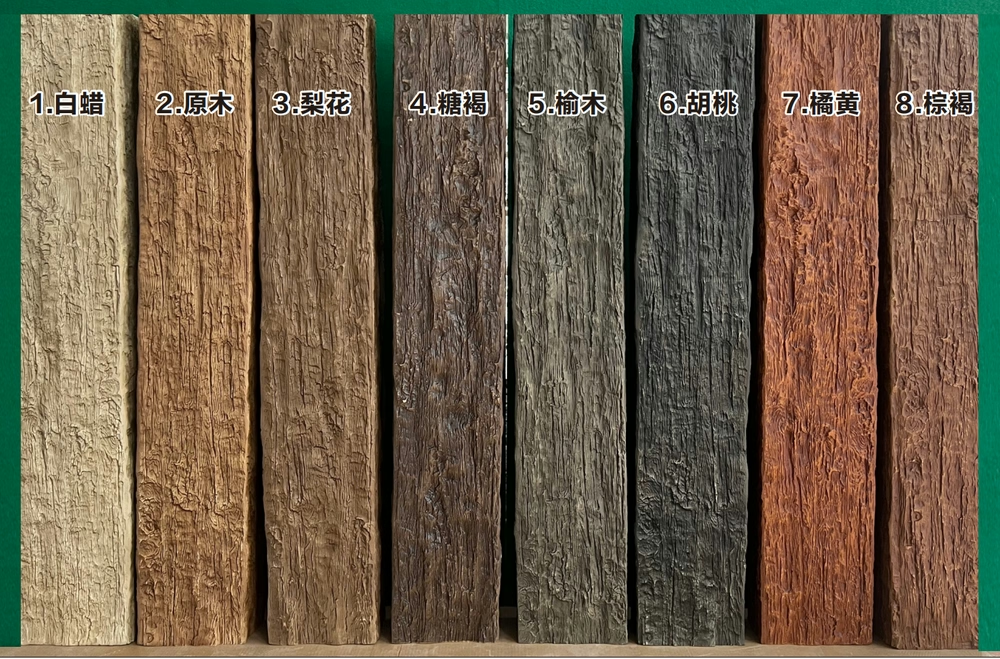
Stain finishes on knot-free beams produce a more natural wood appearance while maintaining the consistency that the knot-free surface provides. A light oak or honey finish on a knot-free beam gives the appearance of premium lumber without the variation and imperfection that would occur in a natural wood beam. This makes it possible to achieve a sophisticated natural wood aesthetic in spaces where natural wood grain variation would feel too casual or rustic.
Glaze finishes, which add a semi-transparent layer over a base coat to enhance grain depth, work particularly well on knot-free PU beams. The uniform surface of the knot-free beam allows the glaze to settle consistently in the grain valleys, creating a predictable and refined result. A dark glaze over a light base coat produces a rich, layered appearance that adds visual depth without introducing the irregularity of natural wood.
Pairing Knot-Free Beams with Minimalist Materials
The materials palette in a minimalist space typically includes concrete, glass, steel, stone, and linen. Knot-free wood beams add warmth to this palette in a way that complements rather than competes with the other materials. The key is to match the refinement level of the beam to the refinement level of the surrounding finishes.
Polished concrete floors and knot-free wood beams make a sophisticated pairing because both materials benefit from precision in their installation and both offer their character through surface quality rather than ornamental detail. The concrete provides cool mass and neutral tone, while the beam adds warm organic texture without introducing visual noise.
Steel accents in minimalist spaces—barn door hardware, table bases, lighting fixtures—pair well with knot-free beams that have been finished in a warm tone. The contrast between the cool precision of steel and the warm organic quality of wood is a classic combination that reads as refined rather than rustic when both elements are presented in their most minimal, unornamented forms.
Glass, particularly large-format glass windows and partitions, responds well to knot-free beams as a room divider or boundary element. The beam's wood grain texture is visible through the glass, adding warmth to the exterior view and reinforcing the connection between the interior and any exterior wood elements such as deck surfaces or exterior cladding.
Long-Term Appearance and Care
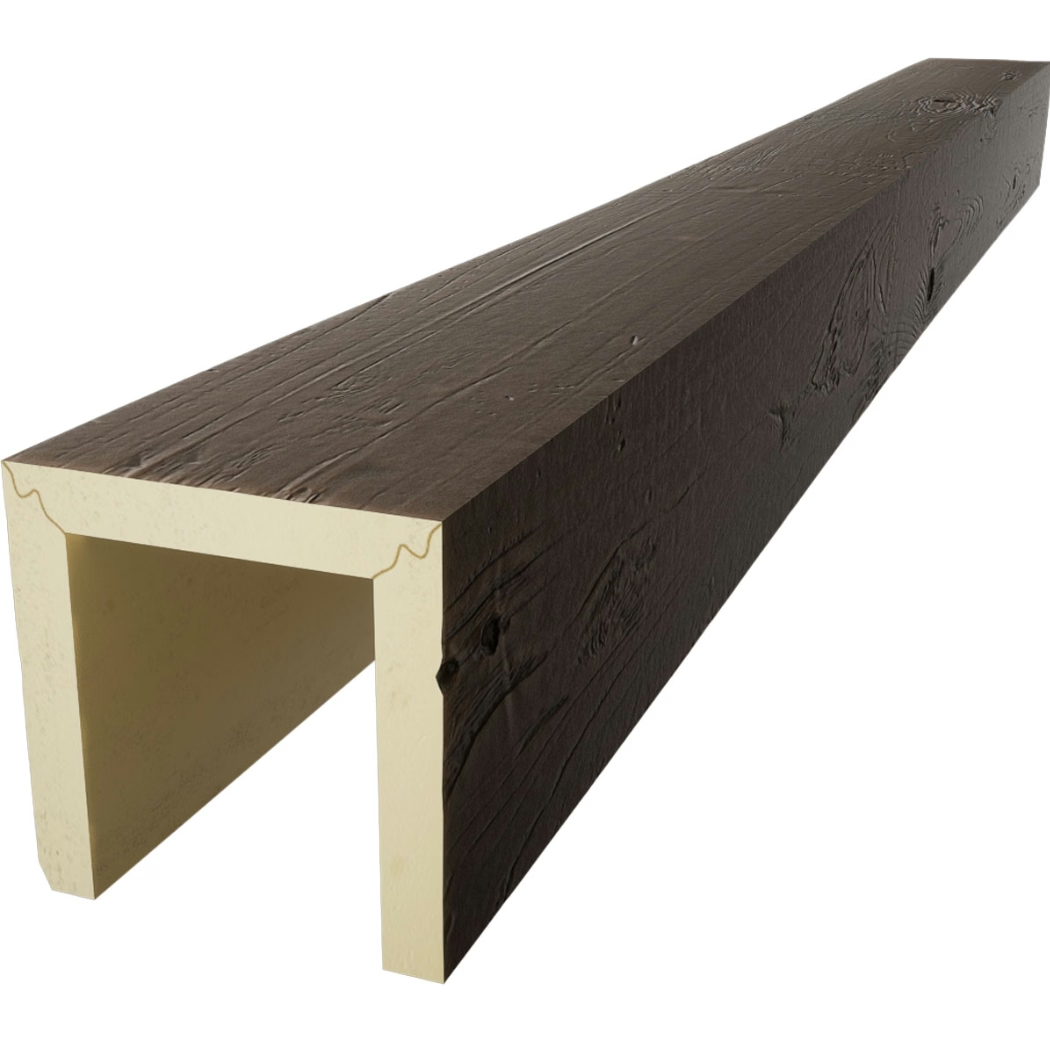
Knot-free PU beams maintain their appearance over time without the natural changes that affect natural wood. Natural wood beams darken, lighten, or develop new grain patterns as they age and are exposed to light. A knot-free PU beam remains consistent in color and surface quality indefinitely, which aligns with the expectations of minimalist spaces where consistency and order are core values.
The light maintenance requirement of knot-free PU beams also suits the minimalist lifestyle. A space that values simplicity and reduction does not benefit from finishes that require periodic attention, refinishing, or repair. The knot-free PU beam is one of the few ceiling treatments that delivers wood's aesthetic warmth while requiring nothing more than occasional dusting, which is consistent with the low-maintenance, high-quality ethos of the minimalist interior.

Knot-free modern wood-look PU beams represent a thoughtful marriage of material aesthetics and spatial philosophy. They provide exactly as much wood character as a minimalist space can productively absorb, and no more. In doing so, they demonstrate that warmth and restraint are not opposites but complements, each more effective in the presence of the other.
Technical References
ASTM standards cited in every specification
Test Data
Lab results from internal testing program
Updated 2026
Reviewed against current product specs


