Contemporary interior design is not a single style but a family of related approaches that share certain foundational values. Clean sight lines, functional beauty, material honesty, and spatial openness characterize contemporary spaces across their many variations. Within this framework, there is room for warmth, texture, and material richness—elements that keep contemporary spaces from feeling cold or sterile. Modern PU faux wood beams occupy exactly this role, providing texture and warmth that complement contemporary design values rather than contradicting them.
What Makes a Beam Contemporary
The distinction between contemporary and other beam styles is primarily about proportion and surface treatment. Contemporary beams favor clean, geometric profiles without excessive ornamentation. Chamfered edges, subtle radiuses, and flat faces are more common than deeply carved details, complex moldings, or heavily textured surfaces.
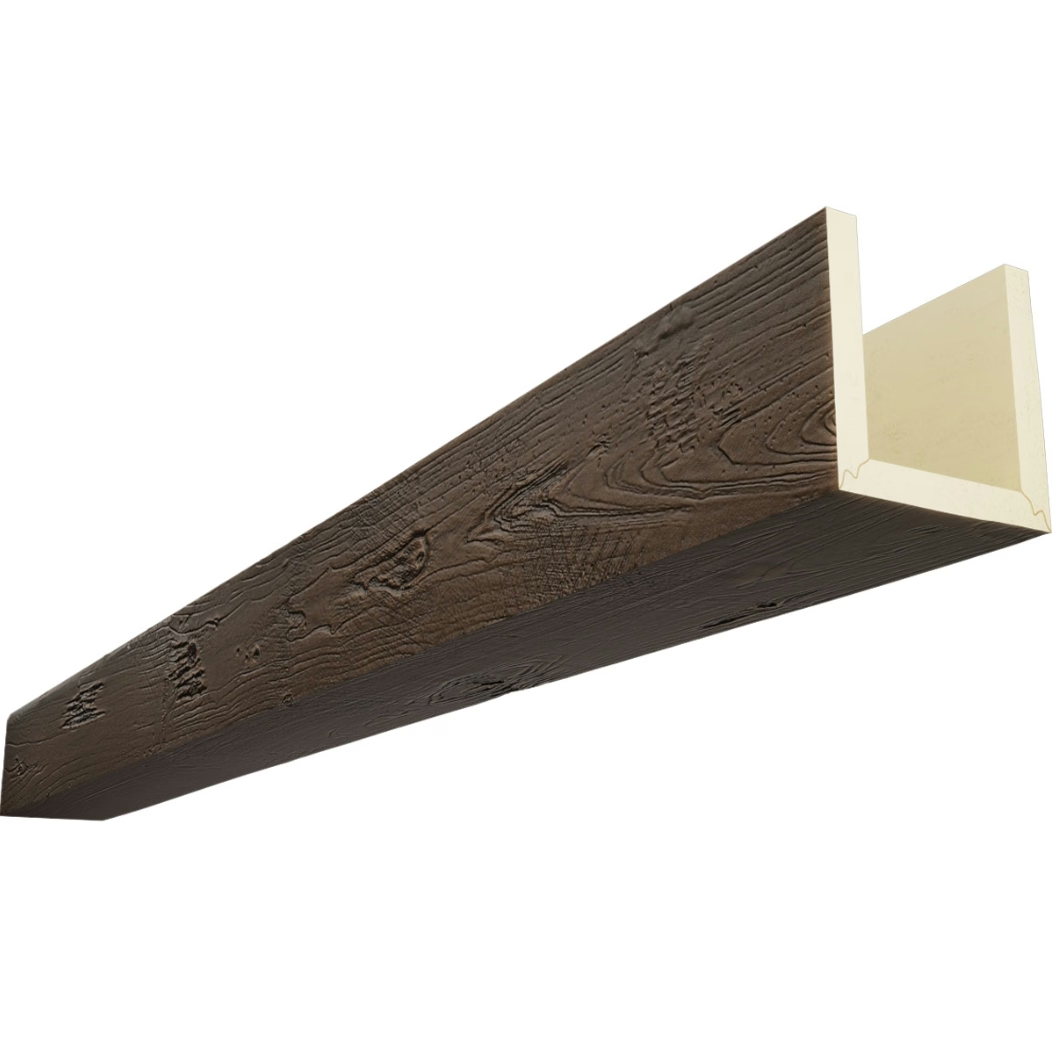
The surface finish of a contemporary beam tends toward restraint. Rather than the bold grain patterns and dramatic color variation of rustic beams, a contemporary beam might feature a subtle grain texture that reads as wood without announcing itself loudly. The color palette of contemporary beams runs the full range from natural wood tones to painted whites and grays, but the application is always clean and uniform.
The proportion of a contemporary beam relates to the scale of the room and the thickness of other design elements in the space. Contemporary interior architecture favors restraint in every dimension, so a contemporary beam should feel substantial enough to justify its presence but not so massive that it dominates the ceiling plane. A beam depth of 4 to 7 inches and a width of 3 to 6 inches covers the most common contemporary range.
Finishing Approaches for Contemporary Spaces
White-painted beams are among the most versatile options for contemporary interiors. A white beam on a white or light-gray ceiling creates a unified ceiling plane that is differentiated only by the shadow line of the beam. This approach is particularly effective in contemporary spaces that favor light, open, and airy environments. The beam's contribution is spatial rather than chromatic, defining the ceiling's structure through shadow and form rather than color.
Gray-finished beams offer a middle ground between the warmth of wood and the cool sophistication of contemporary neutrals. A medium gray stain on a knot-free beam surface produces a refined wood-like texture in a tone that coordinates with the cool grays, concrete, and steel common in contemporary palettes. This approach is popular in lofts, modern apartments, and contemporary houses where the overall palette leans cool.
Natural wood finishes on contemporary beams work best when the rest of the space provides enough cool or neutral elements to balance the warmth. A honey-finished beam in a contemporary space with white walls, gray floors, and black accent furniture creates a warm focal point that draws the eye upward and balances the otherwise cool palette. The key is that the wood finish should be the warmest element in the room, not one of many competing warm elements.
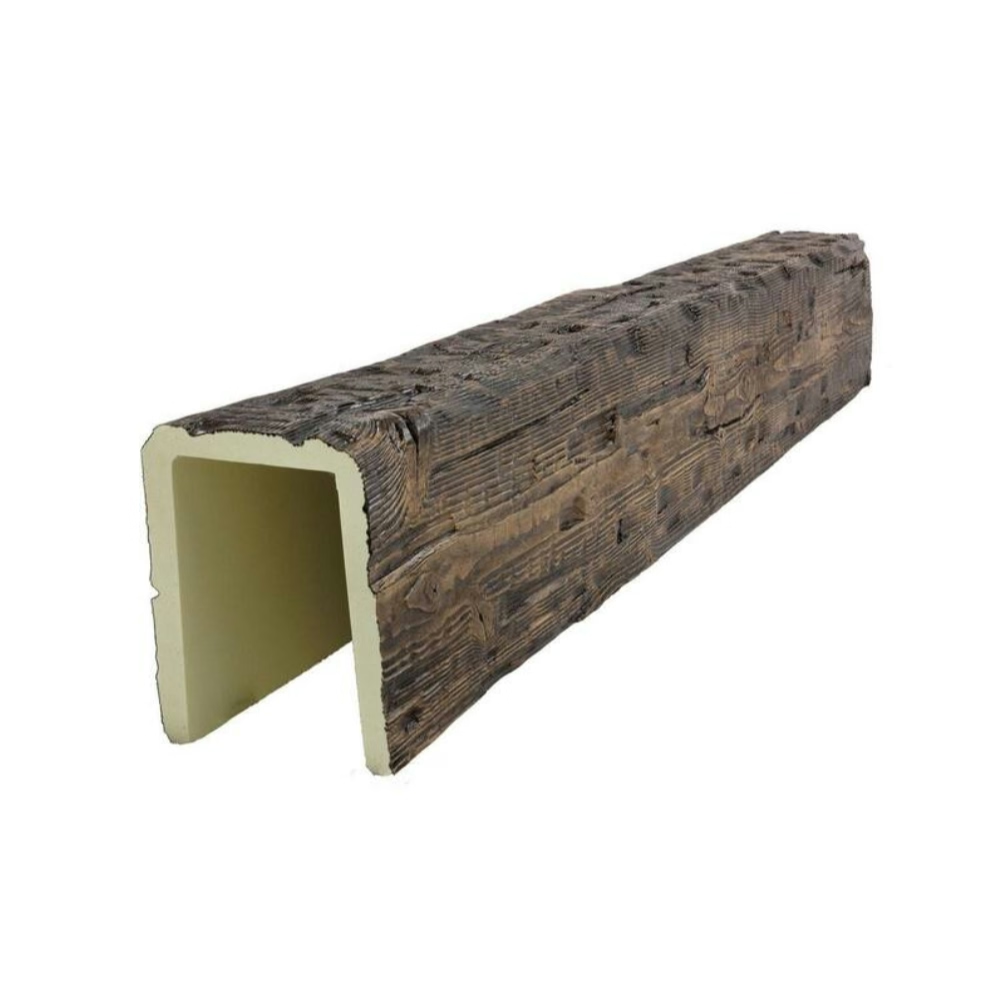
Contemporary Beam Arrangements
The arrangement of beams in a contemporary space should reflect the same spatial logic that governs the placement of other architectural elements. Symmetry, alignment, and proportional spacing are more appropriate than eclectic or intuitive placement.
Parallel beam arrangements in contemporary spaces typically use wider spacing than in rustic installations. A spacing of 6 to 8 feet on center creates generous gaps between beams that let the ceiling breathe and maintain the sense of openness that contemporary design values. The beams function as prominent ceiling elements rather than a repeated texture, and each beam receives individual attention as an architectural feature.
Perpendicular beams in contemporary spaces can create sophisticated ceiling grids that define zones within an open-plan layout. A 2-beam grid, with beams running in both directions across the ceiling, creates four quadrants that correspond to functional areas in the space. The grid should be centered on the room's primary focal point, which may be a seating arrangement, a fireplace, or a large window with a view.
A single beam can be the most powerful contemporary beam statement. One beam running the full length of a room's major axis, centered on the primary seating area, provides all the warmth, texture, and architectural interest that a ceiling needs. This restrained approach is consistent with the contemporary design principle of doing only what is necessary and doing it well.
Material Coordination in Contemporary Interiors
Contemporary interiors typically feature a curated selection of materials, each used purposefully. The material palette often includes concrete, glass, steel, stone, and natural wood. PU faux beams fit into this palette as the primary wood element, and the beam finish should relate to any other wood in the space—flooring, furniture, built-ins—in a way that creates coherence.
If the space features oak flooring, a beam finished in a complementary oak tone creates material continuity that ties the ceiling to the floor. If the space has walnut furniture, a walnut-finished beam extends the walnut aesthetic upward into the ceiling plane. The goal is a material conversation between the floor and ceiling that makes the room feel complete and intentional.
The relationship between beams and contemporary lighting design is particularly important. Recessed downlights positioned between beams create a layered lighting effect that emphasizes the ceiling structure. Linear LED strips installed along the length of beams can transform the beam from a purely architectural element into a lighting fixture as well. Pendant fixtures suspended between beams add vertical scale and visual interest to the space below.
Maintenance for Contemporary Living
Contemporary homeowners value low-maintenance finishes that retain their appearance without demanding regular attention. PU beams in contemporary spaces meet this expectation fully. The material's resistance to moisture, warping, and cracking means that the beams will look as good in ten years as they do on the day of installation, without the periodic refinishing that natural wood would require.
Routine care involves only dusting, which can be accomplished with a ceiling brush attachment on a telescoping pole or with a vacuum cleaner using a soft brush attachment. In high-ceiling contemporary spaces where the beams are a prominent visual element, occasional cleaning maintains the sharp shadow lines and crisp surface detail that make contemporary beams effective.
The combination of contemporary aesthetics, practical durability, and minimal maintenance makes modern PU faux wood beams an ideal ceiling treatment for contemporary interiors. They provide exactly what the style requires—clean lines, material warmth, spatial definition—without any of the baggage that natural materials would bring in terms of maintenance demands or installation complexity. In the contemporary home, where every element earns its place by contributing value, a well-chosen faux beam installation delivers more than it asks in return.
Technical References
ASTM standards cited in every specification
Test Data
Lab results from internal testing program
Updated 2026
Reviewed against current product specs


